There's a strange bee called the alkali bee. And in one small valley in Washington, it's worth its weight in gold.This video ties into Vox explains 'What we get wrong about saving the bees' for World Honey Bee Day. According to the video description, "There are 20,000 other species of bees in the world — over 4,000 in the United States. They’re incredibly diverse, unique, and also important for pollination." Alkali bees fit that description perfectly. They also serve as an example of one of Commoner's Laws, "Nature knows best." That's a law I would like to cite more often.
In Walla Walla Valley, farmers depend on alkali bees, a native species essential to one of the country’s most overlooked crops: alfalfa seed. In fact, the work of these tiny pollinators generates millions of dollars in agricultural revenue. Unlike honey bees, alkali bees take a pollen-packed smack to the face without hesitation, powering through millions of flowers with speed and precision. But alkali bees can’t be boxed, transported, or bought. They nest in the ground, require salt-crusted soil, precise irrigation, and near-perfect conditions to thrive.
In this episode of Human Footprint, Shane Campbell-Staton visits the only place on Earth where solitary, ground-nesting bees are managed for large-scale agriculture. He meets third-generation farmer Mark Wagoner and entomologist Doug Walsh, who’ve each played a role in transforming this agricultural landscape into a living partnership with native pollinators.
Shane uncovers the extraordinary steps to keep these bees alive: building salt-encrusted bee beds, spraying pesticides late at night, and even rerouting a state highway. But supporting alkali bees is more than just innovative farming, it’s a glimpse into what it might take to protect WILD pollinators in a world built for honey bees.
Today is still about honey bees, and I have a video about them that I mentioned in 'Apollo 13: Survival' leads nominees for Outstanding Science and Technology Documentary at the News & Doc Emmy Awards for Wayback Wednesday: "National Geographic has another clip from [Photographer] about honeybees that I might use for World Bee Day or World Honey Bee Day." As promised, I'm sharing Anand Varma Captures a Honey Bee Story | Photographer | National Geographic.
Anand Varma shakes things up in his photography by studying the life of a honey bee and creating a story that most humans have never seen before!I'm a zoologist and I've never seen honey bee metamorphosis before, so I'm sure most humans haven't seen it, either. File this under "It's a good day when I learn something new."
This episode of Photographer was nominated for Outstanding Science and Technology Documentary at the News & Doc Emmy Awards, but didn't win, although another episode won Outstanding Nature Documentary. Follow over the jump for the winner of Outstanding Science and Technology Documentary.
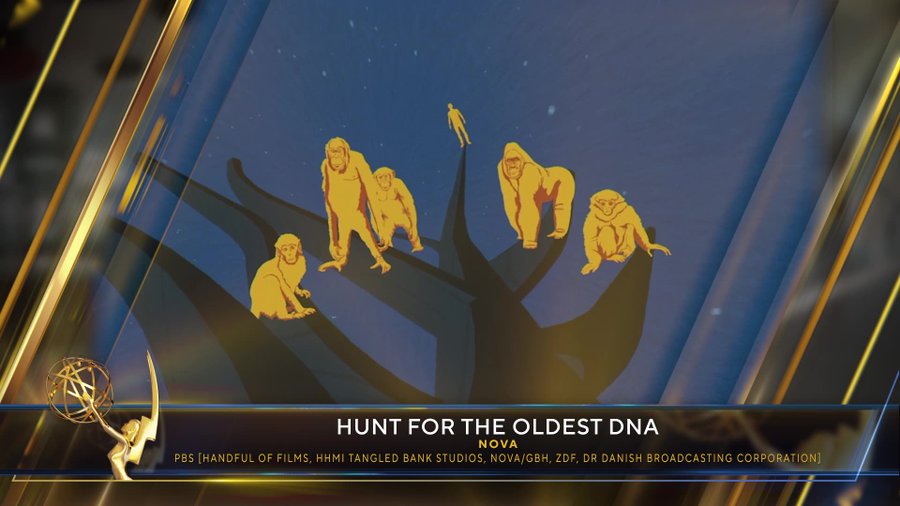
I was glad to be wrong about "Hunt for the Oldest DNA" episode of NOVA, the winner.
This is the only episode of NOVA nominated and I agree it's probably the best one of 2024. It's also the nominee with the most important science. That written, it's not likely to win the most votes, since most of the electorate will judge the nominees for their cinematic and journalistic merit, not their scientific value. As I reiterate nearly every time I write about awards shows, electorates matter.The News & Doc Emmy voters pleasantly surprised me by voting for the nominee with the most important science. Congratulations to them and NOVA!
That's a wrap for today's entry. Stay tuned for the Hugo Award winners for the Sunday entertainment feature, something educational on Monday and maybe Tuesday, and World Mosquito Day on Wednesday. I have another excerpt from Human Footprint planned for it.
Previous posts about the 46th News & Doc Emmy Awards
- 'Apollo 13: Survival' leads nominees for Outstanding Science and Technology Documentary at the News & Doc Emmy Awards for Wayback Wednesday
- 'Tsunami: Race Against Time' leads nominees for Outstanding Historical Documentary at the News & Doc Emmy Awards for Throwback Thursday
- 'Billy & Molly: An Otter Love Story' leads nominees for Outstanding Nature Documentary at the News & Doc Emmy Awards
- 'King Coal' vs. 'Hollywood Black' and 'Madu' for Outstanding Arts and Culture Documentary at the News & Doc Emmy Awards
- 'The Grab' leads both Outstanding Investigative Documentary and Best Documentary at the News & Doc Emmy Awards
- 'Poisoned Ground: The Tragedy at Love Canal' and 'The Truth vs. Alex Jones' lead nominees for Outstanding Crime and Justice Documentary
- 'The Sixth' leads nominees for Outstanding Politics and Government Documentary at the News & Doc Emmy Awards
- 'Mammals' and the remaining nominees for Best Documentary at the News & Doc Emmy Awards
- 'Daughters' and 'Death Without Mercy' lead nominees for Outstanding Social Issue Documentary at the News & Doc Emmy Awards
- 'We Will Dance Again' leads Outstanding Current Affairs Documentary nominees at the News & Doc Emmy Awards
- 'Buy Now! The Shopping Conspiracy' leads Outstanding Business and Economic Documentary nominees at the News & Doc Emmy Awards
- 'Blink,' 'Brats,' and 'Patrice,' nominees for Outstanding Promotional Announcement Documentary at the News & Doc Emmy Awards
- 'The Dirty Business of Monkey Laundering' and 'Apes,' two nominees at the News & Doc Emmy Awards for World Rainforest Day
- Pacific Crest's 'The Broken Column' to honor 'FRIDA' winning a News & Doc Emmy Award
- 'You’re Being Lied To About Voter Fraud. Here’s the Truth,' a double News & Doc Emmy winner
- No PSAs among nominees for Outstanding Commercial plus winners for Outstanding Promotional Announcement at the Emmy Awards
- 'Asia' and 'The Americas' lead nature documentaries at the Creative Arts Emmy Awards


No comments:
Post a Comment