A blog about societal, cultural, and civilizational collapse, and how to stave it off or survive it. Named after the legendary character "Crazy Eddie" in Larry Niven and Jerry Pournelle's "The Mote in God's Eye." Expect news and views about culture, politics, economics, technology, and science fiction.
DETROIT, MI -- Thousands filed into long lines outside the Detroit Institute of Arts, the Detroit Public Library, the Cathedral Church of St. Paul and other Cultural Center fixtures Saturday for the 40th annual Noel Night.
Gridlock traffic and tight parking stretched into the city's New Center as people flocked to Midtown for countless free musical acts and art exhibits.
Looks like a success to me. One of my New Years resolutions will be to go next year. What about the Science Center?
"They even reopened the Science Center tonight," said Brandon Carter, 22.
Plans to permanently reopen the Michigan Science Center are set to be announced next week, but it was open for a sneak peek tonight.
The Detroit Science Center is getting ready to reopen under a new name later this month.
What's missing from this report is what this means to the community other than the auto industry, but the Free Press article includes a broader perspective.
Located behind the Detroit Institute of Arts, the science center is widely viewed as a key cultural and educational asset in Detroit and its closure was an ugly black eye for a city built on the engineering achievements of the auto industry. Before closing, it attracted about 300,000 visitors a year.
“I was very disheartened when it closed,” said Commerce Township resident Kim Murray, who regularly took her two boys, now ages 7 and 9, to the center.
“I think it’s more important than ever that kids are immersed in science and technology. We know that jobs will be more competitive than ever, and I’m not sure what the schools do is enough. The science center gave kids access to that information in a fun and entertaining way. They’re getting more out of it than they realize.”
As a science educator, I have to agree with Murray.
Finally, I would be remiss if I didn't mention what the opening of the Michigan Science Center would mean for employment.
The board projects a 2013 budget of less than $5 million with a staff of about 45, including college and high school interns as docents interacting with visitors.
...
About two dozen employees have been hired so far, a few of whom previously worked for the center.
I've already used Professor Farnsworth for this story. Time for this month's Nablopomo badge.
Getting a second term is pretty good, but getting your own fish is arguably pretty good too because Obamafish. Say it out loud, it’s great.
Five new species of colourful, freshwater fish called darters have been discovered in river drainages in eastern North America and named after four Presidents and a Vice. Darters are the smallest members of the perch family, and are named after their ability to zip around, under and into rocks and sediment on the beds of clean, fast-moving waterways. ... The first of the new species to be described by the researchers in a paper to be published by the Bulletin of the Alabama Museum of Natural History is the spangled darter (Etheostoma obama), the males of which are resplendent in bright orange and iridescent blue spots, stripes and checks. Endemic to the Duck and Buffalo Rivers of the Tennessee River drainage, the males can grow up to 48 mm long, while the largest females reach just under 43 mm. Twenty-nine percent of the specimens observed had palatine teeth.
“We chose President Obama for his environmental leadership, particularly in the areas of clean energy and environmental protection, and because he is one of our first leaders to approach conservation and environmental protection from a more global vision,” says Layman regarding how he and Mayden chose its name.
There are also species named after Carter, Clinton, Gore, and Teddy Roosevelt.
Time for some climate news in honor of the U.N. Climate Change conference in Doha, Qatar. All stories originally used in Overnight News Digest: Science Saturday (Obamafish edition) on Daily Kos. I'll begin with some scolding of U.S. policy makers.
DOHA (Reuters) - Major nations' policies are inadequate to limit global warming and the United States is off track even in carrying out its weak pledge to limit greenhouse gas emissions, a scientific scorecard showed on Friday.
The Climate Action Tracker report, issued on the sidelines of talks among almost 200 countries in Doha about climate change, said a toughening of policies was still possible to avert damaging floods, heat waves and rising seas.
Major emitters China, the United States, the European Union and Russia all got "inadequate" ratings for their plans to help limit global warming to an agreed U.N. ceiling of below 2 degrees Celsius (3.6F) above pre-industrial times, it said.
Adding up all national pledges and taking account of rising emissions, the world was headed for a warming of about 3.3 degrees Celsius (6F), it said.
"We are off track and the United States is not likely to meet its pledge," said Niklas Hoehne of research group Ecofys, which compiles the tracker with Climate Analytics and the Potsdam Institute for Climate Impact Research.
A couple of years ago, Reuters had three environmental sections, environment, environmental blogs, and green business. Now, I can't seem to find any of the sections. What a loss of a good resource!
I still can't find the sections, but I've managed to find the stories. I just have to go through Scientific American. Now to figure how to to tell my students to find them that way.
Follow over the jump for more climate-related stories.
Based on an estimate from Autodata Corp, light vehicle sales were at a 15.54 million SAAR in November. That is up 15% from November 2011, and up 9% from the sales rate last month. This is the highest level of sales since December 2007.
This was above the consensus forecast of 15.0 million SAAR (seasonally adjusted annual rate), however some of the increase was a bounce back from Hurricane Sandy that negatively impacted sales at the end of October.
This graph shows the historical light vehicle sales from the BEA (blue) and an estimate for November (red, light vehicle sales of 15.54 million SAAR from Autodata Corp).
That was yesterday's good news. Here's today's as I type this, which is about real estate.
Home prices nationwide, including distressed sales, increased on a year-over-year basis by 6.3 percent in October 2012 compared to October 2011. This change represents the biggest increase since June 2006 and the eighth consecutive increase in home prices nationally on a year-over-year basis. On a month-over-month basis, including distressed sales, home prices decreased by 0.2 percent in October 2012 compared to September 2012*. Decreases in month-over-month home prices are expected as the housing market enters the offseason.
...
Excluding distressed sales, home prices nationwide also increased on a year-over-year basis by 5.8 percent in October 2012 compared to October 2011. On a month-over-month basis excluding distressed sales, home prices increased 0.5 percent in October 2012 compared to September 2012, the eighth consecutive month-over-month increase. Distressed sales include short sales and real estate owned (REO) transactions.
The CoreLogic Pending HPI indicates that November 2012 home prices, including distressed sales, are expected to rise by 7.1 percent on a year-over-year basis from November 2011 and fall by 0.3 percent on a month-over-month basis from October 2012 as sales exhibit a seasonal slowdown going into the winter.
...
“The housing recovery that started earlier in 2012 continues to gain momentum," said Mark Fleming, chief economist for CoreLogic. “The recovery is geographically broad-based with almost all markets experiencing some appreciation. Sand and energy states continue to experience the most robust appreciation and some judicial foreclosure states are even recording increasing prices.”
This graph shows the national CoreLogic HPI data since 1976. January 2000 = 100.
The index was down 0.2% in October, and is up 6.3% over the last year.
The index is off 27% from the peak - and is up 9.6% from the post-bubble low set in February (the index is NSA, so some of the increase is seasonal).
That was the good news.
The bad news is that I was right to have second thoughts about posting Professor Farnsworth yesterday, although not for the reasons I suspected. I suspected there would be bad economic news. Instead, the news was good, as the above story shows. What actually happened was that the price at the corner station shot up to $3.55 from $3.37 this morning. Good thing I filled up yesterday. That means the price is now more in line with the $3.61 expected from the price of Brent.
The three stations a few blocks away are still selling regular at $3.37, so I'm skeptical the corner station's price will stay that high. I expect it to drop to $3.49, then $3.45, at which point the other stations should increase their price to match. Let's see if that happens.
The gas price rollercoaster bounced up a hill since I chronicled the effects of Sandy on the cost of fuel last month. Shortly after I wrote that, the price at the corner station shot up to $3.55, within a cent of the $3.56 predicted by the Brent price at the time. There it remained until Friday, when I saw the price that morning return to $3.45, where it had been when I posted the last update. That afternoon, it fell to $3.37, exactly where it had been at the start of November. It was still that low price, which I was happy to pay as I filled up my car.
The stations nearest me aren't alone, as the Detroit Free Press reports Michigan gas prices down 12 cents from last week to $3.45/gallon. That's the good news. The bad news is that's fifteen cents higher than at this time last year.
Before I break out Professor Farnsworth, I want to see what Reuters says.
NEW YORK, Dec 3 (Reuters) - Brent oil prices turned lower on Monday after data showed U.S. manufacturing activity slowed to a three-year low, offsetting more optimistic figures from China. ... London-traded Brent crude fell 31 cents a barrel to settle at $110.92, below its 200-day moving average, having risen to more than $112 a barrel earlier on Monday.
U.S. crude futures rose for a third straight day, gaining 18 cents a barrel to settle at $89.09. Earlier on Monday, U.S. crude had topped $90 a barrel.
Brent's losses were attributed by some traders to bets on a further narrowing of the price spread between Brent and its U.S. counterpart. Brent's premium CL-LCO1=R fell below $22 a barrel on Monday, down from as much as $23.42 last week.
According to the gas price calculator at Econobrowser, a Brent price of $110.92/barrel translates to a price at the pump of $3.61. Gas is selling cheap! Time for Professor Farnsworth.
Or maybe not.
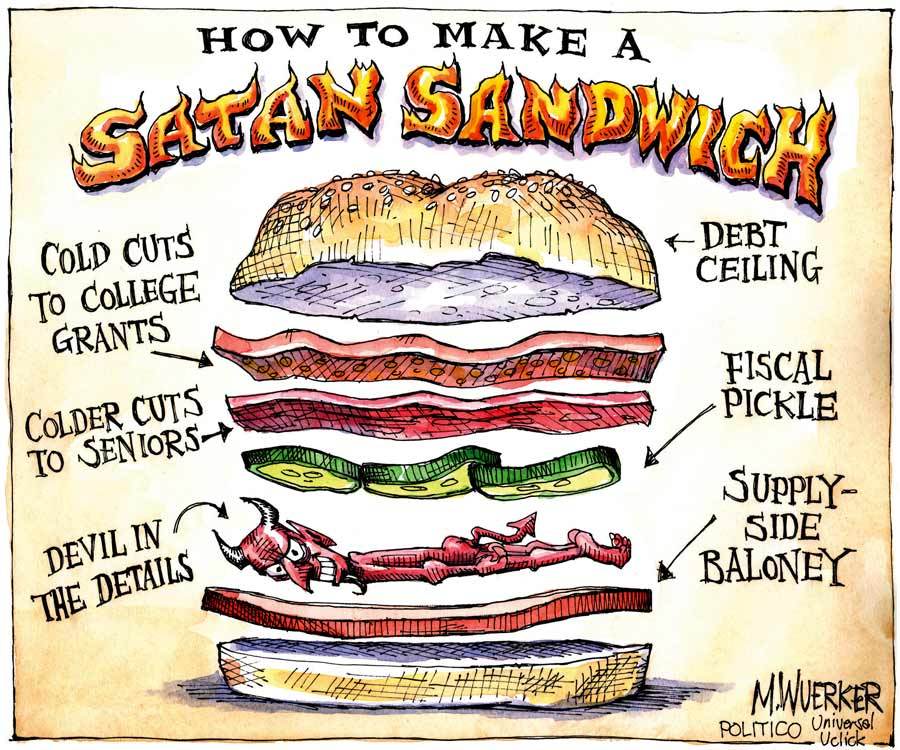
Continuing uncertainty about negotiations on the U.S. budget helped pressure oil prices and equities on Wall Street. ... Fuelling investor caution about demand for oil is the uncertainty about talks on mandated U.S. tax hikes and spending cuts investors fear may pull the world's biggest economy back into recession.
U.S. House of Representatives Republican leaders on Monday called for $2.2 trillion in new deficit-reduction over 10 years in their latest effort to avert an end-of-year "fiscal cliff".
Brad DeLong passed along Eric Loomis's astonishment at the high degree of racial sorting among voters in the Deep South, especially Mississippi. I'm not going to comment on the main point, that racism is so engrained there; the commenters at both DeLong's blog and Lawyers, Guns, and Money do a much better job of it. Besides, Detroit has enough of its own issues in that regard for me to write about. I don't need to go far afield for examples.
Instead, I'll pass along an observation about a tangent raised by one of DeLong's commenters, Brian J that doesn't apply to Michigan, but might be endemic to the South.
I've long suspected that part of the problem is that Democrats just don't compete in some of these states. It's easy to understand why, but unless the vote is very, very inelastic, figure that merely being there asking for votes will up our percentage of the white electorate. That's not to say that it will suddenly shoot up to 50 percent or so, only that it wouldn't look as lopsided if we were there. And depending on the state, doing just a little better would make us competitive.
Brian J, you've got something there. My dad had an anecdote from the 1940's in Durham North Carolina. The local GOP had to basically draw straws to 'compel' some unlucky person to run on the GOP ticket for local office, because they knew that there was NO chance of winning. The parties have reversed roles but the odds are the same. However, the GOP kept putting up candidates- and are the Dems doing that now???
That inspired me to contribute my answer, which was "no, they're not, but the Libertarians are."
I'll give you an example of a state in the South where Democrats are not competing as completely as they could--Louisiana. This year, Democrats contested only three of the state's six congressional districts, the 1st, 2nd, and 3rd. They only won the 2nd, which includes New Orleans and Baton Rouge. They could have at least run a candidate in the 5th, which includes three counties along the Mississippi River where majorities voted for Obama.
In contrast, the Republicans contested all six, winning five. So who opposed the Republicans in the remaining districts? The Libertarians, who ran candidates in five districts, the 2nd through 6th. That means that the Libertarians are on their way to becoming the opposition party in the state, flanking the Republicans to their Right on economic issues and their Left on social issues.
About the only good news for Democrats in all this was that Louisiana lost a seat, so two Republican incumbents ran against each other, resulting in one fewer GOP Representative in the U.S. House.
I know several people from Louisiana who would qualify as liberal, but they won't vote Democratic. Instead, they're Libertarians. I even told one of them to go ahead and vote for Gary Johnson, as her vote would not harm Obama and would be a valid protest against Willard the Rat. If more people follow their lead, then Louisiana's politics will become even more interesting. In particular, I'd like to see how the Libertarians' combination of laissez faire philosophy and general idealism will interact with the notoriously corrupt political culture of the state. Also, I expect their ideas of social freedom might not play well with the religious culture down there. Either way, laissez (faire) les bons temps rouler!
Follow over the jump for the maps I used to point out those three Democratic majority counties in the Fifth Congressional District of Louisiana, as well as how a 100 million year old coastline determined the distribution of Democratic-majority counties in the presidential elections so far this century.
First up, a link to an Associated Press article, so no quoting, that confirms what I've been saying since January; Twinkies and the other Hostess products are still valuable and someone will make them.
The good news is that there are 110 bidders. The bad news is that the incompetent executives who ran the company into the ground will be eligible for $1.8 million in bonuses if they meet their liquidation goals. Meanwhile, the 18,000 workers will still lose their jobs. Ugh, vultures.
Second, here's what I wrote about the Wixom Ford plant three years ago.
In its heyday a generation ago, the Ford Motor Co. assembly plant at the Wixom Road exit off I-96 employed 5,000 people. About two years after it shut down, the 320-acre site is coming back to life as the home of several government-subsidized manufacturers of alternative-energy products, such as solar panels and the batteries to store the sun power that such panels capture.
That doesn't mean 5,000 people will ever be working there again. But 3,000 is within the realm of possibility if the alternative-energy center grows as projected over the next several years. More important, though, the developments at Wixom and other projects now sprouting up around the state signal that Michigan is earnest about becoming a hub of alt-energy and related technology -- a field with a future.
It won't be the next auto industry. But it will be around -- and it's growing. Michigan cannot afford to be left back as global demand grows for energy from sources other than oil, driven by costs, conservation and concern about climate change. China, for example, is aggressively pursuing a plan to get 15% of its electricity from renewable sources, mostly wind, by 2020, and expects to spend $190 billion to do it.
Strip mall retail is a much different redevelopment prospect for the site than was envisioned three years ago, when then-Gov. Jennifer Granholm joined Executive Chairman Bill Ford to announce the possibility of a $725-million renewable energy park with as many as 4,300 new jobs.
That project was to be anchored by battery maker Xtreme Power of Austin, Texas, and California solar company Clairvoyant Energy. But those ambitious plans fell apart by spring 2011, when the two companies failed to obtain about $500 million in financing from the U.S. Energy Department.
Yes, you read that right, "strip mall retail." Instead of using all the property for a green industry, Ford is going to use some of the land for a big box store--more suburban sprawl, anyone?
The automaker's real estate arm is in talks with home improvement retailer Menards to purchase a 45-acre section of property close to I-96 off Wixom Road. The Wixom City Council recently agreed to Ford's request to split that parcel from the 317-acre site, in addition to sectioning off a landfill area at the back of the property.
For what it's worth, while the article points out that this would be the 23rd Menards store in Michigan, it would be the first one in Metro Detroit. Menards' own store locator shows the nearest locations to be in Toledo, Jackson, Lansing, and Flint (actually Davison, but close enough). The store will have plenty of competition nearby, as there is already a Home Depot on the other side of the freeway and a Lowes one exit to the west, but I've seen Lowes and Home Depot right next to each other with enough business for both. As long as business as usual (BUA) continues, this is likely to be a viable proposition. Let's see how long BUA lasts, as these aren't BUA times.
Demolition has already begun, as this raw WXYZ video shows.
Ford tears down part of shuttered Wixom plant.
Not all hope for a green energy plant is lost, as the Free Press notes.
But a separate, high-tech prospect for the old plant could still be in the works. Last year, Townsend Energy Solutions of Hunt Valley, Md., proposed opening a manufacturing operation at Wixom for, among other things, producing energy-efficiency products for fuel-efficient vehicles. The project was forecast to create 36 jobs in its first year and perhaps 875 jobs over five years.
The Michigan Economic Growth Authority board approved multiple rounds of tax credits for the project: a $6.3-million tax credit and two, $10-million brownfield tax credits. These tax credits are only to be used for industrial purposes -- no retail.
No manufacturing, no tax credits. That should be enough incentive for a green energy factory to be built, even if it's only on part of the land.
My friend Michael Stafford, like me a former Republican who got disgusted with the Republican Party and was also involved with the Coffee Party, offered a hopeful picture of the state of our former party in The Conservative Spring at the Cagle Post. Andrew Sullivan over at the Daily Beast picked up on his article, but turned Michael's title into a question, quoting two passages invoking the similarity between the modern GOP and the Communist Party in the Soviet Union. First, here is the hopeful passage about the party's state.
Now, as the GOP regroups from its electoral debacle, public criticisms of conservative dogmas have expanded beyond a small circle of dissidents. Prominent conservatives are saying heretical things that would have gotten them tarred, feathered, and banished a few months ago.
The long night of strict doctrinal conformity- a period when dissidents were condemned for the slightest deviations in the equivalent of media show trials, purged, and then airbrushed out of old CPAC convention pictures- shows signs of ending.
The high priests of the conservative infotainment industry are both discredited and politically vulnerable. Their agenda has been exposed as a bankrupt fraud- a Potemkin village, a path to nowhere.
Of course, this could be the equivalent of a Prague Spring, or, to extend the metaphor to a Communist country, a Tiananamen Square.
The window of opportunity for reform could shut quickly. The Conservative Spring might be followed, swiftly, by dour Brezhnevian repression, and another round of purity purges. Authoritarian elites, after all, have a nasty habit of regrouping and reasserting control. And it is unclear whether reform ideas can be effectively communicated to a base that believes in movement conservative inerrancy, is cut off from other information sources, disdains intellectuals, is dangerously misinformed, and is accustomed to the confrontational, schoolyard bully-style of talk radio.
Sullivan stopped there, but he could have quoted one more Soviet reference.
Through the years, dissidents have paid a heavy price for daring to question conservative dogma. Some, like Bruce Bartlett and David Frum, have lost jobs and suffered other career consequences for speaking out. Others, including me, have been driven into political exile of one form or another.
We’ve endured scorn, petty harassment, ostracization, and worse because, in the words of Andrei Sakharov, we told uncomfortable truths about the huge amount of “substitution, deceit, and lack of correspondence with reality” in modern conservatism and refused to subordinate our integrity to demands for ideological conformity.
Sullivan may have not fired all the ammunition my friend Michael gave him, but he did use the opportunity to give his prescription for GOP reform.
Until the GOP accepts its cultural and intellectual dead-end, it will not endure for long as a national party... I propose two places to start: a commitment to developing conservative ideas for environmental protection and a volte-face on gays. That was one way the Tories climbed back to electability in Britain. But David Cameron didn't have a fundamentalist religious movement and a far right media-industrial complex to overcome. And it took the Tories three consecutive losses to get real.
Sullivan isn't that optimistic about the GOP's likelihood of turning around in the next four years. As for me, it's too late. I'm not going back.
In yesterday's Nablopomo post, I mentioned that all one has to do to see my entries about work was to look at the ones labeled with Examiner.com, among others. The day before yesterday, I also wrote that I'd have more to say about my experiences with Examiner.com this month. It's time to follow through with both promises with my first post since August as the Detroit Science News Examiner. Election's over; time to write about science!
Nineteen University of Michigan faculty members have been elected AAAS Fellows for 2012, the American Association for the Advancement of Science (AAAS) announced Friday. This is the most of any institution in the United States, the Columbus Dispatch confirmed a day in advance of the AAAS announcement.
The Columbus Dispatch also reported that The Ohio State University came in second with 18 new AAAS Fellows, followed by the University of California, Davis, and Vanderbilt University, which tied for third with 17 each.
The AAAS also recognized faculty at Michigan's two other major research universities. Michigan State University gained four new Fellows, while Wayne State University now has three more, for a total of 26 new AAAS Fellows from the Great Lakes State.
In all, the names of 701 AAAS Fellows were released yesterday. They are being honored for their efforts toward advancing science applications that are deemed to be distinguised either scientifically or socially. They will be recognized for their contributions to science and technology at the Fellows Forum to be held on February 16, 2013 during the AAAS Annual Meeting in Boston, Massachusetts.
In case you're wondering, the professor whose photograph I used to illustrate my article was the only one I knew. In fact, the term paper I wrote for his class eventually became the basis for my Ph.D. dissertation. I consider singling him out among all the nineteen scientists to be a delayed thank you.
December kicks off a new addition to the BlogHer conference family -- BlogHer PRO -- and what better way to celebrate it than to consider how work fits into each of our lives?
More and more, the work we do isn't falling into clear-cut, 9-to-5 boundaries. Some work is unpaid but moves us closer to our overall goal. Some work doesn't feel like work at all because it's so much fun.
And, of course, we'll need to spend the month daydreaming your ideal work to make sure you're doing the work you really want to do (and if you're not, maybe January will be a time to start down a new path!). ... So start thinking about what feels like work and what feels like play. And join us on the BlogHer.com homepage and on Facebook, where we'll be talking about work and sharing career tips daily through midmonth!
Also, I blog about other people's work all the time. I use the fruits of their labor whenever I quote an article, press release, or blog post. Speaking of which, I should start quoting The Hipcrime Vocab, Early Warning, and Calculated Risk more often. The first is very interested in the nature of work (escapefromwisconsin is of the opinion that the 9 to 5 job is both an anomaly and a trap). The second is interested in the prospects for work (Stuart Saniford thinks that widespread employment is in danger from automation). The third is just a great source of information about the economy, including employment. Should I write a sustainability textbook, I'd use Bill McBride's graphs to illustrate it. Paul Krugman has even more lavish praise.
CR is an example of the sort of economic reporting and analysis people would be following if they really wanted to know what was happening, rather than “reporting” that reinforces their prejudices. (But enter CR’s comment threads at your own risk — the usual suspects show up in force). CR’s analysis, more than anyone else’s, gave me a heads-up on the housing bubble, and has helped me along the way on many other issues.
Oh, yes, I should be quoting Krugman more, too. Looks like I have my work cut out for me for this month.