A blog about societal, cultural, and civilizational collapse, and how to stave it off or survive it. Named after the legendary character "Crazy Eddie" in Larry Niven and Jerry Pournelle's "The Mote in God's Eye." Expect news and views about culture, politics, economics, technology, and science fiction.
Detroit’s population continues to climb, according to new estimates released this week by the U.S. Census Bureau, marking the city’s third consecutive year of growth.
Good news! In fact, such good news that I'm recycling what I wrote two years ago: "This is such good news that it's enough to make me repost ProfessorFarnsworth."
I'm also repeating what I wrote in Across the Globe explains 'How Detroit Went From Good to Bad to Good Again': "Detroit moved up from 29th last year to 26th in U.S. cities by population this year, passing Memphis, Louisville, and Portland. Things are looking up for the Motor City!" Detroit has maintained its position and is catching up to Boston. Should I still be blogging when that happens, I'll be sure to celebrate that event.
New U.S. Census estimates show Chicago’s population increased for the third year in a row, while fast-growing suburbs like Plainfield and Lockport continue to expand. Chicago Tribune reporter Robert McCoppin breaks down what the latest numbers reveal about where people are moving across Chicagoland.
McCoppin listed affordability, taxes, and crime as issues in Chicago. Those same issues apply to Detroit, and Detroit Mayor Mary Sheffield specifically mentioned affordability as a reason people were moving into Detroit. Detroit is also actively engaging in programs to make home ownership more appealing and sustainable; I didn't hear McCoppin or the ChicagoNOW hosts mentioning the City of Chicago doing such things. The Motor City's population loss was a crisis; Chicago's was merely a concern.
In this video, Flux City takes viewers inside Fairlane Town Center in Dearborn, Michigan—just days after Crain's Detroit Business reported that a court-appointed receiver was announced for the second time in less than a decade.
Once a regional shopping destination that opened in 1976, Fairlane now finds itself at the center of mounting financial distress: millions in unpaid property taxes, alleged missing tenant rent, deferred maintenance, and a history of ownership instability since the start of the COVID-19 era.
As the mall faces potential foreclosure and an uncertain future, this walking tour captures the real-time condition of the property and the broader implications for Dearborn, retail real estate, and legacy suburban malls across the country.
Watching the video open and close with Eddy being ejected for recording inside the mall reminds me of one of my earlier mall entries, Steampunk fans ejected from San Diego area mall. As I quoted KPBS four years later, "Malls are private property. They have the right to determine who shops there." This means you (and Eddy, too)!
Here's to receivership saving Fairlane Town Center.
Stay tuned for the final installment of my coverage of the movie nominees at the Saturn Awards tomorrow.
In this episode, Eddy breaks down troubling reports that Fairlane Town Center in Dearborn may owe nearly $4 million in unpaid property taxes.
Drawing from personal memories of growing up in Metro Detroit and professional experience as a developer, Eddy explains why Fairlane Mall has long mattered to Dearborn and surrounding communities—and why this situation signals a much larger issue facing malls across the country. He explores how declining foot traffic, e-commerce, shifting consumer behavior, and outdated mall formats are putting pressure on once-dominant retail assets.
While I write about national and global issues, I'm still based in Metro Detroit, so I'm always happy to encounter relevant local creators like Eddy. They will uncover situations like Fairlane Town Center's that sources with a national focus wouldn't even notice. They will also hit close to home. Like Northland Mall, I shopped and mall-walked at Fairlane Town Center. That was more than 20 years ago, when I taught at Henry Ford Community College in Dearborn. I found Fairlane Town Center impressive then, but the reality looks different now. Sigh.
Fairlane Town Center is a super-regional shopping mall in the Detroit suburb of Dearborn, Michigan. The mall is adjacent to The Henry Hotel, The Fairlane Club, the University of Michigan–Dearborn, Henry Ford Community College, The Henry Ford, and the Ford Motor Company headquarters. The anchor stores are Macy's and JCPenney, with vacant anchor spaces last occupied by AMC Theatres, Sears, and Ford Motor Company offices.
Following a major renovation in 2007, the mall features a large food court, full-service restaurants, several eateries, and merchandise for the urbanized market.[2] The mall is about a 15-minute drive from downtown Detroit, Wayne State University, or Metro Airport.
Eric C counts six anchor stores closing. Not really. Hudson's becoming Marshall Field's, which was then renamed to Macy's, were just changes in ownership and branding; the locations were still in business afterwards, and the Macy's is still open, so I count four, maybe three-and-one-half because of the change from Saks Fifth Avenue to Saks Off Fifth because of the change in location, footprint, and branding despite the continuity of ownership. That's still not good. Viewers can see the Retail Apocalypse in action through the late 2010s into the 2020s as stores and offices close.
That's a wrap for today. Stay tuned for year-end retrospectives through New Year's Eve.
Spirit Halloween occupies more than 1,500 storefronts and hires around 50,000 seasonal workers for just a few months of business. Spencer Spirit Holdings, which includes Spirit Halloween and long-time mall retailer Spencer's, brings in $1.87b of annual revenue, according to Moody’s Ratings. The company often targets struggling real estate to execute its niche retail operation. Watch the video to find out how Spirit Halloween became the ultimate pop-up store.
That had to be the most fun CNBC video I remember watching. In particular, I was looking for the Saturday Night Live Spirit Halloween skit and CNBC clipped exactly the part I wanted. Nothing like both CNBC and NBC having the same corporate ownership to make that convenient. As I last wrote in Closer looks at the Trump-Musk feud from Colbert, Kosta, Kimmel, and Meyers, "It's not just news value that's driving it."
CNBC's history essentially began in 1999, when Spencer's bought Spirit Halloween. Company Man Mike went back to the actual founding during the 1980s in Spirit Halloween - Why They're Successful.
Spirit Halloween is the popular Halloween store that pops up in empty buildings each year. This video outlines the main reasons behind its success.
It's a Company Man video, so there's a list. Here it is:
Company Man Mike uploaded this video just over a year ago, so he was too early to include PartyCityclosing in the United States when he described Spirit Halloween's failing competitors, so it has one fewer competitor. Other than that, this is a comprehensive compilation of reasons for the chain's success.
Rite Aid is again seeking bankruptcy protection as the struggling drugstore chain says it will try to sell substantially all of its assets.
The company said Monday that its stores will remain open as it returns to Chapter 11 bankruptcy proceedings.
The company said it will work to ensure that customer prescriptions are transferred to other pharmacies as it goes through the sale process. The drugstore chain has lined up from some of its lenders $1.94 billion in new financing which help fund it through the sale and bankruptcy proceedings.
6abc Philadelphia reported this news on May 6, 2025, but it was no surprise. On April 25, 2025, WHTM - abc27 News in Harrisburg, York, Lancaster and Lebanon, Pennsylvania asked What is the future of Rite Aid?
Even then, Garrick Brown, the namesake editor of The Brown Book, could see what Rite Aid's future would be, liquidation. The chain would not survive a second bankruptcy and it looks like all its stores will be closed or sold. Brown also went into more detail about where drug stores get their revenue, including beauty products, which Company Man Mike didn't focus on in 2023. I can say first-hand that Ulta and Sephora have been expanding aggressively, as I mentioned an Ulta replacing a Pier 1 location in 2020, while my wife shops at Ulta and my stepdaughter/older daughter shops at Sephora. I shouldn't be surprised that those chains are eating into drug store revenues on one side of the store while dollar stores are eroding them on the other.
Brown also discussed who would benefit from Rite Aid closing and selling stores as well as the difficulties in unloading some properties. Those are the subjects of the next two videos, which are over the jump.
Some of the fastest-growing metros in the U.S. are also the riskiest when it comes to climate change. And we’ve long puzzled: WHY? In this episode, we explore how the Great Recession, liberal housing policy and well-intentioned community decision-making have fueled our nationwide housing crisis and helped drive people to move into harm’s way.
We’ll dive into new First Street maps that unveil where people will be living - and fleeing - as the climate warms. So stay tuned to see if your home is on the map, and what we can do to build more resilient communities for the future.
I begin my response by recycling what I wrote in January.
I wrote "I just wish that the economics were such that people would move here instead of into harm's way. That would make a great subject for another post" two years ago in PBS Terra asks 'What is the RISKIEST Region in the US as the Climate Changes?' In the case of Louisiana, which 'Weathered: Earth's Extremes' asks 'What Happens When the Land Runs Out?' covered, the answer is a combination of low income and high cost. As long as people are making money, they will continue moving into and living in high-risk states like Florida and Texas, although Miami-Dade County is starting to lose population. That looks like a good story for another day.
Today is that day.
A factor this video examined is that a lot of the safer states and municipalities, although California is both high-cost and high-risk, have made it difficult to build housing, while many high-risk states, like Arizona, Texas, and Florida, allow quicker, easier, and cheaper construction. The combination of more economic opportunity and cheaper housing will drive people to move to high-climate-risk states despite the threat of droughts, fires, floods, heat waves, hurricanes, and tornadoes. What might stop that trend are higher insurance costs, which has already started to drive people out of Louisiana and might be a factor in California and Florida, and the weakening of FEMA as a backstop to insurance. Losing those supports might change the economic equation surprisingly quickly.
The most encouraging aspect of the First Street study May cited involves climate resilience. The map below shows the places First Street considered to be climate resilient.
I've outlined and labeled the parts of Michigan considered to be climate resilient. From west to east, they are Grand Rapids and its western suburbs, Kalamazoo, Mount Pleasant, Lansing and East Lansing, Ann Arbor-Ypsilanti, and the northern suburbs of Detroit — Livingston, Oakland, and Macomb counties. This fits what I told my environmental science students on Monday, that Michigan is the safest state in the U.S. for natural disasters and Oakland County is the best-prepared county in the state. It also fits what I wrote in MLive asks 'Michigan is a climate haven in a warming world. Will everyone move here?' and repeated in FiveThirtyEight examines 'How Climate Change Will Reshape Where Americans Live'.
I'm in favor of getting people to move here, both because it's a safer place to live (but not immune from the extremeweather associated with climatechange as the second video mentioned) and because the state has room. Detroit alone lost more than one million people since its 1950 peak and other Michigan citieshave lost people as well, so they alone could take up the slack — that is, if they can become better places to live and work. People moved out of Michigan to seek work, so state and local governments need to work with businesses to promote and create sustainable industries to employ the people who move here and rebuild infrastructure to support them in a warmer and, for Michigan, wetter world. Infrastructure and housingconstruction to accommodate people moving here will provide a lot of jobs by themselves, but that only lasts so long. Ask Las Vegas, for example.
This is another lesson I hope my students learn and that they spread.
Ray "CityNerd" Delahanty has his own videos on this topic, so stay tuned for a post featuring them later this month. In the meantime, I have continuing coverage of the News & Doc Emmy Awards and three holidays, Friday the 13th, Flag Day, and Father's Day, planned. I'm looking forward to them.
Twenty years ago Hurricane Katrina flooded hundreds of thousands of homes in New Orleans and killed over 1,800 people. In the aftermath, a quarter of the city's housing stock was left vacant or abandoned. The U.S. government has spent billions to rebuild homes, restore infrastructure, and fortify the levee system. But more may be needed to counteract the city’s slow decline into the sea. On top of that, parts of the federal response have been criticized for their complexity and impact on low-income homeowners. Today, the city is facing a housing crisis as homeowner insurance premiums and property taxes rise.
It's a land of fun that has been forgotten. Six Flags New Orleans has been abandoned for nearly 20 years since Hurricane Katrina in 2005. Inside Edition's Steven Fabian toured the theme park back in 2017. "From this view you can really see it's like a wasteland up here," he said from the top of stairs that led to a roller coaster. Now it's finally being demolished and turned into something new. Inside Edition Digital has more.
Here's to the site becoming something more than just a filming location for post-apocalyptic movies and TV shows, although that's still part of its future, as one of the projects will be a movie studio.
I'll probably return to this topic for the actual 20th anniversary of Katrina this August. In the meantime, stay tuned for comic takes on America's slide into autocracy tomorrow. The late-night talk-show hosts have a lot of material for tonight!
For the last 50 years, Americans have flocked to the warm, sunny South. But, as climate change makes extreme heat, hurricanes, wildfire and flooding worse, will that trend ever STOP? Well, some regions might just be showing signs of a reversal, and they hold lessons for what other areas might expect as the world continues to warm.
I wrote "I just wish that the economics were such that people would move here instead of into harm's way. That would make a great subject for another post" two years ago in PBS Terra asks 'What is the RISKIEST Region in the US as the Climate Changes?' In the case of Louisiana, which 'Weathered: Earth's Extremes' asks 'What Happens When the Land Runs Out?' covered, the answer is a combination of low income and high cost. As long as people are making money, they will continue moving into and living in high-risk states like Florida and Texas, although Miami-Dade County is starting to lose population. That looks like a good story for another day. Instead, I'm shifting to the other coast for Maiya May explaining The Real Reason California Is Burning.
The Palisades, Eaton, Hurst, and Kenneth fires in the greater Los Angeles area have already caused catastrophic damage and loss of life. They also figure to be the most expensive in terms of property damage in California, and even US history.
What caused these fires? Why are they happening during what's typically the wettest time of year in Southern California? Is climate change to blame? And how will this affect the insurance industry moving forward? Weathered's Maiya May explains.
I found out last week that the home where I grew up was in a mandatory evacuation zone. In the 25 years I lived there, that never happened. In addition, I don't recall my family ever telling me that had happened during the three decades I've lived in Michigan until this past week.*
...
*I[n] case anyone is wondering, the house is O.K. It was more than a mile from the edge of the fire at its greatest extent.
My old house was under mandatory evacuation orders during these fires as well, but survived again. Whew!
PBS Terra retitled the video in the second post "The Insurance Industry Can't Weather Another Wildfire Season Like This UNLESS..." which I think is more accurate. As the second video points out, the fires have caused between $135 billion and $150 billion in damages so far. Yikes!
That's about as topical as I care to get today. Stay tuned for more evergreen and holiday entries until the end of the month.
The description mentioned groundwater, but the video itself didn't include anything about the subject. Just the same, reading it reminded me that I show a Wall Street Journal video about groundwater depletion to my students and I should embed it here. I should also embed the next episode, which PBS Terra uploaded yesterday. That won't happen until next month. Stay tuned.
The Weathered crew traveled all over the US and abroad to answer pressing questions about our changing climate in our new series, Weathered, Earth's Extremes. Maiya and the team worked so hard on this show -- we can't wait for you to watch it!
Maiya May is on a mission to understand the impacts of climate change and how to stop it. She brings viewers along to learn where we are and where we’re going as greenhouse gasses reach record levels. Have we crossed major climate tipping points? And are there positive tipping points that will help slow global warming faster than expected?
Can coral survive record ocean temperatures? Will thawing permafrost trigger runaway warming? How do we cool our cities and replenish groundwater? Watch to find out!
Another legacy of loss from Ida was the increase in home insurance premiums, which recalls my response to PBS Terra asks 'Will Climate Change Pop the Housing Bubble?' "My answer to the question is by itself, no, but climate change is likely to make the coming real estate price drop worse, at least in places where climate-fueled weather disasters have become more common and severe." PBS mentioned higher premiums because of weather-related losses in California, Florida, and Louisiana in that video. This video shows the human toll of those higher rates.
So far, this season's 18 named storms, including 11 hurricanes and 5 major hurricanes, have borne out NOAA's 'Most Aggressive Hurricane Season Forecast On Record' for 2024, which predicted 17–25 named storms, 8–13 hurricanes, and 4–7 major hurricanes. I might revisit this and other forecasts next month. Stay tuned.
As for what will fill the spaces left by the closed stores, there's always Spirit Halloween. I have a CityNerd video about the seasonal store chain to share for Spooky Season.
Spirit Halloween comes in for a lot of criticism for leasing vacant and often distressed strip mall space for a few months, and then packing up shop on November 1, leaving a moribund shopping center no better off than it was before. But is there more to the story? And is the success of Spirit's business model a symptom of much deeper problems in the way we've planned and designed our cities?
Another installment of the Investigating Heinous Land Uses series!
Ray "CityNerd" Delahanty remarked in one of his live streams (I think 2023 Year In Review + Q & A) that he found this video's viewership disappointing, but I enjoyed it enough to save it until today. Speaking of saving material for another year, both Company Man and CNBC have recent videos about Spirit Halloween, but I'm going to be a good environmentalist and conserve my resources.
Say it once, say it twice, third times the charm. Today's episode is a drink perfect for the recently deceased. This Beetlejuice and Lydia inspired cocktail is perfect this Halloween Each day we are creating a new drink for 31 days of Halloween inspired by iconic characters that go bump in the night.
RECIPE
BEETLEJUICE
INGREDIENTS
2 blackberries
1 oz. black sambuca
1 oz. Irish cream
INSTRUCTIONS
Add berries to a shot glass.
Pour black sambuca into shot glass.
Using a barspoon, layer the Irish cream on top.
LYDIA
INGREDIENTS
2 oz. lemon vodka
4 oz. blood orange soda
Lime juice
Drizzle of grenadine
INSTRUCTIONS
Add all ingredients over ice and stir.
Drink responsibly and stay tuned for more Halloween posts through the end of the month plus a bonus Day of the Dead entry. Trick or treat!
Against my better judgement, I accepted the idea that Project 2025 isn't Trump's "real" plan, and instead looked into Agenda 47, which I was assured by certain viewers was much more reasonable (and an accurate description of what Trump proposes to do if he wins back the presidency). What I found was disturbing on more levels than I can count.
As CityNerd observed, at least the writers of Project 2025 could put together coherent policy proposals, even though their ideas are bad. They're supposed to persuade Trump and the people around him to adopt them should he be elected. Since a lot of the chapter authors were members of the previous administration and would be likely to be part of the next one, heaven forfend, that isn't a hard lift. On the other hand, the individual items that compose Agenda 47 are emotional appeals that Trump himself can understand and get behind and that he thinks will appeal to his supporters, although it's not always clear who those are. They're definitely not the same supporters for every proposal, which makes them as incoherent as a whole. In that case, they reflect the candidate.
One of those proposals, "freedom cities" to solve the housing crisis, is one of the "cyberpunk villain ideas straight out of SnowCrash that are influencing Vance" I referred to in Kosta, Colbert, and Hayes react to the VP Debate. They're also influencing Trump, too, or this concept wouldn't be in Agenda 47. I wrote "They would be right on target for this blog" so expect me to blog about them.
Five years ago, I juxtaposed two quotes from James Howard Kunstler to reconstruct a prediction about American politics from the movie "The End of Suburbia."
There will be a great battle to preserve the supposed entitlements to suburbia and it will be an epochal act of futility, a huge waste of effort and resources that might have been much better spent in finding new ways to carry on an American civilization.
...
Americans will elect maniacs who promise to allow them to keep their McMansions and their commutes and that’s going to produce a lot of political friction, probably a lot of violence, probably a threat to our democratic institutions.
Kunstler was both right and wrong about that prediction, as I pointed out when I revisited that quote in my comment on Slowly, Then All at Once (ETA: this is now a dead link, as Kunstler has moved to Substack).
As for Trump, you once predicted that Americans would elect maniacs who would promise that they could keep the entitlements of suburbia. Trump has shown you to be right and wrong about that. Yes, they'll elect maniacs to protect the entitlements of suburbia, but those entitlements turned out to be psychological and social, not physical. Trump's support is more a response to threats to the social environment as it is to losing SUVs and McMansions, which with the price of oil being low right now, are not issues like they were in 2008 and 2012. Instead, it's immigration, terrorism, and "law and order."
What I also wrote, but didn't post because I didn't want to inflame Vlad, who now goes by Janos, and his fellow deplorables was a second observation.
The one thing missing from "The End of Suburbia" was any discussion of White Flight; the movement to the suburbs was all phrased in class terms, not racial ones. That's something my students from Detroit and its suburbs notice.
It's not what, it's who Trump promises to save the suburbs from. I know who and so does Governor Whitmer, which is why she called it a dog whistle, one people in Michigan have been hearing for decades. I suspect King does, too, which is why she asked.
Trump is still blowing that dog whistle and it sounds throughout all these proposals.
The 2008 recession halted construction projects around North America, some of which would never get going again. The Bloomfield Park, master planned community was one such project. It began as a dream to bring New Urbanism to Michigan and build a spectacular, multi billion community. But following a legal and financial mess, the project was put on hold and would ultimately fall into disrepair. Join me today as we look into this fascinating, failed construction project and what happened to it!
I drove past the decaying white elephant of Bloomfield Park twice a month during 2015-2017 when I attended union local meetings and merely thought it was an abandoned shopping center. I knew it was abandoned after the real estate crash and Great Recession, but I didn't know any of the rest of the history that Jake presented. If I had, I wouldn't have merely marveled at the waste, which was already apparent at the time, but alternated between anger and despair at what could have been but never would be — a New Urbanist community in Oakland County. What a lost opportunity! Even a lifestyle center, which Ray "CityNerd" Delahanty derides as a "heinous land use," would have been an improvement. Sigh. At least the land got redeveloped, even if it wasn't into something nearly as inspiring as the original plan.
I'll get to CityNerd and his thoughts about urbanism some other time. Right now I am thanking Jake for teaching me about a formerly abandoned place in my own backyard. It's always a good day when I learn something new and I learned a lot from this video. I hope my readers agree.
Lawns aren’t natural. Why do so many Americans have them?
...
Grass lawns are so ubiquitous in the US you would assume that they're the most natural and obvious choice for what to put in our yards. But turf grass is not only not native to the US, but it takes a lot of time, money, and resources to maintain.
Today, some cities are offering "cash for grass" programs and giving residents as much as $25,000 to replace their turf grass lawns with more environmentally sustainable options.
But some people still like green grass lawns and enjoy maintaining them, so what should they do? In this video we go through the multitude of options that yard owners have and talk to experts to see what they have to say.
I have a lawn, but I inherited it when I bought the house and I live in Michigan, where I don't have to water it. If I still lived in southern California and owned a house there, I'd have replaced any lawn on the property with something more water-conserving and sustainable, like the landscape Sara Bendrick planted.
How much do you really know about the grass beneath your feet? It turns out, there's a whole lot more to it than meets the tee. Shane ventures beyond the green lawns and learns about the costly and cultural resources at play when it comes to maintaining this so called "crop."
If you're interested in sustainability on the local and personal levels, your biggest obstacles will be homeowners associations, zoning boards, and city councils. Those people will be wedded to business as usual long after it becomes apparent to early adopters that BAU just isn't working any more. Watch those local governing entities hang onto the past like adherents of a cargo cult.
...
When it comes to enforcing business as usual (BAU) norms of middle-class respectability as a way of maintaining property values, Oak Park does not play. Oak Park is so afraid of catching what they think Detroit has, which is blight, that they restrict what property owners can do more than neighboring cities and enforce their will with a vengeance. Put your trash cans out too early or leave them out too long and the police will ticket you. Let your grass grow too high and the city will mow your lawn for you and then bill you. You can only hold two yard sales per year and you have to inform the city in advance. If you want to drink wine while dining in the city, you're out of luck; there are no restaurants with liquor licenses. The list goes on and on.
Of course, the people who live there and like it make a point of saying that the police will arrive before you hang up your call to 911, but all the above is the flip side of what the locals praise as "great city services." I hope their property values and middle-class sensibilities are worth it.
Remember, that controversy was about replacing a lawn with a vegetable garden, something more useful and productive.
Also, watching the scenes of suburbia reminds me that this was the week I used to show The Endof Suburbia and now show Treasuresof the Earth: Power. I no longer require my students to watch James Howard Kunstler and the rest of the Prophets of Doom, but they can still watch The End of Suburbia for extra credit. After all, I conserve my resources.
*I'm also not posting anything involving current events. That's because my blog passed its monthly page view goal just before Noon on Monday, so I'm once again blogging about more evergreen topics that will be good to share in August, like the environmental cost of lawns. This also includes this year's Primetime and Creative Arts Emmy Awards, which will be announced later this morning. Look for me to write about them, beginning with examining how Gold Derby's predictions for Emmy-nominated shows fared tomorrow. Stay tuned.
Women have always been skilled and inventive; they have just faced numerous obstacles in getting recognition and credit for their creations. Here is our tribute to some women who were not afraid to stand up for the respect and credit they rightfully deserved.
I knew that Hedy Lamarr invented the technology that made cell phones possible, but I didn't know that it also made Wi-Fi and Bluetooth possible as well. I did not know about the rest, although that photo of Margaret Wilcox looks much too recent for an inventor active in the 1890s. Still, it's the one that I find when I search for her name. There may be an attribution issue in the history of her portrait, but I'm not going to look for it today. Just the same, I learned a lot just from this video, and it's always a good day when I learn something new.
Follow over the jump for the rest of WION's videos for International Women's Day, which do double duty for Women's History Month.
How dedicated are my readers to maximizing the power of their votes? Are they (you) dedicated enough to move? If my readers are, and care about urbanism, then CityNerd has a list of places to move to as he describes how to Live Your Best Life In These 18 Swing-State Cities.
It's 2024. Ever think about moving to a state where your vote might actually make a difference? It's what I did in 2022 and I highly recommend it -- if you can "swing" it. Today we're looking at this year's likely swing states and affordable neighborhoods in each with great urban qualities.
I'm pleasantly surprised Ray Delahanty, CityNerd's real name, listed two neighborhoods in Detroit as destinations, praising the Motor City's potential and predicting, like I have for the past dozen plus years, the city's comeback. I would choose Midtown over Downtown, because of the Whole Foods store, where my wife and I have shopped, but both are good choices.
I also appreciate Grand Rapids earning an honorable mention as well as Ypsilanti being mentioned in passing. I'd also recommend Royal Oak, where I used to live, and Ferndale. Any one of those are good places to live, although my wife and I got priced out of Royal Oak and moved to a municipality with a more prestigious name yet better housing at a lower price. I wouldn't recommend my current neighborhood for urbanism. My miles driven increased enough that I made good on my promise to buy a hybrid by trading in my mini-SUV for a Prius to compensate.
I close by noting that I don't have to do anything to live where my vote matters. I have lived in Michigan for 35 years already. To see why my adopted home state is important, read 'How Michigan explains American politics' by Vox. Now I'm wondering what my readers who live in Arizona, Georgia, Nevada, New Hampshire, North Carolina, Pennsylvania, and Wisconsin think of CityNerd's recommendations. Comments?
Ask 100 people what "urbanism" is and you'll get 100 different answers. Well, since you watch this channel, you might as well know what I think it means.
I've been watching CityNerd ever since the YouTube algorithm recommended the video I featured in CityNerd lists 'Ten Lovely Cities You Can Migrate To and (Maybe) Survive Climate Havoc'. I already agreed with most of his takes on transportation and housing topics already, so I guess the algorithm knew what it was doing. I've been looking for opportunities to embed one of his videos and today was just that opportunity. So is the next driving update for Pearl. That should be next month. In the meantime, happy World Urbanism Day and stay tuned for last night's election results.
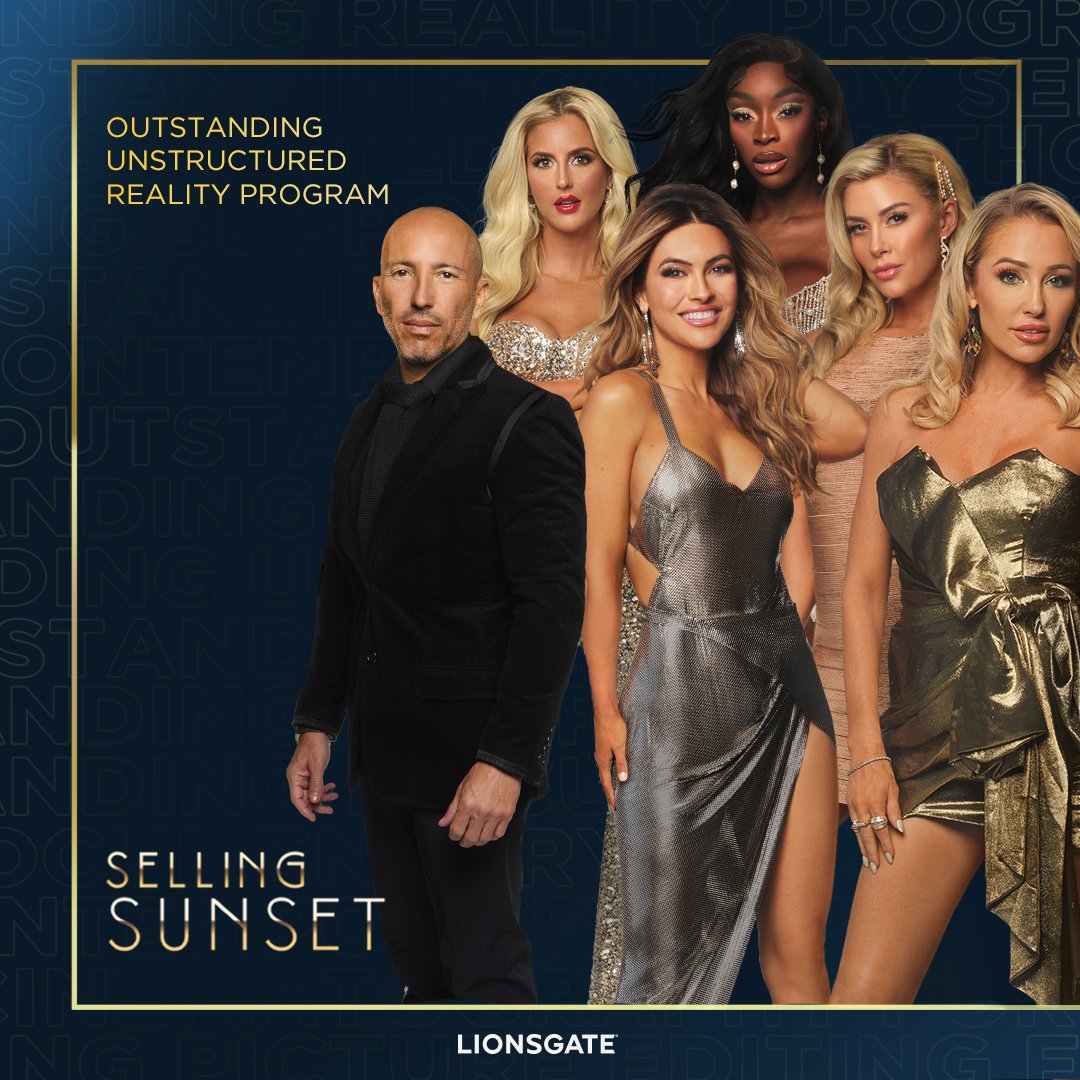
Outstanding Unstructured Reality Program Indian Matchmaking (Netflix) RuPaul's Drag Race: Untucked (MTV) Selling Sunset (Netflix) Vanderpump Rules (Bravo) Welcome to Wrexham (FX)
Welcome to Wrexham earned the most nominations with six, followed by Vanderpump Rules and the 2021 winner and returning nomineeRuPaul's Drag Race: Untucked both with two, then Indian Matchmaking, returning as a nominee from 2021, and three-time nomineeSelling Sunset each earning one. Based on the nominations alone, I think Welcome to Wrexham is the favorite. The experts at Gold Derby agree, ranking it first, followed by Vanderpump Rules, RuPaul's Drag Race: Untucked, Indian Matchmaking, and Selling Sunset. I'm going with the experts.
Check out the new Welcome to Wrexham Season 1 Trailer starring Rob McElhenney & Ryan Reynolds!
...
Synopsis: Rob McElhenney (It’s Always Sunny in Philadelphia) and Ryan Reynolds (Deadpool) navigate running the third oldest professional football club in the world. Welcome to Wrexham is a docuseries tracking the dreams and worries of Wrexham, a working-class town in North Wales, UK, as two Hollywood stars take ownership of the town’s historic yet struggling football club.
In 2020, Rob and Ryan teamed up to purchase the 5th tier Red Dragons in the hopes of turning the club into an underdog story the whole world could root for. The worry? Rob and Ryan have no experience in football or working with each other. From Hollywood to Wales, from the pitch to the locker room, the front office to the pub, Welcome to Wrexham will track Rob and Ryan’s crash course in football club ownership and the inextricably connected fates of a team and a town counting on two actors to bring some serious hope and change to a community that could use it.
I found this trailer inspirational in the same way that Cheer was and for many of the same reasons. Both are sportsdocumentary series masquerading as reality programming. The Critics Choice Association (CCA) has honored the series as both, with Welcome to Wrexham tying with Citizen Ashe for Best Sports Documentary and winning Best Sports Show at the Critics Choice Real TV Awards. The CCA can't make up their collective mind, either!
About Vanderpump Rules:
It’s the dawn of a new age with babies, engagements, and new businesses keeping everyone busy; but no matter how many “firsts” these friends go through, some things never change. Join the passionate, volatile and hot-and-bothered staff at Lisa Vanderpump's West Hollywood mainstay, SUR, as they pursue their dreams and each other while working at her "Sexy Unique Restaurant."
I suspected this show was related to the Real Housewives franchise, but now I know it is, as
Lisa Vanderpump was one of the Real Housewives of Beverly Hills. That didn't surprise me. What did was that this show has been going for ten seasons and finally attracted the attention of the Television Academy voters. I guess this season finally broke through.
I must say that since I've stopped watching "Survivor," I'm a nicer person, although there are many confounding variables on that outcome. However, that doesn't mean I've completely given up on watching reality competition shows; it's just that I'm sticking to those that are talent competitions instead of social competitions, such as "The Next Iron Chef" and "Design Star." At least I'll learn something other than "people are nasty to each other and it pays."
My wife and I have even stopped watching those, although we did watch an episode of Queer Eye and really enjoyed it. That's for the next installment of this series.
Sima Taparia, everyone's favorite matchmaker, returns for another season of helping eligible, eccentric and eager clients find their future spouses.
Ah, that's sweet. It's also a good palate cleanser after the cattiness and drama of Vanderpump Rules. It also adds some diversity to the mix of nominees.
Since Indian Matchmaking has no other nominations, I'm sharing a promotional Twitter image for the show.
The stakes and stilettos are as high as they’ve ever been at the brokerage, as longtime agents make big changes and two new team members bring the heat.
I'm recycling my reaction from last year: "I think they're selling something in addition to real estate." Here's its promotional image from Twitter just to reinforce that impression.
By the way, three of the four nominees above feature people familiar to the Hollywood creatives and executives who belong to the Television Academy. Remember, electorates matter. At least that will be a wash when it comes to the contest between Vanderpump Rules and Welcome to Wrexham. Watching the trailers confirmed my preconceptions about all the shows, meaning I'm even more in favor of Welcome to Wrexham winning than before.
Follow over the jump for my takes on the other five categories in which unstructured reality shows are competing.
One of the stories I've been following but haven't blogged about here yet is how climatechange and extremeweather have caused insurance companies to stop writing policies in California and raise rates in Florida. I think I was just waiting for the right video to come along. Fortunately, PBS Terra uploaded that video Tuesday when it asked Will Climate Change Pop the Housing Bubble?
Remember the 2008 Financial Crisis? Experts warn that the same thing may be happening again, but this time, CLIMATE CHANGE is the culprit. Increasing natural hazards, from wildfires and hurricanes to rising sea levels and catastrophic flooding are threatening the very foundation of our real estate system in huge swaths of the country. State Farm, All State and Farmers Insurance all stopped writing new policies in the entire state of California. And we're seeing similar stories unravel in other states due to different threats, like in Florida and Louisiana. Could the real estate bubble be popping? Where else might be affected?
My answer to the question is by itself, no, but climate change is likely to make the coming real estate price drop worse, at least in places where climate-fueled weather disasters have become more common and severe. Real estate prices follow the Kuznets Cycle, a fifteen-to-twenty year rise and fall that reflects infrastructure investment and supply, which then has effects on demand. This averages out to eighteen years. It was because I knew about this cycle that I was able to recognize the signs of a market top in 2005 and sell in 2006. I also recognized the signs of coming out of a market bottom in 2014, which helped create the conditions for my wife and I to buy a house that year. Eighteen years after the last market top in 2005 is 2023, so residential real estate prices falling are already baked into the cake. We are due. Both the graph in the video and the one below that I included in The tax bill and the U.S. economy in 2018 and beyond that still updates show that home prices may have already peaked.
The irony of the pandemic, as the first video points out, is that "it looks like more affluent people are taking the opportunity to move into better housing in the suburbs. If one has to shelter in place, then one might find a better place to find shelter." Let's see how long that lasts as gas pricesrise while workers return to the office.
Then the public health emergencies ended, accelerating the trend of returning to physical work, as I already have. Oh, and the Federal Reserve has been raising interest rates, making borrowing more expensive. All of those may have contributed to the dip in home prices during the past couple of years followed by a recent rise near to the previous high. I expect that to be followed by stagnation, if not an outright drop. That will be especially true in parts of the country where insurers will no longer write new policies to for homeowners that satisfy the conditions of their mortgages.
As the effects of climate change become harder to ignore, there's not a place on the planet that won't feel an impact.
I was a little disappointed that CityNerd didn't include cities in Michigan among his list of climatehavens, so I'm glad to see this video. I'm even more glad because the example of Ari Biswas and his family fit what I wrote in January: "I expect more of the early wave of migrants will be those already familiar with Michigan. If so, welcome back! Michigan missed you!"
In addition, Dr. Jonathan Overpeck mentioned a story I tell my students about the Great Lakes Compact, which forbids exporting water out of the Great Lakes watershed in containers larger than five gallons. In fact, I just told my students about it today. I'm just surprised I never wrote about it here until now.
Disney World really is a kingdom.
...
Have you ever wondered why Disney World is located where it is? Or how it came to be such a massive, self-contained universe? It’s a story that involves secret land deals, special districts, and, now, a corporation and a government locked in a feud.
The story of why Disney World is in Florida marries business and governmental concerns about the creation of the massive property. The engineering ranges from unique physical construction (like the creation of a lake) to unique legal construction (like the creation of a self-running government that could even build its own sewer system).
I knew much of the history already, since I've been following theme park YouTube accounts for as long as I've been blogging about theRetailApocalypse by that name, but I enjoyed seeing what a news organization did with the story instead of a travel or fan channel. Vox has different interests than Defunctland, Yesterworld, Rob Plays/Midway to Main Street, Offhand Disney, Expedition Theme Park, or DFBGuide, whose videos I've embedded here; law and government are secondary concerns to them, while Vox considers those topics central to their history of Disney World. I hope my readers found Vox's perspective on Disney World interesting and entertaining as well.
Normally, I would have shared this video tomorrow for the Sunday entertainment feature, but I have something else planned — 30 years of Jurassic Park! Stay tuned.