Showing posts with label pressure. Show all posts

Wednesday, January 13, 2016

'The Hateful Eight' and 'Spectre' win music awards at the Golden Globes


I've been teasing an entry about the music nominees at the Golden Globes since Music for moving pictures at the 58th Grammy Awards.  I put it off in Drinks for People's Choice movie winners and then promised it again at the end of 'The Martian' wins two Golden Globes.  It's time to follow through.

First, the nominees:
Best original song
"One Kind of Love," "Love & Mercy"
"Simple Song #3," "Youth"
"See You Again," "Furious 7"
"Love Me Like You Do," "50 Shades of Grey"
"Writing's on the Wall," "Spectre"
...
Best original score — motion picture

“Carol”
“The Danish Girl”
“The Revenant”
Ennio Morricone, “The Hateful Eight”
“Steve Jobs”
At least this year the Hollywood Foreign Press Association did not nominate a song from the Hunger Games movies, as they had the past three years.  I guess the combination of "Fifty Shades Of Grey," "Furious 7," and another James Bond movie were enough to crowd another nominee out.  Good, as I found most of those songs to be inferior compared to the competition.  Also, this is the first look at which scores might contend for the Oscar.

Enough about the nominees.  The winners are...

Sam Smith Wins Best Original Song for "Writings On The Wall" | Golden Globe 2016


That was brief.  I think that's the only clip in which the winners didn't have to be told to hurry up.

Quentin Tarantino took longer when he accepted the award for Ennio Morricone Winning Best Original Score at the 2016 Golden Globes.

The Hateful Eight director Quentin Tarantino accepts the award for Best Original Score at the 73rd Annual Golden Globe Awards.
Ennio Morricone and Quentin Tarantino--that's almost too perfect a match, especially for Tarantino's take on a spaghetti Western.

Follow over the jump for music nominations from Critics' Choice and BAFTA awards as well as a look back at the Grammys along with what I think they portend for the Oscar nominees.

Tuesday, November 10, 2015

SeaWorld phasing out its current Orca shows in San Diego


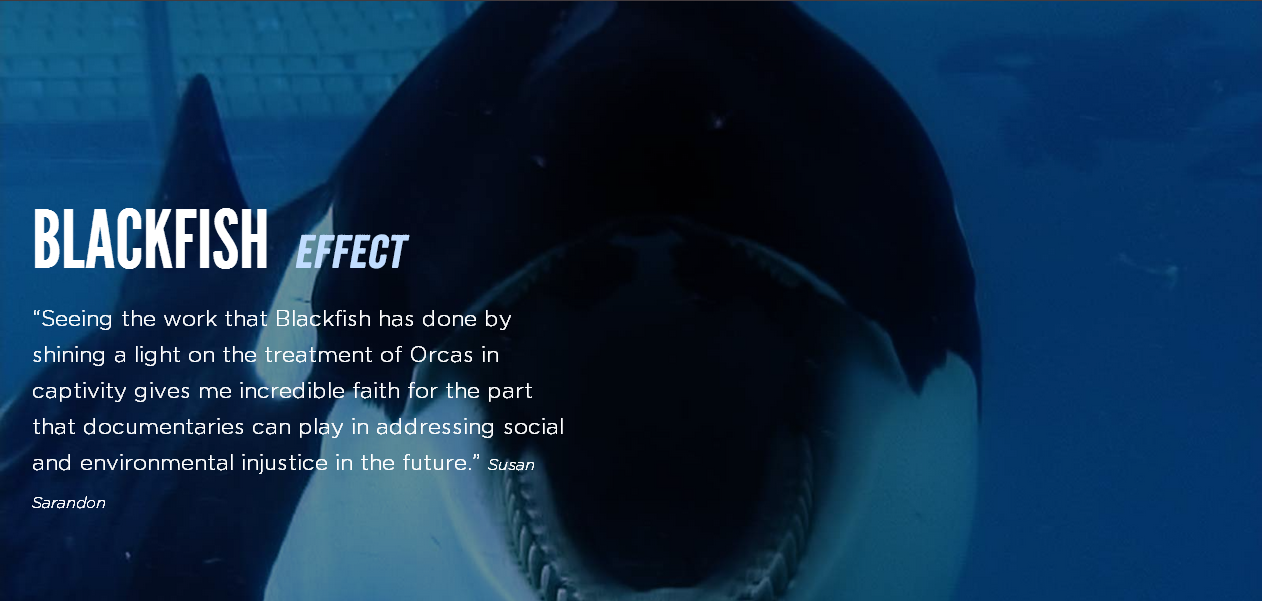
"Blackfish" may have been snubbed by the Oscars and endured push back from SeaWorld, but it's having an effect just the same.  CBS Nightly News reported yesterday SeaWorld to phase out killer whale shows.

SeaWorld San Diego said Monday it would end the theatrical whale shows the park has become known for. Ben Tracy has more on how the park came to the decision.
I think this is a great development, although I'd prefer it be implemented at all their parks, not just the one in San Diego.  If nothing else, SeaWorld wants to greenwash what it does in the name of education (and the bottom line).  If so, I have the same opinion of the action that I have of Republicans on climate change and energy at the CNBC debate--a step in the right direction, however inadequate.

On the other hand, I'm not so sure about Representative Schiff's bill.  I'd rather have more orcas, even captive-bred ones in captivity to safeguard against the species becoming endangered in the wild.  Consequently, I think his proposal is well-meaning but wrong-headed.  Would he also ban the breeding of elephants in captivity to stop circuses from using them?  Better to ban that practice and allow zoos to breed elephants, I say.

Stay tuned.  I'm sure I'm not done with this subject, if for no other reason than PETA might pull one of its legal stunts again.

Friday, March 27, 2015

Anniversary of Alaska's Good Friday Earthquake


Today is another anniversary of an event I include in my geology lectures, the 1964 Good Friday Alaska Earthquake.  In the interest of showing instead of telling, I'll let Accuweather's latest installment of Weather History do my work.
On March 27th, 1964 at 5:36 PM AST, a 9.2 M megathrust earthquake tossed south-central Alaska.
ETA: Accuweather has since deleted this video, so I am replacing it with 1964 Quake: The Great Alaska Earthquake from the United State Geologic Survey.

"1964 Quake: The Great Alaska Earthquake" is an eleven minute video highlighting the impacts and effects of America's largest recorded earthquake. It is an expanded version of the four minute video "Magnitude 9.2". Both were created as part of USGS activities acknowledging the fifty year anniversary of the quake on March 27, 2014. The video features USGS geologist George Plafker, who, in the 1960's, correctly interpreted the quake as a subduction zone event. This was a great leap forward in resolving key mechanisms of the developing theory of plate tectonics. Landslide impacts and the extreme tsunami threat posed by these quakes are also discussed. Loss of life and destruction from the earthquake and accompanying tsunamis was the impetus for things like the NOAA Tsunami Warning Centers and the USGS Earthquake Hazards Program.
This story ranks right up there with my recounting of the 1994 Northridge Earthquake in its importance to my lecture about seismology.  In particular, it features two phenomena the Northridge Earthquake, a tsunami, which the Accuweather video depicts, and liquifaction, which it glosses over.  That latter process resulted in the Turnagain Heights landslide.  I show my students the photo below of it and recount a story I first read in National Geographic about a woman who escaped from her house in that neighborhood, setting her children on the top of each slump scarp then climbing up after them, all as the slump blocks continued to slide down and out to sea.  It certainly personalizes the disaster for my students.

Sunday, March 2, 2014

Discovery News on this year's nominated documentaries


The Academy Awards are tonight, which means it's time for me to share either my take or someone elses on the nominees in the categories and genres I care about.  I'll start with the nominees for Best Documentary Feature and pass along what Discovery News had to say about three films up for that award, "The Square," "The Act of Killing," and "Cutie and the Boxer."

First, Screening Room: Egypt's Fight for "The Square."

The Oscar-nominated movie "The Square" captures the events that took place when a group of Egyptian activists demanded for President Mubarak to step down.

Since then, the Egyptian Revolution has become a different revolution to many. Not only is this happening during our lifetime, but much of it is broadcasted on the internet for the world to see. Laci took time out to watch this intense documentary and tells you why it's so historic.
This looks familiar, as the recent revolution in the Ukraine followed a very similar path.  The difference is that a neighboring major power didn't interfere in a very visible way, such as Russia is doing right now.  On that note, follow over the jump for part of a relevant press release I included in last night's Overnight News Digest: Science Saturday (715 New Exoplanets) on Daily Kos, followed by DNews's reviews of the other two films and my opinions on this category.

Tuesday, February 11, 2014

SeaWorld pushes back against 'Blackfish'


While "Blackfish" was snubbed by the Oscars, that doesn't mean that the film has faded away.  Quite the contrary, as the movie's director was in San Diego last week and made at least two appearances.  One was at KPBS, where she was interviewed for One Year After 'Blackfish,' SeaWorld Goes On Offensive.

The documentary "Blackfish," about SeaWorld and killer whales in captivity, premiered at Sundance Film Festival in 2013. A year later, the debate continues and SeaWorld is going on the offensive.
The accompanying article at the KPBS site has more.
The movie 'Blackfish' has grossed $2 million at the box office. That's quite a feat for any documentary. It has been seen by more than 21 million TV viewers, thanks to its broadcast on CNN.

The enduring controversy about 'Blackish' has made it impossible for SeaWorld to ignore.
She also spoke at a local high school, which ABC10 covered in Local high School students discuss 'Blackfish' documentary with filmmaker.   Unfortunately, the video isn't embedding, but the reporter read an excerpt from a statement by Sea World.  Here's the text of the complete statement.
"As we responded a few weeks ago to the filmmaker's debate challenge, we have no interest in helping promote a film this dishonest and manipulative. Our position has not changed. We did not receive any specific invitation from the schools regarding today's screenings. We would like to thank Kearny High School for inviting us to provide a SeaWorld presentation to their students last week. We applaud the school's desire to provide its students information on both sides of the issue to help them make a more informed decision. It's unfortunate that we did not receive invitations from the other schools to provide a SeaWorld presentation to their students."
Looks like Gabriela Cowperthwaite hit a nerve.  Good luck to her and her crusade; she'll need it.

Tuesday, February 4, 2014

San Diego election news with one week to go


The election is exactly one week from today, although early voting has been taking place for two weeks and mail-in ballots have to be ordered today.  With that in mind, it's time to post the latest news from KPBS.  "If it moves, it leads," so I begin with this video: Separating Alvarez From Faulconer: The Political Issues.

Just months ago San Diego Democratic mayoral candidate David Alvarez was little known outside his city council district. Now, the city is familiar with his story of growing up poor in Barrio Logan, the youngest child of a fast food worker and a janitor. KPBS' metro reporter Sandhya Dirks looks past the personal to the policy issues defining the race between Alvarez and his opponent, republican Kevin Faulconer.
Follow over the jump for more on this election.

Monday, February 3, 2014

Drought news for Groundhog Day from KPBS


It's time for the next weekly update on California's drought from the perspective of KPBS in San Diego.  Here is all the drought and water policy news since California drought emergency begins to reverberate.

Following my policy of "if it moves, it leads," I present two video stories, one about the drought and another about water policy that is being affected by the drought.  First, Mountain Community In San Diego Finds Abundance Of Water Underground.

As some cities and counties across drought-stricken California scramble to find other water sources, a mountain community in San Diego County is relishing in an abundance of supply.
Also see the accompanying article by Susan Murphy from Thursday, January 30, 2014.
Water supplies are a growing concern across drought-stricken California -- especially as the second snow survey out this week from the Sierra Nevada, where San Diego gets a third of its supply, is expected to be even more dismal than the first.

But as some cities and counties are scrambling to find other water sources, a mountain community in San Diego County is relishing in an abundant supply.

"Pine Valley is blessed with an unbelievable supply of water," said Flip Boerman, manager of Pine Valley Mutual Water Company, which supplies water to nearly all of the town's businesses and 1,500 residents.
Next, Environmental Group Challenges San Diego County Water Authority's Master Plan Update.

The San Diego County Water Authority went through a months-long process to update its master plan for supplying water to the county through 2035, but a group says the master plan's environmental impact study is flawed.
Also read the accompanying article by Megan Burke, Maureen Cavanaugh and Peggy Pico originally published January 29, 2014 at 11:30 a.m., updated January 30, 2014 at 1:11 p.m.
How will San Diego County manage its water needs through 2035? That's what the updated San Diego County Water Authority master plan outlines.

The water authority says the 2013 Master Plan is a comprehensive evaluation of infrastructure requirements needed to to keeping supplying water to its member agencies.
Follow over the jump for more news about the drought's environmental and political effects.

Flu causing saline shortage


Time for another update on the flu outbreak with the videos and articles I included in Overnight News Digest: Science Saturday (NASA and Super Bowl) on Daily Kos.  All of them are from KPBS.

First, under the "if it moves, it leads" policy, comes Flu Season Results In Saline Shortage At San Diego Blood Bank.

An increase in flu patients heading to hospitals for dehydration has resulted in a nationwide shortage of saline at blood banks.
More in the accompanying article and in Nationwide Saline Shortage Cuts Into San Diego Blood Supply.
The spike in saline demand came when manufacturers were closed for the holidays, and now that production is back underway, hospitals and dialysis centers have top priority in getting orders filled, according to the SDBB.

The organization said the U.S. Food and Drug Administration is working with the manufacturers to end the saline shortage by spring.
Next, an overview of the situation.

San Diego Flu Season Death Toll Rises To 20
By City News Service
Wednesday, January 29, 2014
Eight more people died of influenza-related causes last week in San Diego County, bringing the local "flu season" toll to 20, the county Health and Human Services Agency reported Wednesday.

The victims have ranged in age from 32 to 91 years and all had underlying medical conditions or were elderly, according to the HHSA.

Last year, 65 flu-related deaths were reported by the county. At this point in 2013, 19 had died.

The HHSA reported that 609 cases of influenza were reported last week, bringing the season total to 2,620.
I still have to get a vaccination.  The good news is that my exposure to H1N1 that saved me in 2009 still seems to be working.  *Knocks on wood*

Friday, January 31, 2014

Examiner.com article on snowiest month in Detroit

Detroit just finished its snowiest month ever. At least one Detroiter coped by cross-country skiing down Woodward.
Photo by Joshua Lott/Getty Images
January 2013 snowiest month in Detroit history
Yet another Detroit weather record fell this morning.

First, last year was the wettest in Michigan history.  Then, Detroit broke its for January snowfall.  Now, this month is not only the snowiest January in the Motor City's history, but its snowiest month ever recorded.

As of 7:00 A.M., the National Weather Service office in White Lake measured 39.1 inches of snow falling at Metro Airport.  Not only is that 9.5 inches more than the previous record for the month of 29.6 inches set in 1978, but more than half an inch greater than the previous maximum for the most snowfall in a month of 38.4 inches, set 106 years ago in February 1908.
Lots more at the link in the headline, including Flint having its snowiest January on record, Detroit having its sixth coldest January and eighth coldest month ever, and Detroit having its snowiest first two months of a snow season on record.  As if that's not enough, February is usually snowier than January and there are 4-7 inches more coming tomorrow and Sunday.

Also, Record broken for January snowfall in Detroit has been my most popular article ever, with at least 1000 page views and 116 Facebook shares.  It's been among the five most popular science articles on Examiner.com all week long, including two stints at number one.

And that's it for January.  Pressure's off!

Happy Year of the Horse


Mandarin: Gong Xi Fa Cai/Xin Nian Kuai Le

Cantonese: Kung Hei Fat Choi

Hokkien (Fujian/Taiwanese): Kiong Hee Huat Tsai/Sin Ni khòai lok

Source

Simplified Chinese: 恭喜发财 新年快乐

Traditional Chinese: 恭喜發財 新年快樂

Source

Updated from Happy Year of the Snake! and Happy Year of the Dragon! as well as the original Happy Lunar New Year! on LiveJournal.

Thursday, January 30, 2014

More energy and the State of the Union


I'm not done with Energy and climate in the State of the Union.  It turns out that being Secretary of Energy singles one out for special treatment during the speech.  Time explains in This Man Will Be Your President If The Worst Happens.
If the unthinkable happens during Tuesday night’s State of the Union address, Secretary of Energy Ernest Moniz will assume the role of President of the United States.

Moniz, the 12th person in the line of succession for the Oval Office, will be protected by Secret Service agents at an undisclosed location as the so-called “designated survivor” while President Barack Obama delivers his address to Congress. Meanwhile, the vice president, members of the Cabinet, Supreme Court justices and others will gather at the Capitol to listen to the president’s annual address.

...He’s better liked inside the administration than his predecessor—and last year’s designated survivor—Steven Chu, who was considered by some administration officials to be a political loose cannon.
It just so happens that I have articles about both men, beginning with Virginia Tech's Nobel laureate talks about innovation in modern research world before capacity Burruss audience.
BLACKSBURG, Va., Oct. 14, 2013 – Steven Chu, a Nobel laureate and a former United States Secretary of Energy, talked about how to create a research and development environment modeled after the famously successful “Bell Labs” on Friday during the initial Hugh and Ethel Kelly Speaker Series presentation, hosted by the Institute for Critical Technology and Applied Science (ICTAS) and the College of Engineering.

Chu said researchers in today's research climate are forced to concentrate on their best ideas, work in small groups, and to collaborate with experts from different fields. In that respect, it reinforces the Bell Laboratories' philosophy to build small research groups containing usually just an investigator, a postdoctoral associate, and a lab technician, and to have active scientists fill the management roles.

"A small group makes you think hard about the most important things to work on, and being forced to share ideas may be a good thing," Chu said. "That's the lemonade from the lemons."
Next, Science Magazine updates its readers with the people around the new Energy Secretary in Obama Names Energy Science Team.
President Barack Obama has added two academic researchers to his new science team at the U.S. Department of Energy (DOE).

Obama yesterday announced his intention to nominate chemical engineer Franklin "Lynn" Orr, a professor and administrator at Stanford University in California, to fill the newly created position of undersecretary for science and energy. The same announcement tapped physicist Marc Kastner of the Massachusetts Institute of Technology (MIT) in Cambridge to lead DOE’s Office of Science, which manages a $4.6 billion research portfolio. Last week, the White House picked physicist Ellen Williams, chief scientist at energy giant BP and a former longtime professor at the University of Maryland (UMD), College Park, to run DOE’s Advanced Research Projects Agency-Energy (ARPA-E).

If approved by the U.S. Senate, the trio will round out Energy Secretary Ernest Moniz’s leadership team for DOE’s civilian research programs, which include 10 national laboratories run by the Office of Science.
That's not all.  As I wrote in Unemployment insurance extension and the State of the Union about the speech:
It also reminded me that I have a long backlog of material from the past two months of Overnight News Digests on Daily Kos about healthcare and energy that I need to post here.
Follow over the jump for the energy news from the past three months that I've posted on Daily Kos since Renewable energy news from campuses on the campaign trail.

An interlude about malaria


I interrupt my blogging about the State of the Union to bring news about the most widespread and deadly parasitic disease on the planet, malaria.  For such a dread malady, it turns out that I've mentioned it only three times, with one story in a research new compendium each year.  That's not much for a a disease that infects at least 350 million people each year and kills about one million of them, mostly children in Sub-Saharan Africa.*  Then, I stumbled across two articles about malaria while compiling Overnight News Digest: Science Saturday (2013 fourth warmest year) on Daily Kos last Saturday.  I've taken care of my content about malaria for this and next!

First, Tulane University with Researchers use E.coli to make potential malaria vaccine.
A Tulane University researcher has found a way to use E.coli bacteria to cheaply manufacture a once hard-to-produce protein critical to the development of a potential transmission-blocking malaria vaccine.

Nirbhay Kumar, professor and chair of tropical medicine at Tulane University School of Public Health and Tropical Medicine, worked with Evelina Angov of the Walter Reed Army Institute for Research to use the common bacteria to create a new process to purify and refold protein CHrPfs25. When tested as a vaccine, the protein produced a 100 percent effective malaria transmission-blocking antibody response in mice using the two most common species of malaria-carrying mosquitoes, according to results to be published in the April issue of the journal Infection and Immunity.

Malaria, which kills nearly 800,000 people every year worldwide, is caused by a microscopic parasite that alternates between human and mosquito hosts at various stages of its lifecycle. Kumar’s vaccine seeks to trigger an immune response in people so they produce antibodies that target a protein the malaria parasite needs to reproduce within a mosquito.
Next, Penn State describes Modernizing malaria research through a new, interdisciplinary approach.
Huck Institutes faculty researcher Manuel Llinás uses cutting-edge techniques in metabolomics and genomics in effort to beat malaria-causing Plasmodium parasite.

Despite a relatively low incidence of malaria in the United States since the 1950s, the disease continues to pose a major threat to nearly half the world's population.

According to the World Health Organization (WHO), an estimated 3.4 billion people in 97 countries live in areas at risk of malaria transmission. In 2012, according to WHO estimates, there were 207 million cases of malaria worldwide resulting in 627,000 deaths.

“The literature on malaria is over a hundred years old,” says Manuel Llinás, an associate professor of biochemistry and molecular biology at Penn State. “It's a very well-studied disease. It's one of the most classic illnesses of humankind. And yet we currently still have no great ways to actually tackle this thing.”
I now return to the regularly scheduled blogging about the State of the Union.

*Pay attention to what I did there.  Those are all links to stories about malaria written by me during one year for Examiner.com.  That's not all.  I wrote a fourth as well: MSU Physician wins AMA Foundation Excellence in Medicine Award.  Now I've made up for lost time.

Wednesday, January 29, 2014

Energy and climate in the State of the Union


In Unemployment insurance extension and the State of the Union, I opened by praising the president.
I watched tonight's State of the Union address and marveled that the entire speech was organized around the conflict between austerity and sustainability, with President Obama consistently coming down on the side of sustainability.  It fits what I've been blogging about here for the past three years, as I've written about every major topic Obama mentioned at least once, some of them, such as energy, education, healthcare, and technological innovation many times.  I felt validated.
His statement on energy is a prime example.  PBS NewsHour has the entire passage in Obama calls for investment in 'fuels of the future'.

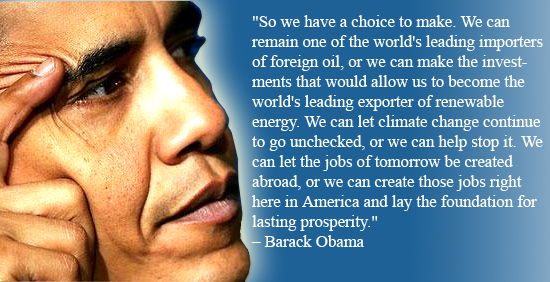
In his 2014 State of the Union address Tuesday, President Barack Obama pledged his commitment to U.S. energy independence by investing in natural gas and solar energy. He also talked about shifting to a "cleaner energy economy" that will benefit the environment. "Climate change is a fact," he said. "And when our children's children look us in the eye and ask if we did all we could to leave them a safer, more stable world, with new sources of energy, I want us to be able to say yes, we did."
PBS has more at its website in Addressing climate change, Obama pledges commitment to clean energy.

Over at Daily Kos, Jed Lewison counted the words and noted how they reflected Obama's priorities.
Three mentions of the word "climate" in the speech. And three mentioning "al Qaeda." Probably the first time there's ever been parity, though climate change is still obviously a  much bigger threat.
I agree with Jed.  Just the same, this was music to my ears.  I'm also not surprised.  As I've mentioned multiple times, but most appropriately last year at this time in Obama loved science in the State of the Union, "President Obama really likes the idea of sustainable development packaged as making America competitive, and his State of the Union address reinforced that meme."  He did it again this year and I'm glad he did.

Unemployment insurance extension and the State of the Union


I watched tonight's State of the Union address and marveled that the entire speech was organized around the conflict between austerity and sustainability, with President Obama consistently coming down on the side of sustainability.  It fits what I've been blogging about here for the past three years, as I've written about every major topic Obama mentioned at least once, some of them, such as energy, education, healthcare, and technological innovation many times.  I felt validated.  It also reminded me that I have a long backlog of material from the past two months of Overnight News Digests on Daily Kos about healthcare and energy that I need to post here.  Before I do that, I have one item that I had given up on, extending unemployment insurance.  I thought that was stalled, if not dead.  I was wrong.

First, here is the video and story from KPBS: Rep. Susan Davis Hopes Congress Extends Long-Term Unemployment Benefits.

San Diego congresswoman Susan Davis spent the morning discussing the impact of the congressional decision to let benefits for long-term unemployment, expire late last year. More than 1.3 million people lost the federal aide in December.
The accompanying article has more.
Davis spoke with San Diegans who had been affected directly by the decision. Eugene Beronilla, 38, was employed in the health care industry until June 2012. He has been struggling since the federal checks stopped coming shortly after Christmas.

“As confidence falls, financial pressures mount, anxiety increases, and we begin to take desperate measures just to survive on a daily basis,” Beronilla said. “Those federal extensions do make a difference, particularly in the case of having stable housing or having to find another place to live.”
I was thinking about posting that yesterday, but decided against it.  Then, the President included the following in his prepared remarks.
I’m also convinced we can help Americans return to the workforce faster by reforming unemployment insurance so that it’s more effective in today’s economy.  But first, this Congress needs to restore the unemployment insurance you just let expire for 1.6 million people.

Let me tell you why.

Misty DeMars is a mother of two young boys. She’d been steadily employed since she was a teenager.  She put herself through college.  She’d never collected unemployment benefits.  In May, she and her husband used their life savings to buy their first home.  A week later, budget cuts claimed the job she loved.  Last month, when their unemployment insurance was cut off, she sat down and wrote me a letter – the kind I get every day.  “We are the face of the unemployment crisis,” she wrote.  “I am not dependent on the government…Our country depends on people like us who build careers, contribute to society…care about our neighbors…I am confident that in time I will find a job…I will pay my taxes, and we will raise our children in their own home in the community we love.  Please give us this chance.”

Congress, give these hardworking, responsible Americans that chance.  They need our help, but more important, this country needs them in the game.
Thank you, Mr. President, for reminding Congress about doing this.  With luck, they'll do as you ask.  If not, well, the Republicans have just given the Democrats another campaign issue.  You win either way.  I'd prefer the former, as the American people win, too.

I'll have more on the other topics later.  I'm also hoping for material that will make another entry like Obama loved science in the State of the Union easy to write.  May I be so lucky.

Tuesday, January 28, 2014

San Diego election news leftovers


I realized that I had two election stories from Overnight News Digest: Science Saturday (California Drought Emergency) on Daily Kos that didn't make it into Debate, endorsements, and a poll from KPBS in San Diego because they weren't about the current San Diego Mayoral election.  However, one of the stories involves one of the candidates for Mayor, David Alvarez, and the other mentions a candidate for mayor of another city, Imperial Beach.  They aren't big stories, but in the interest of completeness, here they are.

Following the "if it moves, it leads" policy Open Government Ballot Measure To Go Before San Diego City Council from KPBS comes first.

An open government ballot measure that would require more government records be available publicly will head to the City Council.
The accompanying article has more.
The city's Committee on Economic Development and Intergovernmental Relations voted unanimously to forward the ballot measure to the full council. The council will have to decide by the end of January whether to put the measure on the June 3 ballot.

Former City Councilwoman Donna Frye, now president of open government advocacy organization Californians Aware, is sponsoring the measure and spoke in support of it at the committee meeting. She was joined by other open government advocates.

City Councilman and mayoral candidate David Alvarez brought the ballot measure, which would change language in the City Charter to require more public access to government records, to the committee.
I'm all in favor of more open government, so I hope this ballot measure succeeds.

Next, Khari Johnson of Patch.com reported Environmentalist To Run For Mayor Of Imperial Beach via KPBS
Serge Dedina, an environmentalist, of Imperial Beach announced plans to run for Mayor of Imperial Beach Wednesday.

A Candidate Intention Statement was submitted to City Clerk Jacqueline Hald last week. No other candidates have filed paperwork to state their intention to run for mayor, Hald said.

The 49-year-old former lifeguard grew up surfing in Imperial Beach. In 2000 he co-founded conservation and environmental group WILDCOAST. As a teenager he was appointed to the Youth Advisory Committee by then Mayor Brian Bilbray.

"This is the city I grew up in and where I hope to retire and die someday," he said.
Good luck, Serge.  I hope you succeed, too.  I think there need to be more environmentalists in government, too.

Asian air pollution and other global pollution stories


Two weeks ago, the Daily Mail reported China starts televising the sunrise on giant TV screens because Beijing is so clouded in smog.
The smog has become so thick in Beijing that the city's natural light-starved masses have begun flocking to huge digital commercial television screens across the city to observe virtual sunrises.

The futuristic screens installed in the Chinese capital usually advertize tourist destinations, but as the season's first wave of extremely dangerous smog hit - residents donned air masks and left their homes to watch the only place where the sun would hail over the horizon that morning.
The article then goes on to describe the terrible smog and the horrible health problems that result from it.  All of that is true, but the hook is baloney, as Quartz pointed out in Westerners are so convinced China is a dystopian hellscape they’ll share anything that confirms it.
When it comes to China stories, people will believe almost anything. Take, for instance, the reports about pollution being so severe in Beijing that residents now watch radiant sunrises broadcast on a huge screen in Tiananmen Square.

So, that never happened. As Tech in Asia flags, the sunrise is a clip from a tourism ad for Shandong province, in China’s northeast; it’s on screen for maybe 10 seconds or so per loop.

But that didn’t prevent a slew of prominent media outlets—including Time, CBS News and the Huffington Post—from running the story, which originated in the UK-based Daily Mail, each taking their own liberties with the truth. The “glorious sunrise was broadcast as part of a patriotic video loop,” explained Time.

How do stories like this happen? One reason is shabby journalism, something for which the Daily Mail is renowned.
That's why The Daily Mail is called The Daily Fail.  Still, it's a striking image, one that I will use when I next lecture on air pollution.  I already have a photo of air pollution in Beijing.  For balance, I'll also tell my students the full story as a cautionary tale about journalism that appeals to their prejudices.

That written, the air pollution from Asia is real and it's affecting the rest of the planet, as Texas A&M explains in Asian Air Pollution Affecting World’s Weather.
Extreme air pollution in Asia is affecting the world’s weather and climate patterns, according to a study by Texas A&M University and NASA’s Jet Propulsion Laboratory researchers.

Yuan Wang, a former doctoral student at Texas A&M, along with Texas A&M atmospheric sciences professors Renyi Zhang and R. Saravanan, have had their findings published in the current issue of Nature Communications.
Satellite photo shows huge air pollution clouds at far left. Japan is on the right.

Using climate models and data collected about aerosols and meteorology over the past 30 years, the researchers found that air pollution over Asia – much of it coming from China – is impacting global air circulations.

“The models clearly show that pollution originating from Asia has an impact on the upper atmosphere and it appears to make such storms or cyclones even stronger,” Zhang explains.

“This pollution affects cloud formations, precipitation, storm intensity and other factors and eventually impacts climate.  Most likely, pollution from Asia can have important consequences on the weather pattern here over North America.”
There is much more at the link, including the following image.


Let that be a lesson in "Everything is connected to everything else," "There is no away," and "There is no such thing as a free lunch."

Follow over the jump for more stories that illustrate Commoner's Laws as pollution from one place ends up going somewhere else, as well as other stories about what people are doing about pollution elsewhere on the planet, all of them originally included in Overnight News Digest on Daily Kos.

Too cool for school


I mean that literally.  Today is so cold that a Wind Chill Warning has been issued by the National Weather Service and schools, including the college where I teach, are closed.  I'll have WXYZ tell the story.

First, here's Wind Chill Watch, the weather report from Sunday night describing how cold it will be.


Conditions were bad enough to close some schools yesterday, although the college was open, so I taught.  WXYZ explains why in Tale of two school districts.


I suspect Ypsilanti was facing an unintended consequence of its merger with Willow Run Schools.  There were a lot of country roads and unincorporated subdivisions in the latter, and I bet they're not plowed as well or often as Ann Arbor.

Finally, here's the situation for today, Schools close for extremely low temperatures.


I'm glad I'm staying warm by staying home.

Monday, January 27, 2014

Campaign finance scandal, endorsements, and new poll in San Diego


Time for the next update on San Diego election news since Debate, endorsements, and a poll from KPBS in San Diego.  For once, the lead story isn't the current Mayor's contest.  Instead, it's a campaign finance scandal involving a foreign national funneling money to candidates, which is illegal.  Under the policy of "if it moves, it leads," here's the video about the story from KPBS: San Diego Politicians Return Illegal Campaign Donations.

A former U.S. Attorney said the former San Diego mayoral candidates did not violate any law if they didn't know the source of the money was illegal.
More at the article accompanying the video.
Congressman Juan Vargas said he'll return any money his campaign might have received from a Mexican businessman at the center of a federal campaign finance probe.

Vargas did not confirm that his campaign had in fact received the funds, but a source told KPBS that Vargas is "Candidate 2" listed in a federal complaint unsealed this week.

The complaint said retired San Diego police Detective Ernesto Encinas approached Candidate 2's campaign for federal office in 2012 to offer a contribution on behalf of a foreign national, now confirmed to be Mexican billionaire Jose Susomo Azano Matsura.
Follow over the jump for more on the scandal, other campaign finance news, and the latest in endorsements and polls.

2013 fourth warmest year on record


The lead story for Overnight News Digest: Science Saturday (2013 fourth warmest year) at Daily Kos came from the Times of India.

No El Nino, yet 2013 fourth warmest year: US climate agency
By Subodh Varma, TNN | 22 Jan, 2014, 01.34PM IST
NEW DELHI: Last year, 2013, was tied with 2003 as the fourth warmest year since records began in 1880, according to the US government's National Oceanic and Atmospheric Administration (NOAA). For the 37th consecutive year, global temperatures were higher than the 20th century average.

Using the same data but calculating slightly differently, NASA said that 2013 was tied for the seventh warmest year with 2006 and 2009.  The difference between 4th place and 7th place is just two-hundredths of a degree. NASA had the "temperature anomaly" - how much the global temperature deviated from the average - pegged at 0.60°C and NOAA had 0.58°C.

"The long-term trends are very clear, they're not going to disappear, and people should be aware of that," Gavin Schmidt, Deputy Chief at NASA GISS, told reporters on a conference call Tuesday.
Let this be a reminder that the year just past was one of weather extremes.  Not only did Michigan have the wettest year in its history, and  California have the driest year on record with Governor Brown declaring a drought emergency, Australia had its hottest year ever.   Don't be fooled by Detroit being in the midst of its snowiest January on record or the regional cool anomaly noted by Minnesota Public Radio into thinking that the warming trend is over.  We still live in a 400 ppm world, and extreme weather of all kinds will result, hot and cold.  There is a reason why Floods in Colorado from ABC News and University of Colorado is the most read entry of the past year and the history of this blog so far.  Expect the wild weather to continue.

Examiner.com article on voter registration deadline

The deadline to register to vote or update one's address for the February elections in Michigan is Monday, January 27, 2013.
Credits: Scott Olson/Getty Images
Deadline to register for February election is Monday
While the next elections in Michigan are a month away, the deadline to register to vote is tomorrow.

All those who wish to vote on February 25th must be registered to vote by Monday, January 27th.  Michigan residents can find out if they are already registered by filling out the online form at the Secretary of State website.  However, if one has moved to a new city or township, one must re-register.  Also, if one has moved from one residence to another within a city or township, one must update the address.  Normally, that happens when the address on a driver's license is changed at the Secretary of State's office.
...
In Washtenaw County, residents of Salem Township will be joining others in the Salem-South Lyon Library District in voting on a millage proposal.
More details at the link in the headline.  Also, welcome to the next installment of Save the libraries, save civilization.