Showing posts with label SDSU. Show all posts

Friday, May 9, 2014

Nutrition news from SDSU


In From baseball to permaculture, I brought news about food, farming, and nutrition from the University of San Diego.  Today, it's San Diego State's turn with two articles.  First, Alyson Faucett of SDSU writes about An Apple a Day.
San Diego health advocates team up to create healthy eating incentives for low-income families.

It is no secret that a healthy diet and living a healthy lifestyle go hand in hand; but making quality foods available to everyone is an ever-progressing mission. For San Diegans using government assisted nutritional aid, the Fresh Fund program made it possible to purchase fruits and vegetables at local farmers markets.

A team at the Institute for Public Health at San Diego State University in partnership with San Diego County Health and Human Services worked to execute and evaluate the program.
...
Federal funding from the Center for Disease Control’s Communities Putting Prevention to Work initiative kick-started Fresh Fund as well as similar programs across the United States. Starting in June 2010, people using government assisted nutritional aid could use their credits to purchase produce at five San Diego farmers markets. For every dollar spent, participants would receive up to $20 in matched incentives.
Faucett returns with @FearlesslyFitt
Jessie Arnold and Andrea Nunez-Smith are experts in nutrition, fitness and Instagram.

San Diego State University students Jessie Arnold and Andrea Nunez-Smith are floor-mates, best friends and fitness gurus who are taking their passion for nutrition and fitness into the realm of social media. On their joint Instagram account, FearlesslyFitt, the dynamic duo posts workout plans, meal ideas, and “fitspiration” aimed toward college students trying to stay healthy while living in residence halls.
...
The idea for the Instagram account surfaced on a trolley ride to the mall. Arnold and Nunez-Smith realized that they had much more in common than their residence hall address.  Both are nutrition majors with high hopes and goals for their future careers and athletic achievements. The two wanted to find a way to help college students achieve their fitness goals, from running a half marathon to avoiding the dreaded “freshman 15.”
...
Nunez-Smith’s passion for wellness surfaced a few years ago when she found out she was allergic to a few very common foods. She began researching the effect different foods can have on the body and got involved with training for triathlons. She is now a nationally ranked triathlete and is training for an international competition in August.
Here's to everyone being properly nourished.

Friday, March 7, 2014

Bad news and good news for International Women's Day


As today's Google Doodle is remining everyone who uses the search engine today, it's International Women's Day.  To mark the occasion, I'm presenting stories from my past six months of Overnight News Digests about discrimination against women and the efforts to rectify it in science education.

First, the bad news from SDSU: Gender Inertia in Television and Film.
The Annual Celluloid Ceiling report shows that women’s roles in television and film have not improved in the last 16 years.
Wednesday, January 15, 2014

The employment of women working in key behind-the-scenes roles in film continues to stagnate, according to the 16th annual Celluloid Ceiling report released today by Martha Lauzen, executive director of the Center for the Study of Women in Television and Film at San Diego State University. 

Women accounted for 16 percent of directors, writers, executive producers, producers, editors, and cinematographers working on the top 250 domestic grossing films of 2013.  This figure is slightly smaller than the percentage of women working on top grossing films in 1998.

“The film industry is in a state of gender inertia.  There is no evidence to suggest that women’s employment has improved in key behind-the-scenes roles over the last 16 years,” Lauzen said.
Next, CBS reported Gaze-tracking Study Apparently Confirms Everyone Really IS Staring At Your Chest.
LINCOLN, NE (CBS) – A new study has confirmed something women have been complaining about for years.

The research, out of the University of Nebraska-Lincoln and published in the Springer-published journal Sex Roles, essentially corroborates the belief that people tend to focus more on the breasts and figure of a woman when analyzing her appearance than they do on her face.
That's enough bad news.  Any more, and I'd post Professor Farnsworth saying "I don't want to live on this planet any more."  As I'm still in an "I can't be all DOOM all the time" mood, I'll stop. 

It's time to post some good news about efforts to educate more women in science and health to cheer myself up.  Follow over the jump for it.

Thursday, January 30, 2014

More energy and the State of the Union


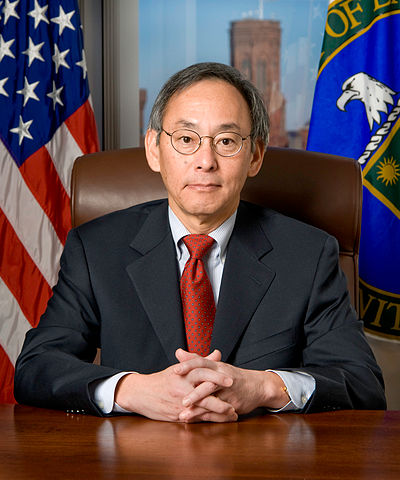
I'm not done with Energy and climate in the State of the Union.  It turns out that being Secretary of Energy singles one out for special treatment during the speech.  Time explains in This Man Will Be Your President If The Worst Happens.
If the unthinkable happens during Tuesday night’s State of the Union address, Secretary of Energy Ernest Moniz will assume the role of President of the United States.

Moniz, the 12th person in the line of succession for the Oval Office, will be protected by Secret Service agents at an undisclosed location as the so-called “designated survivor” while President Barack Obama delivers his address to Congress. Meanwhile, the vice president, members of the Cabinet, Supreme Court justices and others will gather at the Capitol to listen to the president’s annual address.

...He’s better liked inside the administration than his predecessor—and last year’s designated survivor—Steven Chu, who was considered by some administration officials to be a political loose cannon.
It just so happens that I have articles about both men, beginning with Virginia Tech's Nobel laureate talks about innovation in modern research world before capacity Burruss audience.
BLACKSBURG, Va., Oct. 14, 2013 – Steven Chu, a Nobel laureate and a former United States Secretary of Energy, talked about how to create a research and development environment modeled after the famously successful “Bell Labs” on Friday during the initial Hugh and Ethel Kelly Speaker Series presentation, hosted by the Institute for Critical Technology and Applied Science (ICTAS) and the College of Engineering.

Chu said researchers in today's research climate are forced to concentrate on their best ideas, work in small groups, and to collaborate with experts from different fields. In that respect, it reinforces the Bell Laboratories' philosophy to build small research groups containing usually just an investigator, a postdoctoral associate, and a lab technician, and to have active scientists fill the management roles.

"A small group makes you think hard about the most important things to work on, and being forced to share ideas may be a good thing," Chu said. "That's the lemonade from the lemons."
Next, Science Magazine updates its readers with the people around the new Energy Secretary in Obama Names Energy Science Team.
President Barack Obama has added two academic researchers to his new science team at the U.S. Department of Energy (DOE).

Obama yesterday announced his intention to nominate chemical engineer Franklin "Lynn" Orr, a professor and administrator at Stanford University in California, to fill the newly created position of undersecretary for science and energy. The same announcement tapped physicist Marc Kastner of the Massachusetts Institute of Technology (MIT) in Cambridge to lead DOE’s Office of Science, which manages a $4.6 billion research portfolio. Last week, the White House picked physicist Ellen Williams, chief scientist at energy giant BP and a former longtime professor at the University of Maryland (UMD), College Park, to run DOE’s Advanced Research Projects Agency-Energy (ARPA-E).

If approved by the U.S. Senate, the trio will round out Energy Secretary Ernest Moniz’s leadership team for DOE’s civilian research programs, which include 10 national laboratories run by the Office of Science.
That's not all.  As I wrote in Unemployment insurance extension and the State of the Union about the speech:
It also reminded me that I have a long backlog of material from the past two months of Overnight News Digests on Daily Kos about healthcare and energy that I need to post here.
Follow over the jump for the energy news from the past three months that I've posted on Daily Kos since Renewable energy news from campuses on the campaign trail.

Tuesday, January 14, 2014

PBS viewers on poverty plus poverty and recessions damage health for decades


It turns out that PBS had more on poverty in the U.S. than I included in Suburban poverty north and south of the border, as the segments garnered a lot of viewer responses, which were collected in Viewers sound off on NewsHour Weekend stories.

On a new segment called "Viewers like You," NewsHour Weekend fans have the opportunity to sound off on stories and share their opinions with anchor Hari Sreenivasan.
Not only is poverty increasing in the suburbs, it's bad for one's physical and mental health.  It's true even if it's other people's poverty, as the stress of recessions gets to people.  Follow over the jump for  stories from the past three months of Overnight News Digests on Daily Kos that illustrate this point.

Thursday, December 26, 2013

Quitting smoking in the New Year

As I mentioned in Losing weight after the holidays, “Along with quitting smoking, losing weight is one of two popular New Year’s resolutions.”  It’s time to post about quitting smoking with contributions from all three of the San Diego news sources I’ve been using for Overnight News Digest on Daily Kos.

I begin by approaching the topic indirectly with KPBS on Report: California Skimping On Spending For Tobacco Prevention.

In California, only 14 percent of the recommended $441.9 million of tobacco settlement dollars is being spent on tobacco prevention and cessation programs, report by Campaign for Tobacco-Free Kids finds.
Also see Report: California Skimping On Spending For Tobacco Prevention By Megan Burke, Maureen Cavanaugh, Peggy Pico.
Tuesday, December 10, 2013
It's been 15 years since most U.S. states agreed to a more than $264 billion settlement with the big tobacco companies to recover health care costs.

Many people figured that would be enough to help smokers who wanted to quit, and deter the next generation from picking up a smoking habit. But a group of public health organizations finds that in California, tobacco prevention programs are getting a very small cut of that large pot of money.

A report published Monday by the Campaign for Tobacco-Free Kids found only 14 percent of the amount recommended by Centers for Disease Control and Prevention is spent on the state's tobacco prevention and cessation programs; Only $64.8 million of the CDC-recommended $441.9 million will be spent this year in California.
Tsk, tsk.

Follow over the jump for more on quitting smoking from SDSU and UCSD.

Tuesday, December 17, 2013

Real-life tricorders for health and environment


I last mentioned tricorder becoming real in July.  The Space.com story described a purely medical device.  Now USCD and San Diego State are both working on tricorder like devices which will not only monitor human health, but also the environment.

UCSD: Research Team Enlists 'Citizen-Sensors' to Improve World Health

Enterprising researchers and students at UC San Diego are looking for funding to complete a "citizen-sensor" project that they hope will revolutionize global health and environmental monitoring -- especially in remote and undeveloped areas of the planet. They also hope to attract the faith and funding of people around the world through the open, global crowd-funding resource Indiegogo, the first partnership between UC San Diego and a funding platform.
UCSD via University of California has the press release: Using 'citizen-sensors' to improve world health.
Date: 2013-12-12
“What if you could hold the power of modern medical equipment in the palm of your hand?” they ask. The device the students call “a cool gizmo” can also monitor your environment’s health by sampling the air, soil, and water for pollutants, then analyze and report the findings.

For non-Star Trek fans, the gizmo is much like the “tricorder” of the popular sci-fi series — a nifty hand-held device used for scanning, analyzing, and recording data. Less evocatively named, but nearly as high-tech, the UC San Diego device is called the Open Health Stack.

It would beneficially alter the landscape of the medical economy, researchers say, first by changing how people sense and perceive their own health, and then by collecting enough data to enable changes to environmental practices or policies.

Making those ambitious goals a reality is the role of their Distributed Health Lab, a collaboration between UC San Diego’s School of Medicine and the Qualcomm Institute, the UC San Diego division of the California Institute for Telecommunications and Information Technology (Calit2).
The Qualcomm Tricorder XPrize was mentioned in the UCSD video.  It turns out that SDSU is also competing: SDSU Team Advances in Global Competition.
SDSU’s X-Team is now one of 33 teams competing for the Qualcomm Tricorder XPRIZE.
By Beth Downing Chee
Tuesday, December 10, 2013
By Beth Downing Chee
When San Diego State University's X-Team entered the Qualcomm Tricorder XPRIZE competition in April, there were more than 300 teams intending to compete. Now just 33 teams remain in the 3.5-year global competition.

Sponsored by the Qualcomm Foundation, XPRIZE will award $10 million to teams that develop a consumer-friendly mobile device that could change the face of health care.

The SDSU X-Team aims to be one of them.
We do indeed live in science fiction times.

Monday, November 25, 2013

It's flu season again

I harvested such a bumper crop of health news for Overnight News Digest: Science Saturday (MAVEN to Mars) at Daily Kos that I've decided to release it in themed installments.  Today, the theme is flu.  I begin with this bonus video from Accuweather, Is it a Cold or the Flu?

Nov 25, 2013; 5:00 AM ET Symptoms caused by the common cold can often resemble those associated with the influenza virus, so how do you differentiate between the two?
Follow over the jump for four research articles from campuses on the campaign trail about their efforts to fight flu.