A blog about societal, cultural, and civilizational collapse, and how to stave it off or survive it. Named after the legendary character "Crazy Eddie" in Larry Niven and Jerry Pournelle's "The Mote in God's Eye." Expect news and views about culture, politics, economics, technology, and science fiction.
Overnight News Digest: Science Saturday (Blair Mountain and Labor Day) on Daily Kos contained articles about a story I tell my students and a story my students tell me. Tonight, I'm sharing the story my students tell me when they submit articles about geology for extra credit, the sliding stones of Racetrack Playa. I've received copies of that article more times than I care to count. Last month, the mystery of how these rocks moved was solved.
Racetrack Playa is home to an enduring Death Valley mystery. Littered across the surface of this dry lake, also called a "playa," are hundreds of rocks – some weighing as much as 320 kilograms (700 pounds) – that seem to have been dragged across the ground, leaving synchronized trails that can stretch for hundreds of meters.
What powerful force could be moving them? Researchers have investigated this question since the 1940s, but no one has seen the process in action – until now.
In a paper published in the journal PLOS ONE on Aug. 27, a team led by Scripps Institution of Oceanography, UC San Diego, paleobiologist Richard Norris reports on first-hand observations of the phenomenon.
Here's the video explaining the discovery of the mechanism: How Rocks Move.
Scripps Oceanography paleooceanographer Richard Norris describes the phenomenon of sliding rocks in Death Valley.
I tell my students I learn as much from them as a group as they learn from me individually. The story of these rocks serves as one example of what my students have taught me.
Today is the anniversary of the prostate surgery that removed both that organ and the cancer it contained that I first mentioned here in Surgery as a fresh start. A year after the surgery and ten months after I wrote that entry, what I said then--“that thing was killing me, both literally and figuratively and I'm much better off without it”--still holds true. My perspective on the my treatment and its outcome has, if anything, become firmer.
The U.S. Preventative Services Task Force said lung cancer screening for many chain-smokers and former smokers should be done with a CT scan instead of an X-ray.
I’ll have more to say about smoking in another entry. For now, follow over the jump for the rest of the stories about cancer research.
If the unthinkable happens during Tuesday night’s State of the Union address, Secretary of Energy Ernest Moniz will assume the role of President of the United States.
Moniz, the 12th person in the line of succession for the Oval Office, will be protected by Secret Service agents at an undisclosed location as the so-called “designated survivor” while President Barack Obama delivers his address to Congress. Meanwhile, the vice president, members of the Cabinet, Supreme Court justices and others will gather at the Capitol to listen to the president’s annual address.
...He’s better liked inside the administration than his predecessor—and last year’s designated survivor—Steven Chu, who was considered by some administration officials to be a political loose cannon.
BLACKSBURG, Va., Oct. 14, 2013 – Steven Chu, a Nobel laureate and a former United States Secretary of Energy, talked about how to create a research and development environment modeled after the famously successful “Bell Labs” on Friday during the initial Hugh and Ethel Kelly Speaker Series presentation, hosted by the Institute for Critical Technology and Applied Science (ICTAS) and the College of Engineering.
Chu said researchers in today's research climate are forced to concentrate on their best ideas, work in small groups, and to collaborate with experts from different fields. In that respect, it reinforces the Bell Laboratories' philosophy to build small research groups containing usually just an investigator, a postdoctoral associate, and a lab technician, and to have active scientists fill the management roles.
"A small group makes you think hard about the most important things to work on, and being forced to share ideas may be a good thing," Chu said. "That's the lemonade from the lemons."
Next, Science Magazine updates its readers with the people around the new Energy Secretary in Obama Names Energy Science Team.
President Barack Obama has added two academic researchers to his new science team at the U.S. Department of Energy (DOE).
Obama yesterday announced his intention to nominate chemical engineer Franklin "Lynn" Orr, a professor and administrator at Stanford University in California, to fill the newly created position of undersecretary for science and energy. The same announcement tapped physicist Marc Kastner of the Massachusetts Institute of Technology (MIT) in Cambridge to lead DOE’s Office of Science, which manages a $4.6 billion research portfolio. Last week, the White House picked physicist Ellen Williams, chief scientist at energy giant BP and a former longtime professor at the University of Maryland (UMD), College Park, to run DOE’s Advanced Research Projects Agency-Energy (ARPA-E).
If approved by the U.S. Senate, the trio will round out Energy Secretary Ernest Moniz’s leadership team for DOE’s civilian research programs, which include 10 national laboratories run by the Office of Science.
It also reminded me that I have a long backlog of material from the past two months of Overnight News Digests on Daily Kos about healthcare and energy that I need to post here.
Benjamin Bratton, Associate Professor of Visual Arts at UCSD and Director of The Center for Design and Geopoltics at CALIT2, asks: Why don't the bright futures promised in TED talks come true? Professor Bratton attacks the intellectual viability of TED, calling it placebo politics, middlebrow megachurch infotainment, and the equivalent of right-wing media channels. Does TED falsely present problems as simply puzzles to be solved by rearranging the pieces?
TED Talks are exclusive, expensive and reach an insane number of viewers online.
They've also provoked a ton of backlash. The conference of "ideas worth spreading" has been called "elitist," "cultish" and "a place where ideas, regardless of their quality, go to seek celebrity." One San Diego academic recently took the anti-TED gospel to those least likely to want to hear it: TED devotees.
"My TED Talk is not about my work, my new book, the usual spiel," UC San Diego visual arts professor Benjamin Bratton said, introducing his self-described "rant."
"It's about TED: what it is and why it doesn't work."
One San Diego academic recently took the anti-TED gospel to those least likely to want to hear it: TED devotees.
He definitely has a contrary view, but one that should be taken seriously. We do need fora other than TED to have serious conversations about technology, economics (not entertainment), and design. We also need to realize that a better future is going to be hard work and it won't happen without that hard work. Faith in progress and placebo politics won't cut it.
*I don't agree with that, either, but it did a good job of capturing the essence of the criticism.
On a new segment called "Viewers like You," NewsHour Weekend fans have the opportunity to sound off on stories and share their opinions with anchor Hari Sreenivasan.
Not only is poverty increasing in the suburbs, it's bad for one's physical and mental health. It's true even if it's other people's poverty, as the stress of recessions gets to people. Follow over the jump for stories from the past three months of Overnight News Digests on Daily Kos that illustrate this point.
In Research from BCS Championship universities, I described the science generated by Florida State and Auburn, the schools participating in the event. Now, it's time to document the science generated by the fans of pro football teams participating in the NFL playoffs. Here are two stories from last night's Overnight News Digest: Science Saturday (Polar Vortex) on Daily Kos that share this connection.
University of Washington seismologists this week installed two strong-motion seismometers at CenturyLink Field in Seattle to augment an existing station in recording shaking from "earthquakes" expected on Saturday during the NFC divisional game between the Seattle Seahawks and New Orleans Saints.
The Pacific Northwest Seismic Network is preparing a special website at www.pnsn.org/seahawks for the game to display seismograms from all three seismic stations in near-real time, and seismologists will also be available to explain interesting signals. Seismologists also will highlight interesting signals in tweets (@PNSN1) and on Facebook (thePNSN).
Seahawks fans, collectively known as "the 12th man," have a well-known reputation for generating noise and shaking in the stadium during games. Perhaps the best-known example occurred on Jan. 8, 2011, during a 67-yard touchdown run by the Seahawks Marshawn Lynch that helped Seattle defeat New Orleans in an NFC Wild Card game.
The seismogram for the sequence of events leading to the score and the point after illustrates this entry.
Scientists hope to record similar shaking during Saturday's game to better understand how the stadium responds to the activity, and to measure the energy transmitted to the ground within the stadium and within the surrounding neighborhood.
History repeated itself yesterday, as Seahawks beat Saints 23-15, advance to NFC championship game. It looks like they'll be facing the 49ers, who are beating the Carolina Panthers halfway through the fourth quarters as I type this. I'll be rooting for the 49ers.
Next, a health story with a human interest angle from UCSD: Football Fans Team Up for Organ Match by Jackie Carr on January 08, 2014. Random stadium seat assignment leads to lifesaving transplant surgery
In October 2013, Louis Munoz donated one of his kidneys to William Lynch. The organ match would not have occurred without a bit of serendipity and a big love of football. Munoz and Lynch had been childhood friends, but hadn’t seen each other in years – then they found themselves randomly seated next to each other at a Chargers game.
“Louis and I knew each other as kids and then lost touch. Years later, by surprise, we ended up sitting right next to each other at Chargers games,” said William, a middle school teacher. “When I started missing games, Louis asked me why and I explained that due to kidney complications, I’d been unwell. His wife half-jokingly suggested that he give me a kidney.”
Louis immediately volunteered to be tested as a possible donor. William initially declined his friend’s offer, believing another donor would come through. But when that didn’t happen, Louis followed through and proved to be a match.
The Chargers are playing in the next elimination game today. They're underdogs against the Denver Broncos. That's not stopping me from rooting for them, so there will be an all-California Super Bowl. If that happens, I'll be rooting for the Chargers, but I'd be happy with either winning the NFL championship.
As I mentioned in Losing weight after the holidays, “Along with quitting smoking, losing weight is one of two popular New Year’s resolutions.” It’s time to post about quitting smoking with contributions from all three of the San Diego news sources I’ve been using for Overnight News Digest on Daily Kos.
In California, only 14 percent of the recommended $441.9 million of tobacco settlement dollars is being spent on tobacco prevention and cessation programs, report by Campaign for Tobacco-Free Kids finds.
It's been 15 years since most U.S. states agreed to a more than $264 billion settlement with the big tobacco companies to recover health care costs.
Many people figured that would be enough to help smokers who wanted to quit, and deter the next generation from picking up a smoking habit. But a group of public health organizations finds that in California, tobacco prevention programs are getting a very small cut of that large pot of money.
A report published Monday by the Campaign for Tobacco-Free Kids found only 14 percent of the amount recommended by Centers for Disease Control and Prevention is spent on the state's tobacco prevention and cessation programs; Only $64.8 million of the CDC-recommended $441.9 million will be spent this year in California.
Tsk, tsk.
Follow over the jump for more on quitting smoking from SDSU and UCSD.
Are you a hipster, surfer or biker? What is your urban tribe? Your computer may soon be able to tell. Computer scientists at the University of California, San Diego, are developing an algorithm that uses group pictures to determine to which of these groups, or urban tribes, you belong. So far, the algorithm is 48 percent accurate on average. That’s better than chance--which gets answers right only nine percent of the time--but researchers would like the algorithm perform at least as well as humans would.
An algorithm able to identify people’s urban tribes would have a wide range of applications, from generating more relevant search results and ads, to allowing social networks to provide better recommendations and content. There also is a growing interest in analyzing footage from cameras installed in public spaces to identify groups rather than individuals.
Computer scientists presented their findings at the British Machine Vision Conference in the United Kingdom this fall.
There's a new piece of software out there that can identify a whole lot more about you than your name via Facebook. By analyzing a photo of you alone, it can accurately predict intimate details about your life. Anthony explains how it works and if you should fear- or embrace- this new tech.
Welcome to the world of Minority Report, where technology scans you and costumizes ads for you, but also tracks you. So it’s not your retina, but your photos on social media. It’s good enough that I can repeat my mantra and then Nebris’s: “We live in Science Fiction times” and “SciFi is Now.”
I last mentioned tricorder becoming real in July. The Space.com story described a purely medical device. Now USCD and San Diego State are both working on tricorder like devices which will not only monitor human health, but also the environment.
Enterprising researchers and students at UC San Diego are looking for funding to complete a "citizen-sensor" project that they hope will revolutionize global health and environmental monitoring -- especially in remote and undeveloped areas of the planet. They also hope to attract the faith and funding of people around the world through the open, global crowd-funding resource Indiegogo, the first partnership between UC San Diego and a funding platform.
“What if you could hold the power of modern medical equipment in the palm of your hand?” they ask. The device the students call “a cool gizmo” can also monitor your environment’s health by sampling the air, soil, and water for pollutants, then analyze and report the findings.
For non-Star Trek fans, the gizmo is much like the “tricorder” of the popular sci-fi series — a nifty hand-held device used for scanning, analyzing, and recording data. Less evocatively named, but nearly as high-tech, the UC San Diego device is called the Open Health Stack.
It would beneficially alter the landscape of the medical economy, researchers say, first by changing how people sense and perceive their own health, and then by collecting enough data to enable changes to environmental practices or policies.
Making those ambitious goals a reality is the role of their Distributed Health Lab, a collaboration between UC San Diego’s School of Medicine and the Qualcomm Institute, the UC San Diego division of the California Institute for Telecommunications and Information Technology (Calit2).
The Qualcomm Tricorder XPrize was mentioned in the UCSD video. It turns out that SDSU is also competing: SDSU Team Advances in Global Competition. SDSU’s X-Team is now one of 33 teams competing for the Qualcomm Tricorder XPRIZE. By Beth Downing Chee Tuesday, December 10, 2013 By Beth Downing Chee
When San Diego State University's X-Team entered the Qualcomm Tricorder XPRIZE competition in April, there were more than 300 teams intending to compete. Now just 33 teams remain in the 3.5-year global competition.
Sponsored by the Qualcomm Foundation, XPRIZE will award $10 million to teams that develop a consumer-friendly mobile device that could change the face of health care.
A Jan. 16 trial date was set for a Temecula woman ticketed for allegedly watching television via a pair of computerized Google glasses while speeding on a San Diego freeway.
The case may be the first of its kind. Typically, law enforcement officers are given discretion when it comes to deciding what is and what isn't distracted driving.
Cecilia Abadie, 44, was allegedly speeding on Interstate 15 while watching television via a prototype, eyeglass-style Google Glass wearable computer. Though the technology will not be publicly available until next year at the earliest, Abadie was among 10,000 "explorers" chosen to try out the devices.
I have my doubts that she'll prevail. Even if there weren't distracted driving laws in California, the state still has a Basic Speed Law, which states "No person shall drive a vehicle upon a highway at a speed greater than is reasonable or prudent having due regard for weather, visibility, the traffic on, and the surface and width of, the highway, and in no event at a speed which endangers the safety of persons or property." Before there were laws restricting distracted driving, police used the Basic Speed Law to ticket people under the reasoning that driving at any speed while distracted was unsafe.
It's against the law in California to drive while talking on the phone or text, but many are still doing so, which increases the risk of a collision four-fold. A UC San Diego campaign is targeting businesses to get the word out to employees about the risks.
Expanding their efforts to keep citizens safe on San Diego roadways, UC San Diego’s Training, Research and Education for Driving Safety (TREDS) program announced today that they are launching a new distracted driving education project called Just Drive - Take Action Against Distraction, a one hour class free of charge offered to businesses in San Diego. The decision followed a recent survey by the research team, which found that 83 percent of adults who participated reported texting, talking or using a smartphone application while driving.
“Research has shown that talking on the phone while driving increases the risk of collision four-fold, with equal risk attached to hands free and hand held devices. This is the same as driving with a blood alcohol content (BAC) of .08. Texting increases this risk eight to 16 times,” said Linda Hill, MD, MPH, professor in the Department of Family and Preventive Medicine at UC San Diego School of Medicine and TREDS program director.
TREDS, with funding provided by a grant from the California Office of Traffic Safety (OTS), through the National Highway Traffic Safety Administration (NHTSA), will partner with the California Highway Patrol (CHP) to offer San Diego businesses and organizations distracted driving education for their employees as part of safety and wellness programs. Classes include the latest research from national safety experts, information on cell phone laws, real-life examples of individuals affected by cell phone use while driving and resources to help drivers change distracted driving behaviors.
Follow over the jump for more stories about technology producing legal issues.
After a diving accident left Jason DiSanto paralyzed from the neck down in 2009, he had to learn how to navigate life from a powered wheelchair, which he controls with a sip-and-puff system. Users sip or puff air into a straw mounted on their wheelchair to execute four basic commands that drive the chair. But results from a new clinical study offer hope that sip-and-puff users like DiSanto could gain a higher level of independence than offered by this common assistive technology.
In the study, individuals with paralysis were able to use a tongue-controlled technology to access computers and execute commands for their wheelchairs at speeds that were significantly faster than those recorded in sip-and-puff wheelchairs, but with equal accuracy. This study is the first to show that the wireless and wearable Tongue Drive System outperforms sip-and-puff in controlling wheelchairs. Sip-and-puff is the most popular assistive technology for controlling a wheelchair.
The Tongue Drive System is controlled by the position of the user’s tongue. A magnetic tongue stud lets them use their tongue as a joystick to drive the wheelchair. Sensors in the tongue stud relay the tongue’s position to a headset, which then executes up to six commands based on the tongue position.
Follow over the jump for more health research from UCSD, Texas A&M, University of Georgia, and University of Massachusetts.
The University of California, San Diego recognized in its own way that we live in science fiction times in Imagination Gets a Boost with $1 Million Gift. ViaSat named Founding Partner of Arthur C. Clarke Center for Human Imagination in recognition of donation
By Judy Piercey
November 21, 2013
The University of California, San Diego is home to the first and only Arthur C. Clarke Center for Human Imagination, honoring the vision of "2001: A Space Odyssey" author Arthur C. Clarke. Today, the campus is announcing a $1 million gift from San Diego-based satellite and digital communications innovator ViaSat Inc. (VSAT) that will continue Clarke's greatest legacy: imagination. In recognition of this charitable donation, ViaSat has been named Founding Partner of the Clarke Center.
"ViaSat's co-founders include UC San Diego alumni, and they understand the importance of imagination in seeking new frontiers," said Chancellor Pradeep K. Khosla. "The company's generous gift will help the Clarke Center honor the late author and innovator through cultural, scientific and medical transformations. These occur when imagination is more effectively incorporated into research and our daily lives."
Britain's Sir Arthur C. Clarke, celebrated for his multi-disciplinary legacy in science and engineering, is also considered one of the most inspiring and engaging science fiction writers of all time for such classics as "Childhood's End," "Rendezvous with Rama" as well as "2001: A Space Odyssey." His visionary books and papers have fueled the imaginations and avocations of young and old for more than six decades.
One of his visionary ideas was space tourism, as depicted in 2001: A Space Odyssey.
As FlickFeast wrote, "While still not commonplace, space tourism is a reality." Another story from Space.com illustrates this: How Do You Train to Become a Space Tourist?
By Katia Moskvitch, SPACE.com Contributor
November 30, 2013 12:00pm ET
LONDON — Piloting fighter jets, floating in zero gravity and spinning at a belly-flattening speed in a centrifuge are not the things a regular tourist is asked to do before a dream holiday. But this is exactly what Per Wimmer has been doing during 13 years of waiting for his trip — to outer space.
For the 45-year-old London-based Danish entrepreneur and financier, it won't even be a once-in-a-lifetime experience. So far, he has bought three tickets from companies offering space tourism: Virgin Galactic, Space Adventures and XCOR Aerospace.
Wimmer expects to blast into the blackness overhead within the next 18 months, "on whichever rocket becomes available first," he said. When he first found out that private citizens had an opportunity to take a peek beyond Earth's surface, it took him less than 48 hours to pony up the $100,000 to sign up.
My friend Nebris has a shorter formulation of "we live in science fiction times"--SciFi is Now.
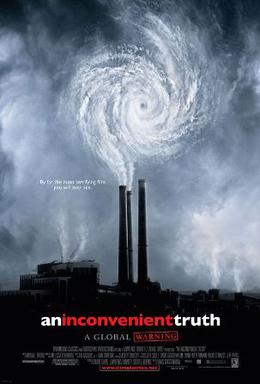
This week, I'm showing "An Inconvenient Truth" to my students again. To mark the occasion, I present the climate news from campuses on the campaign trail that I've included in the most recent Overnight News Digests on Daily Kos.
I begin with an entry that relates to the first question I ask my students, "What evidence first convinced Al Gore about the connection between carbon dioxide and global warming?" The answer was the carbon dioxide data collected by Roger Revelle.* It turns out that the University of California, San Diego presents a medal in honor of Revelle, as can be seen in 2013 Roger Revelle Medalist, Walter Munk.
Referred to as the "greatest living oceanographer," Walter Munk is widely recognized for his groundbreaking investigations of wave propagation, tides, currents, circulation and other aspects of the ocean and Earth. The 95-year-old scientist and alumnus is still active at Scripps Institution of Oceanography. His accomplishments have been recognized by prestigious organizations around the world, from the Kyoto Prize to the Crafoord Prize.
I bet those are two topics most readers didn't expect to see together. Just the same, they are the two top news items this month based on my preference of "if it moves, it leads." Also, since sex sells, the news about condoms goes first.
Bill Gates challenged inventors to revolutionize the condom, and they delivered! Laci Green reports on their creations, including the condom made from cow parts. And no, we're not joking.
Condoms have the power to make the world healthier by preventing disease and unplanned pregnancies, yet they are vastly underutilized.
This year, Bill and Melinda Gates and their foundation issued a challenge to develop the next generation of condoms. Called Grand Challenges in Global Health, the initiative aims to foster scientific and technological innovation to solve key health problems in the developing world.
Jimmy Mays, a chemistry professor at UT, responded to the challenge with a design that will encourage condom use in developing countries. He has received $100,000 from the Bill and Melinda Gates Foundation for research and development of a prototype.
Florence Nightingale left countless gifts to her profession, including a collection of 50 letters and more preserved in the UAB Historical Collections. Copies of these are on permanent exhibit in the University of Alabama at Birmingham School of Nursing.
The University of Alabama at Birmingham School of Nursing is home to a one-of-its-kind, interactive exhibit of 50 famous Florence Nightingale letters. School of Nursing Dean Doreen C. Harper, Ph.D., analyzed the components of these letters, which highlight Nightingale’s visionary leadership for global health and nursing within the historical context of Great Britain’s colonization of India.
The result of this analysis was the paper “Leadership Lessons in Global Nursing and Health from the Nightingale Letter Collection at the University of Alabama at Birmingham,” recently published in the Journal of Holistic Medicine. The descriptive study used a narrative analysis to examine selected letters that Nightingale wrote to or about Dr. Thomas Gillham Hewlett, a physician and health officer in Bombay, India.
“Florence Nightingale is indisputably the founder of modern nursing,” Harper said. “Nightingale also was a prominent force in the creation of global health care and global nursing. To this day, these letters offer countless leadership lessons relevant to the future of nursing and health care. It was a joy to study these letters and try to increase understanding of her visionary leadership for global nursing and health.”
Follow over the jump for more of last week's health news from campuses on the campaign trail.
To Dustin Jones, the bioptic driving program at the University of Alabama at Birmingham provides one very important benefit: freedom. Jones, a 24-year-old recent UAB graduate who works in information technology, is a typical young professional.
But he has a congenital eye disease called optic atrophy, which had prevented him from getting a driver’s license at age 16.
“My job is in Hoover,” Jones said. “Without a driver’s license, I would have to live within walking distance or use public transportation. I would be limited in my economic and social opportunities and not really part of the community as I am today.”
Here at Crazy Eddie's Motie News, it may not lead if it bleeds, but if it moves, it usually does.
Follow over the jump for more on the brain from UAB, UCSD, University of Iowa, and the University of Wisconsin.
Jeff Schoellerman, a San Diego neuroscientist, is curious if the Affordable Care Act will eventually have an effect on what we pay toward Medicare and disability out of our paychecks.
Nov 25, 2013; 5:00 AM ET Symptoms caused by the common cold can often resemble those associated with the influenza virus, so how do you differentiate between the two?
Follow over the jump for four research articles from campuses on the campaign trail about their efforts to fight flu.
At the end of Health news from the University of Cincinnati, I told my readers to "Stay tuned for the material I did use this past weekend." Here it is, the health research and outreach news from Overnight News Digest: Science Saturday (Dog origins) on Daily Kos, which featured the research and outreach stories from the states of Alabama, Arkansas, California, Iowa, Louisiana, and Wisconsin, and the city of San Diego.
Two videos from the University of Alabama, Birmingham, begin this report. First, UAB's Michael Morrisey talks health care premiums, which explains the subsidy structure under the Affordable Care Act.
Members of UAB's Critical Care Transport team — ICU nurses, respiratory therapists, nurse practitioners and physicians — participate in a drill about safety procedures in the event something goes wrong on a flight.
Follow over the jump for the rest of the health care news from last week.