A blog about societal, cultural, and civilizational collapse, and how to stave it off or survive it. Named after the legendary character "Crazy Eddie" in Larry Niven and Jerry Pournelle's "The Mote in God's Eye." Expect news and views about culture, politics, economics, technology, and science fiction.
Car brain is insidious, and it seeps into seemingly everything. Let's explore.
I watched this yesterday, then experienced car brain as I drove to work. A man in a Mercedes tailgated me, then gave the "come on" gesture. I sped up to get away from him, then briefly tapped my brakes to tell him to back off. Dude, I'm already driving five miles over the speed limit along a stretch of road that the police patrol. Do you want me to break the law more so you can, too? He then passed me and had to wait for someone else to turn right to get to his destination. Hurry up and wait.
CityNerd Ray reminded me of a video I watched in school more than 50 years ago, Goofy - Motor Mania.
A classic Goofy episode from the 50's!
In fact, from 1950. Car brain has been around that long.
That's the general situation. Follow over the jump for my personal update.
We all picked up new habits during the COVID-19 pandemic. But not all of them stuck. Here's the data on whether we're better or worse drivers, exercisers, social media community members, neighbors, and self carers than during and before lockdown.
In the past week of returning to in-person teaching and resuming my pre-pandemic driving patterns, I've observed several people driving just as Krugman described, weaving in and out of traffic at high speeds. While a few Michigan drivers were doing that all along before the pandemic, I think I've seen more this week than the pre-pandemic average. Based on the data and my personal observations, I agree with Krugman that "the pandemic and its disruptions seem to have done a number on social psychology in many dimensions. The worrisome thing is that troubled behavior seems to be persisting even as the country reopens." Here's to hoping that subsides when the pandemic is over, which itisn't.
I also knew about increased social media use, which persisted, and worse mental health, which the stats say has returned to the pre-pandemic normal. What I didn't know about were the Cannonball Run record, increased drinking, childhood obesity, strokes, and drug deaths, along with worse heart health. I can't say I'm surprised at any of them, except the Cannonball Run. I thought that was only a movie. I'm also relieved that driving is improving and the murder rate is decreasing. It give me hope that the rest of the craziness will subside as well.
That's the general driving situation. Follow over the jump for my personal update.
I've often heard that EVERYONE thinks they're an above average driver. Well, I wanted to look at data to see if it's actually true, share research on how the Dunning-Kruger effect impacts driving, and look at wider consequences on our transportation system.
I've been blogging for 15 years and I've never mentioned the Dunning-Kruger effect until now? I'm amazed. I've had so many opportunities to apply it, especially during two administrations of "only the best people." *Snort*
That written, I'm not surprised at either people's inflated self-assessments of their driving skills or how poor they really are. I wish I weren't surprised that the people who did the worst actually upgraded their self-assessments after doing poorly. I guess they thought they did better than they expected. And I have to share the road with them? Ugh.
That's the general driving situation. Follow over the jump for my personal driving update.
In this episode we're joined by a leading political scientist to help us figure out the complex psychological and social factors that motivate us to vote… or not to. We discuss how and why our decision whether or not to vote might not be a rational one. And why it is important to understand that. And why it’s important to vote!
Visit Vote.gov to learn how and when to register and vote.
Hearing Hanson and Donald Green discuss how rational choice theory fails to explain why so many people do vote reminds me of an exercise I do with my students that makes the point that a significant number of scientific disciplines use the comparative method and/or modeling to test hypotheses instead of the experimental method. I ask them to name scientific disciplines and then raise fingers on my right hand if those disciplines primarily use the experimental method and fingers on my left hand. Almost every time I lead that exercise, someone mentions a field of knowledge that I don't consider science, usually astrology, which the students confuse with astronomy. Hey, they're only off by a few centuries; the two were connected to each other, if not the same discipline, until the Renaissance through Enlightenment.*
Occasionally, a student will mention economics. My response is that economics has the potential to be science, but I think its subject matter, money, motivates rich and powerful people to try to influence the ideas being examined, the methods, and the results in ways that hinder the field actually being or even becoming a science. This relates to the second and third objections to economics being a science Investopedia lists in Is Economics a Science?
Economics is generally regarded as a social science, although some critics of the field argue that it falls short of the definition of a science for a number of reasons, including a lack of testable hypotheses, lack of consensus, and inherent political overtones.
I think economics has testable hypotheses that economists examine through the comparative method and especially modeling, although I think the models and assumptions behind them have issues. One of those assumptions is the rational choice theory, which fails to explain voter turnout. I should probably add that to the reasons I tell my students why I don't consider economics to not yet be a science. As it is, I already tell them that anyone performing experiments in economics is really doing psychology, which I do consider to be a science.* Notice that psychology provided a satisfactory answer to why people vote when economics couldn't.
That's a wrap for today's subject, the science of elections. Stay tuned for two or three posts about Emmy Award winners, another topic that will be good to share next month.
*Those would be good subjects for their own posts, but not today.
In 1972, 7-year-old Steven Stayner mysteriously vanished on his way home from school. Nearly a decade later, his dramatic return to his family sparked ’80s-era “stranger danger” warnings, legal reforms, and one iconic Made-For-TV-Movie in which the family’s ordeal was transformed into a prime-time miniseries watched by 70 million Americans. When the credits rolled and the movie ended, it closed one tragic chapter of the family’s life, but opened another. This limited documentary series explores the evolution of true crime storytelling through the lens of one family’s 50-year journey and two brothers; one a hero, the other a villain. It’s about how truth becomes story and story becomes truth - on TV, in the justice system, and in our minds.
I can see why both the limited series and the trailer itself earned nominations, the series itself for Outstanding Crime and Justice Documentary and the trailer for Outstanding Promotional Announcement. I found the trailer gripping and its use of music engaging.
I'm examining both categories today, beginning with Outstanding Crime and Justice Documentary, where Captive Audience: A Real American Horror Story is the only nominee with a nomination in another category, so it's my pick to win. Follow over the jump for the other nominees.
Seth takes a closer look at Fox News barring its own anchors from covering a billion-dollar lawsuit against the company that revealed their on-air personalities knowingly lied to viewers about the 2020 election.
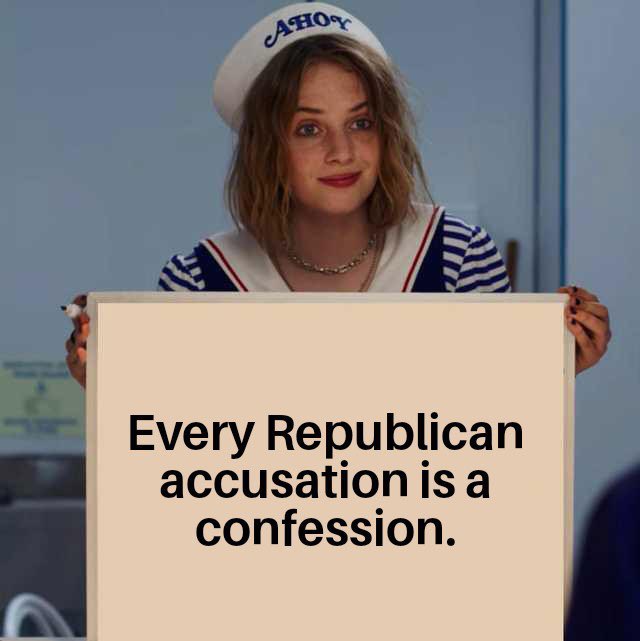
Watching and listening to this sketch reminds me of two of my favorite and oldest points. First, as I wrote more than a decade ago, projection is the Right's favorite defense mechanism. Fox News is and was doing exactly what it accused its competition of being and doing, a major media company lying to its viewers. As the meme says:
Second, as I first wrote in 2011, "America is quite clear about its screwed up priorities. My experience has convinced me that the surest way to get Americans to act is to mess with their entertainment." Telling the Fox News audience a truth they didn't want to hear messed with their entertainment, they reacted to get it back, and Fox gave it back to them.
Considering I've been making both points for more than a decade, I'm surprised it took this long for me to put both of them together. I guess it was inevitable. It just took the right story, pun intended.
This ends February's blogging. Stay tuned for the first post of March.
Projection may be part of a complex of behaviors called DARVO--"Deny, Attack, and Reverse Victim and Offender." Here's what Jennifer Freyd at the University of Oregon [link updated], who coined the term, has to say about it.
DARVO refers to a reaction perpetrators of wrong doing, particularly sexual offenders, may display in response to being held accountable for their behavior. DARVO stands for "Deny, Attack, and Reverse Victim and Offender." The perpetrator or offender may Deny the behavior, Attack the individual doing the confronting, and Reverse the roles of Victim and Offender such that the perpetrator assumes the victim role and turns the true victim into an alleged offender. This occurs, for instance, when an actually guilty perpetrator assumes the role of "falsely accused" and attacks the accuser's credibility or even blames the accuser of being the perpetrator of a false accusation.
As I wrote, projection isn't even the half of it. Tara Palmatier at Shrink4Men describes it as "a combination of projection, denial, lying, blame shifting and gaslighting." Sound familiar?
Yes, it does, and it's become even more familiar during the past decade, especially since 2015.
The Trump organization has been ordered to pay $1.6 million for violating tax laws and its former CFO Allen Weisselberg is now serving five months in jail.
The Trump Organization and its lawyers tried to engage in more blame-shifting by attempting to pin the crime on its former CFO Allen Weisselberg, adding to the DARVO. While the judge and jury didn't buy that defense, it did show that the Trump Organization was unwittingly celebrating another day yesterday, National Blame Someone Else Day (The first Friday the 13th of the year) from 8SA - Books, Biographies and Literature Summary.
National Blame Someone Else Day pawns our mistakes on to other reasons. Blame someone or something for your errors on the 1st Friday the 13th of the year.
I think The Former Guy and his organization fall into the camp of not taking any responsibility for their mistakes and other wrong-doing to the point of really believing they did nothing wrong (they did) and blaming it all on others. For them, every day is Blame Someone Else Day, just like every dayisFestivus.
It's time for a question that with an answer I'm not entirely happy about as Vox asks Are zoos...bad?
Do the benefits of zoos justify the fact that some animals are clearly stressed out?
...
Many of us have fond memories of visiting the zoo as a child (or at any age), and more than a few of us probably credit those visits with turning us into animal-lovers. So, how should we square those warm fuzzy feelings with research that shows the psychological harms of captivity for some animals?
That’s what Vox subscriber Gaurav Patil wanted to know, so producer Liz Scheltens started digging in. One way that zoos maintain their social license to operate despite our growing understanding of the harms to certain species is by marketing themselves as beacons of conservation.
Proponents argue that not only do zoos help preserve endangered wild populations, they also help make humans better conservationists. But when you look at the research, a different picture starts to emerge.
I don't make a secret of my being a fan of the Detroit Zoo and my students like zoos, too, so I'm disappointed to find out that people come out of zoos being less supportive of preserving wildlife habitat than when they came in. Habitat destruction is one of the key reasons why the Monarch butterfly is endangered, for example and preserving habitat is the best way to keep species from becoming extinct in the wild. Sigh. Zoos might have to emphasize preserving animals' natural habitat in their signs and other educational material to counteract that.
Also, I've written about a reintroduction program by the Detroit Zoo for a species that went extinct in the wild, so I know those work. However, it was for a snail, so it definitely wasn't for a "cognitively complex species." I like my snails, but I know they're not bright animals.
I don't know if I will show this video to my students, but I wouldn't be surprised if one of them shows part of it as their visual aid in a presentation. In the meantime, welcome to more blogging as professional development.
Life on the ground following natural disasters is often chaotic and scary. And with global warming gradually adding energy to our atmosphere, driving more extreme weather and worse disasters, it’s logical that people would be concerned. We’ve all seen the images of chaos and heard the reports of looting and violence in the aftermath of major disasters like hurricanes like Katrina and Maria. And a common way that people address their fear is by owning or buying guns. In the United States, self-defense is actually the most common reason people buy guns. And a lot of conversations in the prepper community are about what guns are best to have for personal protection in case things fall apart and the typical emergency response systems aren’t available.
This got us thinking: does owning firearms actually make you safer following a disaster?
So we thought we’d dig into the numbers and talk to the experts about how people respond following disasters and what the greatest risks are. And what we discovered truly surprised us.
Welcome to the intersection of gun ownership, climatechange, and naturaldisasters. For what it's worth, I've seen similar, if not the same, findings about lower crime rates and increased cooperation after natural disasters and wrote about them five years ago in Seeker/DNews is optimistic about how people would behave during the apocalypse. As I wrote then, "that's good news, even if it might not be good entertainment." The bad news is that domestic violence is one of the few types of crime that goes up and that guns make it more deadly. It's one of the reasons I support federal funding ofstudies of gun violence; it can answer questions like this.
The third day of the January 6th Committeehearings are on as I write this. Stay tuned for reactions to that tomorrow.
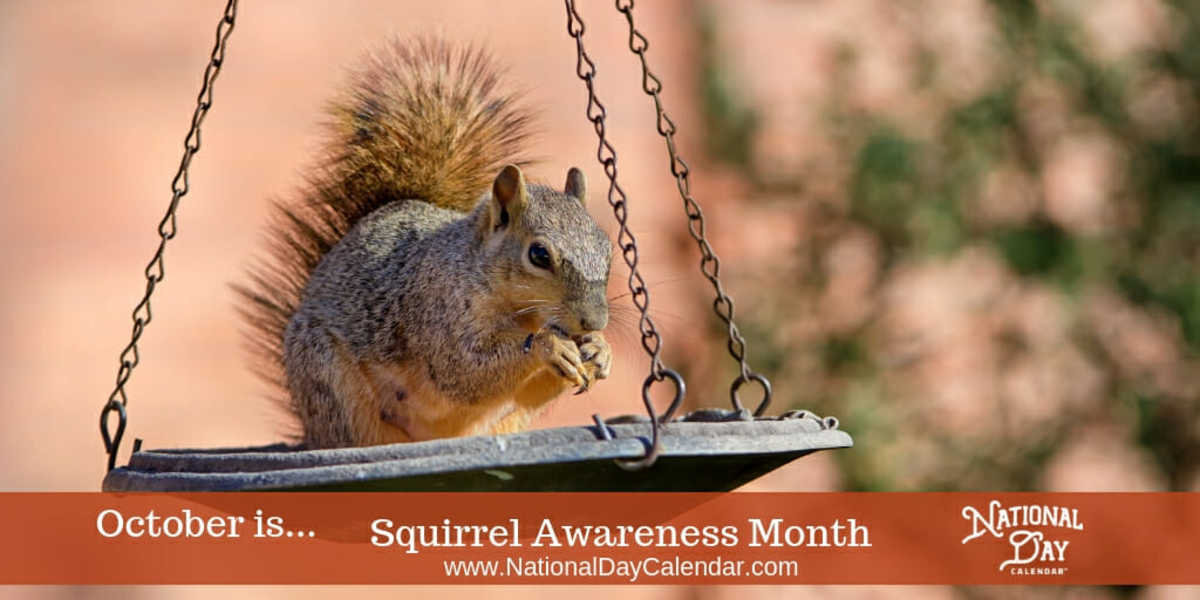
Squirrel Awareness Month is an annual designation observed in October. Yes, you read that right. A whole month dedicated to giving those furry, quirky little creatures a little appreciation. It’s a time to look around at a local park, or even right outside your window, and giggle at the silly mannerisms of squirrels.
They may come off as a little mischievous and troublesome when they get into the bird feeders or even your attic, but you may not realize why they do what they do. Squirrels spend most of the warmer months gearing up for winter. Here’s the craziest part: experts estimate that squirrels find and bury three years of food during the warm months! They don’t hibernate during the winter, but they do like to stay cozy in their dens so they can sleep and snack until it warms up again.
SciShow describes how Eastern Gray Squirrels use their mischievousness to defend their food caches in 7 Animals That Can't Be Trusted.
Almost every human has told a lie at some point or another - but did you know that we are not the only species to do this? From dogs to cuttlefish to thornbills, these 7 animals also lie!
For years, I have closed these entries by writing "May the Wester Squirrel not steal anything from you and hide it!" I didn't realize that the squirrels may be thinking the same thing about us!
*Today is also NationalFoodDay. I'm postponing my post about that until tomorrow. Stay tuned.
It'sFridaythe13th! For today's observance, I'm sharing two videos featuring psychologists who explain how and why people develop superstitions and what to do about them. I begin with Durango (Colorado) Daily News on Why Friday the 13th Is(n’t) Bad Luck, which also describes the history behind today's date.
Do you think bad things happen on Friday the 13th? We talk to Fort Lewis College Psychology Professor Brian Burke about the origins of superstition in society and why they have a hold on us.
While Professor Burke explains how and why superstitions begin and continue, he doesn't say anything about them other than they are coincidences and implies that we shouldn't believe them. Studio 10 in Australia's guest in Friday the 13th Superstitions makes that more explicit. It helps that the panel spices up the lesson by adding humor.
We speak with psychologist Sally-Anne McCormack about SUPERSTITIONS on this freaky date.
It's amazing how much breaking a mirror bothered the panel, although they did cite non-superstitious reasons for their feelings; it's destructive and poses a risk of injury. On the other hand, they were divided about opening an umbrella indoors. Personally, I found it a bit silly and inconsiderate of other people's space but still funny.
I close by noting that today is the only Friday the 13th this year, as the following calendar shows.
It could be worse. The years 2023, 2024, and 2029 will have two, just as 2020 did, and 2026 will have three, the most possible. That last occurred in 2015. Gee, did anything bad happen that year? Coincidence, I'm sure.
HappyGroundhogDay! The master of ceremonies at this morning's ceremony at Gobbler's Knob, Pennsylvania remarked that people all around the world have said the past year felt like "Groundhog Day" with the same day repeating itself over and over. That inspired me to examine the science of why people's perception of time has been distorted that way.* I begin with WDIV in Detroit asking Has the [perception] of time changed due to COVID-19? Study show it's possible.
A study shows the COVID-19 pandemic may change people's [perception] of time based on certain factors.
March was so long ago and April barely lasted a week. Professor Peter Tse talks about how our perception of time has changed because of the pandemic.
The sped-up montage by itself does a good job of depicting the sameness of days during the COVID-19 pandemic, while Professor Peter Tse's explanation is good as far as it goes. PBS Digital's It's Okay To Be Smart goes farther and explains more in Why Time Moves Fast...and Slow.
Time passes for all of at the [same] rate of one second per second. But why does it sometimes feel like time is passing so fast, or so slowly? Especially during COVID? Let’s learn about how our brains keep track of and try to make sense of time, and how they get fooled.
That's enough science about how people perceive time for now. May it have made my readers understand why they feel the way they do about the passage of time and that they're not alone.
Will Punxsutawney Phil see his shadow? Watch Groundhog Day live from Gobbler’s Knob in Pennsylvania.
Yes, there's hope; the cycle will be broken and the monotony will end.
All the above makes Punxsutawney Phil's prediction that there will be six more weeks of winter, a forecast echoed by Michigan's own Woody the Woodchuck, secondary. Stay warm and stay safe, everyone!
Outstanding Music Composition for a Documentary Series or Special (Original Dramatic Score)
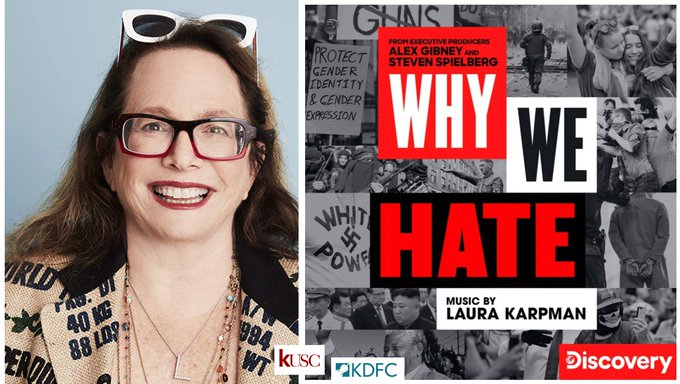
Becoming - Kamasi Washington (Netflix) Home - Amanda Jones (Episode: "Maine") (Apple TV+) McMillion$ - Pinar Toprak & Alex Kovacs (Episode: "Episode 1") (HBO) Tiger King - Mark Mothersbaugh, John Enroth, Albert Fox (Episode: "Not Your Average Joe") (Netflix) Why We Hate - Laura Karpman (Episode: "Tools & Tactics") (Discovery Channel)
Normally, I'd go with the most famous composer, who is Mark Mothersbaugh for "Tiger King" except that Laura Karpman also has a nomination for Outstanding Original Main Title Theme Music, so I think she's the favorite.
The team from Why We Hate wins the Emmy for Outstanding Music Composition for a Documentary Series or Special (Original Dramatic Score).
Why is this science? Because "Why We Hate" is an application of psychology, which is a science, to solving a problem.* As IMDB describes the show, it's "an exploration into the human condition for hatred and how we can overcome it." Here's to being able to do that.
Outstanding Short Form Nonfiction or Reality Series
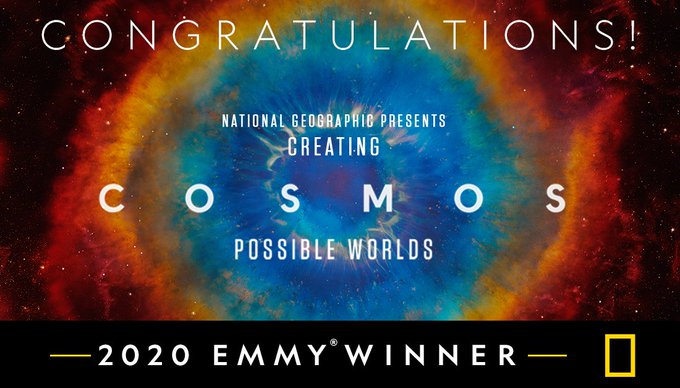
Between The Scenes - The Daily Show (Comedy Central) Full Frontal With Samantha Bee Presents: Pandemic Video Diaries (TBS) National Geographic Presents Cosmos: Creating Possible Worlds (National Geographic) Pose: Identity, Family, Community (FX) RuPaul's Drag Race: Out of the Closet (VH1)
"Creating Saturday Night Live," Last year's winner, is not returning, but last year's nominees "Pose: Identity, Family, Community" and "RuPaul's Drag Race: Out of the Closet" are. On that basis, I consider them the nominal favorites, although I've been finding Samantha Bee's Pandemic Video Diaries to be hilarious and Trevor Noah won his one Emmy Award for "Between The Scenes - The Daily Show." Between the two variety talk nominees, I'd say Noah has the better shot at the award.
The team from National Geographic wins the Creative Arts Emmy for Outstanding Short Form Non-Fiction/Reality Series.
Shame on me, I didn't even consider "Cosmos: Creating Possible Worlds" for the win, but as a scientist, I should have. I guess my focus on the variety nominees had me looking in the wrong direction. Just the same, congratulations to the show I should have been rooting for all along!
ETA: "Cosmos: Possible Worlds" also won a second Emmy Award for Outstanding Individual Achievement in Animation. Congratulations, again!
Kareem Abdul-Jabbar on Black Patriots: Heroes of the Revolution (History)
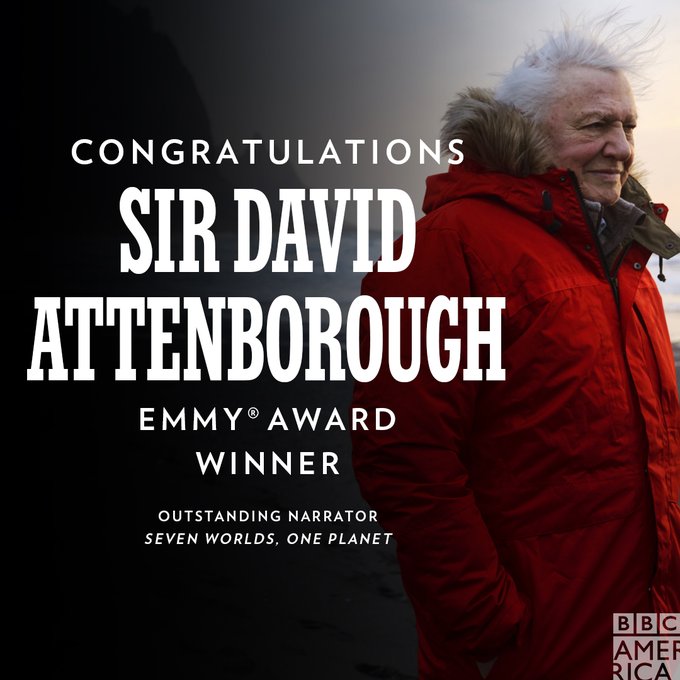
David Attenborough on Seven Worlds, One Planet (Episode: "Antarctica") (BBC America)
Angela Bassett on The Imagineering Story (Episode: "The Happiest Place on Earth") (Disney+)
Chiwetel Ejiofor on The Elephant Queen (Apple TV+)
Lupita Nyong'o on Serengeti (Episode: "Destiny") (Discovery Channel)
What a list of all-star talent! Lupita Nyong'o is an Oscar winner, Angela Bassett is an Oscar nominee and Golden Globes winner, Chiwetel Ejiofor is an Oscar nominee, and David Attenborough is two-timereturning winner. On that basis, I'd say Sir David is the nominal favorite, although he's up against stiff competition. The nominee I'd look out for is Nyong'o because "Serengeti" is the only series with two nominations.
That reminds me that I'm used to seeing a lot of nature documentaries nominated at the Emmys, but that's not the case this year. I suspect that's because "Tiger King" sucked up all the oxygen that would normally go to shows about wild animals.
Despite all its nominations, "Tiger King" walked away empty-handed. That's not the case for Sir David. Watch 2020 Creative Arts Emmys: Narrator to see him win.
David Attenborough wins the Emmy for Outstanding Narrator.
Congratulations to the one Emmy winner I know I've met in person!
The last winner is one that I expected, but only by accident was I reminded that it belonged here as much as it did in reality programs.
Outstanding Cinematography for a Reality Program
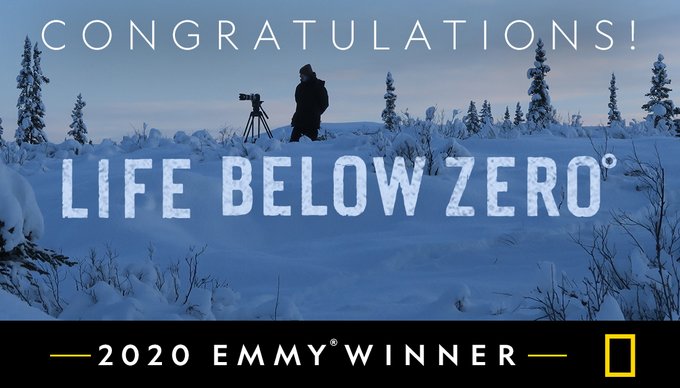
Cheer (Episode: "Hit Zero") (Netflix) Life Below Zero (Episode: "The New World") (Nat Geo) Queer Eye (Episode: "We're in Japan!: Japanese Holiday") (Netflix) RuPaul's Drag Race (VH1) Survivor (CBS)
On the other hand, "Life Below Zero" has a decent shot at repeating here, as it won this award last year. I think its strongest competition consists of "Cheer" based on the trailer and "Survivor" based on my experience of watching the show.
Greta Thunberg is alarmed that most countries have been much faster to move on combating the coronavirus pandemic than they have the existential threat of climate change.
Environmental activist Greta Thunberg describes the world's current response to the climate change crisis as being stuck in the middle of the ocean and "setting fire to the boat."
The biggest problem for the climate change fight isn’t technology — it’s human psychology.
I've been holding onto this video for three years until the right opportunity came along. It finally did.
*I placed the second half of the interview first because I was more interested in her take on the pandemic and thought it made for a better preview image. I've done that before.
**I searched for "gifted children's crusade" on Google and found no results for that exact search string, so I'm using it and claiming to be the first. I am calling the Youth Climate Strike that because when I watched the videos in Thousands of U.S. students strike for the climate, it struck me that the highest achieving middle and high school students were all there. They understood what the science meant for their futures and it scared and outraged them. May more of their generation catch up to them as they grow up. I just hope that the movement's opponents don't use my name for the movement against them.
Social media sites like Facebook, Twitter, and YouTube exploit our tribalism to keep us watching ads. That makes them a perfect target for trolls, conspiracy theorists, and con artists. ... Social media sites like Facebook, Twitter, YouTube, and Instagram are built to cater to the base preferences and desires of their users -- figuring out what information people enjoy with and then showing them more of it. That’s a great way to keep people online, but it also makes these platforms prime target for con artists. People are naturally drawn to inflammatory and sensational news stories, regardless of whether or not they're true. So bad actors -- conspiracy theorists, trolls, and fake news writers -- have been tremendously successful in using these platforms to spread false and divisive content that exploit people’s tribal instincts.
In 2016, it was Macedonian teens making thousands of dollars publishing inflammatory fake stories about Hillary Clinton. After the Parkland shooting, it was random YouTubers going viral by accusing students of being crisis actors. Even the Russian trolls who meddled in the presidential election did so by posting low-quality, highly emotional content to social media -- content they knew would go viral.
The problem with these social media sites isn’t that a few bad apples are ruining the fun. It’s that they’re designed to reward bad apples. And as long as con artists can use these platforms to prey on people’s most base desires, social media sites will continue reflecting the worst of human nature back at us.
"There's been a lot of focus in recent years on emotions and political attitudes, but the ways we, as political scientists, have studied this phenomena have made it hard to draw firm conclusions," said Dr. Jonathan Renshon, from the University of Wisconsin-Madison. "We bypassed many of the methodological problems of previous studies by inducing an emotion unrelated to politics and measuring its effects not with self-reports but with tonic skin conductance." ... "We found that the anxiety we generated was powerful enough that people couldn't simply turn it off, it carried over to unrelated domains and actually influenced people's political beliefs, particularly their attitudes towards immigrants," concluded Renshon. "This is all the more important as political campaigns become more adept at stimulating and manipulating the emotions of the general public."
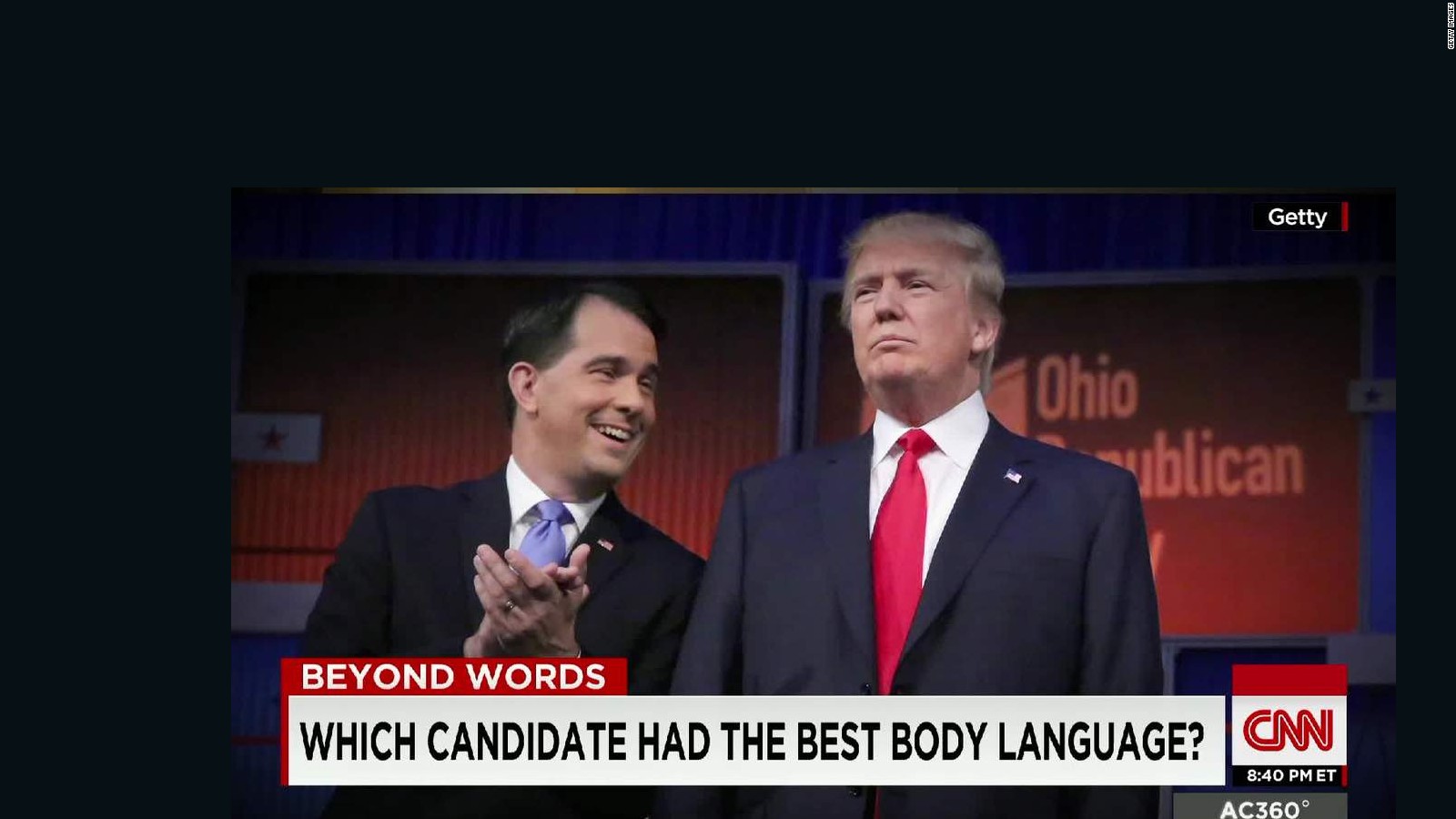
We like to think that we consider our electoral options carefully, and base our decisions on conscious, rational judgments. But it may be a candidate’s height, attractiveness or voice that play outsized roles when we go to the polls.
I'd like to agree with Julia Wilde, the presenter of the video above, that, once we know about the emotional buttons politicians press, we can work to suppress them and pay attention to policy and other rational matters, but I think that's easier said than done. Keep that in mind this election year, especially all my readers in the eight states going to the polls todayfor primary elections. May they at least try to make a rational decision instead of an emotional one when they vote.
People exposed to entertainment television are more likely to vote for populist politicians according to a new study co-authored by an economist at Queen Mary University of London.The researchers investigated the political impact of entertainment television in Italy over the last 30 years during the phased introduction of Silvio Berlusconi's commercial TV network Mediaset.
The press release struck an even more relevant note in its conclusion.
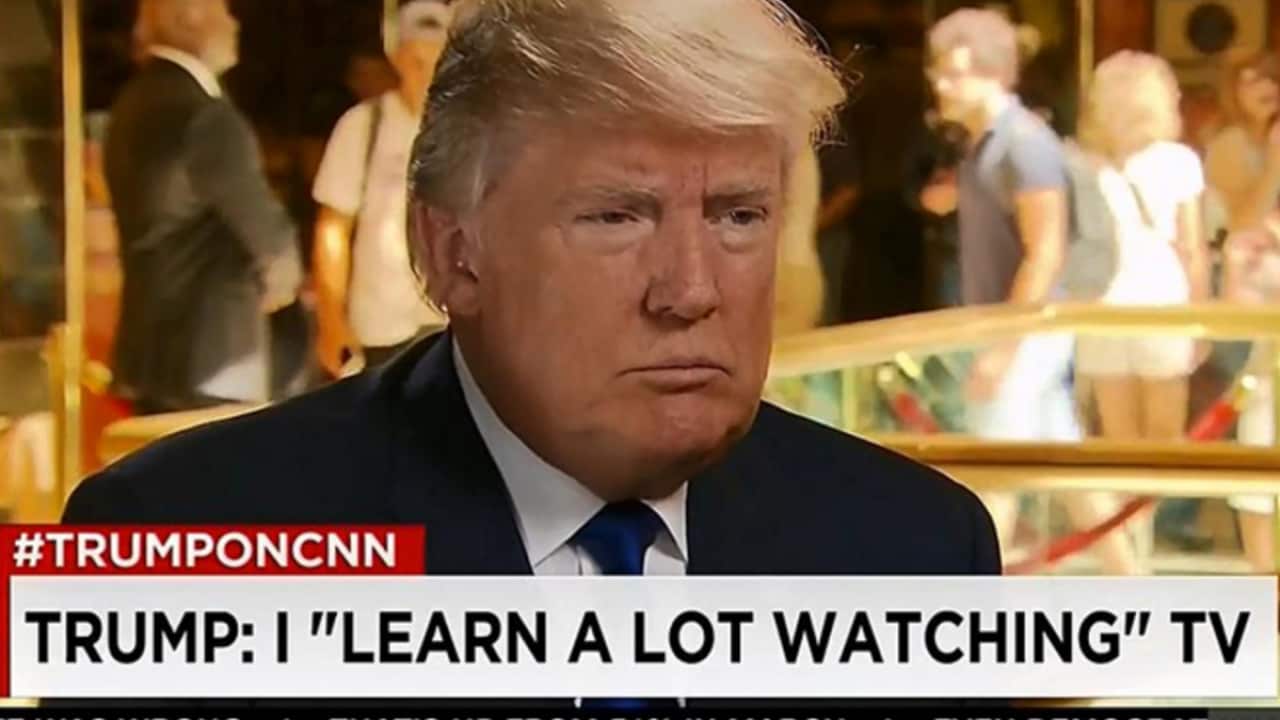
Dr. [Andrea] Tesei said: "Our results suggest that entertainment content can influence political attitudes, creating a fertile ground for the spread of populist messages. It's the first major study to investigate the political effect of exposure among voters to a diet of 'light' entertainment. The results are timely as the United States adjusts to the Presidency of Donald Trump."
Hence the image I used to illustrate this entry — Trump isn't the only person to learn a lot watching television. All of us do, whether we're aware of it or not.
That's it for May. Stay tuned for the first post of June coming up at or just after Midnight.
The answer is yes, or at least it thinks it does according to its algorithms (there is no label for Libertarians, so they would be slotted along the simple liberal-conservative spectrum). The program considers me very liberal under US politics (I just consider myself liberal, but it wouldn't surprise me if I have drifted even farther left over the years) and likely to engage with political liberal political content. Hey, I produce liberal political content; of course I engage with it!
It also knows about where users live relative to their families and hometowns (I'm an expatriate Californian, so I'm away from both), whether users are gamers, if they are interested in education and libraries, and if they commute to work. I mention those because Facebook "knew" and because I have already revealed them here, along with my being a dog owner, which Facebook figured out as well. It will determine these things for my readers who are Facebook users as well. Follow the instructions in the video and image and see if I'm right.
One piece of information that I haven't revealed myself is what Facebook calls "Multicultural Affinity," i.e., users' racial or ethnic identification according to their online behavior. It doesn't necessarily match users' self-identification. On the one hand, that could be chalked up to artificial intelligence being an oxymoron or a flaw in the algorithm. On the other, it's definitely picking up something about Facebook users that they don't even know about themselves but Facebook and its advertisers do. I'm just not sure what it is.
*This was the twentieth most read entry of the third year of the blog. I believe the research presented in that post is what ultimately lead to Cambridge Analytica's use of psychological profiling for political advertising. I'll check that hypothesis and get back to my readers. Stay tuned.
Enough about flu for now. Tomorrow will be an entertainment entry. Since sports counts as entertainment, I might post something about the Winter Olympics. Stay tuned.
Because of the excitement surrounding the Olympics, we decided to make a series about the psychology, physiology, biology, chemistry and physics of the games! Join us every day for your daily dose of Olympic science.
The very first fact about the composition of Olympic medals, recalls the Seeker/DNews video "Are Olympic Gold Medals Really Made of Gold?" I included in More science of the Olympics from Discovery News. I tell my students about that in reference to gold medalists biting their awards. Let's see how many of my students see that sight and remember my little lecture.
As for the rest, many of them are previews of coming attractions. Follow over the jump to see how many appear in the next five videos.
For the Sunday entertainment entry, I'm going to do what I did last year for Bob Dylan, feature the winner of the Nobel Prize for Literature. Normally, I'd have done this in October, when the winners are announced, but I was too busy writing about the News and Documentary Emmy Awards. However, I have a second chance today, as it's Nobel Prize Day.
The Nobel Laureates are announced at the beginning of October each year. A couple of months later, on 10 December, the anniversary of Alfred Nobel’s death, they receive their prizes from the Swedish King – a Nobel diploma, a medal, and 10 million Swedish crowns per prize. All Nobel Prizes are awarded in Stockholm, Sweden, except for the Nobel Peace Prize, which is awarded in Oslo, Norway. (When Alfred Nobel was alive, Norway and Sweden were united under one monarch, until 1905 when Norway became an independent kingdom with its own king.)
British novelist Kazuo Ishiguro has been announced as the winner of the 2017 Nobel Prize in Literature.
It was announced by Professor Sara Danius, permanent secretary of the Swedish Academy.
Japanese-born Ishiguro won the prize for uncovering "the abyss beneath our illusory sense of connection with the world," the Swedish Academy said on awarding the nine million crown ($1.1 million/936,000 euros) prize.