Showing posts sorted by relevance for query de-extinction. Sort by date Show all posts

Thursday, May 22, 2025

Dire wolf de-extinction revisited for International Day of Biological Diversity and Throwback Thursday

Happy International Day for Biological Diversity and Throwback Thursday! As I promised, I'm revisiting dire wolf de-extinction. I begin with SciShow asking Did We Just De-Extinct Dire Wolves?!

So you've probably heard by now that a biotech company called Colossal Biosciences has brought dire wolves back form extinction. Or at least.... they SAY they did. We wanted to break down all the science in their claims, and get to the bottom of the dire wolf dilemma before George R. R. Martin adopts all the wolf pups. Here's the truth on de-extinction, de-mystified.

Hosted by: Savannah Geary (they/them)
I'm glad to see Rancho La Brea make an appearance. I spent four years there working on my M.S. thesis in geology, where "I was the first person to identify 33 species from the most famous fossil deposit in North America." I also walked past the wall of dire wolf skulls and a copy of the mural shown in the video on a regular basis. I'm quite familiar with a paleontological perspective on the species. I'm also aware that using a gray wolf as a template has issues; dire wolves are genetically closer to the common ancestor of most jackals than wolves. Finally, Colossal Biosciences' dire wolves don't fit any of the three species concepts for real dire wolves. Darn.

I continue with Be Smart's The Argument for De-Extinction: EXPLAINED.

Dire wolves are back-sort of. Colossal Biosciences seems to have resurrected this extinct predator, but it's not quite as simple as that. Joe talks with their scientists to explore the truth, tech, and ethics of "de-extinction."
The scientists from Colossal Biosciences that Joe Hanson interviewed both gave intelligent, well-reasoned answers that make me think and feel that they know what they are doing and understand its place in preserving biodiversity. I just hope people are listening.

SciShow's video mentioned that Hank Green had made two videos about dire wolf de-extinction. He's since made a third, Everyone Ignored Colossal’s Bigger Wolf News.

What if there is an actual de-extinction hiding just under the surface.
One question that came up in all three videos is "What is a species?" That has to be answered first to say whether Colossal Biosciences actually revived dire wolves and if not, what are they? I didn't expect that debate last month, but here we are. Also, I agree with Hank that the real de-extinction story will be the red wolf.

I leave this topic with TierZoo asking Are Dire Wolves going to become OP again?

Did modders at Colossal Biosciences just break the game?
Patrick Lacey finally wrote a description I can use!

Before I leave, other viewers and I responded to Lacey's "Stark white coat" remark. Here are my comments.

"I spent five minutes scrolling through the comments to see if someone else had noticed this. Congratulations, you did, so we can both say, 'We see what you did there.'"

"Yes, he did, so we can say, 'We see what you did there.' These are Game of Thrones dire wolves and George R.R. Martin is one of the authors on Colossal Biosciences paper."

"Until this development, I had never noticed that Game of Thrones has GMO in the correct order — GaMe Of Thrones!"

Enough silliness in the service of science and entertainment. Stay tuned for Flashback Friday.

Monday, March 25, 2013

De-extinction: moral imperative or techno-narcissism?

Two weeks ago, TED Talks posted Stewart Brand: The dawn of de-extinction. Are you ready?

Throughout humankind's history, we've driven species after species extinct: the passenger pigeon, the Eastern mountain lion, the dodo .... But now, says Stewart Brand, we have the technology (and the biology) to bring back species that humanity wiped out. So -- should we? Which ones? He asks a big question whose answer is closer than you may think.
Megan Gannon of LiveScience just reported the facts in Reviving the Woolly Mammoth: Will De-Extinction Become Reality?
Biologists briefly brought the extinct Pyrenean ibex back to life in 2003 by creating a clone from a frozen tissue sample harvested before the goat's entire population vanished in 2000. The clone survived just seven minutes after birth, but it gave scientists hope that "de-extinction," once a pipedream, could become a reality.

Ten years later, a group of researchers and conservationists gathered in Washington, D.C., today (March 15) for a forum called TEDxDeExtinction, hosted by the National Geographic Society, to talk about how to revive extinct animals, from the Tasmanian tiger and the saber-toothed tiger to the woolly mammoth and the North American passenger pigeon.

Though scientists don't expect a real-life "Jurassic Park" will ever be on the horizon, a species that died a few tens of thousands of years ago could be resurrected as long as it has enough intact ancient DNA.
Alan Boyle at NBC News included more opinion in his fairly even-handed article Should we revive extinct species? Watch experts debate de-extinction explaining both de-extinction and linking to the conference. In it, science writer Carl Zimmer made a vain wish.
Zimmer said the last thing that Church and his colleagues want is a genetic free-for-all over de-extinction. "They want this to be something where there's a strong consensus," he said. "This is not an off-the-reservation project."
Too late. Very shortly thereafter, the scientific and popular press went wild over it. Follow over the jump for the reaction, both pro and con.

Friday, May 19, 2023

PBS Terra on de-extinction for Endangered Species Day

Happy Endangered Species Day! I'm taking a different tack on today's celebration by following up on a note to myself in 'SNL' shoots down the Chinese 'spy balloon' in its cold open and Weekend Update: "I'm glad to see de-extinction back in the news, which means I'll have to write about it." PBS Terra's "Far Out" series made that easy for me by uploading Why Scientists Want to Resurrect Extinct Species yesterday. I can't resist an attempt to make science fiction into science fact as a topic.

From the woolly mammoth to the passenger pigeon, extinct species once maintained the balance of the earth’s delicate ecosystems. But human interference has resulted in dramatic loss of biodiversity. Can science restore what has been lost? In this episode of Far Out, we dig into ‘de-extinction’ as geneticists and molecular biologists attempt to bring back species to restore the health of the planet.
While I've written about several times about mammoth de-extinction and mentioned Tasmanian wolves as a candidate before, I've discussed the passenger pigeon as a candidate for de-extinction twice before and was critical of the idea.
Swain points out two obvious flaw[s] in the headline example from the talk, reviving the passenger pigeon. That's a species that is well-known for only reproducing in large flocks. A single couple will not be enough. Instead,...there will have to be many thousands of them. I've even read estimates that it may take colonies of at least a million to induce the bird to breed. Also, the environment that supported these birds will have to be re-created if it's too degraded and fragmented. That's a lot of time, energy, and money to make this project succeed.
I repeated the first concern in KPBS on de-extinction.
[S]omeone finally presented a reason for bringing back passenger pigeons beyond "it's cool" and assuaging guilt over its extinction, one that helps organisms other than humans. Now they'll just have to produce a million birds within the lifetime of the first one, so the population can sustain itself in the wild. Passenger pigeons were not California Condors, which can go from 22 to more than 400 in three decades. They required huge flocks to induce them to breed. That's a major hurdle I don't think the techno-optimists have considered yet.
I still think so. Maybe the genetically engineered hybrid of the band-tailed pigeon and the passenger pigeon won't have the same need for a large flock to breed as the extinct species seemed to require, although that would be a characteristic that would demonstrate that these wouldn't really be passenger pigeons. If so, it might be worth doing, especially since the experts seem to think the eastern hardwood forest is not as far gone as I thought nearly a decade ago.

Speaking of a decade ago and de-extinction, I wrote Jurassic Park 20 years later and other paleontology news a decade ago. That might make a good topic for a Sunday entertainment feature, although I have something else planned this weekend. In the meantime, I'm not done with biodiversity as tomorrow is World Bee Day and Monday is International Day for Biological Diversity. I'm tempted to recycle 'Prehistoric Planet' previews explore extinct biodiversity on International Day for Biological Diversity with the trailer for season 2. Stay tuned.

Thursday, November 21, 2013

KPBS on de-extinction

It's been eight months since I wrote De-extinction: moral imperative or techno-narcissism?  It's about time that I revisit the subject, which I'm doing with help from KPBS.

San Diego Researchers Discuss Bringing Back Extinct Animals

The fiction of Jurassic Park might be on the verge of reality. Scientists are talking about the possibility of bringing back extinct species.
In my previous entry on the subject, I came to the conclusion that the advocates of de-extinction were really all about us.  As you can see and hear, so are the opponents, although in a way that is generally regarded as charitable rather than selfish.  On the other hand, someone finally presented a reason for bringing back passenger pigeons beyond "it's cool" and assuaging guilt over its extinction, one that helps organisms other than humans.  Now they'll just have to produce a million birds within the lifetime of the first one, so the population can sustain itself in the wild.  Passenger pigeons were not California Condors, which can go from 22 to more than 400 in three decades.  They required huge flocks to induce them to breed.  That's a major hurdle I don't think the techno-optimists have considered yet.

Tuesday, April 8, 2025

De-extinction update — dire wolves and woolly mice

Weekend Update on Saturday Night Live Saturday Night Live showed some genetically modified woolly mice, to which I responded "I'm glad to see progress being made on mammoth de-extinction — science!" The company behind the woolly mice revealed an even bigger development this week, which TIME profiled in No Longer Extinct? Colossal Biosciences' Dire Wolf Project.

Colossal Biosciences' project to revive the once-extinct dire wolf could also prevent existing but endangered animals from slipping into extinction themselves.
On the one hand, this is a great technological and scientific advancement. On the other, these aren't really dire wolves. They're genetically modified gray wolves with about a dozen dire wolf genes, which is still quite an accomplishment. If nothing else, they're proof of concept and cool animals in their own right.

Speaking of proof of concept, TIME reported Scientists Genetically Engineer Mice with Woolly Mammoth Like Hair last month.

Extinction is typically for good. Once a species winks out, it survives only in memory and the fossil record. When it comes to the woolly mammoth, however, that rule has now been bent. It’s been 4,000 years since the eight-ton, 12-foot, elephant-like beast walked the Earth, but part of its DNA now operates inside several litters of four-inch, half-ounce mice created by scientists at the Dallas-based Colossal Laboratories and Biosciences.
Cute, but the scientist interviewed at the end was not that impressed. Neither was Anton Petrov, who I first featured in Ig Nobel Prizes for April Fools Day 2025, a holiday special, in Let's Talk About the Woolly Mammoth Mice That Were Just Created.

Hello and welcome! My name is Anton and in this video, we will talk about the woolly mice (please note a small correction in the video comments about the base pair/gene differences between mammoths and elephants)[.]
...
Small correction (thanks Jake): It's not 1.5 million gene differences, but 1.5 million base pairs (building blocks of DNA)[.]
Mouse genome is believed to contain around 80,000 genes (but only 22000 create proteins) and here 8 were affected[.]

A more realistic comparison would be to use total number of base pairs and for Asian elephants there are 3.38 billion base pairs and it looks like 1.5 million are different between elephants and mammoths[.]

Still a lot[.]
Petrov's objection I most agree with is the ethical and legal one — obtaining an elephant to experiment on. Just the same, I'm more optimistic than he is, even if these are stunts.

That's a wrap for today. Stay tuned for a retrospective on Wayback Wednesday tomorrow.

Saturday, November 15, 2014

Discovery News on mammoth de-extinction, the sequel


I have yet another installment of DNews on mammoth de-extinction.  Last time, they were wondering Are We Finally Ready To Clone A Mammoth?  This time, the question being asked is Woolly Mammoth Brain Found: Time To Clone?

In 2010, a woolly mammoth was discovered near Russia. New research says describes her brain as the best specimen in history! Catie Wayne is here to discuss what this could mean for the future of cloning.
The answer is still no.  Darn.

Thursday, February 9, 2017

NBC News update on mammoth de-extinction


I've written before about the effort to revive the woolly mammoth, although it's been three years since the last entry, so it should come as no surprise that I'm posting the latest on the subject from NBC News: Scientist Tries To Bring The Woolly Mammoth Back From The Dead.

Harvard geneticist Dr. George Church has been using a gene editing tool called CRISPR to try to bring the woolly mammoth back from the dead. They call it de-extinction.
That's a different technique than I've seen discussed before.  That alone makes this video worth sharing, although the tie-in to climate change and how mammoths or more accurately, genetically engineered cold-resistant elephants that imitate them, can combat higher temperatures in the Arctic, is even more valuable.  It actually makes this quixotic effort practical.

Saturday, March 8, 2014

DNews on mammoth de-extinction


It's time for another installment of the de-extinction saga.  This time, it's Discovery News asking Are We Finally Ready To Clone A Mammoth?

Everyone keeps asking scientists when they're going to clone a woolly mammoth. It's not the easiest thing to do, but they are working on it! Trace is here to discuss with you how we're planning on bringing back extinct animals, and how recent discoveries are helping this process.
As I noted in a comment over on DNews's YouTube channel, there are three inaccuracies in both the text and visuals.  First, the extinct animals shown look more like mastodons than mammoths.  Second, mammalian red blood cells have no nuclei or mitochondria, so they have no DNA to clone.  However, the white blood cells do, which is where DNA could be found.  Third, the preponderance of evidence supports mammoths being more closely related to Asian elephants than African elephants, so an Asian elephant would make for a better surrogate mother.  Besides, Asian elephants are easier to handle, which makes them more convenient to use even in the case when African and Asian elephants are equally closely related to mammoths.

Other than that, good video.

Sunday, April 7, 2013

Jurassic Park 20 years later and other paleontology news

This weekend marks the 20th anniversary of the release of "Jurassic Park" as well as the release of the 3D version of the film.  This makes for a perfect opportunity to re-examine the science behind the film, as well as what has changed both to make the movie more and less possible during the intervening two decades.

Discovery News on YouTube asks the question Can We Build A Real Jurassic Park?

It's the question on all our minds: WHEN IS JURASSIC PARK HAPPENING?! With all this talk of cloning extinct species and the upcoming twentieth anniversary of Jurassic Park the movie, Anthony takes a look at one man's plan to actually build a real life Jurassic Park... sort of.
Pay attention to how the presenter ties the idea behind Jurassic Park into de-extinction, something I have to follow up on.  Welcome to life imitating art, which means we are indeed living in science fiction times.  It also connects this post to this month's theme, as I teach that biodiversity is a key component of natural capital and part of what the textbook I use lists as part of the scientific basis of sustainability.

While Discovery News updated the biotechnology, CNN describes what paleontologists have found out about the animals since the movie was first released in Real dinosaurs scarier than ones in Jurassic Park.

CNN's Jake Tapper finds out how much we've learned about dinosaurs since the release of "Jurassic Park" in 1993.
While scientists are much more confident about what dinosaurs looked like, feathers and all, Megan Gannon of LiveScience cautions against being so confident about all details in True Color of Dinosaur Feathers Debated.
The discovery of microscopic color-making structures in fossilized feathers has recently made it possible for scientists to picture dinosaurs and ancient birds in their natural hues.

But a group of researchers warns we might not be able to paint a Microraptor shimmery black or give the giant penguin a maroon and gray coat just yet.
I'm sure future anniversaries of the movies will become opportunities for even more reflection on the state of our knowledge.

Follow over the fold for the rest of the paleontology news I included in Overnight News Digest: Science Saturday (Petition to reverse NASA sequester cuts) and Overnight News Digest: Science Saturday (Life possible on ancient Mars) on Daily Kos.

Saturday, January 9, 2016

Cloning endangered animals: Student sustainability video festival 52


I usually mention using biotechnology to restore biodiversity in the context of de-extinction.  However, it can also be used to build the populations of still-existing species, as Endangered Animal Cloning explains.

Scientists at a Brazil zoo have began cloning 8 wild animals in an attempt to save them from extinction

- Brazil will be the 3rd country, along with the US and South Korea, working on the cloning of wild animals.
- The science of cloning has come a long way since the successful cloning of Dolly the sheep in Edinburgh in 1996. Dolly was the first mammal cloned from an adult cell.
- The 8 species the Brasilia Zoo will attempt to clone include the maned wolf, brush dog, grey brocket deer, bison, jaguar, black lion tamarin monkey, Collared Anteater, and the Brazilian Aardvark.
-2 years has been spent gathering 420 genetic samples of these animals from dead animals found in the outback of Brazil.
- All these samples are necessary for a process that has a 5-7% average success rate.
- Researchers at the Brasilia Zoo have previously produced over 100 living clones of cows and horses but the process for wild animals is different and the next stage is to get those researchers trained.
- That training will take place while the group waits for legal approval to begin the cloning process.
- Carlos Frederico Martins, one of the head researchers, would not say how long it could take to produce the first clone but he did say it would likely be a maned wolf.
- If they are successful in cloning a jaguar they will be the first ones to clone a big cat. With only about 15,000 jaguars it would be a welcome relief.
- Though, the zoo has said that they would only release the cloned animals into the wild if the species was nearing total extinction.

The two popular questions surrounding this story are, what animals should and shouldn't be cloned AND how else can cloning benefit our society?
With this installment, I'm done with videos from this summer's student presentations.  The next series of these will include videos from the fall semester just completed.

Friday, May 16, 2025

'Earth's Worst Mass Extinction Is Actually a Warning' for Flashback Friday on Endangered Species Day

Happy Flashback Friday and Endangered Species Day! Instead of News & Doc Emmy Awards coverage today, I'm taking a paleontologist's perspective on the national day by sharing PBS Terra telling its viewers Earth's Worst Mass Extinction Is Actually a Warning.

There is a surprising natural wonder in the middle of the vast West Texas desert: a prehistoric ocean reef built from the remains of ancient sea life. This fossil-rich landscape tells the story of Earth's most devastating mass extinction—and can help enlighten the climate threats we face today.
I haven't blogged about the Permian mass extinction AKA The Great Dying since 2018. Seven years is long enough for a reminder of what could be the sixth mass extinction with humans as the asteroid.

The video description also included this call to action: "If you’re interested in supporting PBS’ mission, visit https://protectmypublicmedia.org/ to make your voice heard!" Public broadcasting in the United States is also an endangered species.

Follow over the jump for a retrospective of the most popular science and environment posts I shared on Instagram and Bluesky that I haven't recapped yet.

Friday, May 22, 2026

Bizarre Beasts explains 'What Both Doomed & Saved The Galápagos Giant Tortoises' for International Day for Biological Diversity on Flashback Friday

Happy International Day for Biological Diversity and Flashback Friday! I'm revisiting de-extinction today, but in a different way than Colossal Biosciences is doing. Watch Bizarre Beasts explain What Both Doomed & Saved The Galápagos Giant Tortoises for how.

Galápagos giant tortoises once numbered in the hundreds of thousands, with at least thirteen species. But now some of those species are gone forever and the same forces that doomed those tortoises might have ended up helping save others.
No need for geneetic engineering and cloning — old-fashioned selective and captive breeding could re-create species thought to be extinct. That's good news for today's biodiversity holiday!

Follow over the jump for a retrospective of two posts from the back catalog that relate to today's topic.

Monday, May 22, 2023

'Prehistoric Planet 2' explores ancient biodiversity on International Day for Biological Diversity

I concluded PBS Terra on de-extinction for Endangered Species Day with an idea for today.
Monday is International Day for Biological Diversity. I'm tempted to recycle 'Prehistoric Planet' previews explore extinct biodiversity on International Day for Biological Diversity with the trailer for season 2. Stay tuned.
I decided exploring ancient biodiversity was still my favorite idea — I'm a paleontologist who wants to share my passion with my readers — so watch Prehistoric Planet — Season 2 Official Trailer | Apple TV+.

New dinosaurs. New habitats. New Season. Prehistoric Planet returns May 22 on Apple TV+...

Prehistoric Planet, from executive producers Jon Favreau and Mike Gunton, and narrated by Sir David Attenborough, combines award-winning wildlife filmmaking, the latest paleontology learnings and state-of-the-art technology to unveil the spectacular habitats and inhabitants of ancient Earth for a one-of-a-kind immersive experience. The series is produced by the world-renowned team at BBC Studios Natural History Unit (“Planet Earth”) with support from the photorealistic visual effects of MPC (“The Lion King,” “The Jungle Book”) applied to concept art created by Jellyfish Pictures (“The Book of Boba Fett,” “Spirit: Untamed”). Prehistoric Planet season two continues to bring Earth’s history to life like never before as the series presents new dinosaurs, new habitats and new scientific discoveries while taking viewers around the world in an epic five-night adventure. With new dinosaurs like the Tarchia, one of the largest Ankylosaurus, to returning fan-favorites like the Tyrannosaurus rex, and many more, Prehistoric Planet returns with an all-new season of prehistoric wonders.

Theme by Hans Zimmer and Andrew Christie for Bleeding Fingers Music. Original score by Zimmer, Anže Rozman and Kara Talve for Bleeding Fingers Music.
That's the advertisement. Now for The Science Behind Prehistoric Planet 2 from IFL Science.

We sat down for an exciting chat with the producers of the second season of Prehistoric Planet on Apple TV+ to dig into the science behind the digital resurrection of these ancient animals.
That was informative and fun. I enjoyed the inclusion of prehistoric animals beyond dinosaurs and pterosaurs, who were the stars of Season 1. Mosasaurs, crocodylomorphs, turtles, mammals, and ammonites show how biologically diverse the terminal Cretaceous was. I also appreciated how the series didn't just present the latest science, but helped spur research that advanced the field of paleontology. Way to pay the field back beyond just popularizing it!

While I raved about the trailer and previews for season 1, my prediction that the series would receive multiple Emmy nominations still hasn't come true. Hans Zimmer took home two awards for its music at the Hollywood Music In Media Awards and it earned nominations at the Cinema Eye Honors Awards, Annie Awards, Visual Effects Society Awards, Television Critics Association Awards, and Hollywood Critics Association Television Awards, but no Emmy nominations. I hope that was because Apple TV+ decided to submit it to the News & Documentary Emmy Awards instead of the Creative Arts Emmy Awards. If so, I'll be looking for those nominations in a couple of months.

The producers mentioned how cute the baby Velociraptors were, so I'm closing with Prehistoric Planet — Cutest Dino Moments | Apple TV+.

Some were cautious forest dwellers. Others were fearful flyers. All of them were extremely squeezable. More cuteness to come. Prehistoric Planet Season 2 returns May 22 on Apple TV+...

Narrated by Sir David Attenborough, and featuring an original score by multiple Academy Award winner Hans Zimmer, the captivating exploration of ancient Earth will debut with five all-new episodes in a week-long event.
I hope these clips help earn some Emmy nominations. In the meantime, I plan on posting a tale of the Retail Apocalypse tomorrow. Stay tuned.

Sunday, February 5, 2023

'SNL' shoots down the Chinese 'spy balloon' in its cold open and Weekend Update

In addition to being popular posts, my Sunday highlights of the previous night's "Saturday Night Live" help me feature news stories I missed during the week. Last night's episode was no different, as it began with Spy Balloon Cold Open.

Katy Tur (Chloe Fineman) reports on the U.S. military shooting down a suspected Chinese spy balloon (Bowen Yang) with the help of a Pentagon official (Kenan Thompson).
I'm glad SNL is featuring Bowen Yang's costumed impressions, like Krampus, which Yang mentioned in the interview by Seth Meyers I embedded in George Santos responds to his impersonators, who clap back, a spotted lanternfly, a proud gay Oompa Loompa, and the iceberg that sunk the Titanic, in its cold opens as it did his impression of George Santos last month. He deserves the spotlight, especially since he was the one actor nominated for an Emmy last year.

On a more serious note, both Thompson and Yang made valid points in the skit about TikTok and Amazon already surveilling their users and being bigger security risks than a balloon. Remember, Big Data is watching you!


SNL continued covering the balloon story in Weekend Update: U.S. Shoots Down Chinese Spy Balloon, FBI Searches Biden's Beach House.

Weekend Update anchors Colin Jost and Michael Che tackle the week's biggest news, like George Santos lying about producing Broadway’s Spider-Man: Turn Off The Dark.
I'm going to have to return to some of these stories, like Florida loosening gun laws and pressuring the College Board to revise the AP African-American History course, which makes a great topic for Black History Month. In the meantime, Santos claiming to be a producer of a failed Broadway play makes me think he learned the wrong lesson from "The Producers." Speaking of pathological liars, Jon Lovitz had a role in the remake. Santos continues to make my prediction that he will be a great inspiration for comedy as long as he stays in the news true.

Follow over the jump for the rest of Weekend Update, which included bits about animals and science, two topics I can't resist.

Sunday, June 11, 2023

Celebrating 30 years of 'Jurassic Park'

As I telegraphed yesterday, today's Sunday entertainment feature celebrates 30 years of Jurassic Park. I begin with some corporate PR from the Jurassic World YouTube channel, Celebrating 30 Years of Jurassic Park.

Thirty years ago, the world experienced the original Jurassic Park, "the beginning of something that changed movies." Sam Neill (Dr. Alan Grant), Laura Dern (Dr. Ellie Sattler), and Jeff Goldblum (Dr. Ian Malcolm) return in an exclusive clip to reflect on their experiences and express their gratitude to the fandom for keeping the captivating wonders of Jurassic Park alive. After all, "there's something about dinosaurs which captures the proper imagination like nothing else."
At its core, this video is a great piece of self-promotion, but it has the best preview image, the best video description, and the best capturing of the spirit of the franchise and especially the original movie of any video I found, so in featured position it goes.

News Center Maine had the next best retrospective in 'Jurassic Park' celebrates 30th anniversary.

The film debuted at the Uptown Theater in Washington, D.C., an event that was also a fundraiser for children's charities.
The clip from 30 years ago held up really well, including the interview with Gary Hoyle of the Maine State Museum. The original movie took the science seriously, both the paleontology and the biotechnology, which has led to serious proposals for de-extinction, although not of dinosaurs from amber. That's not going to happen.

I close with KHON2 News' Kualoa Ranch celebrating 30th anniversary of Jurassic Park with LEGO and a giveaway.

It was 1993 when Steven Spielberg's Jurassic Park, the first one, came out and hit the screens.
On the one hand, this is local news promoting a local commercial event as a public service for locals' entertainment. This is something I see over and over again in local news coverage of holidays and I'm ambivalent about it. On the other, it really does describe the importance of the movie to Hawaii and how it has affected the intervening 30 years, including the filming of "Lost" and "Jumanji" at the ranch. Those are important not only to Hawaii, but to movies and television more broadly.  That history makes this clip worth sharing.

I might have more to write about the 30th anniversary of "Jurassic Park." Stay tuned.

Tuesday, April 4, 2017

Videos for my biology classes--dinoflagellates, thylacines, and pandas


I blog for a number of reasons, but one is a form of professional development.  In addition to organizing my research, I will park videos here that I plan to use in my classes using the stories I tell my students label.  Since I'll be teaching my evolution, ecology, and biodiversity class starting next month as well as new sections of my environmental science class, it's time for me to stock up.  Here are three videos that popped up on my YouTube subscriptions over the past few days.

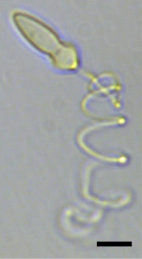
The first is from AAAS/Science Magazine: Hunting microbe wields a “gatling gun” harpoon.

Single-celled organisms have intricate microscopic weapons evolved for capturing prey.
As soon as I saw the preview image, I knew this was about dinoflagellates.  At least now I have something interesting to tell my students about them other than red tides and bioluminescence.

Follow over the jump for two videos about mammals that work equally well for my advanced students as for my general onces.

Sunday, March 9, 2025

Trump mediates between Musk and Rubio in cold open plus Lady Gaga on 'SNL'

As I promised yesterday, I'm sharing the highlights of last night's Saturday Night Live. I begin, like the show, with Trump, Musk and Rubio Meeting Cold Open.

Donald Trump (James Austin Johnson) attempts to keep the peace between Marco Rubio (Marcello Hernández) and Elon Musk (Mike Myers) during a meeting at the Oval Office.
While I still appreciate Michael Meyers playing Elon Musk's as an Austin Powers villain, as I've written three times before, "'I know you are but what am I?' was a lot funnier when Pee-wee Herman said it." At least James Austin Johnson as Trump called him out on it.

Donald "Hoover Cleveland" Trump and Musk both made headlines in Weekend Update: Trump Causes Tariff Confusion, Elon Musk's SpaceX Starship Explodes.

Weekend Update anchors Colin Jost and Michael Che tackle the week's biggest news, like Donald Trump Jr. considering a presidential run in 2028.
That's one of the best responses to Weekend Update I've heard from an SNL audience in a long time. I chalk it up to a great week for material, good writing, and the Lady Gaga fans being vocal. Being "little monsters" isn't all bad!

Weekend Update continued with Heterosexual Man Sues Starbucks for Discrimination, Scientists Create "Woolly Mouse".

Weekend Update anchors Colin Jost and Michael Che tackle the week's biggest news, like research suggesting men who have stronger sperm tend to live longer lives.
On the one hand, I was right to be worried about Sesame Street; I just didn't think it would happen this soon. On the other, I'm glad to see progress being made on mammoth de-extinction — science!

While the news about Sesame Street and Amazon already qualifies this entry as the Sunday entertainment feature, the next segment solidifies it, since I treat sports as entertainment. Watch Kendrick Perkins on the 2025 NBA Playoffs.

Kendrick Perkins (Kenan Thompson) stops by Weekend Update to discuss the 2025 NBA Playoffs.
That was complete nonsense and utterly hilarious! Let's see if Lord Gaga on His Unwavering Support for His Wife Lady Gaga, a premise I'm surprised I haven't seen anyone use before, works as well.

Lord Gaga (Mikey Day) stops by Weekend Update to discuss supporting his wife, Lady Gaga.
Once again, this continues the tradition of making Colin the butt of the joke. Also, it worked. Lady Gaga's fans loved it.

Follow over the jump for more.

Tuesday, April 22, 2025

'The Daily Show' Celebrates Earth Day by Tackling Climate Change

Happy Earth Day! I know I told my readers that I already have more conventional videos for today's celebration, but I decided to go with TDS Celebrates Earth Day by Tackling Climate Change. I needed a good laugh.

Unlike the Trump administration, The Daily Show acknowledges the existence of climate change. In this collection of segments honoring Earth Day, Ronny Chieng breaks down rising global temperatures, Michael Kosta discovers an environmental safe haven in Duluth, Minnesota, and Troy Iwata investigates solutions to the climate crisis, including a trip to Mars and a woolly mammoth resurrection.
Michael Kosta is complaining about snow? He was born in Ann Arbor, Michigan, just like my younger daughter! We know snow! On the other hand, he spent long enough to Los Angeles to know about the people there. He may be telling a joke, but he's not kidding! On a more serious note, Duluth is on CNBC's list of safest places in the U.S. from climate change, but so is Detroit, and we already have better weather than Duluth!

Troy Iwata managed an interesting transition from 2024 being the world's hottest year on record to a space ark to mammoth de-extinction. Re-establishing the mammoth steppe would help keep methane from permafrost in the ground, but that's an entire biome; bringing back one species would not be enough, which is part of why Colossal Biosciences also revived dire wolves, although those are Game of Thrones dire wolves, not the real ones. George R.R. Martin is even listed as a co-author on the paper!

That's a wrap for Earth Day. Stay tuned for Wayback Wednesday.

Wednesday, May 13, 2026

Virginia Tech student discovers new "murder muppet" dinosaur for Wayback Wednesday

Change of plans — instead of returning to the News & Doc Emmy Awards for Wayback Wednesday, I'm sharing two videos about a paleontology story, beginning with WSET ABC 13 reporting Virginia Tech student identifies new meat-eating dinosaur species 205+ million years-old.

A fossil that sat untouched for decades is now helping rewrite part of the dinosaur family tree, and the breakthrough is happening at Virginia Tech.

What may look like crushed rock is actually a fossil, one that scientists painstakingly rebuilt piece by piece into one of the earliest meat-eating dinosaurs ever identified.
There's more in 10 News interview: Simba Srivastava, Virginia Tech student who identified new dinosaur from WSLS.

Earlier this year, Srivastava identified the fossil of a meat-eating dinosaur that is thought to be three times older than the T. rex, the only one of its kind that anyone has ever found.
We spoke to Srivastava about his discovery.
That explains the "murder muppet" nickname.

Now for the press release: Student identifies new meat-eating dinosaur three times older than T. rex By Kelly Izlar.
A fossil skull provides new clues about how dinosaurs ascended to their full Jurassic power.

“You want to stick your finger in a dinosaur brain?” asked Simba Srivastava.

Surrounded by cabinets full of ancient bones in the paleobiology lab, the Virginia Tech undergraduate student held out a lumpy, pockmarked fossil.

“This is a uniquely sucky specimen,” said Srivastava. “It's so bad. Like, if you saw a human skull in this way, you'd throw up.”

Nevertheless, the senior geosciences major spent two years unscrambling the ancient creature and determining its place in the story of evolution. His findings, which were published April 15 in Papers in Palaeontology, shed light on how dinosaurs dominated the Jurassic period.

This is the type of work a long-tenured curator or a late-stage professor would do, but geobiologists Sterling Nesbitt and Michelle Stocker tapped Srivastava when he was a first-year student.

“We want undergraduate researchers to experience the whole paleontological research process at Virginia Tech,” said Nesbitt. “Simba grabbed the project by the reins.”

Dino domination

The mangled skull was uncovered twice: In 1982, a crew from the Carnegie Museum of Natural History unearthed it from New Mexico’s Ghost Ranch. Thirty-some years later, Nesbitt dug it out of a drawer and eventually brought it back to Blacksburg. Using computed tomography scanning data, Srivastava isolated the specimen digitally and 3D printed a reconstruction.

The skull belonged to a species of meat-eating dinosaur that’s more than three times as old as Tyrannosaurus Rex (sic).

These creatures lived at the end of the Triassic period, which is about 252 million to 201 million years ago. Back then, dinosaurs weren’t the all-powerful apex predators portrayed by Hollywood. They were vying for resources against the forerunners of crocodiles and mammals.

But that all changed drastically when an extinction seemingly wiped out most of the competition. With that, the Triassic ended, and dinosaurs came into their power.

“Dinosaurs go from being co-stars to the headliner,” Srivastava said.

Clues about how dinosaurs evolved and spread in the succeeding Jurassic period lie buried in the rocks, but well-preserved fossils from the end of the Triassic are rare.

In fact, Srivastava’s squished specimen is the only one of its kind anyone has found so far.

The skull shows that the species had massive cheekbones, a wide braincase, and probably a short, deep snout. It was the first time these characteristics had been seen in early dinosaurs, indicating that they were constantly evolving, according to the study.

Murder muppet’s last stand

The name Srivastava picked for the new species reflects its bizarre proportions and unfortunate condition.

“We landed on Ptychotherates bucculentus, which means ‘folded hunter with full cheeks’ in Latin,” said Srivastava. “One paleo-artist said that it looked like a murder muppet.”

After two years of deep research, the Virginia Tech team was able to determine that the skull belonged to one of the last surviving members of one of the earliest-evolving families of carnivorous dinosaurs called Herrerasauria.

Thanks to this fossil, the group made another, somewhat surprising discovery.

Ptychotherates was found in rocks that may date to right before the great extinction at the end of the Triassic period — and no other members of their family was ever seen again, possibly suggesting that this dinosaur group went extinct as a result of that mass extinction.

“This forces us to reconsider the impact of the end-Triassic extinction as something that wiped out not just the competitors to dinosaurs, but some long-standing dinosaur lineages themselves,” Srivastava said.

And finally, because no herrerasaurians have been found anywhere else this late in the Triassic, the area that is today the American Southwest may have been where they survived the longest and made their last stand.

Srivastava’s folded hunter is their only spokesperson.

“This specimen, it fits in my hands, but it is the only proof that any of these dinosaurs lived this long, lived in these latitudes, the only proof that they evolved to have this skull shape,” said Srivastava. “All these billions of individuals that existed through time are spoken for by this one specimen.”
I can relate to Simba Srivastava. I've mentioned several times that I studied the fossil mollusks of the tar pits (Rancho La Brea) in Los Angeles. Those specimens sat in drawers at the George C. Page Museum (La Brea Tar Pits) for nearly a decade before I read about them in Palaeogeography, Palaeoclimatology, Palaeoecology and saw an opportunity, which I seized. I approached my advisor, who told me there would be a talk about the invertebrate fossils at the tar pits the next week. I attended the talk, spoke to the collections manager afterwards, and got a tour of the working area of the museum. I felt like a kid in a candy store; I'd wanted to be there ever since the museum opened. I then met with the assistant curator and began work within the month. I ended up working there for four years, becoming Student-In-Residence before completing my M.S. thesis and moving to Michigan. While I was there, I realized that there was a century of research waiting with the specimens already in the collection. That's true of every major research museum; there are hundreds, if not thousands, of discoveries waiting to be found sitting in drawers and on shelves. Srivastava and his advisor/co-author Sterling J. Nesbitt made one of them.

By the way, not only did Srivastava and Nesbitt describe and name a new genus and species, they proposed a new clade of dinosaurs, Morphoraptora within Herrerasauria, which is already in the Wikipedia article. Wikipedia has had its issues, but rapid and accurate reporting of scientific discoveries is not one of them.

One of last year's top posts is about science and technology at Virginia Tech, so follow over the jump for a brief retrospective about it.

Wednesday, May 21, 2025

BBC News asks 'Will Bluesky be able to rival X or Twitter?' A Wayback Wednesday special

Happy Wayback Wednesday! I'm continuing my retrospectives about the 2024-2025 blogging year with another roundup of the popular posts on social media, this time on Bluesky and Twitter/X. Before I do, I'm sharing BBC News asking Will Bluesky be able to rival X or Twitter?

You may have seen the word "Bluesky" popping up on your social media pages.

It is an alternative platform to Elon Musk's X and the company said it is growing rapidly with users and new sign-ups.

So, what is it and why are so many people reportedly joining?
While BBC's subject line asked about Twitter/X, Bluesky CEO Jay Graber compared herself and her running of Bluesky to Mark Zuckerberg of Meta. I plan on getting to Zuckerberg and Meta's legal fight with the Federal Trade Commission (FTC) on Flashback Friday, when I finish this series with the blog's year on Instagram and Threads. For a comparison focused on Twitter/X, I turn to Fast Company explaining Why Everyone Is Leaving X for Bluesky!

The breakdown of Bluesky's ascendant year and what they plan to do next.
That's a good capsule summary that accords with my experience. For more detail, I turn to Virtualization of the Public Sphere - Exodus of Users from X to Bluesky by Atmiki Pai.

Today, we will be discussing the virtualization of the public sphere, taking a deeper dive into the rise and fall of social media platforms.
I agree with the findings about why users left Twitter/X for Bluesky, although the numbers show that Bluesky's growth has slowed. That indicates that the answer to BBC News asking "Will Bluesky be able to rival X or Twitter" is no, not any time soon. That's O.K., for reasons I described in CNBC describes 'How Bluesky Grew From A Twitter Side Project To An X Competitor'.
I've grown my followers faster on Bluesky than I ever did on any other platform. It took me 13 years to get to 1,000 followers on Twitter/X. It took me one month on Bluesky. I now have nearly 3,000 followers two-and-one-half months after I joined. That's almost triple the 1,075 friends and 174 followers I have on Facebook, the next largest audience I have on social media, and that took 17 years to achieve. I'm also getting more engagement in the form of likes, reposts, and replies on Bluesky than X, although Facebook still beats both, but not enough link clicks from Bluesky to register, while X ranks in the top five. I'm not deactivating my X account for just that reason; it's still useful.
Six months after I joined Bluesky, I now have more than 6,300 followers. Bluesky's growth may be slowing down, but mine isn't and I'm getting even more engagement there than on Twitter/X, particularly since only post on the latter once a day while I'm consistently active on Bluesky. It doesn't help that Twitter/X's analytics are now a service for paid subscribers, and I won't pay to support Elon Musk, so they end up being little better than what I can collect from Bluesky for free.

Follow over the jump for the blog's top shares on Bluesky and Twitter/X between March 21, 2024 and March 20, 2025, the 2024-2025 blogging year.