
While I told my readers to "Stay tuned as I have more Emmy Awards coverage coming up," I didn't say which Emmy Awards I'd be covering, so I feel O.K. covering the News & Documentary Emmy Awards winners today, better than how I feel physically because I'm stuck at home with COVID-19. So far, it feels like a really nasty cold, but that's probably because my wife and I are vaxxed and boosted. If we hadn't done that, we'd likely be in much worse shape. Also, my wife and I got Paxlovid today. Here's to that helping us recover.
Because my wife and I are both at home recuperating, I've decided to blog about The First Wave, which earned seven nominations at the News & Documentary Emmy Awards, and took home three statuettes for Best Documentary, Outstanding Editing: Documentary, and Outstanding Cinematography: Documentary, tying it with "The Rescue" for most honored documentary at last week's ceremony. Watch The First Wave - Trailer | National Geographic.
With exclusive access inside one of New York’s hardest hit hospital systems during the terrifying first four months of the pandemic, Oscar®-nominated and Emmy® Award-winning director Matthew Heineman’s THE FIRST WAVE spotlights the everyday heroes at the epicenter of COVID-19 as they come together to fight one of the greatest threats the world has ever encountered.Wow, powerful! I can see why it won.
For more, watch The First Wave: The Human Face of Covid-19 | Interview with Matthew Heineman from friend of the blog Factual America Podcast.
The National Geographic documentary "The First Wave" captures the first months of the Covid-19 pandemic as it played out in one of New York City’s hardest-hit hospital systems...Again, powerful. Congratulations to Matthew Heineman and his fellow producers, cinematographers, and editors!
The National Geographic documentary The First Wave captures the harrowing first four months of the Covid-19 pandemic as it played out in one of New York City’s hardest-hit hospital systems.
Joining us is Matthew Heineman, an Academy Award-nominated and Emmy-winning filmmaker who directed and produced this film. The incredible footage he obtained and shaped into The First Wave represents a testimony to the strength of the human spirit and how people come together in the face of crisis.
He shares how he gained access to the hospital at the beginning of the crisis, the heroes he filmed, and the inevitable emotional toll the production had on him and his crew.
“I saw an obligation to take this issue that was so relegated to stats, headlines, and misinformation, and try to put a human face to it.” - Matthew Heineman
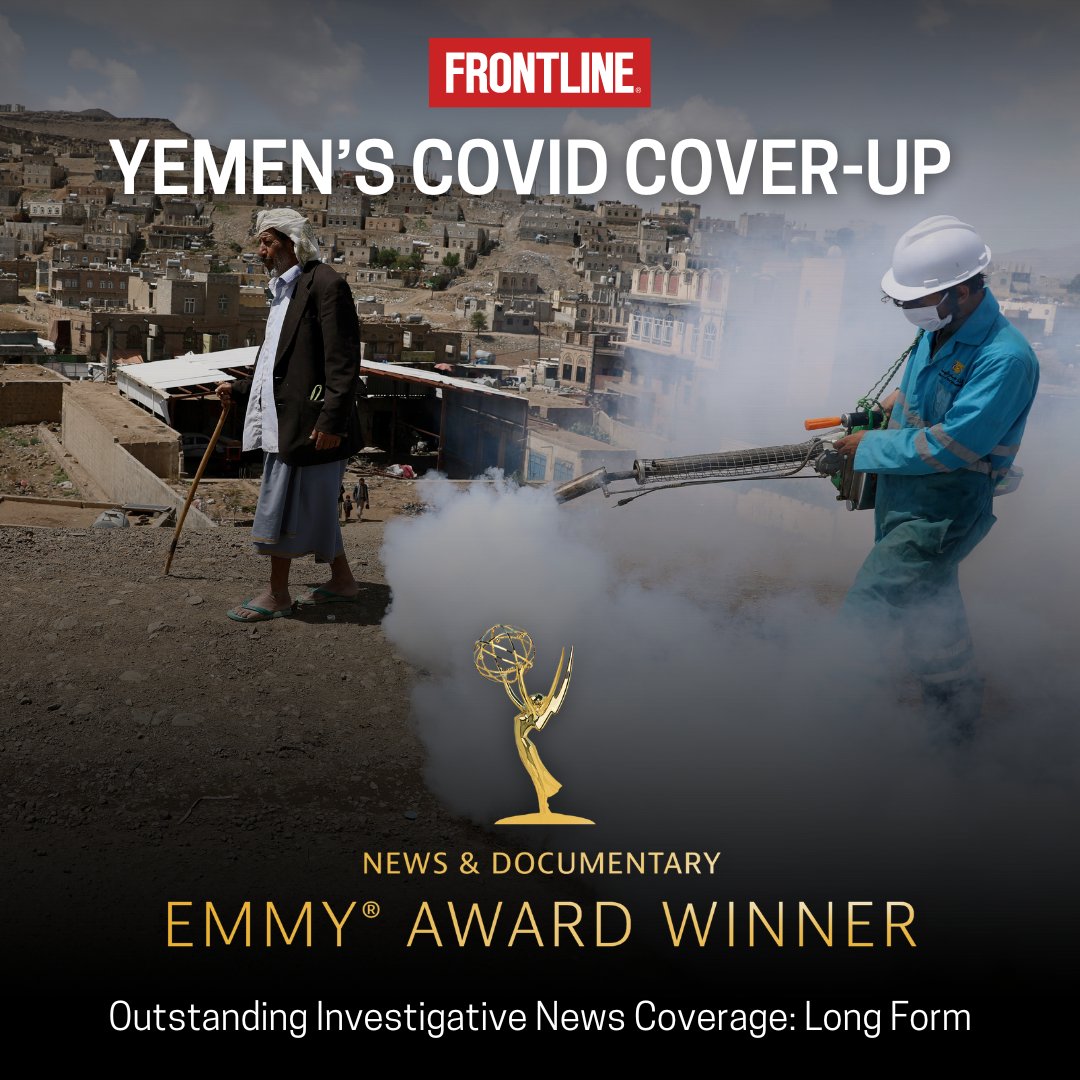
Another News & Documentary Emmy Award winner covered the pandemic as well, the PBS FRONTLINE episode "Yemen's COVID Cover-Up," which won Outstanding Investigative News Coverage: Long Form. The entire episode is on YouTube. Watch Yemen's COVID Cover-Up (full documentary) | FRONTLINE.
Correspondent Nawal al-Maghafi reports from inside Yemen on how the coronavirus pandemic is worsening what the UN has called the worst humanitarian crisis in the world.And I thought the U.S. had political problems with the pandemic! At least we don't have a civil war to make it worse.
This journalism is made possible by viewers like you. Support your local PBS station here: http://www.pbs.org/donate
Following six years of war between the Houthis, a rebel group backed by Iran, and a Saudi-led coalition, an estimated 2 million children in Yemen are suffering from starvation, and 3.5 million people have been internally displaced. In “Yemen’s COVID Cover-Up,” the Yemen-born al-Maghafi returns to her home country to investigate how COVID-19 has impacted these compounding crises.
She finds evidence of a far higher death toll than Houthi authorities in the country’s north are admitting, and reveals that the Houthi suspension of doctors' salaries, international aid cuts and the Saudi blockade have had a dire impact on Yemeni doctors’ ability to treat COVID patients.
“Lack of oxygen caused most of the deaths,” one doctor tells her.
As President Biden commits to ending U.S. support for Saudi offensives in Yemen, this documentary is a powerful look at the situation on the ground.
Stay tuned for more Emmy Awards coverage.
Previous entries in this series


