Showing posts with label Maryland. Show all posts

Monday, January 19, 2026

Morgan State at the Rose Parade and Alcorn State at the Macy's Parade for MLK Day

Happy MLK Day! For this year's version of JSU's 'Sonic Boom of the South' at the Rose Parade for MLK Day, I'm featuring the HBCU bands in the 2026 Rose Parade and the 2025 Macy's Parade. I begin with Smash Time Productions' Morgan State University M3 @ Disney Land Parade 2025.


Smash Time knows how to select a preview image, which is why this video came first.

Luis of Music213 recorded the next two videos, beginning with Morgan State University "Magnificent Marching Machine" - 2026 Pasadena Bandfest.

From Baltimore, Maryland
The Magnificent Marching Machine of Morgan State University performing their show at the 45th Annual Pasadena Tournament of Roses Bandfest on Monday, December 29, 2025.
The Mid-Eastern Athletic Conference (MEAC) bands (and former MEAC bands, like North Carolina A&T, which is now a member of the Coastal Athletic Conference), have more drum corps influence than the bands in the Southwestern Athletic Conference (SWAC) like Alcorn State, and someone like me can see it in their field shows, although they are still recognizably HBCU showbands.

Next, Morgan State University "Magnificent Marching Machine" - 2026 Pasadena Rose Parade from Music213.

The Magnificent Marching Machine of Morgan State University performing at the 137th Pasadena Tournament of Roses Parade on a very wet Thursday, January 1, 2026.
It's unusual that it rains on the Rose Parade, but it didn't dampen the performers' spirits!

Now travel back in time to watch Band Central's Alcorn State University Marching Band Macy’s Thanksgiving Day Parade 2025, which combines original coverage with broadcast TV clips.

Alcorn State University Marching Band Performing in Macys Thanksgiving Day Parade 2025
NBC cut them off just a little too soon. Darn. Still, what power!

I close with my own video, Alcorn State University Marching Band in Macy's Thanksgiving Day Parade.

#shorts Alcorn State University Marching Band in Macy's #Thanksgiving Day Parade 11/27/2025 #MacysParade #NYC
https://www.twitch.tv/alldaynyc
AllDayNYC on Twitch approves and so do I!

That's a wrap for the holiday. Stay tuned for another tale of the Retail Apocalypse followed by one more post recognizing diversity among movie winners, the Critics Choice Awards and Golden Globes won by KPop Demon Hunters.

Friday, January 17, 2025

PBS NewsHour reports 'Saltwater from rising sea levels threatens future of farming along Chesapeake Bay'

I came across another video worth sharing while composing The Wall Street Journal explains 'Why America’s Groundwater Is Disappearing', PBS NewsHour's Saltwater from rising sea levels threatens future of farming along Chesapeake Bay.

Near the Chesapeake Bay, farms have flourished for hundreds of years on the rich, fertile soil of coastal Maryland. But as sea levels rise, driven in part by climate change, encroaching saltwater is disrupting the livelihoods of many farmers. It's a preview of what other areas near saltwater may soon confront. William Brangham reports for our series on climate change and water, Tipping Point.
As I wrote on my DreamWidth account, "I shared and linked to videos I show my students in The Wall Street Journal explains 'Why America’s Groundwater Is Disappearing'. I don't have one about groundwater contamination, so I might show this one, too." The slide about saltwater contamination of groundwater focuses on overdrafting bringing saltwater closer to the surface and contaminating wells for drinking water, but adding the effects of climate change, rising sea levels, and agriculture contribute new dimensions and connections to the issue, ones I hadn't thought of before. Welcome to blogging as professional development.

Tuesday, May 14, 2024

Marching music for the Maryland, Nebraska, and West Virginia Presidential Primaries

Welcome to this election cycle's version of marching music for the Maryland, Nebraska, and West Virginia Presidential Primaries. It seems that I never wrote one of these for the Maryland primary before despite two chances, so I'm starting here. Besides, Maryland used to have a competitive drum corps, the Yankee Rebels, so I'm kicking off the music to watch and listen while waiting for results with 1994 Yankee Rebels Alumni from one of the at least two Drum Corps Fan accounts on YouTube.


Welcome to the corps' greatest hits. Since this is an unofficial upload, it may not last long, so enjoy it while it lasts.

Moving on to the Old Line State's marching bands, I'm sharing Music City Bowl Performance | December 30, 2023 | The Mighty Sound of Maryland from the University of Maryland Marching Band.


That was a fun show, enough to make me want to watch more of "The Mighty Sound of Maryland."

Follow over the jump for drum corps and marching bands from Nebraska and West Virginia.

Saturday, March 31, 2018

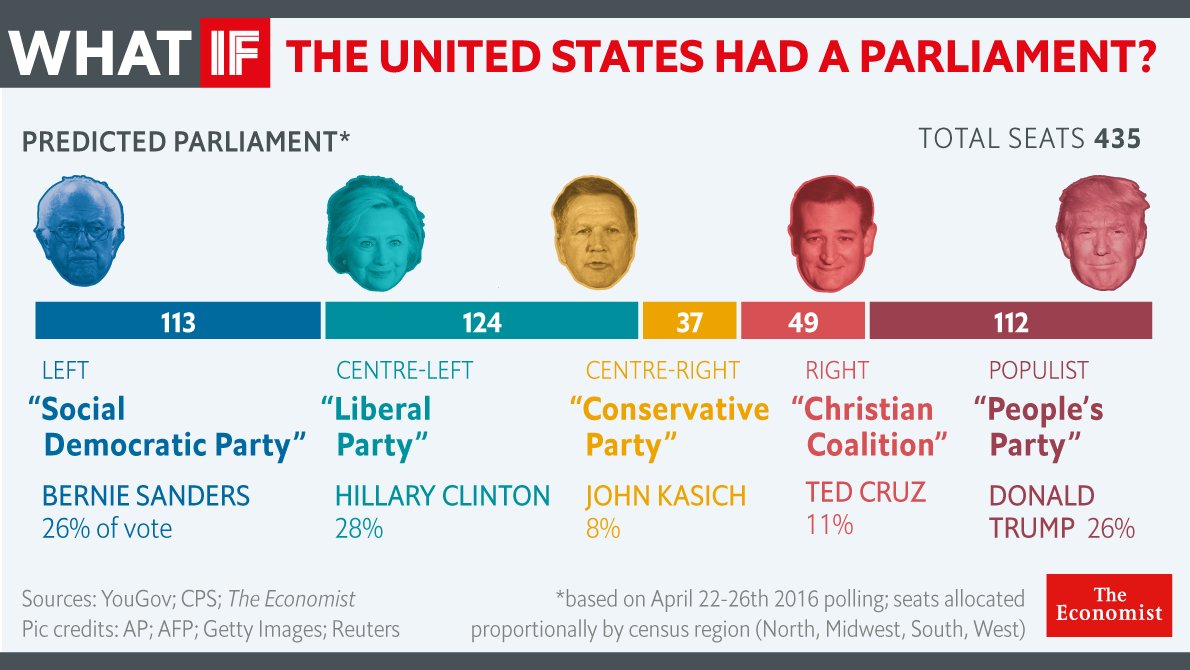
Update to 'Vox explains how proportional representation can solve gerrymandering and help minor parties,' the second most read entry for the seventh year of Crazy Eddie's Motie News, plus minor parties


The second most read entry of the seventh year of the blog was Vox explains how proportional representation can solve gerrymandering and help minor parties, posted November 9, 2017.  It ended the blogging year with 12,974 raw page views, 12,714 according to the default counter.  It was the first entry to earn more than 10,000 page views the year it was posted and was the number one post between December 2, 2017 and March 4, 2018, when Suit against John Oliver and HBO dismissed passed it to claim the top spot.

Before I explain how this entry climbed to number one and stayed there for three months, I'm will do the same thing here that I did in Update to 'Suit against John Oliver and HBO dismissed,' top post for the seventh year of Crazy Eddie's Motie News, following up with an update to the subject of the original post.  Fortunately, three articles about using proportional representation in the U.S. were published just this month.

The first one by David Wassel in The Hill, asked What is to be done with congressional districts? Try proportional representation in response to the lawsuit fighting gerrymandering in Pennsylvania.
But maybe districts themselves are the problem. Fortunately, an alternative is available: proportional representation. It’s an idea that is beginning to attract the attention of more and more political commentators, grassroots groups and others. Under this system, both major parties (as well as minor ones) might pick slates of 18 nominees in regional geographic primary elections. Instead of voting for one representative in 18 separate districts, a statewide congressional election would be held with each voter casting votes for up to 18 candidates from the various slates. In Pennsylvania, we do this in judicial elections when there are multiple court openings. The number of seats awarded to each party would be determined by the percentage of the vote received by that party, statewide.
...
Proportional representation offers an opportunity to remove politics as much as possible from this particular process while injecting some much-needed clarity and certainty.

Are there problems with this proposal?  Of course; nothing is perfect and, as with drawing districts, there are always trade-offs. But this system is both fairer and more reflective of actual voter intent. It would eliminate, instead of just minimizing, the wasted votes because partisan voters are overwhelmingly concentrated in particular districts. And how better to address the problem of unfair advantage, the basis of the court’s decision to scrap the old map?

The biggest difficulty is political feasibility. Vested interests will cling to status quo, or make cosmetic changes, at best. Anything new is always frightening. But the voters in Pennsylvania deserve an intelligent and workable solution to this problem — one that might become an example for other states facing such challenges.
Next, the U.S. Centre of the London School of Economics analyzed the effect of proportional represenation in Maryland’s electoral maps show how proportional representation could solve the problem of gerrymandering.*
This week the US Supreme Court hears a case concerning the constitutionality of partisan gerrymandering in Maryland. Examining current, past, and alternative electoral maps, Alex Keena, Michael Latner, Anthony J. McGann, and Charles Anthony Smith find that by making districts more competitive, some redistricting plans can actually work against one party or the other. Only the introduction of proportional representation with multi-member districts, they argue, would mean a truly fair electoral system for Maryland.
...
The last alternate, PR plan, divides Maryland into two districts, with district one containing five seats, and district two containing the other three seats.  The larger district includes the more heavily populated region of the state.

Using a neutral electoral formula for seat allocation (one that does not provide a bonus to the largest party), this system would assure two seats to Republicans (assuming two party competition), and would nearly assure them a third seat in the larger district, for a total of 38 percent of the seats, about as proportional as you can get (responsiveness is trickier to estimate for multi-seat districts and is excluded from the table, but it is insignificant, given the low disproportionality).  Moreover, every voter contributes to their party’s seat share.  The votes of rural Democrats and urban Republicans are as valuable as anyone else’s, and racial groups don’t need to be packed into districts to have an equal and effective voice in choosing representatives.

Maryland’s Democratic gerrymander is an excellent case for understanding the dynamics of disproportionality.  Still, it is highly unlikely that a majority of Supreme Court Justices will recognize the direct connection between individual political equality and greater proportionality, indeed greater proportionality than our current electoral system can provide.  But the Justices have before them two clear cases of extreme partisan gerrymandering, each designed by the other political party.  And they have a discernable and manageable standard, symmetry, which provides direction to how the problem might be remedied.   We hope that all voters, regardless of partisan preference, are soon relieved of the very real discrimination that gerrymandering causes.  And we hope that one day soon, party leaders will consider the electoral remedies available to them to advocate for greater political equality.
The authors note one problem with proportional representation in the U.S. House of Representatives but mention a solution.
Multi-seat districts are currently prohibited for Congress, but there is a bill in committee, the Fair Representation Act, that would facilitate multi-seat Congressional districts.  Several states previously elected their Congressional delegates using multi-seat districts, though they used discriminatory plurality formulas.  Several state legislatures, including Maryland, still use multi-seat districts to elect some members.
The Fair Representation Act includes ranked-choice voting in addition to proportional representation in multi-member districts.**  So do two plans from California.  Follow over the jump for those.

Saturday, October 1, 2016

PBS Newshour examines gerrymandering in Maryland and North Carolina


This past March, I reported that the second most read post of the fifth year of the blog was WXYZ on redistricting reform.  That examined the possibility of Michigan having a non-partisan commission take over redistricting from the state legislature.  That initiative did not make it to the ballot this year, but the idea is still kicking around, as seen in North Carolina and Maryland challenge gerrymandering from PBS NewsHour.

Gerrymandering -- the practice of drawing districts to benefit one political party over another or to protect an incumbent -- has a long history in the U.S. Special Correspondent Jeff Greenfield reports on reform efforts in Maryland, where one district has been called a “broken-winged pterodactyl,” and in North Carolina, where litigation is challenging partisan redistricting.
For another embed of this video as well as a summary and complete transcript, surf over the NewsHour page at PBS.org.

While both Maryland State Senator Joan Carter Conway, a Democrat, and Republican State Representative David Lewis of North Carolina think that independent commissions are too idealistic and completely non-partisan people don't exist, I'm on the side of Maryland Governor Larry Hogan, who wants an independent redistricting commission for his state.  If its good enough for that Republican governor, it's good enough for Democrats and Republicans in states like Michigan.  I think Arizona, California, Idaho, and Washington all have the right idea.