A blog about societal, cultural, and civilizational collapse, and how to stave it off or survive it. Named after the legendary character "Crazy Eddie" in Larry Niven and Jerry Pournelle's "The Mote in God's Eye." Expect news and views about culture, politics, economics, technology, and science fiction.
A day after Paramount Skydance and a group of state attorneys general announced a settlement clearing the way for its merger with Warner Bros. Discovery, questions remain about whether the deal does enough to protect consumers and competition. Geoff Bennett discussed more with Oliver Darcy of Status.
I've writtenmanytimes that the surest way to get Americans to act is to mess with our entertainment. This will mess with our entertainment, just like the Paramount-Skydance merger before, which resulted in Late Night with Stephen Colbert being canceled. Also, there is no new Star Trek being produced for the first time since Star Trek: Discovery debuted in 2017. However, I don't think consumers have yet seen how this merger will mess with their entertainment. It might take a while, like HBO not renewing Last Week Tonight with John Oliver next year, although The Daily Show is still going.
Critics said they feel betrayed and duped by the California leaders.
California Governor Gavin Newsom and Los Angeles Mayor Karen Bass may have urged a settlement to save their political careers. Instead, they created new enemies. As for the protest doing anything useful, I'm recycling what I wrote in 'DTF St. Louis' wins Outstanding Limited Series while 'Beef' is shut out at the Primetime Emmy Awards: "What the shareholders want and what the Hollywood creatives desire are not the same and the shareholders are in charge unless the courts rule otherwise." The most visible actors may be well-paid and influential, but at the end of the day, they're just employees.
OPINION: Lindsey Granger gives her lens on the Paramount-Warner Bros. merger, which cleared a major hurdle after reaching a settlement with a dozen states that had sued to stop the merger.
People are freaked out over the Ellisons and their relationship with Donald "Pervert Hoover" Trump and the possible effect on CNN, but this is the first I've heard of people being concerned about foreign ownership. I hadn't considered that as being bad for America.
I'm sure I'll write more about the fallout from this deal. In the meantime, stay tuned for more Emmy Awards coverage.
A "funeral" for the penny was held at the Lincoln Memorial in DC over the weekend, as the US Treasury is officially halting production of the coin.
It was a publicity stunt staged by Ramp, an expense management platform. That explains a lot, including both the silliness and the production values, both good and bad. That written, co-host Amber Duke, Senior Editor of The Daily Caller, aired some grievances of her own about the cashless economy, putting the end of the penny into a broader context.
That's a wrap for today's fake holiday. Stay tuned for a musical celebration of Christmas Eve.
It's time for one more Grammy Awards nominees post before the ceremony, so here are the final categories from the 66th Annual Grammy Awards.
Best Audio Book, Narration & Storytelling Recording Big Tree – Meryl Streep Boldly Go: Reflections on a Life of Awe and Wonder – William Shatner The Creative Act: A Way of Being – Rick Rubin It's OK to Be Angry About Capitalism – Bernie Sanders The Light We Carry: Overcoming in Uncertain Times – Michelle Obama
This is not the first Grammy nomination for either Obama or Sanders, as The Hill reported.
Obama previously won a Grammy Award in the spoken word category for her 2020 bestseller “Becoming.” A year earlier, she made a surprise appearance at the 2019 Grammys to tout the power of music, saying that it “helps us share ourselves.”
It’s not the first time that Sanders has been nominated for a top music prize either. The lawmaker earned a spoken word category nomination in 2018 with actor Mark Ruffalo for “Our Revolution: A Future to Believe In,” but the pair lost to Carrie Fisher for the audio book of her memoir “The Princess Diarist.”
I'd say the former First Lady has the advantage over Senator Sanders here, but that doesn't mean she'll win. This is a strong field and any one of them could walk off the stage with the gramophone statuette Sunday night. This ihcludes Rick Rubin, who is a music producer. Most of my readers may not know who he is, but the Recording Academy members do. Remember, electorates matter!
Vice President Kamala Harris cast the tie-breaking vote.
The Hill has more on Harris's tie-breaking vote and its significance.
Vice President Harris cast her 25th tiebreaking vote with the passage of the Inflation Reduction Act on Sunday, moving her within six votes of the almost two-century-old record held by former Vice President John Calhoun.
The Constitution stipulates the vice president also serves as president of the Senate and has the authority to break ties, which has occurred with some regularity over the past year and a half given the 50-50 makeup of the upper chamber.
Harris has already cast more tiebreakers than almost any other vice president, except for John Adams and Calhoun, who served from 1825 to 1832.
Calhoun has held the record of 31 tiebreaking votes since his tenure as vice president under John Quincy Adams and Andrew Jackson. John Adams, who served as vice president for nearly eight years under George Washington, cast 29 tiebreakers.
Harris, however, has cast more tiebreakers than Adams or Calhoun at the equivalent times in their vice presidencies.
Whether she will pass Adams or break Calhoun's record depends on how long the Senate remains tied at 50-50 between Republicans and Democrats, along with the independents who caucus with the latter. Right now, FiveThirtyEight forecasts that the Democrats have a 59% chance of retaining the chamber, which includes 8% probability that the chamber continues to have a 50-50 split with the Vice President breaking the tie. If that's the case, I expect Harris will set a new record for tie-breaking votes.
Colin Rogero and Emily Jashinsky react to Axios' reporting that The National Republican Congressional Committee will be the first national party committee to solicit crypto donations.
That's a good brief exploration of the issues from a pair who knows politics better than they know cryptocurrency. One of the possibilities is a crypto-related campaign finance scandal. I'd be more worried about other kinds of cybercrime, but I'm not Rogero and Jashinsky, who are trying to play to their strengths instead of working on their weaknesses.
Interest in cryptocurrency is growing exponentially—and the 2022 midterms could be when Congressional campaigners jump on the bandwagon.
Since the 2020 presidential election, there’s been a notable uptick in U.S. political campaigns accepting donations via cryptocurrency. Younger, more dynamic candidates started the trend—Andrew Yang was an early enthusiast—but in mid-2021, the National Republican Congressional Committee (NRCC) said it would start accepting donations in crypto, marking a major watershed for cryptocurrency in U.S. politics.
The rules for political campaigns accepting crypto donations are murky and may vary from state to state. But with players like the NRCC getting into the game, perceptions are definitely changing.
Before you jump at the opportunity to hand some Dogecoin over to your preferred Congressional candidate, you need to know the rules and limits—such as they are—that apply to crypto donations and political campaigns.
The article answers some of the questions raised by Colin Rogero and Emily Jashinsky in their video from ten months ago, including campaigns having to convert crypto into cash before spending it, which Rogero thought would be the case. It also reports that the crypto advocates are making their donations in cash, not crypto. Hmm. Just the same, this is another example of our living in science-fiction times or, as my friend Nebris says, "SciFi is now."
WISH-TV didn't provide a video description, so I'm quoting The Hill.
A study by researchers at the Urban Institute, the University of Colorado and Virginia Commonwealth University (VCU) estimated that the U.S. life expectancy dropped last year to 76.6 years, down more than two years from the rate in 2019. At the same time, life expectancy rates in other wealthy countries increased between 2020 and 2021, after registering a smaller decrease the year before.
“While other high-income countries saw their life expectancy increase in 2021, recovering about half their losses, U.S. life expectancy continued to fall,” VCU sociologist Steven Woolf, one of the study’s authors, said in a statement. “This speaks volumes about the life consequences of how the U.S. handled the pandemic, and in a country where the U.S. Constitution and the 10th Amendment grant public health authority to the states, I believe the U.S. catastrophe speaks volumes about the policies and behaviors of U.S. governors — at least some of them.”
Life expectancy has dropped the most in recent years among Hispanic and Black populations, which researchers attributed to “the legacy of systemic racism and inadequacies in the U.S. handling of the pandemic.”
Ryan Masters, a sociologist at the University of Colorado and the study’s lead author, said high rates of obesity and heart disease made the U.S. population more vulnerable to the coronavirus pandemic than populations in other wealthy countries.
As I wrote last year, "the pandemic is responsible for most of the drop, [but] other causes, like the opioid epidemic and systemic racism making the pandemic worse for minorities, played roles in lowering life expectancy." All of this is still true, which is why I also wrote "returning to the pre-pandemic normal isn't good enough."
Follow over the jump for total U.S. deaths last year and the effect on the populations of states.
Michigan Rep. Brenda Lawrence (D) on Tuesday said she would not seek another term after serving eight years in Congress, making her the 25th House Democrat this year to announce plans to retire.
U.S. Rep. Rashida Tlaib, D-Detroit, announced Wednesday that she will run for reelection to her third term in the newly created district merging west Detroit with Dearborn, western Wayne County and Southfield.
The announcement came about 12 hours after U.S. Rep. Brenda Lawrence, D-Southfield, said she would not run for re-election to a fifth term. Had Lawrence run for reelection, it likely would have been in the same district Tlaib will now run in.
The saying is that nature abhors a vacuum, which isn't strictly true because much of the universe is a near vacuum, but politics also abhors a vacuum and Tlaib quickly filled this one. The Detroit Free Press explained why she did so instead of remaining in the new district where she currently resides.
While Tlaib doesn't currently live in what will be known as the 12th Congressional District, she plans to move. From a political standpoint, the decision makes sense, given that Tlaib's base in what is currently the 13th Congressional District has been on the west side of Detroit and in western Wayne County.
Now I'm looking forward to voting for Tlaib so she can be my Representative in Congress. That ends my short-lived disappointment.
Lawrence and Tlaib weren't the first Representatives to announce their moves to run for a new seat. Debbie Dingell did so last week, which WDIV 4/Click on Detroit reported in What impact will redistricting have at the polls?
Dingell decided to move out of a district created because of the Voting Rights Act, a move that would have originally helped Lawrence but now helps Tlaib, to the new 6th district that is nominally open but Dingell represented and contains her most loyal voters. I think that was a smart move and I'm glad she took it. The same is true for ElissaSlotkin, who announced that she would be moving from her home in Holly, Michigan to run in the new 7th District, which contains most of her voters. I wish Haley Stevens would do the same for the open 10th instead of running against Andy Levin, my current Representative. I'd like to keep both of them in Congress, but that doesn't look like it will happen. Sigh.
Speaking of sighing at the outcome, the Detroit Free Press described one outcome of Tlaib moving.
Her decision, taken with Lawrence's, leaves a newly drawn 13th District that includes much of Detroit, the Grosse Pointes, Southfield and part of southeastern Oakland County without a sitting member of Congress looking to run there. That is expected to set off a scramble among Democrats to fill the open seat.
The leading candidate as I write this is Shri Thanedar, who represents part of Detroit in the Michigan House of Representatives. He's well-off and can self-fund. However, he's not alone in wanting that seat or challenging Tlaib, as the Detroit News reported.
[13th District Democratic Party Chair Jonathan] Kinloch has heard from a few potential candidates who are weighing a run in the new 13th District, including attorney Michael Griffie, state Sen. Marshall Bullock of Detroit and former Detroit Police Chief Ralph Godbee Jr., now chief of staff at Triumph Church.
Other possible contenders include former state Sen. Ian Conyers who ran against Tlaib and others in the crowded 13th District Democratic primary in 2018. Former state Rep. Sherry Gay Dagnogo, who sits on the Detroit school board, announced on Facebook late Tuesday she is running for Congress, though it was unclear for which district.
Once again, my readers and I should find this year's elections interesting and fun to watch, as much fun as this actual game of musical chairs except I don't expect it to be as cheerful.
Rep. Marjorie Taylor Green, R-Ga., has been permanently banned from Twitter after repeatedly violating their misinformation policies. De Beaumont Foundation President CEO Dr. Brian Castrucci explains the role that misinformation continues to play in the Covid-19 pandemic.
Let me repeat what Castrucci said to Business Insider: "For every single death certificate that has COVID-19 as a primary cause of death, partisanship should be listed as a contributing cause. This pandemic was politicized from day one." That's one of the themes of "Totally Under Control" as well my posts about coronavirusmisinformation. It's also why I've tried to give scientifically accurate information about the pandemic here to counteract it.
Team Rising discusses the permanent suspension of Rep. Marjorie Taylor Greene's Twitter account.
The Hill's Team Rising was much more interested in Greene's permanent suspension as a social media issue than a pandemic one. In particular, they see this as contributing to the conflict over Section 230 of the Communications Decency Act. Welcome to the SocialDilemma.
Dr. Anthony Fauci (Kate McKinnon) presents different scenarios to demonstrate the new COVID-19 mask guidelines.
That was really silly and not one of SNL's stronger openings, although Kate McKinnon as Dr. Anthony Fauci made all the right points. Weekend Update: CDC Lifts Mask Mandate covered more ground and had better punchlines.
Weekend Update anchors Colin Jost and Michael Che tackle the week's biggest news, like the Pfizer and Moderna COVID-19 vaccines proving effective against new variants of the virus.
There is some valuable pandemic news inspiring the jokes. In addition to lifting the mask mandate for fully vaccinated people, the good news is that the Pfizer and Moderna vaccines provide protection against the more recent variants of the coronavirus. Contrary to the punchlines, Johnson and Johnson's vaccine is also effective against the variants. The bad news is that COVID-19 seems to cause erectile dysfunction, but at least Michael Che points out how this could be used to promote vaccination among men. I'm all in favor of making lemonade out of lemons.
Rep. Liz Cheney (Kate McKinnon) stops by Weekend Update to discuss her recent conflicts with the Republican Party.
McKinnon's caricature of Cheney pointed out what an uphill battle the real Cheney is facing. As I pointed out in the saga of Elise Stefanik replacingCheneyas conference chair, the GOP is sticking closer to Trump and his Big Lie than ever. I wish the real Cheney luck; she'll need it.
Not only is Beta the first Greek-letter tropical system to make landfall in the U.S., it is the ninth named tropical system to make landfall in the U.S., tying a record that dates back to 1916, more than a century ago. As Tim Pandajis pointed out, the 2020 hurricane season still has nearly two months to go and a very active season like 2005 and 2020 could produce storms in December or even January, so that record could easily fall and 2020 would set a new record. That would be very on-brand for 2020.
As I expected, all the records that could be were broken when Hurricane Delta made landfall last night. It is now the earliest 25th named Atlantic tropical system and the tenth named tropical system, fifth hurricane (ninth if one counts pre-landfall conditions), and first hurricane designated by a Greek letter to hit the U.S. mainland in a single season, all records. CBS This Morning uploaded two clips to its YouTube channel this morning mentioning the records, including a new one, fourth named storm to make landfall in Louisiana in a single year, and showing the destruction from this storm as well as some left over from Hurricane Laura. I begin with report that opened this morning's broadcast, Delta downgraded to tropical storm as it batters Louisiana.
Heavy rain and strong winds are again pounding coastal Louisiana and portions of Texas and Mississippi after Hurricane Delta became the tenth named storm to hit the U.S. mainland in 2020. While it was downgraded to a tropical storm overnight, Delta still carries danger as it moves slowly inland with winds of about 45 miles per hour. Mireya Villarreal reports from hard-hit Lake Charles, Louisiana.
"It's 2020, what else?" Reverend, I agree with you and think it's as good a coping mechanism as any, but wish you wouldn't ask. It can still get worse and there are two and two-thirds months left in the year for it to do so.
Heavy rain and strong winds are again pounding coastal Louisiana and portions of Texas and Mississippi after Hurricane Delta made landfall Friday evening. It has since been downgraded to a tropical storm, though the system has left more than 600,000 people without power. David Begnaud reports from Lafayette, Louisiana.
It must be quite a shock returning to your home town to cover a disaster there. I imagine it would one step above finding out that the house where I grew up was under mandatory evacuation orders for a wildfire. As I wrote in August, "I saw the damage up close in January 2019, when my mom and I drove from her California house to the sea and back. Once we hit the burnt area, we didn't leave it until we got to Malibu; the fire burned all the way to the coast. I was astounded. It's one thing to watch the news reports; it's another to see it up close and in person." I had never seen so many burned hills and canyons up so close in Southern California and I grew up there and lived there for 30 years!
Various video clips show heavy wind, heavy rain, and storm damage across Louisiana after Hurricane Delta made landfall on Friday.
CBS This Morning showed plenty of damage, but the middle third of this video captured destruction that program didn't, a house completely blown over and another building with its roof completely removed. Wow!
Whenever a big storm like Hurricane Douglas or Hurricane Hanna hits, one of the first questions everyone wants to know is 'Was this latest hurricane caused by global warming – or not?' Climate scientist Katharine Hayhoe answers this frequently asked question about global warming.
No, climate change didn't cause this hurricane, although it did likely make it worse (it might have only been a tropical storm when it hit, for example). That's a point I've made more times than I can count, most directly in Vox on hurricanes, climate change, and storm surge, where I embedded two Vox videos on the connection between climatechange and hurricanes. I recommend my readers click on the link to that entry and watch the videos, then think about how much of this year's weather-caused destruction didn't have to happen, just like they should think about how many deaths from the COVID-19 pandemic didn't have to happen, either. If they are in the U.S., then they should vote accordingly.
I have one final image for my readers, a graphic showing all ten landfalls so far this year.
That's it for today's serious news. Stay tuned for the Sunday entertainment feature, where I plan on continuing my coverageoftheEmmyAwards.
Rep. Tulsi Gabbard (D-Hawaii) dropped out of the 2020 presidential contest Thursday, endorsing former Vice President Joe Biden in what is now officially a two-man primary with Sen. Bernie Sanders (I-Vt.).
As I have for all the other candidates who have dropped out, follow over the jump for the drink suggestions and memes I am retiring now that Gabbard is gone from the race.
Democratic candidate John Delaney tells CNN's John Berman that he is withdrawing from the 2020 presidential race.
Delaney is definitely picking the right candidates with moderate reputations for his few supporters to consider, at least among those competing in Iowa, Joe Biden, Amy Klobuchar, and Pete Buttigieg. If Michael Bloomberg and Deval Patrick were competing there, he might suggest them, too. That's not a recommendation that reflects my preferences. As I wrote on the comments to Drinks for the Democratic debates, Part 2, I am supporting more liberal candidates.
I like Bernie. In fact, I voted for him in the Michigan primary three years ago and had both a lawn sign and a car magnet advertising him. I helped contribute to his surprise victory in the Michigan primary. However, I voted for Bernie for two other reasons than his actual stands on the issues. First, he was a stand-in for Elizabeth Warren, who I liked even better, but wasn't running in 2016. Second, I really did not like the idea of the nomination process being a coronation of Hillary; I thought she had to earn that nomination, not coast to it. Neither of those apply this year, so I'm supporting Harris, Warren, and Inslee, in that order.
With both Kamala Harris and Jay Inslee out of the race, I'm backing Elizabeth Warren, for now. I just hope she doesn't drop out before the Michigan primary on March 10th. My wife and I haven't decided on who our second choice is among the remaining candidates.
During the first night of the second Democratic debates in Detroit, Senator Elizabeth Warren had a heated moment with John Delaney asking, "why talk about what’s not possible.”
That exchange at the debate prompted one on Twitter, where my friend Kevin Gamin wrote "Considering how Warren dropped an anvil on Delaney, we're already down one." I responded "Yeah, but Delaney is rich, self-funding, and on a mission to tell the liberals off. It will be a while before he drops." I followed up on my tweet by writing "I was right that it would be a while before John Delaney dropped out. I didn't think it would take six whole months!" Anyway, good riddance!
nrakich [Nathaniel Rakich, elections analyst]: I don’t know. In the “self-funders” category, I think former Rep. John Delaney is likelier to drop out than Steyer. At least Steyer’s money is getting him into debates.
Delaney, on the other hand, has loaned his own campaign more than $24 million total for the cycle and has nothing to show for it.
At what point do you say, “Hm, I think I’d rather keep my money”?
geoffrey.skelley: I don’t know. He seems dedicated. Delaney completed the “Full Grassley” — named for Iowa Sen. Chuck Grassley — by visiting every county in Iowa, and obviously, he has a ton of personal wealth to keep him going, so who knows.
sarahf: Ha. OK, Geoff, if not Delaney, who??? LAST LAST PICK.
Rakich ended up being right; Delaney dropped out before Steyer, who has already qualified for the next debate. As for Skelley, he picked Klobuchar, who is currently in fifth place in Iowa and has also qualified for the next debate. He should have picked Delaney.
Anyway, it's still six down, three to go. Here's to Bennet dropping out after Monday night.
Follow over the jump for the drink suggestions and memes/graphics I'm retiring now that Delaney has dropped out.
I've been predicting that Julian Castro would drop out of the presidential contest for two months now, the history of which I recounted in last month's Sestak sinks and Bullock bows out as both drop out.
I wrote "Now to see if my pick of Julian Castro drops out before or after Steve Bullock and Michael Bennet. My readers and I should find out shortly after the November 13 deadline for the next debate" just above the jump cut in Bye-bye Beto as O'Rourke drops out. I repeated my prediction in the comments to Au revoir Tim Ryan as Ohio Representative retires from race: "As for who's next, I still think it will be one of Bennet, Bullock, or Castro. At least one of them will drop out after they fail to make the next debate."
Former Housing Secretary Julián Castro announced he is dropping out of the presidential race. Castro, the only Latino in the crowded Democratic field, failed to gain a foothold among voters and lagged behind other candidates in the fundraising race.
Team Rising reacts to Julían Castro ending his 2020 Presidential bid.
The panel got the reasons for Castro dropping out right. He didn't have enough support in the polls, he lost visibility by not making thelasttwodebates, and he was running out of money. Therefore, it was no surprise to me, as I saw it coming two months ago. So did FiveThirtyEight, who held a second drop out draft in November. He was their first pick.
nrakich: [W]ith my first pick, I choose former Secretary of Housing and Urban Development Julián Castro.
Castro is almost certainly not going to make the November debate — he has gotten zero qualifying polls, and there’s only a week left to qualify.
sarahf: Good pick (furiously reorders roster).
nrakich: And Castro got in this race to win — i.e., he’s not a John Delaney who’s just running for the heck of it.
So for a candidate like Castro (and O’Rourke before him), there’s really no point to continuing your campaign if you’re not in the debates.
sarahf: I mean Castro has essentially said as much — he’s sent at least one email to supporters where he’s said that if he did not qualify for the November debate, it would “be the end of my campaign.”
nrakich: He also has an incredibly high burn rate and ended the third quarter with just $1.1 million on hand.
His recent campaign moves (laying off staffers in New Hampshire and South Carolina) also suggest to me that he’s running on fumes.
Also… Just gonna leave this here… The filing deadline for the Texas U.S. Senate race is Dec. 9.
Now, Castro has said that he wouldn’t run for Senate. But, as John Hickenlooper can tell you, talk is cheap.
geoffrey.skelley (Geoffrey Skelley, elections analyst): Oh, that would be a particularly crazy curveball!
nrakich: On the other hand, he’d be a pretty natural VP choice for any of the current presidential front-runners, which could be a reason for him to just sit at home and wait by the phone.
I didn't see this article until after Sestak and Harris dropped out. Too bad, as both of them were also picked in the draft, Sestak in seventh and Harris in fifth. If I had read this in time, I wouldn't have been so surprised by Harris quitting. As for Bullock, he and Michael Bennet were the only candidate picked in both drafts and Bullock dropped out right after Sestak. Four down, five to go. In order of likelihood of suspending their campaigns, FiveThirtyEight listed the remaining five as Cory Booker, Marianne Williamson, Michael Bennet, Tom Steyer, and Amy Klobuchar. I'd prefer Bennet get out next, but I'm afraid it will be Booker.
Follow over the jump for the drinks and memes I'm retiring now that Castro has ended his campaign.
The Democratic National Committee was hacked because of a single email.
...
New indictments against twelve Russian hackers give us a detailed account of just how they infiltrated the Democratic National Committee’s network.
It started with a single spear phishing email; a personalized, targeted hacking attempt sent to an employee at the Democratic Congressional Campaign Committee. Once inside the DCCC network they were also able to gain access to the DNC using malware on employee’s computers.
In 2016 the Russian hackers stole thousands of emails and sensitive documents — all because of one phishing email.
It’s not just political organizations that are at risk: you’ll likely be targeted as well. And it’s getting harder and harder to spot a fake email or text message. Find out how to prevent hackers from getting to you, too.
Sen. Jeanne Shaheen (D-N.H.) on Sunday warned of "widespread" phishing attacks against Senate offices and political parties across the country, revealing that her office had already notified authorities of one suspicious experience.
"There has been one situation that we have turned over to authorities to look into," Shaheen, a member of the Senate Foreign Relations Committee, said on CBS's "Face the Nation."
"We're hearing that this is widespread with political parties across the country, as well as with members of the Senate."
Shaheen's comments came after Sen. Claire McCaskill (D-Mo.) confirmed last week that her Senate computer system had been targeted unsuccessfully by Russian hackers.
Here we go again. Expect to read more stories about Putin's hackers and agents attempting and sometimes succeeding in interfering with our elections this year, along with cybercriminals stealing people's personal and financial information this way. In the meantime, try to stay safe online.
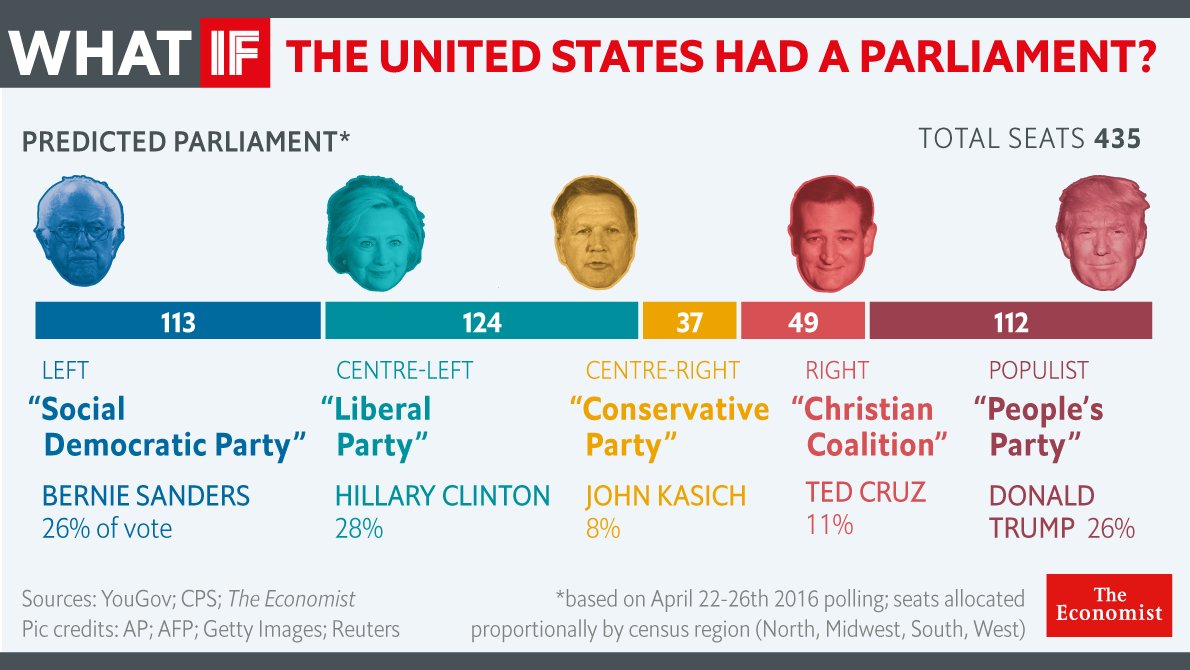
But maybe districts themselves are the problem. Fortunately, an alternative is available: proportional representation. It’s an idea that is beginning to attract the attention of more and more political commentators, grassroots groups and others. Under this system, both major parties (as well as minor ones) might pick slates of 18 nominees in regional geographic primary elections. Instead of voting for one representative in 18 separate districts, a statewide congressional election would be held with each voter casting votes for up to 18 candidates from the various slates. In Pennsylvania, we do this in judicial elections when there are multiple court openings. The number of seats awarded to each party would be determined by the percentage of the vote received by that party, statewide. ... Proportional representation offers an opportunity to remove politics as much as possible from this particular process while injecting some much-needed clarity and certainty.
Are there problems with this proposal? Of course; nothing is perfect and, as with drawing districts, there are always trade-offs. But this system is both fairer and more reflective of actual voter intent. It would eliminate, instead of just minimizing, the wasted votes because partisan voters are overwhelmingly concentrated in particular districts. And how better to address the problem of unfair advantage, the basis of the court’s decision to scrap the old map?
The biggest difficulty is political feasibility. Vested interests will cling to status quo, or make cosmetic changes, at best. Anything new is always frightening. But the voters in Pennsylvania deserve an intelligent and workable solution to this problem — one that might become an example for other states facing such challenges.
This week the US Supreme Court hears a case concerning the constitutionality of partisan gerrymandering in Maryland. Examining current, past, and alternative electoral maps, Alex Keena, Michael Latner, Anthony J. McGann, and Charles Anthony Smith find that by making districts more competitive, some redistricting plans can actually work against one party or the other. Only the introduction of proportional representation with multi-member districts, they argue, would mean a truly fair electoral system for Maryland. ... The last alternate, PR plan, divides Maryland into two districts, with district one containing five seats, and district two containing the other three seats. The larger district includes the more heavily populated region of the state.
Using a neutral electoral formula for seat allocation (one that does not provide a bonus to the largest party), this system would assure two seats to Republicans (assuming two party competition), and would nearly assure them a third seat in the larger district, for a total of 38 percent of the seats, about as proportional as you can get (responsiveness is trickier to estimate for multi-seat districts and is excluded from the table, but it is insignificant, given the low disproportionality). Moreover, every voter contributes to their party’s seat share. The votes of rural Democrats and urban Republicans are as valuable as anyone else’s, and racial groups don’t need to be packed into districts to have an equal and effective voice in choosing representatives.
Maryland’s Democratic gerrymander is an excellent case for understanding the dynamics of disproportionality. Still, it is highly unlikely that a majority of Supreme Court Justices will recognize the direct connection between individual political equality and greater proportionality, indeed greater proportionality than our current electoral system can provide. But the Justices have before them two clear cases of extreme partisan gerrymandering, each designed by the other political party. And they have a discernable and manageable standard, symmetry, which provides direction to how the problem might be remedied. We hope that all voters, regardless of partisan preference, are soon relieved of the very real discrimination that gerrymandering causes. And we hope that one day soon, party leaders will consider the electoral remedies available to them to advocate for greater political equality.
The authors note one problem with proportional representation in the U.S. House of Representatives but mention a solution.
Multi-seat districts are currently prohibited for Congress, but there is a bill in committee, the Fair Representation Act, that would facilitate multi-seat Congressional districts. Several states previously elected their Congressional delegates using multi-seat districts, though they used discriminatory plurality formulas. Several state legislatures, including Maryland, still use multi-seat districts to elect some members.
The Fair Representation Act includes ranked-choice voting in addition to proportional representation in multi-member districts.** So do two plans from California. Follow over the jump for those.