A blog about societal, cultural, and civilizational collapse, and how to stave it off or survive it. Named after the legendary character "Crazy Eddie" in Larry Niven and Jerry Pournelle's "The Mote in God's Eye." Expect news and views about culture, politics, economics, technology, and science fiction.
Last week, Talking Points Memo published three letters from its readers about guns and gun culture. Two of them deal with guns in a post-apocalyptic world, one of them specifically about the zombie apocalypse. The first was Readers on Guns #2, which deals directly with a theme I explored in Zombies meet preppers on 'Fear the Walking Dead' Season 3 -- racism as a motivation behind prepping for the zombie apocalypse.
I know that a lot of the rhetoric from the pro-gun crowd revolves around “protection from tyranny,” but my sense is that the “tactical situation” they are mostly thinking about is more lurid than that. You sometime hear them talking about the “zombie apocalypse” or more generally some sort of “social breakdown,” where their stockpiles might form the basis of a protective arsenal. Are they really worried about zombies? Of course not. That’s just a wink-wink, nod-nod.
Follow over the jump for the rest of this letter and all of the next.
That was because I had found out that there was a winning entry that examined the topic of the first paragraph over the fold in the last post before the winners announced. I just hadn't mentioned it. Here's the paragraph.
The opioid epidemic, which I mentioned in U.S. life expectancy falls prompting Russian analogies, inspired three nominees. "Hooked: America's Opioid Epidemic" from NBC Nightly News with Lester Holt is nominated for Outstanding Continuing Coverage of a News Story in a Newscast. Vice News Tonight's "The Rise of Carfentanil" is nominated for Outstanding Hard News Feature Story in a Newscast. "Chasing Heroin" from Frontline on PBS, earned a nomination for Outstanding Social Issue Documentary. Yes, health is a social issue. Regardless of whether these nominees win their categories, I will probably return to this topic as an example of societal decline and collapse.
NBC10’s Digital Team spent five months investigating the issue of opioid addiction in the Philadelphia region and beyond. They discovered a generation of addicted people and a public health and law enforcement system ill-equipped to save them.
I'm sure that I'll have more to write about the opioid epidemic in the future, most likely about the prescription pill side of it.
In the meantime, I plan on posting about "The Rachel Maddow Show" and the Flint Water Crisis on the 25th. In between, I have two posts planned about "The Walking Dead," Sweetest Day, National TV Talk Show Host Day, and Food Day. Stay tuned.
Happy Hagfish Day! Here's the national day's description from National Day Calendar.
Hagfish Day is observed annually on the third Wednesday in October.
Hagfish are considered to be the ugliest of species. The idea behind Hagfish Day is to encourage everyone to look beyond the exterior of the Hagfish and appreciate how highly evolved they are.
In general, O.K., but in detail, no. I'm sure there are uglier vertebrates. Also, while hagfish are just as evolved as any other organism on this planet, they are the descendants of the first branch off the vertebrate family tree. In fact, they branched off so early that they don't even really have vertebrae! They're the reason why cladists call the group Craniates instead of vertebrates; the most primitive group to have vertebrae are lampreys. See the phylogenetic diagram below.
However, I did not decide to celebrate Hagfish Day to give a lecture. Instead, I'm doing so to note that hagfish got in the news this summer. Watch Sloppy slime eel spill stops traffic from USA Today, which I showed to one of my classes this summer. USA Today took down that video, so here's the National Geographic video instead.
A car accident caused thousands of hagfish to spill on the highway, coating the road—and even a car—with slime. Hagfish, also called slime eels, secrete huge amounts of an extremely slippery mucus when stressed. The Oregon Department of Transportation used firehoses and a bulldozer to clear away the goo. The fish were likely destined for Asia, where many countries consider them a delicacy.
The hagfish is a slime-emitting ocean-dweller that's remained unchanged for 300 million years--and it shows. It has a skull (but no spine), velvet smooth skin, and a terrifying pit of a mouth that’s lined with rows of razor-sharp teeth.
That shows and tells a lot more about the animal itself and not just how it interacts with humans.
Two nominees cover the Amazon Rain Forest and its environmental issues. "La Amazonía: Un Paraíso A La Venta" from Univision earned a nomination for Outstanding Feature Story in Spanish. "Deforestation in the Amazon InfoGuide" from The Council on Foreign Relations has a nomination for Outstanding New Approaches: Current News, where it is competing with "Carbon's Casualties" from The New York Times. That story details the first crop of climate refugees, including Americans living in Alaska and Louisiana who have to move away from rising sea levels. I might blog about that even if it doesn't win.
Looking at the list in the image above, it looks like I missed listing a feature story on Monarch Butterflies in my examination of sustainability themed nominees. The listing of nominees by Tom Llamas as he presented Outstanding Feature Story in Spanish shows I missed another about living in the shadow of oil.
She's absolutely right; without a healthy Amazon, we can't have a healthy planet. Also, I was lucky that I had already listed the winner while I missed two other nominees that I should have mentioned.
Here is the briefer of two versions of the award-winning report (En Espanol: sorry, no English subtitles).
El río Amazonas, la gran reserva natural del planeta, está en riesgo. Más de 20 mil animales silvestres traficados sólo en Colombia en 2016 y alrededor de 120 mil hectáreas deforestadas han puesto la alerta. Un recorrido por la zona deja al descubierto lo que los promotores turísticos no quieren que nadie vea.
Translation: The Amazon River, the great nature reserve of the planet, is at risk. More than 20 thousand wild animals were trafficked in Colombia alone in 2016 and approximately 120 thousand hectares deforested have raised an alarm. A tour of the area left uncovered what tourism promoters do not want anybody to see.
To observe today, I'm sharing two of the most popular videos from Tipsy Bartender on YouTube that involve liqueur, in this case, blue curacao. First, the 31 Shot Glass Rainbow Shot Challenge, which was used in the opening of the rest of Skyy's videos for 2015.
Can it be done?! Rainbow shots using 31 shot glasses!
The prettiest shots ever...RAINBOW SHOTS! These are the best looking rainbow shots ever!
...
RAINBOW SHOTS
Grenadine
Sweet & Sour
Orange Juice
Vodka
Blue Curacao
Skyy's are pretty. Emma's, not so much. Brown isn't a color of the rainbow, but that's what she got instead of yellow. I'm sure it tastes just fine.
Back to the News and Documentary Emmy winners tomorrow with two statues going to stories about the Amazon. Stay tuned.
Medical issues in sports were the subject of three nominees. "Russia's Dark Secret" from 60 Minutes on CBS explores doping in Russia's sports teams, particularly in Olympic events. It's nominated for Outstanding Investigative Report in a Newsmagazine along with the other nominee exploring the health aspects of sports, "Cost of the Game: The Dangers of Youth Football" from Real Sports with Bryant Gumbel on HBO. The latter segment might just get the U.S. to yes on the question of "Are you ready for no football?" So might "Friday Night Lights" from Vice News Tonight, which is nominated for Outstanding Feature Story in a Newscast.
Of those three, the only winner was "Cost of the Game: The Dangers of Youth Football" from Real Sports with Bryant Gumbel on HBO, an appropriate awardee to examine on a football Sunday. Watch Byron Pitts present the award for Outstanding Investigative Report in a News Magazine.
Bernard Goldberg investigates the alarming number of high school football deaths-and sits down with Terry O’Neil, a former executive producer of NFL football, to discuss the lack of protection for younger players and researchers at Boston University to hear about their new findings.
As a former high school football player, those statistics are scary and make me glad I seem to have escaped brain damage. They also make me glad my son played soccer instead of football.
There was a third nominee about football that I missed in last week's listing of nominees. It won an award, so follow over the jump for two videos about it.
I found three nominees that were more science than either health or the environment. Two of them were nominated for Outstanding New Approaches: Documentary, "A Bear's-Eye View of Yellowstone" and "Collisions." The former looks like a fun follow-up to 'Wild Yellowstone: The Frozen Frontier' -- last year's Emmy winner for Outstanding Cinematography: Documentary and Long Form. The second is much more serious and on-topic for this blog, the story of a native tribal elder's recounting of his being witness to an atomic bomb test in the Australian Outback. Not only does it talk about the event, but also the elder's philosophy on caring for the environment. For both of these nominees, it is not the content that is being recognized, but the technology used to tell it.
Reading between the lines, one might be able to tell that I was more impressed with "Collisions." So were the Emmy voters. Here is Scott Kelly, star of "A Year in Space," announcing the winner of Outstanding New Approaches: Documentary.
Like Lynette Wallworth, I find the timing of this production's release particularly apt. Here is the trailer that describes both the story and the technology being honored.
A work of stunning visuals and powerful narrative, Collisions tells the story of Aboriginal elder Nyarri Nyarri Morgan who lived as 1000 generations before him in the remote Pilbara desert of Western Australia-- until his life was dramatically impacted by a collision with the extreme edge of Western science and technology. [Lynette] Wallworth is an acclaimed Australian artist and documentary filmmaker known for producing immersive artworks that provoke a profound emotional response. She is ideally positioned to explore the storytelling potential of VR, and sees the new form as the perfect vehicle for Nyarri to communicate his story.
Congratulations to Wallworth and all the people she named in her acceptance speech.
That's not all. Follow over the jump for a video of one of the tests and another about the site today.
Ahoy sailors! Check out our latest animation video which shows the 7 most common sailing superstitions amongst seafarers!
That's a really well-animated video of the list, but it doesn't explain why any of them exist. For that, watch Tour Guide Talk: Naval Superstitions from the Intrepid Sea, Air & Space Museum.
Join Intrepid Museum Tour Guide Matt Harris as he shares some of the history behind certain naval myths and superstitions. Why are bananas bad luck on ships? Why are cats good luck? Watch to learn more!
Yes, those explanations for why bananas are bad luck and cats are good luck make sense. Not all superstitions are arbitrary or silly, so I'll remember no bananas on board!
I found the story about how the film had plenty of time to be edited because its director/producer was in Ebola quarantine darkly funny, just like the audience.
I guess there was only one clip of each nominee to show.
I'm pleasantly surprised that "Body Team 12" won. I thought "A Girl in the River: The Price of Forgiveness" would be the more likely victor with "Extremis" the next most likely winner. That written, I think it fully deserved both honors.
Olivia Wilde, David Darg, and Bryn Mooser join TODAY to talk about producing “Body Team 12,” a new documentary about the impact of the Ebola virus in Liberia.
Congratulations to all involved in documenting the work to stop Ebola. "Body Team 12" can now join Emmy winner 'Outbreak' from Frontline on PBS as worthy examinations of the disease I call "The Red Death."
I'll continue my series on the News and Documentary Emmy winners after I celebrate Fridaythe13th. Stay tuned!
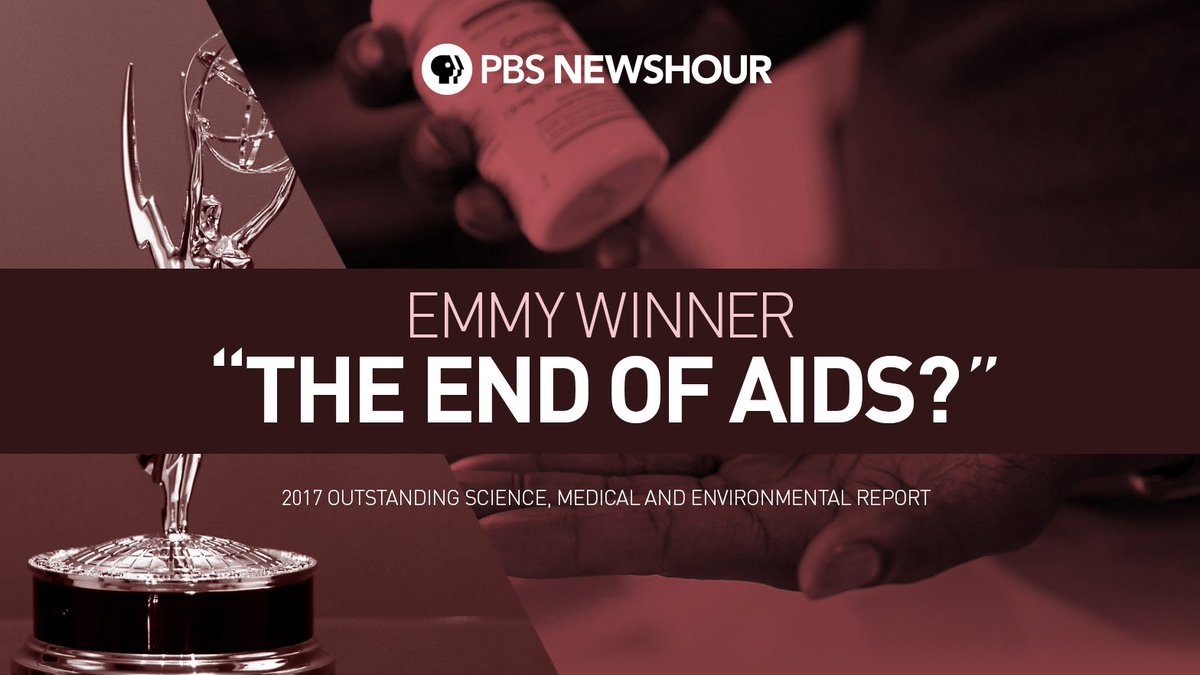
I was rooting for "Vanishing: The Earth's Sixth Mass Extinction" from CNN Digital to win. It didn't, but I wasn't disappointed as all the nominees were worthy, including "The End of AIDS?" from PBS NewsHour. Watch Byron Pitts present the award for Outstanding Science, Medical and Environmental Report.