Showing posts with label KCRA. Show all posts

Monday, September 2, 2019

History Channel on the history of Labor Day


Happy Labor Day from metro Detroit!  Last year, I shared TED-Ed on the history of Labor Day.  This year, I recycle the theme with History Channel's History of the Holidays: Labor Day.

While you take your three day weekend, remember those who struggled to get Friday and Saturday off.
One of the points the video impressed on me was the Canadian origin of our Labor Day.  Thanksgiving isn't alone in originally being a Canadian holiday.

As my regular readers know, I like to celebrate my holidays with a drink.  For this year's celebration, I'm going deep into KCRA in Sacramento's archives for Star-Spangled Drinks For Labor Day.

Mackenzie Spurlock from Sofia Restaurant shares these Labor Day-themed cocktails.
Yum.  That first drink would also work for 4th of July.

Enjoy your Labor Day!  It's back to school tomorrow for many of us.

Friday, August 3, 2018

EPA announces relaxed fuel efficiency standards, California and other states vow to fight them


Exactly four months ago, I wrote EPA relaxing fuel efficiency standards, setting up fight with California.  Yesterday, the other shoe dropped, as the EPA followed through.  PBS NewsHour reported Trump administration plans rollback of fuel standards, setting up legal fight with states.

Over President Obama's tenure, rules were put in place that would have nearly doubled the average fuel economy standard in the U.S., which the Trump administration has argued goes too far. Now a new EPA proposal would set standards to far lower to protect manufacturers and consumers from costs. Judy Woodruff reports that Thursday's announcement sets up a looming legal battle with some states.
PBS NewsHour followed up this segment by asking How would Trump’s fuel standard rules affect Americans?

The Trump administration called on Thursday for rolling back the Obama-era fuel standards to make cars get better gas mileage and emit less pollution. Judy Woodruff gets reaction from Virginia Attorney General Mark Herring, who plans to join the legal challenge, as well as Mary Kate Hopkins from Americans for Prosperity, a libertarian advocacy group that has applauded the move.
I'm with Herring on this issue, not Hopkins.  With sea level rise is already causing coastal flooding in New Jersey, record heat scorching southern California and the rest of the Northern Hemisphere, and gas and oil prices higher than they've been in four years, I think relaxing fuel efficiency standards is a bad idea.  Doing so will make pollution, climate change, and energy use worse.

Herring and I are not alone in thinking that.  Newsy included a collection of quotes from various governors and state attorneys general in Suit planned over proposed fuel standard freeze who said much the same thing.

Nearly 20 states' attorneys general say they plan to join the lawsuit.
I wish the states planning on suing the federal government luck and skill; they will need both.

Finally, KCRA in Sacramento examined How new fuel standards will impact California vehicles.

California is fighting to keep fuel-efficiency standards in place after the EPA announced the rollback of Obama-era mileage standards. The standards called for automakers to reach a fleet average of about 54 miles per gallons by 2025; the new standard is about 37 miles per gallon after 2021. California Attorney General Xavier Becerra said the rollback would imperil the state's efforts to curb greenhouse gases and clean up some of the nation's most polluted air. Becerra also promised to sue if the Trump administration makes good on plans to revoke a longstanding waiver allowing California and other states to set their own stricter auto emissions standards. Get the full story in the video above.
KCRA does not think that relaxing the standards will affect demand for more efficient vehicles.  I hope that turns out to be correct; the planet needs it.

Monday, April 16, 2018

Watch reports on March for Science 2018 from four U.S. cities


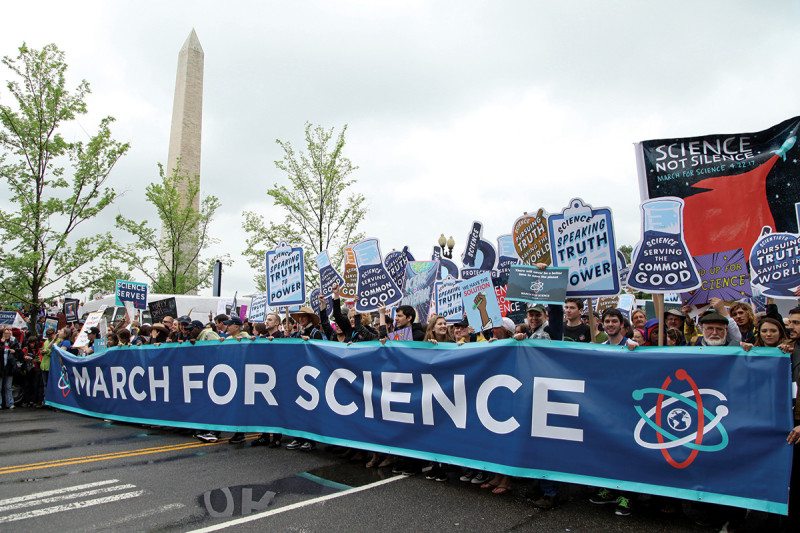
It's time to report on March for Science 2018.  While it wasn't as big as last year, there was still a good turnout.

One of the sponsors, The Nature Conservancy depicted the demonstration in Washington, D.C.

We were a proud sponsor of this year’s March for Science on April 14th. Here’s a look at the Washington, DC march.
New Scientist posted a montage with images from several locations.

The March for Science returned on 14 April with rallies around the globe in support of science-based policies.
That was a good street-level view of the march itself.

Follow over the jump for video reports from New York and California.

Thursday, November 13, 2014

Gas prices and mileage down, shopping up


It's time to make good on two promises.  First, I concluded The corner station jumps over the limbo bar as it is lowered with "I'll refrain from posting Professor Farnsworth until the corner station drops to $2.85."  I just posted another in the comments to Guide to entries that contain answers to 'The End of Suburbia'.*
Nebris: The low gas prices must be driving Jimmy fucking nuts. =D

Me: No. He's pointing to it as a likely cause of the bursting of the fracking bubble, which will result in more chaos in the financial markets. He likes that. Speaking of low gas prices, that's up next.
The "Jimmy" Nebris referred to is James Howard Kunstler, who Nebs knows.  I'll get to Kunstler's comments later.  Right now, I'll concentrate on the lower gas prices.

First, the corner station matched the rest of the neighborhood outlets over the weekend, so all the nearby stations are selling at $2.85.  Hence, Professor Farnsworth, as promised.

Next, KCRA in Sacramento has noticed the low gas prices, too, and reported on them in Gas prices down shopping up.

With gas prices continuing to drop experts are predicting that holiday shopping will robust in 2014.
$2.60/gallon in California?  Oh, my!  If the experts the KCRA reporters are quoting are right, this will be a good year for those giving off the stink of retail desperation.

As for what consumers are spending that money on, it's not all good news from my perspective, as KCRA also reported With lower gas prices, demand up is up for bigger vehicles.

With gas prices falling, the demand for big cars is up.
Don't let the lack of a preview image (so far) deter you from playing the video; it plays.  As for the content, it's evidence in support of the drop in gas mileage I reported in Michigan universities on buying cars.  I guess that's the flipside of the good economic news lately.

*I'm showing "The End of Suburbia" to my students again this week, so I shared the link for Throwback Thursday on Facebook, attracting Nebs' attention.

Speaking of Facebook, this blog has a Facebook page.  If you have a Facebook account, please like it

Tuesday, October 21, 2014

CNN on the San Joaquin, America's most endangered river


Despite my promise at the end of Ebola news from campuses on the campaign trail and Discovery News, my readers will have to continue to "stay tuned for a delayed entertainment entry."  Tonight's entry is instead an exercise in blogging as professional development, a series of videos from CNN that I'm posting to my blog so that I can use them in this week and next.  What's the topic?  A 417-mile trip down the San Joaquin, the 'Apocalypse River.'  John Sutter writes, "I spent three weeks trying to kayak (and walk) down the “most endangered” river in America, California’s San Joaquin; I quickly learned why no one does that."
The San Joaquin is a river that would flip my boat, steal my camera, throw me into trees, take my food, tweak my muscles, acquaint me with heat exhaustion, scare the s--- out of me, trap me in the mud and leave me hiking for three days across a desert.

It even fertilized me in the middle of the night.

And that’s just the me-complaining part.

Far worse, it also deforms birds (or did, in the 1980s), taints taps, steals jobs, causes the ground to sink irreversibly, kills fish, destroys wetlands -- and harbors shady people with semi-automatic weapons.

Still, it’s somehow also a river that supports a valley that grows 40% of the nation’s fruits and some vegetables as well as more than 80% of the world’s almonds. It’s a hugely important river, but one that’s been engineered almost to death.
The rest is a great article that all of my readers should also read, but I'm interested in the videos for my classes, beginning with this one, Opinion: The 'most endangered' river.

The San Joaquin river is on life support. John D. Sutter looks at the extreme measures taken to keep the river flowing.
Follow over the jump for the rest of the videos from CNN about Sutter and what he found out in his voyage/trek down the San Joaquin River.

Tuesday, August 19, 2014

Mole people and meth chemicals: student sustainability video festival 26


I just finished submitting my grades for the semester, which means it's time for the last installment of the Student sustainability video festival until December.  Normally, I'd post the students' favorite video, like I did in Student sustainability video festival 21: Extreme weather in May.  It turns out that "Face Your Food" was the video from the favorite talk, so I already posted it.  Instead, I'll post videos from the two talks that vied for runner-up.  Both of them, coincidentally enough, are old segments from news shows.

First, NewsPoliticsInfo hosts this CBS News segment Homeless People Living Underneath Las Vegas.


The student used this segment in a talk about "Mole People."  On a fantastical note, she passed along an anecdote that a friend of hers thinks they would be the first to become zombies in case of the zombie apocalypse.  I think her friend should worry about disasters that actually will happen and not the metaphors for them.  Besides, these people might actually be better candidates for surviving the apocalypse, even if they are among the first surviving victims of collapse.

One of the Las Vegas tunnel dwellers was a meth addict.  That just happens to lead into the next video, in which KCRA News reported Meth Chemicals Wreak Havoc On Environment.

From corrosive acids to lighter fluid, the ingredients to make methamphetamine often end up in the ground or flushed down the drain.
Ugh, nasty.  While I'm on the subject, it so happens that I have a bunch of stories about Meth from KPBS from earlier this year.  Follow over the jump for them.