Showing posts with label poverty. Show all posts

Friday, May 8, 2026

'Katrina: Come Hell and High Water' leads social issue documentaries at the News & Doc Emmy Awards for Flashback Friday


Slight change of plans from yesterday, when I wrote, "I'll probably examine Hurricane Katrina: Race Against Time tomorrow." I decided to highlight the other nominee about Hurricane Katrina, Katrina: Come Hell and High Water, which leads the nominees for Outstanding Social Issue Documentary with three nominations, including Outstanding Direction: Documentary and Outstanding Editing: Documentary in addition to Outstanding Social Issue Documentary. It's followed by The Ride Ahead with two nominations, then Born Poor, Enigma, and Searching for Amani with just this one category nomination. I'm sharing the trailers in that order, beginning with Katrina: Come Hell and High Water | Official Trailer | Netflix.

This is the story of a brutal coastal hurricane turned cataclysmic through human error and neglect. Over the course of a gripping and emotional three episodes, the people of New Orleans recount their past, extoll their present and lean into the future of what they and their beloved city survived and have become 20 years later. The series sets the stage for a tragedy - whose man-made elements expose the systemic governmental neglect that led to the city being defenseless in the face of the storm - and Katrina’s devastating impact that changed New Orleans irreparably. Detailed, harrowing and triumphant first-person accounts and never before seen archive illustrate the magnitude of Katrina, the aftermath of the levees breaking and the bungled recovery.
Katrina was a foreseeable disaster. I remember listening to an NPR story a year or more before Katrina hit explaining how New Orleans' levees were only built to withstand a category three hurricane, so they would fail under a category four or five storm, and describing what would likely happen if — when — one struck. It did. It also mentioned in passing that, while being poor is hard, New Orleans was probably the easiest city to be poor in. Katrina took that away. I've been recommending Hurricane Katrina: Race Against Time to my students. Now I can recommend Katrina: Come Hell and High Water to them, too. Welcome to blogging as professional development.

Next, The Ride Ahead | Official Trailer | POV on PBS.

What does adulthood look like when the world isn’t built for your body?

In THE RIDE AHEAD, Samuel Habib is ready for independence as he turns 21—but every rite of passage is complicated by ableist systems and physical barriers. Facing seizures, inaccessible housing, and degrading encounters, he sets out to find community and answers.

With humor, honesty, and a deep commitment to disability justice, Samuel travels across the U.S. to meet activists and role models who help him reimagine what freedom, adulthood, and love can look like.

A coming-of-age story rooted in interdependence, dignity, and the power of community.
As soon as I read the video description, I thought of Crip Camp: A Disability Revolution. Sure enough, the trailer advertises that the co-director of Crip Camp is involved, as is Judith Heumann, who won Most Compelling Living Subject of a Documentary at the Critics Choice Documentary Awards. The trailer also features some of the animation in the movie, which shows me it deserves its second nomination for Outstanding Graphic Design: Documentary.

'Born Poor' & Now Grown, They're Trying to Shake Poverty's Impact | Documentary Prologue | FRONTLINE is the first of the nominees with only this one category nomination in alphabetical order.

Meet Brittany, Johnny and Kaylie, whose journeys — filmed across 14 years — are at the heart of the new documentary "Born Poor." Watch the prologue now.

This journalism is made possible by viewers like you. Support your local PBS station here: https://www.pbs.org/donate

The 90-minute documentary "Born Poor" premieres Tues., Oct. 7, 2025 on @frontline's YouTube channel, in the PBS App, at pbs.org/frontline and on PBS stations. The film follows these three kids from three families across three chapters of their lives — from childhood through the teen years to young adulthood — and offers a powerful, personal and longitudinal look at the realities of growing up in poverty in the U.S.

“Born Poor” is a FRONTLINE production with True Vision Productions. The director is Jezza Neumann. The producers are Jezza Neumann and Lauren Mucciolo. The senior producer is Frank Koughan. The editor-in-chief and executive producer of FRONTLINE is Raney Aronson-Rath.
This looked familiar, but I probably am misremembering FRONTLINE's "Two American Families: 1991-2024," nominated in this category last year. FRONTLINE does good work examining poverty and society.

Next, Enigma | Official Trailer | HBO, which could as easily been nominated for Outstanding Arts and Culture Documentary.


“You are free to choose your destiny.”

I think this might have done well at the Creative Arts Emmy Awards; it looks like their kind of documentary.

Today's last video is TRAILER: Searching for Amani.

A thirteen-year-old aspiring journalist investigates his father’s mysterious murder within the boundaries of one of Kenya’s largest wildlife conservancies. As a ravaging drought encroaches, his quest to find the killer shifts and an activist is born as the collateral damage of a warming world is revealed.
Looks like I found another movie I can recommend to my students. Again, welcome to blogging as professional development, even if I'm only planning on teaching one more semester, which begins Monday.

Now to examine the other nominations for Katrina: Come Hell and High Water and The Ride Ahead.

Outstanding Editing: Documentary
Cover-Up

Netflix [Plan B | Netflix | Praxis Films]
Folktales
Loki Films [Fifth Season | Impact Partners | Topic Studios]
Katrina: Come Hell and High Water
Netflix [Netflix | Message Pictures]
Life After
Multitude Films | PBS [ITVS]
Love + War
Little Monster Films [National Geographic]
2000 Meters to Andriivka
FRONTLINE FEATURES | PBS [Associated Press]
Thoughts & Prayers
HBO Documentary Films [Tony Tina]
The White House Effect
Actual Films | Netflix [Netflix | The Department of Motion Pictures]
I think 2000 Meters to Andriivka is the favorite, if only because it's the only nominee also nominated for Best Editing at the Critics Choice Documentary Awards and I suspect 2000 Meters to Andriivka might sweep its categories.

I return to 'Sally' leads Science and Technology Documentaries at the News & Doc Emmy Awards for Katrina: Come Hell and High Water's third nomination.

Sally should just be happy to be nominated in this category. 2000 Meters to Andriivka has six nominations, including Best Documentary. Life After has four, also including Best Documentary, as does The Stringer. Katrina: Come Hell and High Water and Vietnam: The War That Changed America both tied Sally with three. Apocalypse in the Tropics and Music Box: It's Never Over, Jeff Buckley have just this one. Out of this field, 2000 Meters to Andriivka is my provisional favorite.
I still think so.

Now for The Ride Ahead's second nomination from 'Underdogs' earns four News & Doc Emmy Award nominations.

Outstanding Graphic Design: Documentary
Antidote/Kill List

FRONTLINE FEATURES | PBS [Passion Pictures | Bellingcat]
The Gilgo Beach Killer: House of Secrets
Texas Crew Productions [Peacock Original | New York Post Entertainment | G Unit Film & Television, Inc.]
The Ride Ahead
LikeRightNow Films
Titanic: The Digital Resurrection
Atlantic Productions [National Geographic]
Underdogs
Wildstar Films [Maximum Effort | National Geographic]
In Waves and War
Studio AKA [Netflix | Actual Films]
This is likely to be Underdogs' best shot to win, but it faces a tough competitor in Titanic: The Digital Resurrection. Either way, National Geographic would win.
The Ride Ahead's animation looks impressive and fun and it advances the narrative well, so I wouldn't count it out.

I found an entry about Hurricane Katrina among the most read during the 15th year of Crazy Eddie's Motie News, so I'm featuring it and another from the back catalog at the intersection of entertainment, climate change and extreme weather over the jump.

Monday, November 13, 2023

World Kindness Day 2023 from Enchanted Insights and Beast Philanthropy

Happy World Kindness Day! I begin today's celebration with Enchanted Insights, formerly 8SA, asking and answering What is World Kindness Day (November 13) - What is the purpose of World Kindness Day?

What is World Kindness Day (November 13) - What is the purpose of World Kindness Day?

World Kindness Day is to highlight good deeds in the community focusing on the positive power and the common thread of kindness which binds us. Kindness is a fundamental part of the human condition which bridges the divides of race, religion, politics, gender and zip codes.

World Kindness Day is an international observance on 13 November. It was introduced in 1998 by the World Kindness Movement, a coalition of nations' kindness NGOs. It is observed in many countries, including Canada, Australia, Nigeria and United Arab Emirates.
Again, videos like this are why I subscribed to the channel and why I'm disappointed that the woman behind the channel no longer makes them. Sigh.

Next, I'm sharing Beast Philanthropy's We Did 10,000 Random Acts of Kindness.

It’s World Kindness Day today, and KIND Snacks provided us 100,000 KIND products to share with our community. This inspired us to do 10,000 acts of kindness in 48 hours. See how we did, and see how you can help us spread some kindness.
No, Beast Philanthropy didn't do 10,000 acts of kindness in 48 hours, but that wasn't for lack of trying. That was enough to get me to watch Beast Philanthropy's video for this year's World Kindness Day, We're Giving Away $30 Million in Free Food.


Mr. Beast is not only involved in tree planting and beach cleanup, but also in combating food waste and hunger. These are all important environmental causes for me and why I'm glad that, after three years of saying I would, I finally embedded his videos here.

Speaking of causes important to me, tomorrow is World Diabetes Day. Stay tuned.

Friday, December 16, 2022

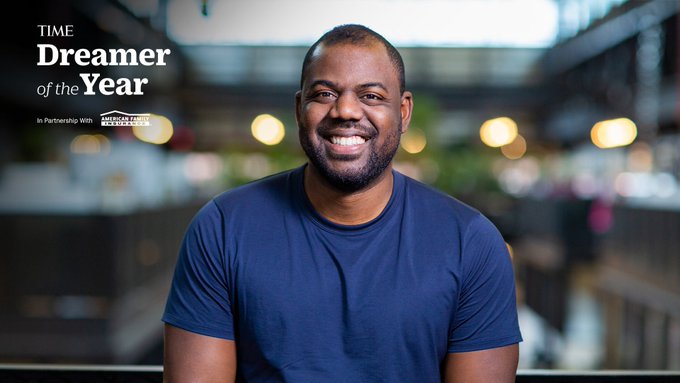
Meet Donnel Baird, Time Magazine's first-ever Dreamer of the Year


I'm postponing blogging about Time Magazine's Icon and Athlete of the Year because Time uploaded Meet the First-Ever Dreamer of the Year yesterday.

Meet the First-Ever Dreamer of the Year: Donnel Baird, CEO of BlocPower. Donnel's story demonstrates how the pursuit of one dream can empower the dreams of thousands. His company BlocPower, a clean energy tech company generating climate resilience and community wealth, is changing lives one building at a time.
Hey, look, another Crazy Eddie! I approve!

While this video is the first time I've heard of Donnel Baird, it isn't his first time being covered by the media. The Weather Channel told his story in Faces of Change: Donnel Baird almost two years ago.

Learn about Donnel Baird's tech start-up, which replaces old, wasteful heating systems with modern, green technology.
I appreciate showing both the graphic of how much of global carbon dioxide emissions come from heating buildings and the heat pump installed at St. Bartholomew's Episcopal Church. Numbers, technology, and solutions — yay!

Time covered Baird earlier this year as one of the guests in Sara Menker and Donnel Baird: Climate Change Is a Crisis, But It's Solvable.

The world is facing a climate crisis, and parts of the U.S. energy system are collapsing at this very moment, ecopreneurs Sara Menker and Donnel Baird warned the audience at the TIME 100 Summit during a panel discussion moderated by Simon Mulcahy, the President of Sustainability at TIME.
Ecopreneur — now that's a word that I should not only read more often, but use more often. Thanks, Time, for expanding my vocabulary.

I'm looking forward to seeing future Dreamers of the Year. In the meantime, stay tuned for Time Magazine's Icon of the Year. Speaking of Time, it's time to grade final exams. See you tomorrow!

Monday, April 18, 2022

CNBC explains the problems of suburbia and their possible solutions

I haven't written much if at all about "The End of Suburbia" since I replaced it with "Treasures of the Earth: Power" five years ago. That doesn't mean I'm not still interested in the sustainability issues of suburbia, which CBNC covered in a pair of videos, beginning with How Suburban Sprawl Weighs On The U.S. Economy.

America's suburbs are sprawling again. Over the 20th century, real estate developers built large tracts of single-family homes outside of major cities. The builders were following mortgage underwriting standards first introduced by the Federal Housing Administration in the 1930s. Over the century, those guidelines created housing market conditions that explicitly shut out many minorities. Experts say it is possible to update these old building codes to create equity while fixing some, but not all of the problems of American suburbia.

Last year, single family housing starts rose to 1.123 million, the highest since 2006, according to the National Association of Home Builders, however, options for prospective homebuyers remain lean.

Experts say the problems of America’s housing market relate to past policy decisions. In particular, they say restrictive zoning codes are limiting housing supply. These codes are based on 1930s-era Federal Housing Administration guidelines for mortgage underwriting. That includes “no sidewalks and curvy dead-end streets,” according to Ben Ross, author of “Dead End: Suburban Sprawl and the Rebirth of American Urbanism.“

Ross and others believe that more must be done to manage residential real estate development. Ross lives in Montgomery County, Maryland, which recently revised its zoning code to bring more population density to the area. The county didn’t have many alternative options — 85% of build-worthy land is already developed.

Strict zoning laws favoring single-family homes have limited the supply of land available for multifamily construction and hampered production of more affordable housing. With land limited for multifamily projects, the price of that land has jumped and made those projects unaffordable for builders.

Today’s homebuyers are paying for past sprawl by drawing on credit to finance their lifestyles. Meanwhile, the cost of public infrastructure maintenance is weighing on depopulating towns across the country.
This video has its own answers to four questions from the semi-retired worksheet for "The End of Suburbia":
1. What advantages did suburban life promise, especially compared to the industrial city?
The narrator of "The End of Suburbia" those were "space, convenience, affordability, family life, and upward mobility". He and James Howard Kunstler then went on about how it promised the best of both country and city living conveniently close to the central city, including getting away from the pollution and masses in the city proper.
4. How did suburbia change the American Dream?
Living in a detached home in the suburbs replaced "anyone can make it" as part of the American Dream.
5. What effect did the rise of suburbia have on cities?
As Kunstler said in the documentary, suburbia decanted (poured out) all the functions of cities into the countryside, emptying out the "core urban areas" (central cities).
7. What is the relationship among cheap energy (including oil), automobiles, and suburbia?
Suburbia became possible when car ownership became cheaper.

CNBC followed up on the first video inHow To Make The Suburbs More Affordable.

About 46% of renters in the U.S. are struggling to make ends meet, according to Harvard University researchers. Builders say conditions for renters will get worse before they get better. A snarled supply chain, a labor shortage, and rising interest rates are worsening what some call a "throwaway" development pattern. Several real estate industry experts have ideas about how to make housing more attainable. Some of the most popular ideas include mixed-use districts and master-planned communities.

Americans who are short on cash to make rent may need to face an uncomfortable reality: Conditions will likely get worse before they get better.

U.S. housing supply fell to the lowest levels observed in over 20 years, according to the National Association of Realtors. That’s dramatically pushing up prices for consumers, and catching the attention of leaders.

“The most immediate challenge is a lack of lumber and other kinds of building materials,” says Rob Dietz, chief economist at the National Association of Home Builders. “The other challenge, and it’s one that’s going to be with us for some time, is a lack of skilled labor.“

Architects say better planning could ease cost burdens while shoring up public health.

“Suburban retrofitting has the potential to transform people’s lives,” said June Williamson, dean of architecture at City College of New York.

The Mosaic District of Fairfax, Virginia, is among the many “retrofitted” mixed-use districts and master-planned communities that have attracted major developers to the concept.
This video bears on three more questions from the worksheet.
2. How does James Howard Kunstler characterize suburbia as an allocation of resources?
Kunstler called suburbia "the greatest misallocation of resources in the history of the world" and "a living arrangement that has no future." Chuck Marohn said that suburbia was a great one life-cycle product but didn't have a future beyond that, which I found similar enough to Kunstler that I wondered if they knew each other. They do, as they have been guests on each others podcasts since 2014.
25. What are the contributions of New Urbanism to the possible challenges of Peak Oil?
CNBC reframed the challenges as climate change and the short life cycle of suburban development, but the solutions are the same — planned, multi-use communities that consciously duplicate the kinds of urban communities that developed before single-use zoning arose, which the first CNBC video noted was a source of suburbia's problems. Those will encourage walking, public transportation, and the kind of dense convenient city life that promotes community, uses fewer resources, and produces less waste. By the way, I'm glad to see Celebration, which I mentioned in Disney's own government, the Reedy Creek Improvement District, as well as the planned communities Disney is proposing to build, listed as examples. It's enough to inspire me to blog about them, albeit four years later.
26. What are the prospects for suburbia after Peak Oil?
Not good. In fact, the situation got worse within a decade after the release of "The End of Suburbia," as I wrote about Suburban poverty north and south of the border eight years ago. This is on top of the infrastructure and life cycle issues both CNBC videos describe.

The irony of the pandemic, as the first video points out, is that "it looks like more affluent people are taking the opportunity to move into better housing in the suburbs. If one has to shelter in place, then one might find a better place to find shelter." Let's see how long that lasts as gas prices rise while workers return to the office.

Thursday, September 4, 2014

Update on Detroit water shut-offs and bankruptcy


Last week, I included the following story from Reuters in a comment to another diarist's Overnight News Digest, along with the rest of the day's top U.S. news.

Detroit resumes water shutoffs for unpaid bills
By Aaron Foley
DETROIT Tue Aug 26, 2014 9:17pm EDT
(Reuters) - Controversial water shutoffs in Detroit resumed on Tuesday after a month-long moratorium to allow delinquent customers to catch up with past-due bills, city officials said.

The bankrupt city's water authority attracted unwanted international attention earlier this summer when it launched an aggressive effort to cut service to customers who were months behind or owed thousands of dollars.

The campaign, intended to deal with a $90 million backlog in unpaid bills, prompted accusations that it was unfair to the poor.
That action was challenged in court this week as part of the proceedings for Detroit's bankruptcy trial, as the Detroit Free Press reported yesterday.  Follow over the jump for that story and a video clip from WXYZ.

Sunday, August 31, 2014

'Breaking Bad' goes out on top


I opened and closed Emmy Awards update from Reuters by promising more Emmy coverage.
I promised more about tonight's awards in 'Orange is the New Black' and 'Cosmos' already big Emmy winners.  I'll follow through with that promise later.  Right now, I have two updates from Reuters on the ceremony that I've included in tonight's Overnight News Digest on Daily Kos.
...
Stay tuned for more later.
Instead of writing something original, I'm going to be a good environmentalist and repurpose a comment I left on another diarist's Overnight News Digest on Daily Kos.

First, Reuters with Emmys exalt old favorites over TV's shiny newcomers By Mary Milliken and Eric Kelsey in LOS ANGELES Tue Aug 26, 2014 10:07pm EDT.
(Reuters) - For all the talk about newcomers raising the game of television, the industry on Monday chose to bestow its top Emmys on the long-running shows "Breaking Bad" and "Modern Family" and long-time television actors who held off challenges from film stars.

"Breaking Bad," AMC's unlikely tale of a teacher-turned-drug kingpin Walter White, won the night's biggest honor, the Emmy for best drama series, for the second year in a row while lead Bryan Cranston took best drama actor for the fourth time in that role.

It was a nostalgic vote of sorts for the series after it ended on the fifth season with widespread acclaim and devoted binge-watching fans. It held off the ballyhooed HBO anthology, "True Detective," the bayou thriller starring Oscar winner Matthew McConaughey and fellow film star Woody Harrelson, who Cranston beat.
Tipsy Bartender celebrated the final Emmy win for the show by posting the recipe for How to make a Breaking Bad Blue Margarita - Tipsy Bartender on his Facebook page.

Here's one for all the Breaking Bad fans of the world....THE BREAKING BAD BLUE MARGARITA! Everything thing is blue to give it a truly illicit feel. This drink has some to the most unique ice ever; designed and colored to resemble meth! It's a devilishly good cocktail. It was created by Morgan from the blog "HostTheToast."
Hey, at least they talked about TV in addition to mixing the drink.

Follow over the jump for more Emmy coverage plus a sustainability-related story from the Video Music Awards.

Tuesday, August 19, 2014

Mole people and meth chemicals: student sustainability video festival 26


I just finished submitting my grades for the semester, which means it's time for the last installment of the Student sustainability video festival until December.  Normally, I'd post the students' favorite video, like I did in Student sustainability video festival 21: Extreme weather in May.  It turns out that "Face Your Food" was the video from the favorite talk, so I already posted it.  Instead, I'll post videos from the two talks that vied for runner-up.  Both of them, coincidentally enough, are old segments from news shows.

First, NewsPoliticsInfo hosts this CBS News segment Homeless People Living Underneath Las Vegas.


The student used this segment in a talk about "Mole People."  On a fantastical note, she passed along an anecdote that a friend of hers thinks they would be the first to become zombies in case of the zombie apocalypse.  I think her friend should worry about disasters that actually will happen and not the metaphors for them.  Besides, these people might actually be better candidates for surviving the apocalypse, even if they are among the first surviving victims of collapse.

One of the Las Vegas tunnel dwellers was a meth addict.  That just happens to lead into the next video, in which KCRA News reported Meth Chemicals Wreak Havoc On Environment.

From corrosive acids to lighter fluid, the ingredients to make methamphetamine often end up in the ground or flushed down the drain.
Ugh, nasty.  While I'm on the subject, it so happens that I have a bunch of stories about Meth from KPBS from earlier this year.  Follow over the jump for them.

Sunday, August 3, 2014

Forgotten Harvest's farm


The big local environmental story of the day is the algal contamination of Toledo's water supply.  It's right up my alley, but I'm in an "I can't be all DOOM all the time" mood, so I'll concentrate on something more positive that fits in this month's theme about memory by my using this blog as a reminder of material to use in my classes.  In this case, it's WXYZ posting Forgotten Harvest, which fits right in with At least Detroit has great charities.


I mentioned Forgotten Harvest before in Detroit Zoo director's salary goes up along with zoo's rating as a charity.
The local charities ranked higher than the zoo are Helping Hand for Relief and Development in first with a score of 69.25, Forgotten Harvest in second with a score of 67.82, Michigan Anti-Cruelty Society in third with a score of 67.73, and American Autoimmune Related Diseases Association in fourth with a score of 67.35.  Among the local organizations my students would write about for their assignments, that places the zoo in third behind Forgotten Harvest and the Michigan Anti-Cruelty Society.  That's something to be proud of.
Now I have a positive video to show my students about a top-rated local environmental charity.  Cool.  Also, I have something more up to date than the promotional video of Greening of Detroit in Student sustainability video festival, part 2: Greening of Detroit.  I was getting a bit bored with it.

Saturday, July 26, 2014

Examiner.com article on wolf hunt and minimum wage proposals

It's time to follow up on Petitions submitted for minimum wage, wolf hunt, which I quoted in Examiner.com article on petitions submitted for ballot initiatives.

The same day a initiative to raise Michigan's minimum wage was turned down, U.S. Sen. Tom Harkin (D-IA) held a news conference to call for Congress to raise the national minimum wage.
Credit: Alex Wong/Getty Images.
Board of State Canvassers approves wolf hunt, denies minimum wage
On Thursday, the Michigan Board of State Canvassers decided the fates of two ballot initiatives that had their petitions submitted at the end of May.

The Board unanimously approved the initiative from Citizens for Professional Wildlife Management that would allow the wolf hunt to continue along with funding measures to combat Asian Carp and continue offering free hunting and fishing licenses to active-duty members of the armed services.

They also denied the initiative from Raise Michigan to put a measure on the ballot that would allow voters to vote for an increase in the state's minimum wage to $10.10 per hour on a 3-1 bipartisan vote, citing not enough valid signatures.
Much more about both decisions and the reaction to them at the link.

As I told the readers of Join the Coffee Party Michigan, it's possible that neither will be on the ballot, as the minimum wage measure was turned down, while the pro-hunting measure may be voted into law by the state legislature, bypassing the voters entirely.  Welcome to life in a republic, not a democracy.

Friday, June 27, 2014

U.N. declares Detroit's water shutoffs a human rights violation


I haven't written here about Detroit's water system since I posted Detroit Regional Water Authority talks in the news in January.  It turns I should have, as the water system is one of the sticking points in dealing with Detroit's bankruptcy.  One of the actions taken as a result has become big news, as WXYZ reports in City of Detroit shutting off water to thousands for lack of payment.


WXYZ did a fairly good job of summarizing the story, complete with quotes from both activists and the water department, as well as pointing out that the United Nations had become involved.  That written, it doesn't go into many of the details, including the actual finding of the U.N.  Follow over the jump for perspectives on the situation from The Huffington Post and the Detroit Free Press.

Saturday, May 17, 2014

Poverty and obesity from the University of Houston


Last week's Overnight News Digest: Science Saturday (Mother's Day) on Daily Kos brought more news about poverty and malnutrition.  Consider this a follow up to both Nutrition news from SDSU and Nutrition and poverty from campuses on the campaign trail.

University of Houston: Long-Term Childhood Poverty Contributes to Young Adult Obesity Rates
Research from Department of Health and Human Performance, Texas Obesity Research Center
By Marisa Ramirez
May 8, 2014
A new study from the University of Houston Department of Health and Human Performance (HHP) finds childhood poverty reaches into the lives of white, Hispanic and African-American young adult women, contributing to their propensity to be overweight and obese.

“We know that having a low socioeconomic status during childhood contributes to children being overweight or obese,” said HHP’s Daphne Hernandez, who also is an executive board member of the UH Texas Obesity Research Center. “We’ve found a connection between the long-term exposure to poverty during childhood and obesity rates among young adult woman.”

Hernandez examined how repeated exposure to poverty during childhood impacts a young adult’s risk of being overweight or obese. The results are published in the Journal of Epidemiology and Community Health.
As I told my students this week, poverty leads to malnutrition.  Not only is starvation a form of malnutrition, overconsumption of cheap, fattening food leading to obesity is, too.  This study confirms that connection between poverty and obesity.

Thursday, May 15, 2014

Diabetes news from Michigan universities


Here are two news items about diabetes from Michigan universities that I included in Overnight News Digest: Science Saturday (Mother's Day) on Daily Kos.  Both came out on the same day, May 8th.  If I hadn't been burned out from posting Examiner.com articles on wolf hunt ban and millage elections, I might have written one about these two.

First, the University of Michigan reports Financial insecurities hinder women from adhering to diabetes regimen.
ANN ARBOR—Changes imposed by a diabetes regimen are considered unmanageable by financially insecure women, a new University of Michigan study indicates.

Study participants who were brought up with fewer resources were more likely to have family members who were diabetic when fewer treatment options were available, exposing them to the worst-case scenario. Women with more resources were aware of less severe cases and typically had more ties to the health care field.

"It became apparent that having previous knowledge about diabetes and the regimen, as well as having previous experiences viewing complications unfold among loved ones, shaped the experience of diagnosis and attitudes toward diabetes," said Emily Nicklett, U-M assistant professor of social work and the study's lead author.
Looks like a good reason for health insurance reform.

Next, Wayne State University reports Grape skin extract may soon be answer to treating diabetes.
DETROIT — The diabetes rate in the United States nearly doubled in the past 10 years. Approximately 26 million Americans are now classified as diabetic, stressing an urgent need for safe and effective complementary strategies to enhance the existing conventional treatment for diabetes.

Preliminary studies by researchers at Wayne State University have demonstrated that grape skin extract (GSE) exerts a novel inhibitory activity on hyperglycemia and could be developed and used to aid in diabetes management. Recently funded by the National Center for Complementary and Alternative Medicine of the National Institutes of Health, this $2.1 million transitional study will provide insights into the novel inhibitory action of GSE on postprandial hyperglycemia and will also provide preclinical data in support of the biological effectiveness and safety of GSE and its components in potential prevention and treatment of type 2 diabetes.

“It is hopeful that our research may eventually lead to the successful development of a safe, targeted nutritional intervention to support diabetes prevention and treatment,” said Kequan Zhou, Ph.D., assistant professor of food and nutrition science in the College of Liberal Arts and Sciences, and lead investigator on the grant. “Our study will provide important pre-clinical data regarding the anti-diabetic mechanisms, biological efficacy and safety of GSE that should facilitate eventual translation into future clinical studies to assess GSE and its components as a safe, low-cost and evidence-based nutritional intervention for diabetes.”
I hope this treatment works.

Saturday, May 10, 2014

Nutrition and poverty from campuses on the campaign trail


Nutrition news from SDSU included an outreach story about how to educate low-income families about proper nutrition.  It turns out that wasn't the only story about nutrition and poverty from campuses on the campaign trail in my archives of Overnight News Digest on Daily Kos.  Here are two more.

First, Meredith Gunter of the University of Virginia reported back in January about U.Va. Study: One in 10 Virginians Receives Food Stamp Benefits.
Slightly more than one in 10 Virginians receives monthly benefits from the Supplemental Nutrition Assistance Program, commonly known as food stamps, according to University of Virginia researchers in the Weldon Cooper Center for Public Service’s Demographics Research Group. SNAP payments in Virginia in 2012 totaled approximately $1.2 billion, as reported by the Virginia Department of Social Services.

This finding and others related to SNAP benefits across Virginia are detailed in a Census Brief released today, the second in a series of short publications depicting trends in census and other data of interest to the commonwealth.

SNAP provides monthly subsidies to individuals and families in or near poverty, specifically for the purchase of food; a family of four in Virginia with a net monthly income of $1,963 or less is eligible for benefits. Individuals recently unemployed are eligible for only a limited time.
The next month, the University of Michigan described how Poor conditions early in life may lead to health problems for many elderly in the developing world.
ANN ARBOR—Well-intended efforts to improve infant and child health in the developing world in the mid-20th century could be linked with increased risk of diabetes, obesity and heart disease for people born during this period when they reach older age, a University of Michigan researcher found.

People born in developing countries in the 1930s through the 1960s lived their early lives when there was rapid improvement in life expectancy—mostly due to public health interventions involving antibiotics or other medical innovations. But for many of them, their standard of living did not improve, said Mary McEniry, a demographer at the U-M Inter-university Consortium of Political and Social Research, part of the U-M Institute for Social Research.

"Having a higher standard of living often means better nutrition and improved ability to fight off infections," she said. "We know that adult lifestyle—diet and exercise—can be very important in terms of health. However, there are now several studies that suggest that poor living conditions in early life can have long-range consequences on one's health at older ages.
As I wrote yesterday, here's to everyone being properly nourished.

Friday, May 9, 2014

Nutrition news from SDSU


In From baseball to permaculture, I brought news about food, farming, and nutrition from the University of San Diego.  Today, it's San Diego State's turn with two articles.  First, Alyson Faucett of SDSU writes about An Apple a Day.
San Diego health advocates team up to create healthy eating incentives for low-income families.

It is no secret that a healthy diet and living a healthy lifestyle go hand in hand; but making quality foods available to everyone is an ever-progressing mission. For San Diegans using government assisted nutritional aid, the Fresh Fund program made it possible to purchase fruits and vegetables at local farmers markets.

A team at the Institute for Public Health at San Diego State University in partnership with San Diego County Health and Human Services worked to execute and evaluate the program.
...
Federal funding from the Center for Disease Control’s Communities Putting Prevention to Work initiative kick-started Fresh Fund as well as similar programs across the United States. Starting in June 2010, people using government assisted nutritional aid could use their credits to purchase produce at five San Diego farmers markets. For every dollar spent, participants would receive up to $20 in matched incentives.
Faucett returns with @FearlesslyFitt
Jessie Arnold and Andrea Nunez-Smith are experts in nutrition, fitness and Instagram.

San Diego State University students Jessie Arnold and Andrea Nunez-Smith are floor-mates, best friends and fitness gurus who are taking their passion for nutrition and fitness into the realm of social media. On their joint Instagram account, FearlesslyFitt, the dynamic duo posts workout plans, meal ideas, and “fitspiration” aimed toward college students trying to stay healthy while living in residence halls.
...
The idea for the Instagram account surfaced on a trolley ride to the mall. Arnold and Nunez-Smith realized that they had much more in common than their residence hall address.  Both are nutrition majors with high hopes and goals for their future careers and athletic achievements. The two wanted to find a way to help college students achieve their fitness goals, from running a half marathon to avoiding the dreaded “freshman 15.”
...
Nunez-Smith’s passion for wellness surfaced a few years ago when she found out she was allergic to a few very common foods. She began researching the effect different foods can have on the body and got involved with training for triathlons. She is now a nationally ranked triathlete and is training for an international competition in August.
Here's to everyone being properly nourished.

Thursday, April 3, 2014

Poverty and austerity for the third year of Crazy Eddie's Motie News


The seventh most read entry posted during the third year of the blog was Austerity on the personal level from the AP, which earned 431 page views according to the secondary counter.  As I mentioned in Popular retrospectives for the second and third year of Crazy Eddie's Motie News, it was briefly in the top ten according to the primary counter.
The entry about Examiner.com that made a move last year was Examiner.com article on tax policy forum, posted September 17, 2012.  As of March 21, 2013, it had 211 views according to the secondary counter, enough for 18th place among all entries posted that year.  Since then, it began a steady rise into the top ten all-time, knocking off first Austerity on the personal level from the AP, which itself kicked out Old man yelling at chair accidentally reveals a deeper truth.
My stats didn't fall in October has more details on the entry's rise.
Austerity on the personal level from the AP surpassed Old man yelling at chair accidentally reveals a deeper truth with 406 page views to become the 10th most viewed entry in the blog's history.  That happened entirely by linking to it at Kunstler's blog.
The entry was Creepily Close, and I didn't even link to it in my first comment there, but my second, when lsjogren confronted me.
“You don’t get it, neon. The consumer binge cannot be sustained”

Oh, I get it. After all, I did write, “Just because the money might not be there doesn’t mean the desire won’t be.” There aren’t enough resources now for all seven billion humans on this planet to live like Americans have for the past 50 or 60 years, and there certainly won’t be enough for the nine billion of us who could be here in 2050 to do so when there will be less fossil fuel energy. That won’t stop Americans for wishing for the Moon for quite a while. Reality will have to swat them really hard for them to give up on their dreams.

Some people are getting the message, though, and are adjusting to their new, less wealthy circumstances, as the AP video at the link shows.
That was enough to pull about 400 page views, most of the 451 that came in from that entry of Kunstler's to my blog that week.

Follow over the jump to more entries about poverty and austerity that made the top 20 most read list from the third year of this blog, including the top entry about Detroit's bankruptcy.

Saturday, January 18, 2014

Discovery News thinks it's the best time ever to be alive


It looks like it's time for a brief entry.  Fortunately, Discovery News has just the video in It's The Best Time In History To Be Alive and Here's Why.  Good news, everyone!

It's easy to watch the news and get down on our global state of affairs. But the world has made some great strides in improving life for everyone on this planet. Anthony, Laci, and Trace explain why right now is actually the best time in history to be alive.
I have a contrary view about techno-optimism on tap from TED, of all places.  In the meantime, here's to hoping that the DNews Crew is right and that things actually do get better, instead of this really being peak everything with the future getting worse.

Tuesday, January 14, 2014

PBS viewers on poverty plus poverty and recessions damage health for decades


It turns out that PBS had more on poverty in the U.S. than I included in Suburban poverty north and south of the border, as the segments garnered a lot of viewer responses, which were collected in Viewers sound off on NewsHour Weekend stories.

On a new segment called "Viewers like You," NewsHour Weekend fans have the opportunity to sound off on stories and share their opinions with anchor Hari Sreenivasan.
Not only is poverty increasing in the suburbs, it's bad for one's physical and mental health.  It's true even if it's other people's poverty, as the stress of recessions gets to people.  Follow over the jump for  stories from the past three months of Overnight News Digests on Daily Kos that illustrate this point.

Monday, January 13, 2014

Suburban poverty north and south of the border


Normally, I'd post another conversation with The Archdruid.  I even have the parts for it lying around.  However, I'm both tired out from posting four entries a day for the past two days to assemble it and thinking I should do something else.  Fortunately, I found two videos this past week about problems with suburbia and a third about poverty in general.  The first comes from PBS NewsHour and declares Poverty rates surge in American suburbs.

When President Johnson declared a "War on Poverty" fifty years ago, images of American poverty focused on the inner-city and rural poor. What is the state of American poverty today? Megan Thompson reports on the less visible but growing number of poor in America's suburbs.
Here's the takeaway from this story.  Since 2000, poverty is up 60+% in the suburbs, so there are now more poor people in the suburbs than in either the central cities or rural areas.  Kunstler's prediction that the suburbs would become the slums of the future are coming true.  He might be able to take some grim satisfaction from this happening in Long Island, in a suburb of his old hometown (NYC) and in his current home state.

PBS NewsHour isn't done with the subject of poverty in the U.S., as they report that Gap between wages and consumer prices imperils security.

Wages in the U.S. have been largely stagnant over the past 45 years, but during the same time span consumer prices have risen dramatically. Hari Sreenivasan discusses this trend and its effect on poverty with Bloomberg BusinessWeek reporter, Roben Farzad.
When Kunstler decries "the gritty plight of ordinary citizens getting monkey-hammered in an economy that can provide neither decent incomes nor dignified, meaningful social roles for classes of people who could be earnest, honest, and enterprising given the chance," here it is in charts and numbers, instead of florid prose.

Speaking of charts and graphs, here's one from Brad Plumer of the Washington Post showing the growth of poverty in the suburbs.


There are even problems with suburbia south of the border in Mexico, where KPBS reports Abandoned Homes Plague Tijuana's Outlying Suburbs.

In the past few decades, millions of Mexicans became homeowners thanks to higher salaries and government aid. The increased demand fueled a boom of low-cost suburbs in cities like Tijuana. But now, many of those suburbs are falling into disarray, and residents have fled. There are an estimated 50 thousand abandoned homes in Tijuana and some 600 thousand across Mexico. In this second in our series exploring Tijuana's history and neighborhoods, Jill Replogle from our Fronteras Desk explores why.
This looks all too familiar.  Adopt an American solution, get American problems.  On the other hand, it looks like the Mexican government is learning by focusing on sustainable housing close to work and services.  Maybe we can learn from them.