Showing posts with label New Scientist. Show all posts

Saturday, December 28, 2024

2024, another busy year in space, according to NASA, ESA, Reuters, and New Scientist

I closed 'Can a twice-a-year shot help end the HIV/AIDS epidemic' — Science Magazine's 2024 Breakthrough of the year by telling my readers "Stay tuned for this year's edition of 2023 in space from NASA, ESA, Reuters, and PBS NewsHour tomorrow. Here's to 2024 being another exciting year in space!" It was.

I begin with NASA: Best of 2024.

Find out more about the NASA missions mentioned in this 2024 year-end highlight video by taking a deep dive with these resources.
The Great American Eclipse wasn't a breakthrough, so Science Magazine didn't cover it, but it was a big science story, and I'm pleased that NASA included it in their year-end summary. It also showed up in NASA Johnson's Space to Ground: 2024.

2024 on the International Space Station was a year filled with excitement, challenges, and milestones as we mark 25 unbroken years of humans living, working, and flying in humanity's home in low-earth orbit.
Seeing the umbra from above added a spectacular dimension to the event!

NASA missed one achievement in the year-end summary, which NASA Goddard described in Parker Solar Probe: Humanity’s Closest Encounter with the Sun.

Controllers have confirmed NASA’s mission to “touch” the Sun survived its record-breaking closest approach to the solar surface on Dec. 24, 2024.

Breaking its previous record by flying just 3.8 million miles above the surface of the Sun, NASA’s Parker Solar Probe hurtled through the solar atmosphere at a blazing 430,000 miles per hour — faster than any human-made object has ever moved. A beacon tone received in the late evening hours of Dec. 26 confirmed the spacecraft had made it through the encounter safely and is operating normally.

This pass, the first of more to come at this distance, allows the spacecraft to conduct unrivaled scientific measurements with the potential to change our understanding of the Sun.
NASA's year in review came out just a little too early to include this feat of science and engineering.

Follow over the jump for space news from both inside and outside the U.S., although the Russian space agency Roscosmos played a supporting role in the ISS highlights.

Monday, April 1, 2024

IgNobel Prizes for April Fools Day, a holiday special

Happy April Fools Day! I considered today's topic in PBS Eons and SciShow on Piltdown Man for April Fools Day, a Science Saturday holiday special.
I might write about the IgNobel Prizes next year, which I haven't done for nearly a decade. Time to return to them.
My readers reinforced this idea, as Science awards from the ridiculous to the sublime, 2013 edition has seen a surge in interest so far this year, earning 305 page views from December 1st to now. Without any further ado, listen to Ig Nobel prize 2023: Science that makes you laugh (and think) | New Scientist Weekly podcast 215.

A smart toilet with a camera inside that analyses your poop, plus a study of people who are fluent in speaking backwards – these are just two recipients of this year’s Ig Nobel prize. As the satirical sister to the Nobel prize, the Ig Nobels honour scientific achievements that make people laugh…then think. Prize founder Marc Abrahams on this year’s hilarious winners - and why even robots made from reanimating dead spiders can have a more serious side.
Two of the prizes connect to stories I tell my students, geologists, particularly paleontologists, licking rocks and spiders moving their limbs by hydraulic action. Science Friday went into more detail on both in Saluting Science’s Silly Side, Virtually (click to listen).
This year’s awards included prizes for explaining why many scientists like to lick rocks, for re-animating dead spiders to use as mechanical gripping tools, and for using cadavers to explore whether there is an equal number of hairs in each of a person’s two nostrils.
I'm a paleontologist, so I know what geologists do in the field, including tasting rocks for composition and chewing on them for texture. I tell my students about the chew test for siltstone versus shale, but I also tell them not to do it to their specimens; the rocks are already identified. Besides, they can tell by rubbing them.

Using reanimated spiders as robots is creepy, but it makes perfect sense given the anatomy of spiders. I'll try to remember this research when I lecture about spiders this summer and fall in Organismal Biology.

The Education Prize touches on my teaching philosophy: "If I'm bored, my students are bored, and nobody is learning." I try to keep my lectures interesting for that reason, including telling jokes and, hopefully, interesting stories. That's a third story I tell my students that I now know has scientific support, thanks to the IgNobel Prizes.

Ars Technica has detailed descriptions of all the winners, including ones New Scientist and Science Friday missed, such as the Nutrition Prize recognizing "Homei Miyashita and Hiromi Nakamura, for experiments to determine how electrified chopsticks and drinking straws can change the taste of food" and the Physics prize acknowledging "Bieito Fernández Castro, Marian Peña, Enrique Nogueira, Miguel Gilcoto, Esperanza Broullón, Antonio Comesaña, Damien Bouffard, Alberto C. Naveira Garabato, and Beatriz Mouriño-Carballido, for measuring the extent to which ocean-water mixing is affected by the sexual activity of anchovies."

I hope my readers enjoyed today's excursion into "achievements that first make people LAUGH, then make them THINK." All of them are real research. No hoaxes today!

Follow over the jump for a retrospective of the most read posts about holidays during the 13th year of Crazy Eddie's Motie News.

Monday, April 16, 2018

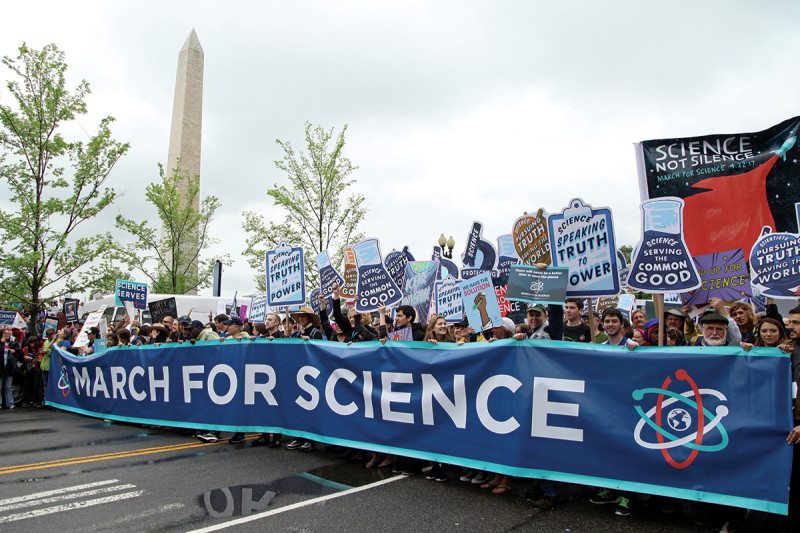
Watch reports on March for Science 2018 from four U.S. cities


It's time to report on March for Science 2018.  While it wasn't as big as last year, there was still a good turnout.

One of the sponsors, The Nature Conservancy depicted the demonstration in Washington, D.C.

We were a proud sponsor of this year’s March for Science on April 14th. Here’s a look at the Washington, DC march.
New Scientist posted a montage with images from several locations.

The March for Science returned on 14 April with rallies around the globe in support of science-based policies.
That was a good street-level view of the march itself.

Follow over the jump for video reports from New York and California.

Wednesday, December 27, 2017

Neutron star collision detected and other top science stories of 2017


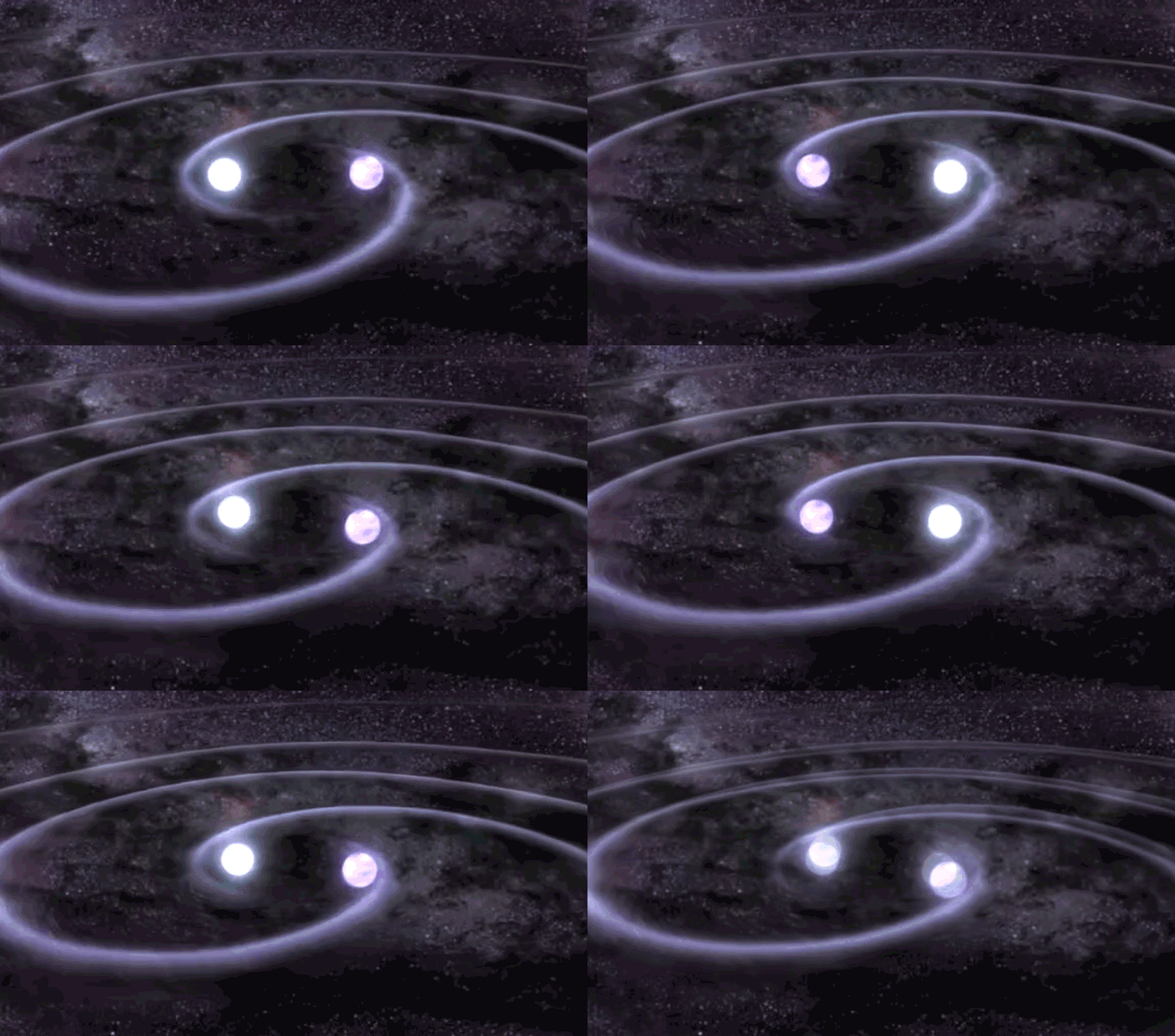
When I posted Gravity waves and other top science stories of 2016, I had no idea that the discoverers of gravity waves would win the Nobel Prize for physics this year, but they did.  Gravity waves are still the number one science story of the year, at least according to the AAAS and Science Magazine, as they named them Breakthrough of the Year, 2017.

Check out what Science's editors deemed the top results of 2017, including our Breakthrough of the Year!
That discovery topped most of the other lists I examined from what I considered reputable sources.  The other stories that Science Magazine placed in this year's top ten that showed up elsewhere were CRISPR and its role in gene therapy, the discovery of the oldest Homo sapiens fossils in Morrocco, and a new endangered species of orangutan.  Stories that Science Magazine did not mention that made many other sources' top science story lists included the Great American Eclipse and the end of the Cassini mission, perhaps because they were not breakthroughs or discoveries, even if both were big news.

Follow over the jump for videos from New Scientist, Curiosity Stream, Science News, and Scientific American on their top science stories of 2017.

Tuesday, December 20, 2016

Gravity waves and other top science stories of 2016


I promised to return to reality today after a three day weekend devoted to entertainment.  I was planning on blogging about the Electoral College or the Flint Water Crisis, but I decided to write about something positive about the past year instead, the year in science.  Following my own adage of "if it moves, it leads," here is New Scientist's  The 12 biggest science stories of 2016.

Gravitational waves, humming gorillas, a new neighbour and more: here are New Scientist's stories of the year.
Science News, Gizmodo, and Newsweek have their own reviews of the top science stories of the year about to end.  Every one of them included the discovery of the gravitational waves predicted by Albert Einstein, so it's the top science story of the year by consensus.  Planet Nine and Proxima B showed up in three of the four.  The remaining stories that showed up in half the lists were human gene editing, a three-parent baby being born, Google's A.I. beating a human Go master, and Zika.  No single environmental story showed in more than one list, although two different climate change stories were mentioned in different articles.  Also, no one story about fighting aging made more than one list, but several different ones also were mentioned, so I'm giving climate change and anti-aging breakthroughs honorable mentions.

The New York Times had its own science, environment, and health year in review articles, but I found them next to useless.  The science summary mentioned none of the above stories, the environmental review was all about climate change, and the health one only mentioned Zika.  I suppose that reinforces my awarding climate change an honorable mention and allows me to break the tie among the third place stories in favor of Zika, but that's about it.  Still, it's enough to convince me to blog about Zika; today's entry is the first time I've mentioned the disease here.

Tomorrow is the winter (hibernal) solstice.  I have something special planned for the occasion.  Stay tuned.

Friday, August 26, 2016

Did we just discover Wunderland? No, Moiroi


Four years ago, I asked "Did we just discover Plateau?" in response to the discovery of a possibly habitable exoplanet around Tau Ceti.  Today, the question is "Did we just discover Wunderland?"  New Scientist has the story in Proxima b: an Earth-like planet on our cosmic doorstep.

We've found a planet orbiting in the habitable zone of our nearest star, Proxima Centauri, just 4.25 light years away. Here's what we know about it so far.
Nature has more in The exoplanet next door.

Astronomers have discovered evidence of a small, rocky planet orbiting our nearest star - and it may even be a bit like Earth. Nobody knows whether the planet, called Proxima b, could ever sustain life. The little planet orbits our sun's nearest neighbouring star, Proxima Centauri, making it the closest exoplanet ever found.
The answer is no, as Wunderland orbits Alpha Centauri, not Proxima Centauri.  It is, however, the next best thing, even if it is tidally locked.  That might make it a combination of We Made It and Jinx.

On the other hand, we might have discovered Moiroi from the game 2300 A.D.  According to Wkipedia's Alpha Centauri in Fiction article, it's the only habitable fictional planet with a proper name listed around Proxima Centauri.  The others are Proxima Centauri 3 from "Babylon 5," an unnamed planet in Stanislaw Lem's "The Megallanic Cloud," and another unnamed planet in "Spacecraft 2000-2100 AD."  Since they don't have names, Moiroi it is.

Wednesday, August 17, 2016

July 2016 hottest month on record yet


New Scientist has the summary in July was the hottest month in history.

NASA's records show that Earth's temperature was hotter than it has been since measurements began.
USA Today has more details.
July was 1.51 degrees higher than average. The previous record-holder for hottest month was July 2011.

July's record-breaking heat follows a wave of shattered records this year — the first six months of the year have been the warmest half-year on record.
Phil Plait at Slate noted how long the record-breaking streak has gone on, writing "For the sixth seventh eighth ninth 10th month in a row, we’ve had a month that has broken the global high temperature record."  As my readers can see, the streak has continued since April.

USA Today reported records for the U.S., too.
July was yet another hotter-than-average month across the U.S., and folks in New Mexico and Florida were really feeling the heat.

Both states had their hottest July on record, and overall, it was Florida's second-hottest month ever. The Sunshine State's all-time hottest month was June 1998.

With a nationwide average temperature of 75.3 degrees, July was the USA's 14th-warmest July on record, the National Oceanic and Atmospheric Administration said.
...
For the year to date, the nation is seeing its third-warmest year on record. Every state is warmer-than-average so far this year, with Alaska record warm.
Yesterday, I wrote that I'd post another retrospective unless I got distracted by a shiny object.  I must say this is quite the shiny object!  That written, expect the retrospective series to continue tomorrow with January 2016's stats.  Stay tuned.

Sunday, August 12, 2012

The future of the Olympics

I closed my previous post with:
I'm going to compose an entry speculating on the future of the Olympics. Hey, what do you expect for a blog with a science fiction slant?
Here are the stories on this topic I originally included in Overnight News Digest: Science Saturday (Opening of London Olympics edition) on Daily Kos. Welcome to the best speculation British science has to offer.

First, Nature magazine predicts Olympics: Genetically enhanced Olympics are coming.
Future Olympic Games may allow handicaps and gene therapy for people born without genes linked to athleticism, predict Juan Enriquez and Steve Gullans.
July 19, 2012
Olympians can run faster, leap higher and lift more than 'normal' humans. Of course, such elite athletes earn their titles with an astonishing amount of hard work and support. But many also have some unearned advantages: the right genes.

There is growing evidence that world-class athletes carry a minimum set of particular 'performance-enhancing' genes. For instance, almost every male Olympic sprinter and power athlete ever tested carries the 577R allele, a variant of the gene ACTN3. About half of Eurasians and 85% of Africans carry at least one copy of this 'power gene'. The billion or so other people who lack the 577R allele might wish to reconsider their Olympic aspirations.

More and more genes are now being linked to athletic prowess, and future Olympic officials will have to wrestle with the implications. Are the games in fact a showcase for hardworking 'mutants'? And if Olympic rule-makers admit that the genetic landscape is uneven, should they then test every athlete and hold separate competitions for the genetically ungifted?
Not to be outdone, New Scientist has a slideshow of possibilities in Olympic extremes: The winning formulas for London 2012.
ONE-HUNDREDTH of a second. That could be the difference between an athlete representing their country in this year's Olympic Games in London and one staying at home. Even finer margins can separate medal-winners from also-rans.

The Olympics is the ultimate goal for many sportspeople, and they will go to great lengths to get there. Ever since the modern games began in 1896, any research that might give athletes a boost - no matter how small - is leapt on by coaches. Behind the scenes, every athlete relies on a legion of psychologists, physiologists, engineers, biologists and nutritionists. Their work is a closely guarded secret: nobody will know whether it has been successful until long after the medals have been awarded. But it is possible to make educated guesses about the latest crazes...
Finally, in the spirit of speculating about the Olympics, here is Next Media Animation's funny forecast for tonight's closing ceremony.

The closing ceremonies of the London 2012 Summer Olympic Games are here already! That was fast. Besides the "A Symphony of British Music" theme, there is little else known about the ceremony.
As for more speculation about the future, I think it's time I gave Paul Ryan his own label and a post introducing it.

Sunday, May 27, 2012

Dragon and ISS dock plus other space and astronomy news of the week

In Space and astronomy stories for the week of the annular eclipse, the story below the jump was about the scrubbed launch of SpaceX's Falcon/Dragon to the International Space Station. This week, that story gets top billing both here and in Overnight News Digest: Science Saturday (Dragon docks with ISS edition) at Daily Kos. Pride of place goes to the Los Angeles Times' article on the event.

NASA astronauts open SpaceX capsule hatch and begin unloading cargo
By W.J. Hennigan
May 26, 2012, 3:36 a.m.
Less than 24 hours after a historic docking, astronauts aboard the International Space Station clambered into SpaceX's unmanned Dragon spacecraft and began unloading supplies that were packed inside.

Wearing oxygen masks as a precaution, the astronauts opened the hatch, slid the door open, and took delivery of the 1,014 pounds of food, water and clothing aboard Dragon.

"Like the smell of a brand new car," said NASA astronaut Don Pettit, after going inside.

Live coverage of the hatch opening, which included some of the first video footage from inside the cone-shaped Dragon, started Saturday shortly before 3 a.m PDT on the Hawthorne company's website and NASA TV.
Speaking of NASA TV...

Enter The Dragon on This Week @NASA


The crew of the International Space Station opened the hatch of the recently berthed SpaceX Dragon capsule, the first commercial craft to fly to the ISS. Also, Venus Transit, Fallen Heroes, Carbon-Sensing Sherpa, and more.
That's not the only video I posted. Here is SpaceX Dragon COTS 3 Rendezvous Grapple Berthing Timelapse. Note: there is no sound with this video.


I wasn't the only diarist at Daily Kos to comment on the occasion yesterday. DarkSyde used the story to headline This week in science: Catch a Dragon by the tail and kindler placed it in a sustainability context by comparing and contrasting Forward vs. Backward: SpaceX vs. Heartland. That latter diary earned a distinction of getting a lot of recs and tips, but no comments. That's the equivalent of a silent standing ovation, a great sign of respect.

Click on "Read more" for the rest of the week's space and astronomy news.