Thursday, April 9, 2020

Coronavirus response reducing air pollution updates climate change and the environment for the ninth year of Crazy Eddie's Motie News

Happy Throwback Thursday!  As I have every Thursday since the blog's 9th birthday, I'm observing the day by posting a retrospective on the top entries on a topic during the previous posting year.  Today's topic is climate change.  I'll review the most popular posts on the subject over the jump.

Now that that's out of the way, it's time for the featured video, CNBC explaining How Coronavirus Quarantines Lead To A Drop In Air Pollution, a video I found when I wrote CNBC explores why coronavirus is more dangerous for diabetics.  Yes, the coronavirus pandemic is affecting everything, including the environment.

As coronavirus quickly spreads around the world, the virus is forcing people to stay put. People aren’t driving or flying, leading to a massive reduction in air pollution, most notably in China, but also in Italy, the U.S. and other hard-hit areas that have implemented directives to stay home.
So staying safe at home is not only saving lives from COVID-19, but so is the reduction in air pollution from reduced travel.  That's quite the silver lining to a response that's also produced record unemployment claims in the U.S.  Unfortunately, it's hampering the fight against climate change.  Sigh, a short-term gain leading to a long-term loss.

One of the experts interviewed in the CNBC segment is Katharine Hayhoe, who I've featured here before.  She has two videos on the interaction among coronavirus, air pollution, and climate change on her Climate Weirding YouTube channel in which she expands on the points she made in the CNBC video.  I begin with Climate Change and Coronavirus | Special Episode.

What does climate change have to do with the coronavirus?

Climate change is not increasing the geographic range of COVID-19. And the novel virus did not come from the permafrost or the soil, like other infectious diseases that climate change is spreading.

So where did it come from? How is it spreading? And what's the connection to climate change?

Find out on this special episode of Global Weirding with Katharine Hayhoe!
One of the most read entries from the previous posting year was about climate change leading to more diseases, so this video provides a good connection and reminder of the risk.

Now, the second video, The Pandemic's Effects on Climate Change | Special Episode.

This pandemic is responsible for untold suffering around the world. If anything, it's simply reminding us how interconnected we all are, and how we can ignore a crisis until it's brought to our attention.

Let's take a step back and say 'what is going on?', in relation to COVID-19's effects on climate change on this special episode of Global Weirding with Katharine Hayhoe.
Hayhoe's video reminded me of what I've written about Commoner's Laws, most recently in World Wildlife Day 2020 celebrates biodiversity.
  1. Everything Is Connected to Everything Else. There is one ecosphere for all living organisms and what affects one, affects all.
  2. Everything Must Go Somewhere. There is no "waste" in nature and there is no "away" to which things can be thrown.
  3. Nature Knows Best. Humankind has fashioned technology to improve upon nature, but such change in a natural system is, says Commoner, "likely to be detrimental to that system."
  4. There Is No Such Thing as a Free Lunch. Exploitation of nature will inevitably involve the conversion of resources from useful to useless forms.
This crisis serves as a good example of the first law.

Follow over the jump for the top posts about climate change from the ninth year of Crazy Eddie's Motie News.

Wednesday, April 8, 2020

Bye, Bye, Bernie, the Sequel


I concluded Ta-ta, Tulsi, as Gabbard gives up by observing "This should be the last one of these I post until it's time for an updated Bye, Bye, Bernie!"  It's time, as Bernie Sanders just dropped out.  CNN has the story in Bernie Sanders drops out of 2020 presidential race.

Sen. Bernie Sanders ended his presidential campaign on Wednesday, clearing Joe Biden's path to the Democratic nomination and a showdown with President Donald Trump in November.
I'm not surprised that this happened; after all, I foresaw the eventuality last month.  I'm just surprised that it happened this soon.  I expected Sanders would drop out next week, after the results of the Wisconsin Primary were announced, which FiveThirtyEight forecast Joe Biden as having an 88 percent chance of winning with 58 percent of the vote.  That's in a state Sanders won decisively four years ago.  Maybe he decided to get out before the bad news.  Maybe I should let Sanders speak for himself.  Watch 'Victory virtually impossible': Bernie Sanders ends 2020 presidential campaign from The Guardian to hear him explain his decision.

Bernie Sanders, the 78-year-old senator from Vermont who reshaped American politics with his youth-led movement for sweeping social change, announced on Wednesday that he was ending his presidential campaign for the 2020 Democratic nomination. 'I wish I could give you better news, but I think you know the truth,' Sanders said. 'I have concluded that this battle for the Democratic nomination will not be successful, and so today I am announcing the suspension of my campaign'
Bernie Sanders, who reshaped US politics, ends 2020 presidential run
Either way, Sanders is acknowledging the reality of his situation, which is that Biden is the prohibitive favorite and now the presumptive nominee and that the opposition has to unite to beat Donald Trump.

Follow over the jump as I retire all of the recipes I recommended and infographic memes I created for Sanders.

Tuesday, April 7, 2020

Marching music for the Wisconsin Primary, which is still being held today


Despite the coronavirus pandemic, the Wisconsin Primary is being held today, even though the results won't be announced until Monday, April 13, 2020.  I'll let FiveThirtyEight tell the story.
On Monday, Gov. Tony Evers issued an executive order attempting to postpone in-person voting for Wisconsin’s April 7 election to June 9; however, Republican legislators successfully challenged the order in the Wisconsin Supreme Court. So as of Monday evening, Wisconsin will be going to the polls on Tuesday.

However, in a separate court case, the U.S. Supreme Court ruled late on Monday that all absentee ballots must be postmarked by April 7, overturning an earlier ruling by a federal judge that said ballots would count as long as they were received by April 13.
What drama!  I didn't know if I was going to post this entry today, Next Monday, or in June until I read the news this morning.  Now that I have, enjoy one of my marching music for a primary election entries as the in-person vote takes place, an update of 2016's Drum corps for the Wisconsin Primary.

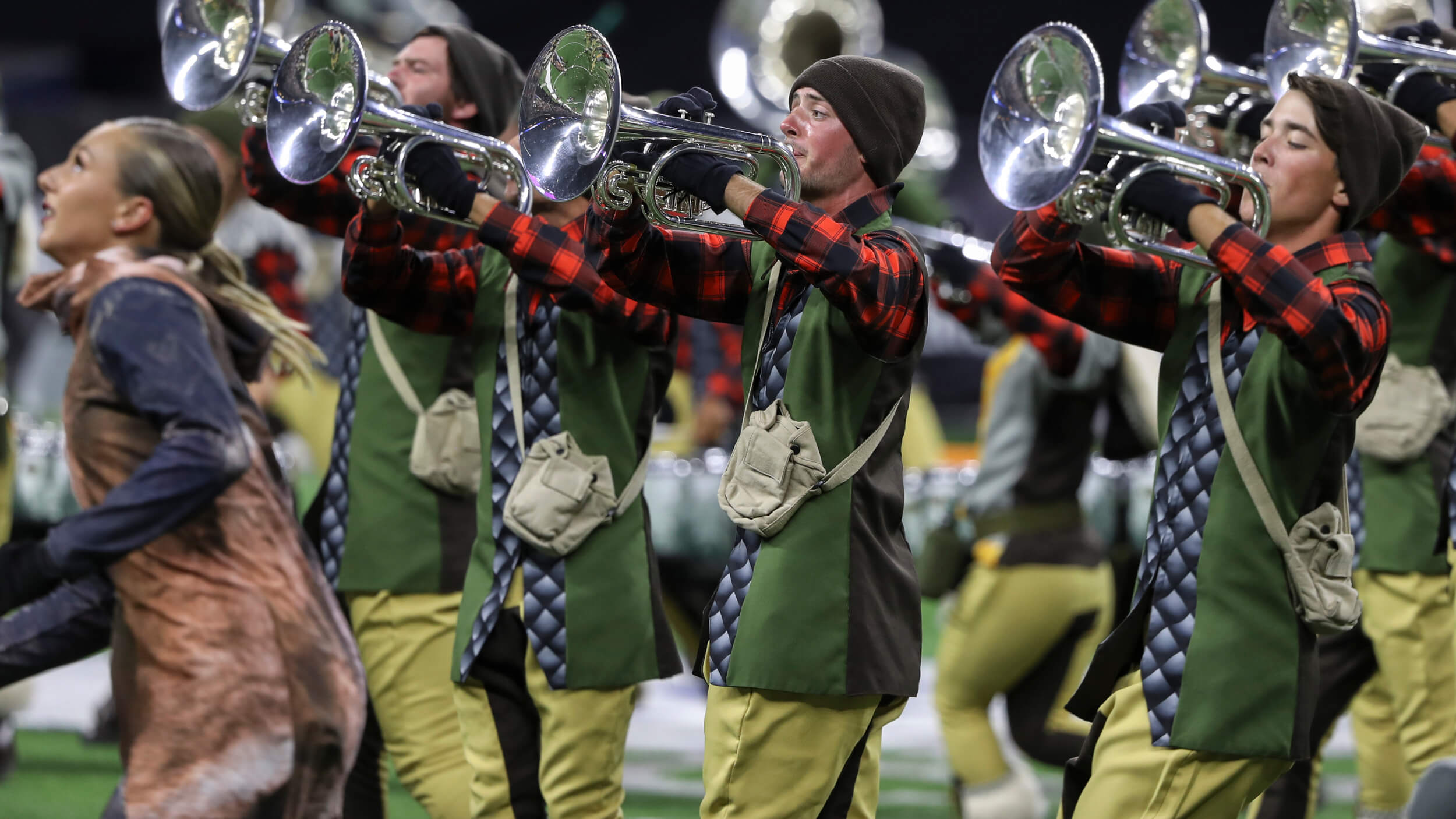
I begin with the 2019 Blue Stars | Call of the Wild.


La Crosse, WI | 8th Place | 91.225

I have no idea if the Blue Stars were aware that a movie by the same name would come out this year, but it's a fun coincidence.

Next, the stars of the 2016 edition of this post, the 2019 Madison Scouts | Majestic.


Madison, WI | 17th Place | 82.137

I think that show was a noble effort to get back to the corps' roots.  I know it pleased a lot of fans, even if it didn't impress the judges.

Finally, the final performance of 2018 Pioneer - "Celtic Dragons", who are no longer with us.


Milwaukee, WI | 36th Place | 64.300

R.I.P., Pioneer.

Follow over the jump for two marching bands from the Badger State that participated in this year's Rose Parade.

Monday, April 6, 2020

CNBC explores why coronavirus is more dangerous for diabetics

As a Type I diabetic, I suffer from one of the health conditions that makes COVID-19 outcomes worse.  My wife and I have been wondering why that's the case.*  CNBC has the answer in Why Coronavirus Is Dangerous For Diabetics.

Coronavirus can be terrifying for an average healthy person but what about those who are considered “high risk.” The Center for Disease Control and the World Health Organization state those at higher risk for the worst outcomes for the virus are older adults and people with chronic illnesses like heart disease, lung disease and diabetes.
CNBC explores why is coronavirus more dangerous for diabetics.
So, the short version is that for Type I diabetics like myself, high blood sugar suppresses the immune system and reduces healing, while for Type II diabetes, there is already low-grade inflammation that COVID-19 makes worse.  That makes sense to me, so I'm glad I watched the video.  I hope my readers learned something from it, too.

*I actually suffer from three of them.  In addition to diabetes, I am 60 years old and an asthmatic.  Even though I have written about asthma, I've never mentioned my asthma before on this blog.  That's probably because I've had it since I was a child and it hasn't bothered me much this century except during the rare occasions when I have an infection and develop bronchitis.  Now, the coronavirus pandemic has made it important again.

Sunday, April 5, 2020

Coffee Party USA invites you to watch these political movies while staying safe at home


Hey, all of you binge-watching your guilty pleasure shows while staying safe at home!  That includes all of you watching "Tiger King" — you know who you are!  On behalf of Coffee Party USA, I have a suggestion to make your time in front of the big-screen TV in the living room, the slightly smaller screen in the bedroom, or even holding your tablet or smartphone work to help your appreciation of politics and government in film and then apply your understanding to help Coffee Party USA in one of our projects.  Yes, it's time for this year's edition of the Golden Coffee Cups for movies.  Follow over the jump for the shortlists for Best Drama or Comedy about Politics or Government (Best Political Scripted Movie) and Best Documentary about Politics or Government along a three-part activity involving them.

Saturday, April 4, 2020

Democratic convention delayed plus Washington Week and FiveThirtyEight discuss how the pandemic has changed the 2020 election so far


I wrote about how the pandemic has affected this year's elections to open Michigan to mail ballots and $400 million for elections in coronavirus stimulus bill update the election news and views for the ninth year of Crazy Eddie's Motie News and in a footnote to More closer looks at the pandemic response from Seth Meyers.  I expressed my ambivalence about New York's actions regarding elections to the pandemic in the latter.
I have mixed feelings about Cuomo's postponing New York's presidential primary from April to June.  It's probably a good thing from a public health perspective — the pandemic is likely to be subsiding by June — but it may not be great for democracy.  In particular, the date set is after the deadline set by the DNC, so New York may get penalized by having fewer delegates accredited.  On the gripping hand, if the epidemic has not subsided by July, holding the national convention may be a bad idea as well.  Heh, sometimes my conceit of being a Motie pays off.
I was right to wonder about the wisdom of holding the Democratic National Convention in July, as Newsy reported two days ago Democratic National Convention delayed.

The event will now take place in mid-August, not long before the Republicans' convention.
That takes care of both the deadline for selecting delegates, which late primary elections would have run afoul of, and holding the convention before the pandemic subsides.  Smart move.  I just hope it's enough.

The Democratic Party delaying its convention was among the several effects of the pandemic on the election so far that Washington Week on PBS discussed yesterday.  Watch and listen as the panelist ask and answer How will COVID-19 impact the 2020 election?

President Trump said today that he does not support the use of mail-in ballots even though many states postponed elections due to COVID-19. The panel discussed how the virus is already impacting the 2020 election.

Panelists: Yamiche Alcindor of the PBS NewsHour, Peter Baker of The New York Times, and Gerald Seib of The Wall Street Journal.
Since I've expressed my support for voting by mail, it should not surprise my readers that I think President Trump is wrong on this issue, just as he is on many others.

The Washington Week panel mentioned that New York City postponed its primary election on 9/11 because of the terrorist attack.  That was one of many examples FiveThirtyEight mentioned in The U.S. Has Held Elections During Times Of Crisis Before. This Is What Happened.

Galen Druke speaks to elections analyst, Geoffrey Skelley, about how the United States have handled elections in times of crisis in the past, from wars to natural disasters.
In short, the United States has faced worse disasters (at least, worse than the U.S. has seen so far from this pandemic, but it's early) including the 1918 flu pandemic, which killed at least 675,000 Americans, and still held elections.  I'm confident the country will be able to hold its elections this year, even if the primary elections and Democratic National Convention have been postponed.  Democracy may be delayed, but it won't be denied.

Friday, April 3, 2020

Explaining the Media Bias Chart, a popular topic of the past two years of Crazy Eddie's Motie News

Happy Flashback Friday!  Yesterday, I mentioned that I changed the topic of Record unemployment claims and coronavirus accelerating existing retail trends update tales of the Retail Apocalypse for the ninth year of Crazy Eddie's Motie News and explained what I had in mind originally in a footnote.
It would have been an update to Wonkette reacts to its Media Bias Chart placement, an update to 'A comparison of two measures of media bias shows readers and viewers respond to both ideology and quality', but I'm saving that for tomorrow.  Stay tuned.
I'll cover how this entry got its page views over the jump, but first I'm examining how the Media Bias Chart works.  I begin with Newsy's Political media's bias, in a single chart from 2018.

Vanessa Otero set out to rank an ever-growing partisan media landscape, with the belief that an informed public is a better public.
In this video, Vanessa Otero mentioned a revised version of the Media Bias Chart.  In Ad Fontes Media Inc.'s Intro to the Media Bias Chart Definitions and Methodology, she explains how the most recent version of the Media Bias Chart works.

If you've seen the Media Bias Chart and wanted to know how we put it together here's a thorough discussion about it. Ad Fontes Media Founder and CEO Vanessa Otero goes over concepts she covers in her public talks.
Of course, all stories these days are being examined through the lens of the coronavirus pandemic and the Media Bias Chart is no exception.  Watch Polarization of Coronavirus Stories to see how.

We'll go through examples of news stories from over the past few weeks that show how coverage of a virus quickly turned into differing left-right narratives in the United States
If you watched all the videos, congratulations!  You now have a good education in media literacy.

Follow over the jump for how Wonkette reacts to its Media Bias Chart placement, an update to 'A comparison of two measures of media bias shows readers and viewers respond to both ideology and quality' earned its page views.

Thursday, April 2, 2020

Record unemployment claims and coronavirus accelerating existing retail trends update tales of the Retail Apocalypse for the ninth year of Crazy Eddie's Motie News


Today's record unemployment claim numbers changed the subject of today's Throwback Thursday look back at last year's top posts on a common theme.  Because of the news, today's theme is the Retail Apocalypse, the topic of seven of last year's most read entries, including the most read post from the back catalog.*  I'll get to those over the jump.  First, watch 6.6 Million Americans File for Unemployment | TODAY.  When I wrote "Today's record unemployment claim numbers," I meant it literally in more ways than one.

NBC senior business correspondent Stephanie Ruhle talks about the news that a jaw-dropping 6.6 million Americans have applied for unemployment benefits. She says “we just don’t know yet” where the bottom of the economic downturn may be. She answers TODAY viewers’ questions related to the coronavirus outbreak, such as what happens to “flat-rate” workers and whether companies are allowed to cut employees’ pay without their consent.
Note that Stephanie Ruhle segued into retail and the transition from brick-and-mortar job losses into job opportunities in online ordering and delivery.  The response to the coronavirus pandemic is accelerating existing trends.  That's the theme of the next three videos.  Ruhle and her guest made that same point in Retailers Reeling From Coronavirus Pandemic on MSNBC yesterday.

Thousands of retailers are closed right now, some unsure of if they'll reopen. Stephanie Ruhle is joined by Matthew Shay to discuss what's next for an industry that was already struggling before the pandemic. Aired on 4/1/2020.
Again, the effects on employment played a major role in this interview.

CNBC uploaded two inteview clips on the subject of COVID-19 and retail this morning, beginning with Fmr. Toys "R" US CEO: "Retail was already going through a revolution," virus is just amplyfing (sic) exist.  Looks like the caption writer for CNBC ran out of room in addition to making a typo.  I think the second clause should read "virus is just amplifying existing trends."  Yes, I used to be an English teacher.

Gerald Storch, Storch Advisors CEO & former CEO and chairman at Toys "R" Us, talks the state of the retail industry amid a spike in unemployment numbers and the ongoing coronavirus pandemic.
That segment was relatively sanguine compared to the next one, Coronavirus 'is an existential threat to retail,' says former Saks CEO.

A new report by Cowen shows that retail store traffic is down 97% year-over-year. The market caps of retailers are plummeting, with Macy's getting kicked out of the S&P 500. Steve Sadove, former chairman and CEO of Saks Inc. and now a senior advisor for Mastercard, joins "Squawk Box" to discuss.
And I thought things were bad for brick-and-mortar retail before.  The current crisis seems to have compressed the next two years into two months — or less!  The exception might be grocery stores and supermarkets, a sector Business Insider thought might have 7,310 stores close by 2026, a statistic I quoted in 12,000 stores are likely to close this year, including at least 313 Fred's, a tale of the Retail Apocalypse.  That could still happen, but not as a result of the response to COVID-19.  They're one of the few kinds of businesses that are open right now.

Follow over the jump for the most popular tales of the Retail Apocalypse during the ninth year of this blog.

Wednesday, April 1, 2020

Full Frontal focuses on furries for April Fools Day

Happy April Fools Day!  As I wrote yesterday, I have something appropriately silly for the day in a "ha, ha, only serious" way.  Without any further ado, I present The Furries Are On to Something from Full Frontal with Samantha Bee.*

Before things went to hell in a handbasket, correspondent Amy Hoggart interviewed a group of people (remember those?) who pride themselves on maintaining a hopeful and welcoming community, no matter the circumstances.
Furries get a bad rap for being weirdos, but this segment shows that they embody mutual respect and inclusiveness in the way they run their community, demonstrating that one can find virtue in the strangest places.  As I promised, "ha, ha, only serious."

*As far as I can tell, this is only the second time I've mentioned furries on this blog.  The first was when I wondered if K-Dog was a furry for linking to a drawing of a sexy anthropomorphic animal (a lab rat?) in a response to me.  That was five years ago.

Tuesday, March 31, 2020

FiveThirtyEight examines coronavirus and the economy


One of the main themes of yesterday's More closer looks at the pandemic response from Seth Meyers was the effect of staying at home, staying safe, and saving lives during the coronavirus pandemic and the desires of President Trump and others to get people back to work sooner than advisable in order to keep the economy going.  That was a darkly comic take on the situation of the type I call "ha, ha, only serious."  For a truly serious take on the issue of the coronavirus response and the economy, I turn to three videos from FiveThirtyEight on the topic.

I begin with the briefest and most recent, Could Staying Home Protect The Economy And Also Save Lives?

We know our economy is struggling due to coronavirus. But just how much would it cost us to stop quarantine and risk many Americans dying?
For more, my readers should click on What Should The Government Spend To Save A Life?  The answer is the same as cited in the video.
The VSL, instead of trying to sum up the value of a life, approaches the question from the other direction — how much are we willing to spend to reduce the odds of dying?

Economists draw the numbers from multiple sources, including surveys and assumptions about our own choices, like how much additional money people earn for especially dangerous jobs, or how much a premium they’ll pay for a safer car. The estimates do vary, but they fall in the same basic range — the EPA’s valuation falls around $9.4 million, while Viscusi’s latest calculation is $10 million. To put it another way, Viscusi’s estimate means that if a group of 10,000 people is facing a 1-in-10,000 risk of death, they’re willing to pay $1,000 per person to reduce the odds that any given member of the community will die.

These numbers show why spending trillions of dollars to combat a threat like the coronavirus pandemic can be a good investment, despite the high cost. “Let’s say one of our worst-case scenarios comes to pass, and 2 million people die,” said James Hammitt, an economist at Harvard’s T.H. Chan School of Public Health and the director of the Harvard Center for Risk Analysis. “Multiply that by $9 million or $10 million and we’re talking about up to $20 trillion as the value of preventing those deaths. That suggests it’s worth expending a fair amount of our resources to mitigate this.”
That's a great quote, one that indicates the $2 trillion in the coronavirus stimulus bill only covers 200,000 people, which is the median number of deaths expected in the U.S. from this pandemic.  If it looks like more people are likely to die, then more money should be spent to prevent it.

Follow over the jump for the other two videos from FiveThirtyEight on the pandemic's effect on the economy.