Friday, September 30, 2016

'Twice Born: Stories From The Special Delivery Unit' Emmy winner for Outstanding Science and Technology Programming


I concluded 'The Mystery of Matter: Search for the Elements' Emmy winner for Outstanding Lighting Direction and Scenic Design by telling my readers to "Stay tuned for the final entry of the month, which I plan to be about the Science and Technology Programming winner, 'Twice Born: Stories From The Special Delivery Unit.'"  To that end, I share the series trailer from PBS.

Witness groundbreaking medical procedures in this intimate look at fetal surgery.
For the rest of the clips, watch the playlist on PBS's YouTube channel. Expect to spend about an hour, as there are 17 of them.

After watching that trailer, I can see and feel why it won over the rest of the field, which were all also from PBS -- Independent Lens: "American Denial," NOVA: "The Great Math Mystery," NOVA: "Dawn of Humanity," and NOVA: "Inside Einstein's Mind." I might revisit some of these, particularly "Dawn of Humanity" and "American Denial." The first looks like something I could use for my teaching, while the second appears to be quite on-topic for this blog.

That's it for September. Stay tuned for a post for a new month at midnight Eastern Daylight Time.

Thursday, September 29, 2016

'The Mystery of Matter: Search for the Elements' Emmy winner for Outstanding Lighting Direction and Scenic Design


So far in my review of the science, health, and nature honorees among the News and Documentary Emmy Awards, I've looked at the evolution of vertebrates in Emmy Award winner 'Rise of Animals', the 2014 Ebola epidemic in Emmy winner 'Outbreak' from Frontline on PBS, and great ape conservation in 'The Last Orangutan Eden'--Emmy winner for sound and music in a documentary.  Today, I'm looking at chemistry with "The Mystery of Matter: Search for the Elements," the Emmy winner for Outstanding Lighting Direction and Scenic Design.  Two clips from the first episode will serve to demonstrate how the series earned that award.

First, A Momentous Encounter.

While holding a variety of jobs as a minister, teacher, lecturer and tutor, Joseph Priestley wrote prolifically on subjects ranging from education and theology to politics and science. Biographer Steven Johnson explains how Priestley’s idea for a book about electricity led to his warm friendship with Benjamin Franklin – and inspired him to become a scientist in his own right.
Priestly shows up again in the next clip, Lavoisier's Better Half.

Antoine Lavoisier worked six days a week as a tax administrator for the king of France, but his passion was chemistry. Before and after work each day, he spent hours in his private laboratory, and one day a week he welcomed others to take part in his ambitious experiments. But his most important collaborator was his wife, Marie Anne, who brought her own extraordinary talents to their partnership.
Those are just the segments about chemistry in the 1700s.  The show continues the story through the next two centuries.  There is a playlist of all seven clips for my readers who are interested in watching highlights of the rest of the history.

Stay tuned for the final entry of the month, which I plan to be about the Science and Technology Programming winner, "Twice Born: Stories From The Special Delivery Unit."

Wednesday, September 28, 2016

'The Last Orangutan Eden'--Emmy winner for sound and music in a documentary


Yesterday, I wrote "I'll resume posting about the actual news and documentary Emmy winners tomorrow."  As the Gorillaz say, "tomorrow comes today," so it's time to post about another winner.

Today's show is "The Last Orangutan Eden," which won Outstanding Music and Sound.  The news and documentary people recognize music?  Well, if they do, so will I.  I can't resist awards for music that accompanies visual media.

Ecologist Chris Morgan travels to the jungles of Northern Sumatra to document the work being done to save its population of wild orangutans. Asia’s most intelligent ape once roamed across the Indonesian islands of Sumatra and Java, but today, fewer than 7,000 Sumatran orangutans remain in the wild. The film cites rapid deforestation — clearing the land for vast palm oil plantations — as the chief reason for the species’ declining population.
The music is beautiful even in the trailer, but the real star is the ambient sound of nature.  Listen for the bird and insect calls in Getting the Orangutan Perspective.

NATURE host Chris Morgan joins scientist Caroline Schuppli way up in the canopy to take a look at neesia fruit, a staple of the orangutan diet.
I get acrophobia just sitting at my computer watching the video!

I have two more planned, one for each remaining day of the month.  Stay tuned.

Tuesday, September 27, 2016

Last Week Tonight examines Clinton and Trump foundations after winning three Emmy Awards

While I was writing about "Game of Thrones" and "Orphan Black" winning Emmy Awards, another show was winning three statuettes.  "Last Week Tonight" earned Outstanding Talk Variety Series, Outstanding Writing for a Variety Series, and Outstanding Picture Editing for a Variety Series.  Congratulations!

After winning the awards, the series returned Sunday with an examination of the Trump Foundation and comparing it to the Clinton Foundation.  It demonstrated that the show deserved all of its awards.  Watch Scandals: Last Week Tonight with John Oliver (HBO) and see if I'm wrong.

The 2016 presidential race is teeming with raisins. Sorry…scandals.
Vox quoted the full raisin metaphor.
"Ethical failings in a politician are like raisins in a cookie," Oliver added. "They shouldn’t be there. They disgust people. But most politicians have at least a few raisins.

"Hillary is a cookie like this one," Oliver said, pulling out one raisin cookie. "She arguably has more raisins than average. There’s probably 10 of those little fuckers in there."

"But we all need to remember that when it comes to Donald Trump, this is the amount of raisins that he represents," Oliver explained, as hundreds of raisins rained on top of him. "The man is a fucking raisin monsoon. He is ethically compromised to an almost unprecedented degree."
...
"If you don’t like raisins, I get it — they’re disgusting," Oliver said. "But unfortunately, this November, you’re going to have to swallow 10, or we’re all going to be eating this shit for years."
I like raisins, but I don't like them that much!

I'll resume posting about the actual news and documentary Emmy winners tomorrow, although it felt like I was just writing about the best news program on TV today, even if it is considered entertainment.  Once again, congratulations on the show's three Emmy Awards!

Monday, September 26, 2016

Emmy winner 'Outbreak' from Frontline on PBS


I wrote that I'd post more about other Emmy News and Documentary winners at the end of Emmy Award winner 'Rise of Animals'.  After giving my readers a rain check at the start of How 'Star Trek' shaped the present and future, it's time to redeem it.

Today, I'm looking at Frontline's "Outbreak," which won the award for Outstanding Coverage of a Current News Story – Long Form, one of seven awards earned by Frontline last week.  It covered the Ebola epidemic of 2014 in west Africa, which I wrote about extensively at the time.  I begin with the trailer.

The vivid, inside story of how the recent Ebola outbreak began and why it wasn’t stopped before it was too late. FRONTLINE's upcoming documentary "Outbreak" exposes tragic missteps in the response to the epidemic.
Follow over the jump for clips from each of the most affected countries, Guinea, Sierra Leone, and Liberia.

Sunday, September 25, 2016

How 'Star Trek' shaped the present and future


When I wrote "I'll have more on the other [News and Documentary Emmy] winners next week, possibly beginning with Sunday's entertainment entry" to end Emmy Award winner 'Rise of Animals', the key word was "possibly."  I'll still do it, but later this week.  Instead, I'm celebrating Star Trek's 50th anniversary one more time with two videos from Smithsonian Channel from its documentary "Building Star Trek."  I begin with a topic I've examined here before, a real-life tricorder in The $10 Million Race to Invent Star Trek's Tricorder.

Fifty years after the show aired, Star Trek’s fictional tricorder is far from becoming a reality. But a $10 million prize from the XPRIZE Foundation is hoping to motivate inventors to create one quickly.
The show influenced more than technology.  Star Trek's Nichelle Nichols on Uhura's Radical Impact depicts its impact on society.

Star Trek’s decision to cast Nichelle Nichols, an African American woman, as major character on the show was an almost unheard-of move in 1968. But for black women all over the country, it redefined the notions of what was possible.
To watch more, click here for the full documentary.  Sorry, embedding disabled by request.

Saturday, September 24, 2016

Double driving update for September


I told my readers to stay tuned for a driving and gas price update today at the end of Emmy Award winner 'Rise of Animals'.  Time to follow through.

Both cars turned over their odometers this week.  Dez (similar to the car above) passed 52,000 miles on Monday and Pearl rolled past 29,000 miles on Wednesday.  Dez last turned over in April, specifically  April 27th.  That means it took 145 days for the car to drive 1,000 miles for an average of 6.90 miles per day and 210.34 miles per standard month.  That's much less than any of the three previous updates, the 23.81 miles per day or 726.2 miles per standard month during March and April, the 9.9 miles/per day or 302.0 (301.98) miles per standard month between December and March, and the 16.67 miles per day or 508.33 miles per standard month between October and December.  This is the lowest average daily and monthly travel for the car since my wife and I bought it.  I attribute the lower mileage to trips to visit family and no long trips for service or shopping.  That will probably change next month, when my wife has some travel planned.

Pearl last rolled over her odometer on July 27, 2016, when it passed 28,000.  That means 57 days elapsed until the car passed 29,000 miles this week.  That translates to 17.54 miles per day and 535.1 (535.09) miles per standard month.  Those are less than both the 18.52 miles per day or 564.8 miles per standard month during June and July and the 19.61 miles/day and 598.0 miles/month I drove Pearl between April and June.  On the other hand, it's very close to the 17.41 miles per day, 530.9 miles per standard month over the entire first year I owned the car.  I just had an average month!  Driving to no meetings during July and August plus not working for three weeks of August contributed to the lower use, but I should have walked more.  Instead, I drove a lot of short multi-store shopping trips for my wife that resulted in me buying too much to carry while I was home.  I'm sure that contributed to her driving a lot less!

Both cars passing another 1,000 miles within two days of each other presents another opportunity to examine the driving of the entire household.  When I did that in March, I estimated it to have been a combined average of 34.21 miles/day and 1043.42 miles/month.  The next month, it jumped to a total average of 40.48 miles per day and 1270.8 miles per month.  This time, I'll add Dez's 6.90 miles per day to the average for Pearl over two reports, 18.03 miles per day, to yield 24.93 miles per day and 760.4 miles per standard month.  That's a big drop.  It was probably a good thing that I ran those errands in my Prius than my wife doing them in her Tiguan, as I probably consumed several gallons of gas less than she would have.

Enough of my life.  Stay tuned for the Sunday entertainment entry.

Friday, September 23, 2016

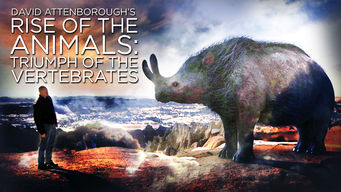
Emmy Award winner 'Rise of Animals'


As I mentioned in Al Jazeera America's final Emmy nominations, the News and Documentary Emmy Awards were given out Wednesday night.  Unfortunately, Al Jazeera America didn't win any.  That doesn't mean that I found the awards disappointing.  Quite the contrary, since I've started paying attention, I've found worthwhile shows that I can share with my classes, whether about Snow Monkeys or Your Inner Fish.  This year, the winner that caught my eye was Smithsonian Channel's "Rise of Animals: Triumph of the Vertebrates," which earned Outstanding Nature Programming.  Not only is it excellent informative television, it gives me a chance to write about fossils.

Smithsonian Channel has obligingly loaded several videos from the show to its YouTube channel, begining with Sir David Attenborough answering the question When Did Our Backbones First Appear?

When did vertebrates emerge, asks David Attenborough? An exciting fossil find in China points to a 525-million year old sea-dweller who used its new backbone to swim nimbly away from predators.
I can definitely use this in class.

Follow over the jump for more videos.

Thursday, September 22, 2016

Happy Autumnal Equinox 2016!


Today is the last day of astronomical summer and the first day of astronomical fall.  Treehugger gives the exact time of the transition today in 12 things to know about the 2016 autumnal equinox.
Well hello, fall.

Even though it happens year after year, the arrival of autumn is always a little surprising. Almost as if on a switch, one day late in the summer you feel it – a subtle crispness in the air. And before you know it, it’s pumpkin-spice-everything everywhere. We are suddenly swathed in sweaters and wearing boots and bombarded by shades of orange, often even before the thermometer warrants it. After slogging through a long hot August, it's exciting.

We can thank the autumnal equinox for this shift from sultry summer to cozy fall. And while most of us are aware of when the first day of autumn lands on the calendar, there’s more to the equinox than meets the eye. Consider the following.

1. This year, the autumnal equinox arrives precisely at 10:21 a.m. (EDT) on Thursday, September 22. Unlike an event like New Year’s midnight that follows the clock around the time zones, equinoxes happen at the same moment everywhere.
Eleven more facts at the link in the headline.  You can read them, or you can watch this video from National Geographic.

Just twice a year, day and night fall into perfect balance. Some claim that astronomical phenomenon, called equinox, inspires ancient structures to reveal hidden secrets.
Or you can do both.  Either way, happy equinox!

Wednesday, September 21, 2016

Al Jazeera America's final Emmy nominations


I told my readers to expect "two or three entries about the News and Documentary Emmy Awards" at the end of Ten Emmy Awards for 'Game of Thrones' plus other speculative fiction winners.  Today, the day of the award ceremony, I begin delivering on that promise with the swan song for Al Jazeera America, which announced this past January that it was shutting down.  The cable news channel followed through, closing in April.  However, it kept up its excellence in journalism right up to the end, which earned the outlet 10 Emmy nominations, making it the seventh most nominated news source behind ABC News with 11 nominations and ahead of The New York Times with 9.
Al Jazeera America 10
Fault Lines 5

Baltimore Rising 1
Conflicted: The Fight for Congo’s Minerals  1
Forgotten Youth 1
Forgotten Youth: Inside America’s Prisons 1
The Puerto Rico Gamble  1

Al Jazeera America Presents  2
Freeway: Crack in the System 1
Guantanamo’s Child 1

Ali Velshi On Target 2
Hitting The Brakes: Chicago’s Red Light Camera Scandal 1
Slave Wages For The Disabled 1

America Tonight 1
Emmett Till Special 1
The categories include Outstanding Business and Economic Reporting in a
Regularly Scheduled Newscast (2 for Ali Veshi), Outstanding Coverage of a Breaking News Story in a News Magazine (1 for Fault Lines), Outstanding Investigative Journalism in a News Magazine (1 for Fault Lines), Outstanding Business and Economic Reporting in a News Magazine (2 for Fault Lines), Outstanding Coverage of a Current News Story: Long Form (1 for All Jazeera America Presents), Outstanding Investigative Journalism: Long Form (1 for Al Jazeera America Presents), Outstanding Writing (1 for America Tonight), and Outstanding Research (1 for Fault Lines).  In future years, some other outlet will get these nominations, but I'll miss Al Jazeera America.  I'll be a good environmentalist and recycle what I wrote in January about the channel closing down.
I appreciated Al Jazeera's investigative reporting and presentation without sensationalism.  In that, I'll echo what Al Jazeera America CEO Al Anstey wrote in an email to his employees: "I know the closure of AJAM will be a massive disappointment for everyone here who has worked tirelessly for our long-term future. The decision that has been made is in no way because AJAM has done anything but a great job. Our commitment to great journalism is unrivaled."
And it was, right up to the end.