A blog about societal, cultural, and civilizational collapse, and how to stave it off or survive it. Named after the legendary character "Crazy Eddie" in Larry Niven and Jerry Pournelle's "The Mote in God's Eye." Expect news and views about culture, politics, economics, technology, and science fiction.
Happy WorldElephantDay! I found two videos for today that illustrate a point I make about elephants, that they are ecosystem engineers, foundation species that not only maintain an ecosystem, like keystone species such as sea otters, but can re-establish ecosystems. Watch World Elephant Day 2026 from American Humane Society.
Take elephants out of Africa, and the landscape itself begins to change. Their absence would be felt far beyond the herd, in the forests they help renew, the water sources they uncover and the habitats their movement creates for countless other species. Elephants are not simply part of Africa’s biodiversity; they are one of the forces that help sustain it. This World Elephant Day, help us protect these extraordinary animals and the living landscapes shaped by their presence.
India is home to more than 60% of the world’s Asian elephants—a distinction that comes with a deep responsibility.
From 33 Elephant Reserves and more than 150 identified elephant corridors to science-led monitoring and mitigation measures across 77 critical railway stretches, India continues to strengthen efforts for elephant conservation.
Technology, scientific research, frontline forest teams and local communities are all playing an important role in creating safer landscapes for elephants and people.
On World Elephant Day 2026, we celebrate India’s elephants and reaffirm our commitment to conserving the habitats and landscapes they call home.
Join us in celebrating World Giraffe Day with Africam! From their towering grace to their quirky drinking stances, giraffes are some of the most iconic animals of the African bush.
Watch as these gentle giants visit the waterhole, interact with other wildlife, and remind us why giraffe conservation matters.
In Uganda’s Murchison Falls National Park, Rothschild’s giraffes, one of the rarest giraffe subspecies, move quietly across the landscape. Classified as endangered, these giraffes are a vital part of Uganda’s natural heritage. Poaching snares, set to catch smaller animals, often trap unintended victims, including giraffes.
Despite their size, giraffes are particularly vulnerable to poaching snares and their injuries can be life-threatening if left untreated. That’s where our Elephant and Wildlife Rescue Unit steps in. Working alongside our partners at the Uganda Conservation Foundation and the Uganda Wildlife Authority, the veterinary team responds rapidly to wildlife in distress, treating their injuries and stabilizing them for safe release. In the first five months of 2025, the unit has already rescued 28 giraffes, giving each one a second chance at life in the wild.
That's giraffe conservation in the wild. Most of my readers do not live in countries where giraffes live free. Instead, they would only encounter giraffes in the flesh in zoos. Conservation goes on there, as the Cheyenne Mountain Zoo shows in last year's Happy World Giraffe Day!
Today, on the longest day of the year, we are celebrating the longest-necked animal: the giraffe!
In celebrating World Giraffe Day, we are also celebrating the almost two-year anniversary of the International Center for the Care and Conservation of Giraffe. Established in 2022, The Giraffe Center is a concentrated effort by CMZoo to consolidate resources and expand educational programs in order to improve and enrich the lives of giraffe in human care worldwide. One of the ways they achieve this is through in-person and virtual workshops. These workshops include lecture-style presentations, group discussions, role-playing and actual practice focused on giraffe nutrition, natural behaviors, hoof anatomy and care, and positive reinforcement training. Since 2022, The Giraffe Center has helped organizations in 28 different countries and has had hundreds of requests for information and assistance with giraffe care.
Learn more about the International Center for the Care and Conservation of Giraffe at cmzoo.org/giraffecenter.
Zoos play a part in conservation, too!
I am extending the streak of holidays one more day because tomorrow is WorldRainforestDay. Stay tuned to see how I combine celebrating that day with the Sunday entertainment feature, which may still be coverage of the News & Doc Emmy Awards. It can be done!
The light that burns twice as bright burns half as long. Come along as we take a closer look at the story of this legendary singer, musician and performer, including the many challenges and hardships he weathered before being taken too soon. Our video includes Freddie’s struggle to be taken seriously as an artist, his issues with substance abuse, his battle with AIDS, and more! What do YOU think is the most heartbreaking thing about Freddie Mercury’s life? Let us know in the comments!
I'vecalledWatchMojo's videos "high-quality, well-researched clickbait that is worth sharing" and this video exceeded even that standard. I learned a lot about Mercury from this video, including his being born in Zanzibar and his having extra teeth in his mouth. As I'm fond of writing, "it's always a good day when I learn something new, which makes today a good day."
He’s one of the all-time greats, but how much do you really know about this ‘80s musical icon? Did you know that Freddie Mercury wasn't his real name? Or that he actually had more teeth than most people? WatchMojo is counting down the things you never knew about Freddie Mercury.
I learned even more from this video, as light-hearted and trivial as it is. One of the facts was Mercury being DavidBowie's roadie. While the Wikipedia entry for "Under Pressure" makes no mention of this connection, it makes for an irresistible transition to Under Pressure - Annie Lennox & David Bowie from Freddie Mercury Tribute Concert in 1992.
What chemistry!
That concludes today's tribute to an entertainer taken away too early by AIDS. Stay tuned for CyberMonday followed by GivingTuesday to complete the extra-long holiday weekend.
In our first episode of Human Footprint, host and evolutionary biologist Shane Campbell-Staton uncovers the impact of hunting on elephant genetics. From Mozambique's Gorongosa National Park to the scars left on the elephant population, Shane's research is revealing how our actions can change the course of evolution itself.
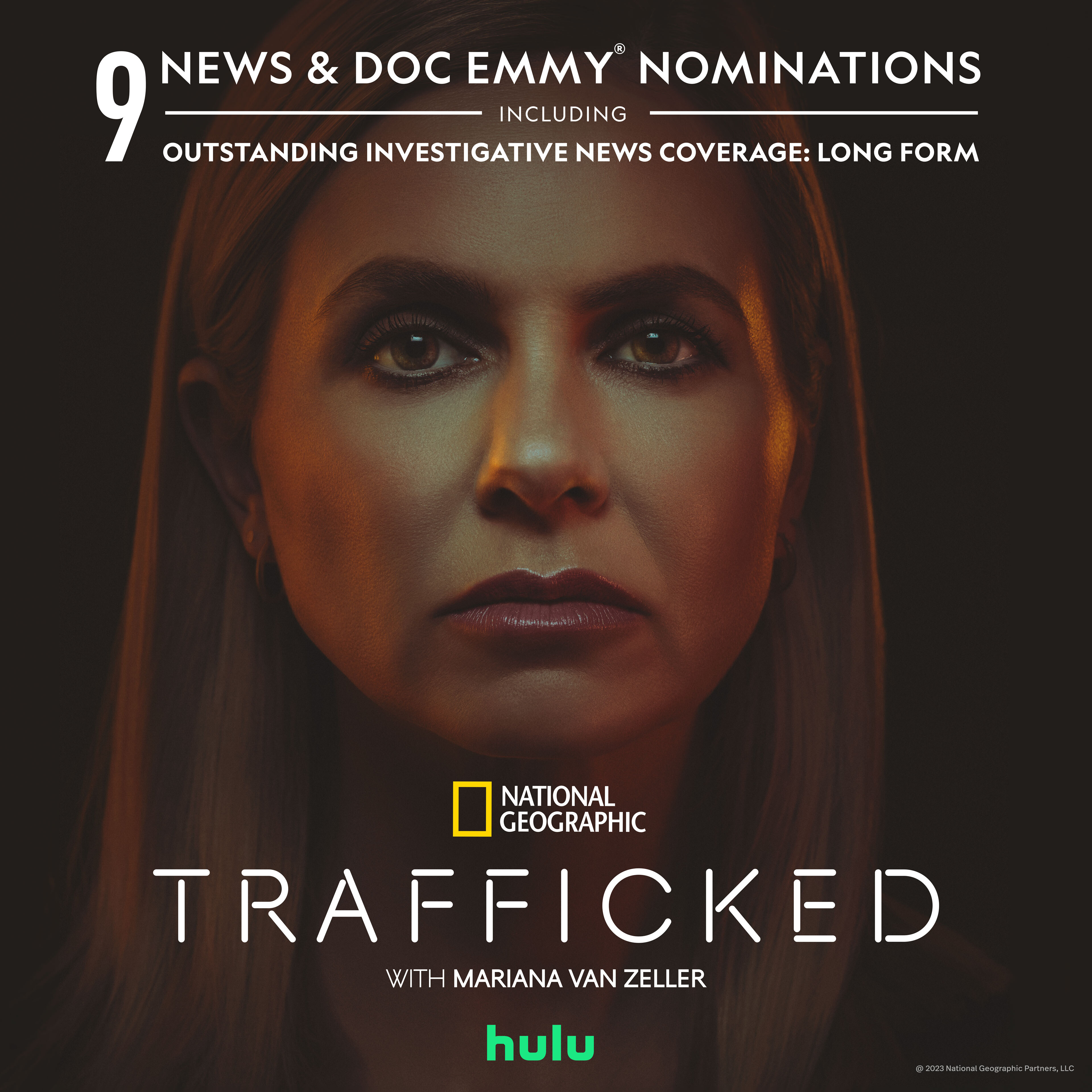
["Amazon Mafia"] is another video I can recommend to my students. It's just as strong on the environment as In Real Life: Plastic Time Bomb, even if it's weaker on the science. It, like all the other nominated episodes of Trafficked with Mariana van Zeller, makes up for it by being strong on long-form investigative reporting and crime coverage. In fact, "Fish Pirates" earned a nomination for Outstanding Investigative News Coverage: Long Form as well as Outstanding Writing: News and I've already mentioned that "White Supremacy" has nominations for Outstanding Crime and Justice Coverage, Outstanding Editing: News, and Outstanding Research: News. I will try to get around to covering those categories, if I haven't already, and embedding their videos.
As much as 30% of our seafood has been caught illegally. Mariana searches for the fish pirates who make billions each year while destroying our oceans.
...
About Trafficked with Mariana van Zeller:
TRAFFICKED with Mariana van Zeller is an original documentary series that explores the complex and dangerous inner-workings of the global underworld, black and informal markets. Each adventure follows Mariana on a mission to follow the chain of custody of trafficked goods, understand how to obtain the contraband, or see the 360-degree view of the trafficking world from the point of view of the smugglers, law enforcement and those caught in the crossfire.
Watching this video reminds me that I've been blogging about overfishing since 2013, when I quoted an article about climate change that mentioned overfishing as an additional threat to biodiversity, then quoted another article that detected evidence of it in old restaurant menus from Hawaii. It's been a topic of Earth Overshoot Day and a theme of World Wildlife Day and especially WorldOceansDay. Most recently, I included a video about overfishing I show to my students in Whales and fish, two stories I tell my students. Today's entry fits well with my continuing coverage of this threat to the environment and the global food supply, which means it's another video I can recommend to my students along with "Amazon Mafia."
Now for its competition in its two nominated categories.
Outstanding Investigative News Coverage: Long Form
FRONTLINE Afghanistan Undercover PBS FRONTLINE, The Associated Press, SITU Research Crime Scene: Bucha PBS Caught on Camera, Traced by Phone: The Russian Military Unit That Killed Dozens in Bucha The New York Times Trafficked with Mariana van Zelle Fish Pirates National Geographic VICE News Tonight Above the Law: Investigating the Louisville Metro Police Department Vice
All of the nominees except "Above the Law: Investigating the Louisville Metro Police Department" have another nomination, so I can't use that to handicap the category. Both of Frontline's nominees, "Afghanistan Undercover" and "Crime Scene: Bucha," and the New York Times' Caught on Camera, Traced by Phone: The Russian Military Unit That Killed Dozens in Bucha are also nominated for Outstanding Research: News, a category that I expect Trafficked with Mariana van Zeller's "White Supremacy" will win. Normally, I'd forecast based on the lack of other nominations that "Above the Law: Investigating the Louisville Metro Police Department," one of VICE News Tonight's 28 nominations, would be the least likely to win, but the video views say otherwise.
Continuing on, here is the other nominated category for "Fish Pirates" as well as one of two nominations for "Cocaine Queens."
Outstanding Writing: News
60 Minutes The Lost Souls of Bucha CBS 60 Minutes Pathogen X CBS 60 Minutes Platform 4 CBS Fault Lines The Killing of Shireen Abu Akleh Al Jazeera International USA Trafficked with Mariana van Zeller Cocaine Queens National Geographic Trafficked with Mariana van Zeller Fish Pirates National Geographic
60 Minutes has three nominated segments, two of which have two nominations, "Pathogen X" in this category and Outstanding Hard News Feature Story: Long Form and "Platform 4" in this category and Outstanding Edited Breaking News Coverage. "Cocaine Queens" also earned a nomination for Outstanding Editing: News. Using page views to break the tie, I'd say "Platform 4" with 700,899 views is in the lead to walk away from the podium with this award.
That concludes today's installment of this series. Return tomorrow as I plan on looking at the remaining nominations for Trafficked with Mariana van Zeller. Stay tuned.
Previous posts about the 2023 News & Documentary Emmy Awards
Around 6,000 years ago, in the Sahel region of Africa, a lone female mosquito buzzed through the lush, green savannah. She couldn’t know it, but the planet itself was about to change in ways that would see her descendants evolve to live very different lives. A sudden ecological shift would force them to go from living in forests and feeding on a range of animals to specializing on just one single species: us.
As Michelle Barboza-Ramirez pointed out, this story is an example of everything is connected to everything else, one of Commoner's Laws. This includes us, mosquitos, and climatechange, this time caused by natural cycles instead of human pollution.
The story of Aedes aegypti aegypti may be the earliest instance of mosquitos evolving to specialize on humans, but it's not the last. PBS Eons told that story in The London underground has its own type of mosquito.
These underground mosquitos are coming for you
This is literally a textbook example of evolution, as one of the textbooks I used for my biology classes told this story. That's where I first read about it nearly 20 years ago.
Speaking of subway lines, this is where I get off. I have to grade more exams and papers to pass back to my students for the last meeting of my classes tomorrow and Tuesday. Stay tuned for another short video post tomorrow.
Inside the Wagner Group’s playbook.
...
On January 10, 2023, the Ukrainian town of Soledar was reportedly captured. But it wasn’t captured by the Russian army under Vladimir Putin’s command. The announcement came from a relatively unknown man, Yevgeny Prigozhin, who said his troops now controlled the town. The troops are part of the Wagner Group, a private army that has become a prominent force alongside Russian troops in the war against Ukraine.
But they aren’t new. They've been secretly fighting for Russia around the world since 2014. In this video, we take a look at their playbook and examine the three main steps they use to spread Russian influence around the world in brutal ways. We also look at how they’ve transformed from a ghost army to a recognizable private military group with insignias and an online brand, changing the nature of this secret group and its role in the world.
Wagner Group's "Little Green Men" aren't just fighting for Russian interests in Ukraine. They're also in Syria, Mali, and Sudan, a Russian proxy presence on three continents. Wagner Group's mining operations are also all over Africa. Now I'm wondering what the Chinese think of this.
I'm sure I'll be writing more about the war in Ukraine. Stay tuned.
Happy NobelPrizeDay! I begin this year's observance the same way I did last year, with the winner of the Peace Prize. Watch DW News (Deutsche Welle or German Broadcasting) answer Nobel Peace Prize 2019: Who is Abiy Ahmed?
Ethiopian Prime Minister Abiy Ahmed has been announced as the winner of this prestigious award for his work to resolve the border conflict with neighboring Eritrea. Ahmed was up against around 300 nominees. The Norwegian Nobel Committee made the announcement in Oslo. Earlier this week, the Nobel prizes in the fields of Medicine, Physics, Chemistry and Literature were also awarded.
Congratulations to Prime Minister Ahmed and thanks to the Nobel Prize committee to get me to write about East Africa, a region I have generally and probably unjustly ignored.
Follow over the jump for the rest of the laureates.
Happy World Water Day! Last year, I wrote the following about my non-observance of the holiday and what I intended to do about it.
World Water Day is exactly the kind of holiday I should be celebrating on this blog, but it falls right when I've been doing statistics for the past six years...Here's to my remembering to observe World Water Day on time beginning next year, delaying the statistics post to March 23rd. Water is more important than meta.
Every drop of water is on an endless journey through the sky, the soil and streams… …through our lives… and back into nature. In many places, our environment is damaged, leaving us with polluted water or no water at all. Nature is green infrastructure A system supplying us with the water we need to survive and thrive. Healthy forests and fields prevent soil and chemicals being washed into rivers. Lakes, wetlands and floodplains store, purify and control water. This World Water Day, explore nature-based solutions to our water challenges. World Water Day 2018 The answer is in nature.
Last year, I focused on the Flint Water Crisis.* This year, it's the water crisis in Cape Town, South Africa. Follow over the jump for three videos from CBC's The National about this water story.
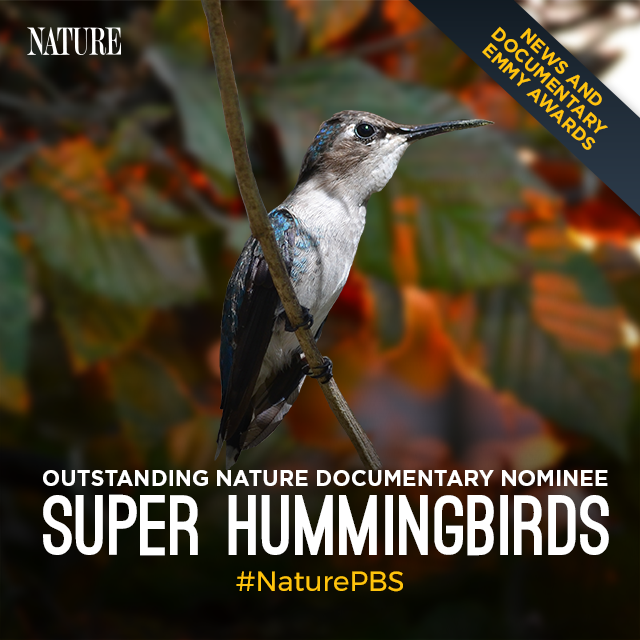
In the News and Documentary Emmys, the show is nominated for Outstanding Cinematography: Documentary along with four other nature shows, "David Attenborough's Light on Earth," "Desert Warriors: Lions of the Namib," "Forces of Nature," and "Nature: Super Hummingbirds." I watched the last one at my mom's house in Utah immediately after I watched the Nova episode " Treasures of the Earth: Power." It deserves its nomination. As for "Wild New Zealand," its nominations prove it was well-narrated and well-photographed.
Since I've already featured "Wild New Zealand" in an earlier entry and I've praised "Nature: Super Hummingbirds," I'll write about the latter one first (and the first one last). Here is the preview from PBS.
Hummingbirds are amazing creatures to behold. They are the tiniest of birds, yet possess natural born super powers that enable them to fly backwards, upside-down, and float in mid-air. Their wings beat faster than the eye can see and the speed at which they travel makes people wonder if it was indeed a hummingbird they actually saw. They also are only found in the Americas. These attributes have both intrigued scientists and made it challenging to study the species, but with the latest high-speed cameras and other technologies, Super Hummingbirds reveals new scientific breakthroughs about these magical birds.
In addition to being nominated for Outstanding Cinematography: Documentary, the Nature episode is nominated for Outstanding Nature Documentary. So is another nominee, CuriosityStream's "David Attenborough's Light on Earth."
Why do animals produce light of their own? For centuries, we could only marvel at the mystery of bioluminescence. Now we can begin to reveal the amazing truth about these living lights. Sir David Attenborough is our guide, as we venture into a world he describes as "utterly unlike our own".
Yes, Sir David narrates nominees in the News and Documentary Emmys as well. Follow over the jump for the rest of them as well as the remaining nominees in both Outstanding Cinematography: Documentary and Outstanding Nature Documentary.
Movie made by Greenpeace showing how e-waste sent as "charity" in reality turns out to be electronic waste.
Remember Commoner's Laws -- there is no away, everything is connected to everything else, and there is no free lunch. As for nature knows best, this isn't it.
Today, I'm looking at Frontline's "Outbreak," which won the award for Outstanding Coverage of a Current News Story – Long Form, one of seven awards earned by Frontline last week. It covered the Ebola epidemic of 2014 in west Africa, which I wrote about extensively at the time. I begin with the trailer.
The vivid, inside story of how the recent Ebola outbreak began and why it wasn’t stopped before it was too late. FRONTLINE's upcoming documentary "Outbreak" exposes tragic missteps in the response to the epidemic.
Follow over the jump for clips from each of the most affected countries, Guinea, Sierra Leone, and Liberia.
Liberia vows to be vigilant to keep Ebola-free as country goes 42 days without a new case after a year-long epidemic that killed over 4,700 people. Nathan Frandino reports.
The Reuters article accompanying this video continues with the death toll.
However, celebrations were muted by thoughts for the dead and medical charity Medecins Sans Frontieres (MSF) urged vigilance until the worst outbreak of the disease ever recorded was also extinguished in neighboring Guinea and Sierra Leone.
A total of 11,005 people have died from Ebola in the three West African neighbors since the outbreak began in December 2013, according to the WHO.
ODN joined Reuters in reporting this welcome development.
Don't believe the "42 weeks" part; that's an error. It's 42 days.
When the epidemic is declared over in all three countries, I'll post Professor Farnsworth. Until then, it looks like the rest of the world may have dodged a bullet.
Yesterday (which is still today from Chicago west to the Aleutians) was World AIDS Day. I marked it a week late last year, when I posted AIDS: The pandemic in our midst. This year, I'm observing it along with the western two-thirds of North America and all of the eastern Pacific, so I'm not completely tardy.
Like last year, I'm sharing the news stories from Overnight News Digests, this time going back to The Archdruid on Ebola and other epidemic news, the last time I mentioned the disease. I begin with two stories about in utero HIV transmission.
Stony Brook, NY – November 24, 2014 – The results of an international clinical trial sponsored by the National Institutes of Health (NIH) has found that taking a three-drug regimen during pregnancy prevents mother-to-child HIV transmission more effectively than taking a single drug during pregnancy, another during labor, and two more after giving birth.
“This study will help us to understand the safety and toxicity of these specific regimens in HIV positive pregnant women and their children,” said Dr. Nachman, Associate Dean of Research and Professor of Pediatrics at Stony Brook Medicine, and the Principal Investigator of the International Maternal Pediatric Adolescent AIDS Clinical Trials (IMPAACT) network, which conducts the PROMISE (Promoting Maternal Infant Survival Everywhere) Study. “As these women and children are followed, we will learn more about the long-term issues that may arise from these medications.”
Wayne State University: Research shows anti-HIV medicines can cause damage to fetal hearts Just-published findings in the journal AIDS raise concern about potential long-term harmful impact of “antiretroviral therapy” on in-utero infants whose mothers are HIV-positive, but who are not infected with HIV themselves. November 19, 2014
DETROIT, Mich., Wednesday, Nov. 19, 2014 – A study by a Children’s Hospital of Michigan, Detroit Medical Center research team is shedding new light on the troubling question of whether the drugs often given to HIV-positive pregnant women can cause significant long-term heart problems for the non-HIV-infected babies they carry.
The study recently published in the journal AIDS shows that while the HIV medications have been successful in helping to prevent the transmission of the virus from mother to infant, they are associated with persistently impaired development of heart muscle and reduced heart performance in non-HIV-infected children whose mothers received the medicines years earlier.
“What our study indicates is that there’s potentially a long-term price to be paid for protecting the children of HIV-infected mothers from the virus,” said Steven Lipshultz, M.D., pediatrician-in-chief at the Children’s Hospital of Michigan and chair of pediatrics for the Wayne State University School of Medicine. Dr. Lipshultz is a specialist in the study of long-term toxic cardiac effects among children affected by cancer and HIV drug therapies.
Follow over the jump for more stories from the past three months in reverse chronological order.
Cerebral malaria is the deadliest type of malaria and kills more than one-half million children under age five each year. However, knowing how it kills has eluded physicians from finding a treatment for centuries, until now. In groundbreaking research, Michigan State University’s Dr. Terrie Taylor and Dr. Karl Seydel, have found that children who die from cerebral malaria have massively swollen brains.
The current Ebola outbreak is the worst in history, and there are a lot of myths about this virus floating around. Julian is here to figure out what is fact, and what is fiction.
New research published in the online journal PLoS Outbreaks predicts new Ebola cases could reach 6,800 in West Africa by the end of the month if new control measures are not enacted.
Arizona State University and Harvard University researchers also discovered through modeling analysis that the rate of rise in cases significantly increased in August in Liberia and Guinea, around the time that a mass quarantine was put in place, indicating that the mass quarantine efforts may have made the outbreak worse than it would have been otherwise.
Deteriorating living and hygiene conditions in some of the quarantined areas sparked riots last month. Sierra Leone began a three day country-wide quarantine today, where all citizens have been asked to stay at home, said Sherry Towers, research professor for the ASU Simon A. Levin Mathematical, Computational and Modeling Sciences Center (MCMSC) in the College of Liberal Arts and Sciences.
The latest figures from the World Health Organization show that the death toll from the worst outbreak of Ebola on record has killed at least 3,091 people, out of 6,574 probable, suspected and confirmed cases.
Pretty close, especially since the numbers came out on Saturday. I'm sure four more days would push the number of cases to and probably past 6,800.
WHO said earlier this week the total number of infections could reach 20,000 by November, months earlier than previously forecast. The U.S. Centers for Disease Control and Prevention (CDC) warned between 550,000 and 1.4 million people might be infected in the region by January if nothing was done.
I probably need to do a post here on the likely role of pandemic disease in the transition to the deindustrial dark age. Given that Ebola cases are doubling every twenty days at this point, that may be a more immediately relevant point than most people like to think.
I hope he follows through. If so, it wouldn't be the first time one of my comments prompted him to explore a topic. I did it before when I inspired The Archdruid to write about Steampunk. That's when I wrote the following to him.
On my blog, I've written that interacting with you has been good for my writing. I'm glad to see that the reverse has been true for you, too.
I begin with the key sentence of Greer's that prompted my comment.
The Ebola epidemic in West Africa has continued to spread at an exponential rate as hopelessly underfunded attempts to contain it crumple, while the leaders of the world’s industrial nations distract themselves playing geopolitics in blithe disregard of the very real possibility that their inattention may be helping to launch the next great global pandemic.
That gave me my opening.
President Obama actually talked about Ebola on Meet the Press, saying that it could pose a danger to the U.S. and that the country should send troops and resources in. That might be wiser in the long run than chasing ISIS, AKA The Sith Jihad, around Syria and Iraq, even though that would be a more popular thing to do, as people understand a fight with a human enemy better than an effort to contain The Red Death. Speaking of which, the same people who observed relationship between food prices and unrest and predicted the onset of the Arab Spring and then the current spate of crises in Ukraine, Syria, and elsewhere, are calling attention to a model of Ebola spread that could turn into a global pandemic by just adding intercontinental transportation into the mix. That's an issue that was pointed out in "The Hot Zone" 20 years ago. Welcome to the science-fiction future of two decades ago.
Greer's response was more chilling and alamist than usual, which is saying something.
Pinku-sensei, Obama's fairly good at talking. It's doing anything when he's finished with the speech that's his problem. At this point I think a global pandemic that could leave a quarter or more of the world's population dead in five to ten years is a serious possibility.
Yikes!
Greer wasn't alone in his grim assessment. Rene concluded his comment by stating "as a retired public health professional, [I] do agree with your assessment about the possibilities for an Ebola outbreak." On that cheery note, here's the story Reuters ran on Friday about the epidemic, which I included in a comment to Overnight News Digest: Science Saturday (Solar storm and aurora).
The number of new Ebola cases in West Africa is growing faster than authorities can manage them, the World Health Organization (WHO) said on Friday, renewing a call for health workers from around the world to go to the region to help.
As the death toll rose to more than 2,400 people out of 4,784 cases, WHO director general Margaret Chan told a news conference in Geneva the vast nature of the outbreak -- particularly in the three hardest-hit countries of Guinea, Liberia and Sierra Leone -- required a massive emergency response.
Sarah Crowe, a spokeswoman for UNICEF, said the U.N. children's agency was using innovative ways to tackle the epidemic, including telling people to "use whatever means they have, such as plastic bags, to cover themselves if they have to deal with sick members of their family".
The version of the story at Reuters India includes the following bullet points.
* Cuba to send 165 health workers to help in Sierra Leone
* WHO's Chan calls for more international support (Adds Dutch doctors, Piot comment, UNICEF comment)
Follow over the jump for more on the situation from Reuters and Agence France Press.
Wife of American doctor infected with Ebola addresses news media at UMass Medical School
In response to the outpouring of concern about her husband, Richard Sacra, MD, who is the third American doctor to be infected with Ebola in Liberia, Debbie Sacra shared a message of gratitude and hope at a press conference held today at UMass Medical School.
Mrs. Sacra’s comments came moments after the announcement from the international Christian mission organization SIM that Dr. Sacra is being transported from Liberia to the Nebraska Medical Center in Omaha, which has a biocontainment patient care unit, for treatment.
“He walked onto the plane and he is in good spirits,” said Mrs. Sacra. She fought back tears while expressing her hopes for his recovery, and thanked the media for bringing attention to the plight of Liberians “who needed a hospital to open” whether for malaria treatment, maternity care or other medical care.
Dr. Warren Ferguson and Dr. Virginia Van Duyne worked with Dr. Richard Sacra and spoke briefly about their relationship with Dr. Sacra, UMMS Assistant Professor of Family Medicine & Community Health, and his work in Worcester and elsewhere.
Dr. Sacra has spent much of his career working overseas, including nearly two decades in Liberia. He has a faculty appointment at UMMS as an assistant professor of family medicine & community health, as a function of teaching in the medical school’s residency program at the Family Health Center of Worcester when he returns to the U.S. for periodic respite visits.
The third U.S. medical missionary to become infected with the Ebola virus was showing signs of improvement Saturday at a Nebraska hospital but was still very ill, his wife said.
Dr. Rick Sacra, a 51-year-old Boston physician, arrived Friday at the Nebraska Medical Center in Omaha for treatment after being flown there from Liberia, one of five West African countries affected by an outbreak of the virus.
"Rick is very sick and weak, but slightly improved from when he arrived yesterday," Debbie Sacra said Saturday. "He asked for something to eat and had a little chicken soup," she said.
Here's to a successful recovery, just like the other two U.S. physicians who came back to be treated.
Follow over the jump for other news about the epidemic from the past week, including statements from President Obama and the director of the WHO and the scariest silent video about the epidemic one could possibly watch.
This month's Nablopomo theme is Heal. I'll get around to posting the usual entry about the theme later. Right now, I'm going to focus on one aspect of that theme, health and disease, and the number one health story I'm covering in this blog is the Ebolaoutbreak.
(Reuters) - Democratic Republic of Congo declared an Ebola outbreak in its northern Equateur province on Sunday after two out of eight cases tested came back positive for the deadly virus, Health Minister Felix Kabange Numbi said.
A mysterious disease has killed dozens of people in Equateur in recent weeks but the World Health Organization had said on Thursday it was not Ebola.
"I declare an Ebola epidemic in the region of Djera, in the territory of Boende in the province of Equateur," Kabange Numbi told a news conference.
This is likely a second outbreak, not a spread of the original one.
(Reuters) - Divided by mistrust and mutual recriminations, the Russian and Ukrainian leaders will hold rare talks on Tuesday that offer only a slim hope of progress towards ending five months of separatist war in Ukraine.
Since Vladimir Putin and Petro Poroshenko last met on June 6 in France, Ukraine has turned the tide of the conflict and largely encircled pro-Russian rebels holding out in two cities in the east of the former Soviet republic.
But the diplomatic crisis has only deepened, especially since the downing of a Malaysian airliner over rebel-held territory last month with the loss of 298 lives.
This was the most read story on Reuters last night. My Ukrainian and Russian readers can make of it what they will. And, yes, I have lots of readers from both countries. Ukraine and Russia are top two non-U.S. sources of readers for the blog this month, and Russia is the largest foreign portion of the audience in the history of the blog; Ukraine is in eighth, and will pass France for seventh at current rates in a few months.
Follow over the jump for the stories about war, death, and destruction from Iraq, Gaza, Congo, and elsewhere that made headlines last night.