Showing posts with label Discovery News. Show all posts

Thursday, July 20, 2023

Seeker and Vintage Space look back at Apollo 17 and ahead to Artemis for Moon Day

Happy National Moon Day! I complete my retrospective of Apollo missions 50 years later with Seeker asking Why Did NASA Cancel the Apollo Program?

NASA had grand plans for the Moon during the Apollo program, but those dreams were cut short a few years after the first landing. Apollo 17 would mark the last time humans ventured to the Moon.
...
The path to the moon traced a dangerous line of risk and reward. In a race against time, the Apollo Program challenged our scientific capabilities and redefined the boundaries of humanity. To celebrate NASA’s 60 years of exploration, Seeker is going back in time to relive each Apollo mission, taking viewers on a ride to an entirely new world.
Three things struck me about this video, the Big Blue Marble photo, the three canceled Apollo missions, and NASA's plans to return to the moon. I'm being a good environmentalist by recycling the importance of the Blue Marble from The end of an era: last space shuttle mission, when I quoted Indiana University's AHR examines ‘Earthrise era,’ symbols of Argentine cultural identity.
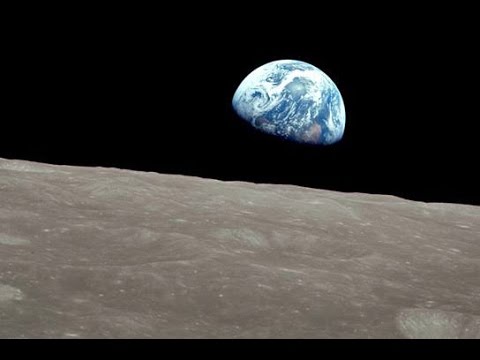
Hear the word "Earth," and the images likely to flash through the mind are descendants of two views afforded by the Apollo missions. One, a photograph called "Earthrise," shows Earth half-cloaked in shadow above a lifeless moonscape. A second, "Blue Marble," reveals our planet suspended alone in the void; it is reputed to be the most widely disseminated photograph in history.

Such views of Earth, it has been argued, prompted a revolution in the global imagination and a new appreciation for the beauty and fragility of the planet. But Benjamin Lazier, associate professor of history at Reed College, writing in the June 2011 issue of the American Historical Review, questions whether the Apollo images did indeed prompt such a revolution. And if so, he asks, to what ends?

Lazier supplements accounts of the Cold War origins and environmentalist afterlives of the "Earthrise era" with a history of philosophical responses to the earliest images of Earth from space. He focuses on thinkers -- including Hannah Arendt, Martin Heidegger and Hans Blumenberg -- who were troubled by the displacement of local, earthbound horizons with horizons that are planetary in scope and scale.

"Their example … prompts us to ask whether the visions and vocabularies of the Earthrise era have inadvertently accelerated our planetary emergency as much as they have inspired us to slow it down," he writes in "Earthrise; or, The Globalization of the World Picture."
Yes, the environmental era and the era of space travel not only coincide, they directly feed into one another. After all, I consider the use of "the planet" to describe Earth as a shibboleth of the environmental movement, and that use comes directly from space travel, as described above.
The emotional importance of that image may supercede all the scientific findings from the final Apollo mission to the Moon.

Amy Shira Teitel of The Vintage Space examined the canceled missions in Missions we Lost When Apollo was Cancelled.

Long before Apollo landed on the Moon, NASA leadership was looking at some lofty plans for Apollo hardware after the Moon.
"At least we got Skylab." It's the 50th anniversary of that program, too. Let's see if I get inspired enough to write more about it.

I return to Seeker explaning How NASA Plans to Return to the Moon.

NASA hasn't sent humans back to the Moon in almost 50 years, but in the next decade, the agency has ambitious plans for a lunar revival.
NASA's plans to return to the Moon have been moving ahead during the past four years. The successful test flight of the Orion capsule around the Moon was one of the reasons I declared that 2022 has been another great year in space. Stephen Colbert interviews the Artemis II crew for Yuri's Night covered the next step. After that, landing on the Moon again. Here's to my covering the Artemis II mission for next year's Moon Day!

Saturday, August 20, 2022

Emmy nominee 'My Garden of a Thousand Bees' for World Honey Bee Day

Happy World Honey Bee Day! As I promised yesterday, I'm writing about award-nominated television documentaries today. I begin with My Garden of a Thousand Bees | PBS Nature Trailer (2021), which my mom told me about and has earned a nomination for Outstanding Nature Documentary at the News & Documentary Emmy Awards.

Taking refuge from the pandemic a wildlife filmmaker sets out to record the incredible variety of wild bees in his small garden, finally developing a close relationship with an individual bee that he has followed over its entire life.

Martin Dohrn is an expert at exploring the macroscopic world; his last project on ants with David Attenborough won awards around the world. This time, he unravels a bee filled universe inhabited by winged creatures of every size and shape. From giant bumblebees to scissor bees the size of a mosquito, he has seen over 60 species of bee in his backyard. As he gets sucked into this world, he narrates with the charm and informative voice of a man obsessed. Filmed with one-of-a-kind lenses forged on his kitchen table, this film illuminates its audience with unique natural history insights, and depths of behaviors never recorded before.
In 'The Beatles: Get Back,' 'We Need to Talk About Cosby,' and 'Stanley Tucci: Searching for Italy' all nominated for five Emmy Awards in nonfiction series, I wrote "Who knows, maybe revisiting the archives was the best thing to do in isolation." For a nature videographer, the best thing to do in isolation was record the nature in his own yard. Considering that wildlife became bolder and more visible during the pandemic, the timing was fortuitous.

The "Nature" episode's page on PBS's website has more.
The documentary, which kicks off Nature’s 40th season on PBS, follows Dohrn during the COVID-19 lockdown of spring and summer 2020, as he becomes bee obsessed and develops relationships with individual bees. Filming more than 60 species of bees, from Britain’s largest bumblebees to scissor bees, which are the size of a mosquito, Dohrn observes how differences in behavior set different species apart from each other. Eventually, he gets so close to the bees, he can identify individuals just by looking at them.

Viewers will marvel at moments timely captured in My Garden of a Thousand Bees, such as bees laying tiny eggs preparing for the next generation, green-fanged spiders feasting on male flower bees and a female yellow-faced bee attacking a Gasteruption wasp to protect her nest. Other fascinating behavior featured in the program includes two male bees fighting each other over a female, different species of bees competing over territory and one busy bee building a nest with a shell and hundreds of sticks. Intrigued by the intelligence of one particular wood-carving leafcutter bee, Dohrn dubs her “Nicky” and sees life at her level as she leaves a lasting legacy in the garden.
That's impressive, but today is dedicated to honeybees, which Seeker examined at the same time "My Garden of a Thousand Bees" was airing, in The Threat to Bees and Our Food Supply.

The European honey bees are crucial to our food systems, but they may soon be under threat from a microscopic pest. So what exactly is this threat?

To learn more about other types of bees, make sure to check out the documentary, "My Garden of a Thousand Bees," streaming now on @Nature on PBS...

It’s no secret, bees are super important. And it’s not just for food sources; bees also keep the health of wild ecosystems in check by pollinating wildflowers, which in turn maintains biodiversity and a thriving terrestrial biomes.

And while all bee species are helpful pollinators, honey bees are CRUCIAL to our own food supply, pollinating close to 90 commercially grown crops in the U.S. But bee populations have been under extreme stresses, from pesticides to the climate crisis, to parasites and diseases.

We are currently losing between 30% and close to 50% of our honeybee colonies every single year. What would be worse in a situation where the balance is already kind of teetering is to add a parasite that we know has a dramatic impact on honeybees.

Unfortunately, that’s exactly the situation all bees are facing. Dr. Sammy Ramsey, a scientist at the USDA, focuses on protecting bees from an emerging threat.
Even Seeker told its viewers to watch this episode, just like my mom told me to. Good for them!

Follow over the jump for its News & Documentary Emmy nomination along with the nominations for other nature documentaries at this year's awards.

Wednesday, July 20, 2022

Apollo 15 and 16 and the Lunar Rover 50 years later for Moon Day 2022

Happy National Moon Moon Day! For today's anniversary of Apollo 11 landing on the Moon, I'm looking back at Apollo 15 and Apollo 16, the two missions whose 50th anniversaries occurred since the last Moon Day. I begin with Seeker's video covering both missions, but focusing mostly on the Lunar Rover, How Did NASA Engineer a Car for the Moon?

NASA’s first car to drive on the Moon revolutionized space exploration, giving astronauts the ability to travel farther than ever before.
SciShow Space also devoted one of its episodes to the Lunar Rover, What We Learned by Putting Cars on the Moon.

To expand their range on visits to the moon, astronauts needed a way to travel faster, go farther, and carry more than walking provided. Thankfully, they had the Lunar Roving Vehicle.
Both of these videos demonstrate how NASA and Boeing created a lunar vehicle and how a car on the Moon allowed the lunar astronauts to perform more and better science.

NASA also remembered both missions, looking at them as wholes, not just through the lens of their most visible technological achievement, as interesting and significant as it was and still is. To celebrate the mission's 50th anniversary, NASA uploaded Apollo 15: "Never Been on a Ride like this Before".

Our first wheels on the Moon. On the Apollo 15 mission, the Lunar Roving Vehicle allowed the astronauts to cover a much greater distance on the Moon than the previous three flights had accomplished. This year marks the 50th anniversary of the Apollo 15 mission. On July 26, 1971, David R. Scott (Commander), James B. Irwin (Lunar Module Pilot) and Alfred M. Worden (Command Module Pilot) launched from Kennedy Space Center’s Launch Complex 39A.

Apollo 15 set several new records for crewed spaceflight: heaviest payload in a lunar orbit of approximately 107,000 pounds, maximum radial distance traveled on the lunar surface away from the spacecraft of about 17.5 miles, most lunar surface moonwalks (three) and longest total of duration for lunar surface moonwalk (18 hours, 37 minutes), longest time in lunar orbit (about 145 hours), longest crewed lunar mission (295 hours), longest Apollo mission, the first satellite placed in lunar orbit by a crewed spacecraft, and first deep space and operational spacewalk.
That is an impressive list of records! Also, I remember watching as the hammer and feather hit the lunar surface at the same time, demonstrating that Galileo was right.

NASA Goddard observed the 50th anniversary of the Apollo 16 mission with Apollo 16 Lands in the Lunar Highlands.

Thanks to data provided by the Lunar Reconnaissance Orbiter mission, we are able to visualize the Apollo 16 landing site in the Descartes highlands on the nearside of the Moon, where the astronauts landed in April 1972. The mission was crewed by Commander John Young, Lunar Module Pilot Charles Duke, and Command Module Pilot Thomas K. Mattingly. This visualization contains audio transmissions from portions of the mission between the astronauts and CapCom James Irwin, and a view of the 3 EVA (extravehicular activity) routes the astronauts took over the course of three days, including their visit to North Ray crater. The experiments conducted and lunar samples collected by the crew are still providing valuable data about our Moon to scientists today.
Apollo 16 may not have been as flashy, but it was still important for understanding the Moon.

That's it for this look back. I plan on finishing this series next year with the 50th anniversary of Apollo 17, the last Apollo mission to the Moon. In the meantime, stay tuned as I return to the present day.

Saturday, August 28, 2021

Seeker asks 'Why Isn’t U.S. Cybersecurity Infrastructure Good Enough?'

I took a comedic look at ransomware in John Oliver explains ransomware, so it's time for a more serious treatment of the subject. Watch as Seeker asks Why Isn’t U.S. Cybersecurity Infrastructure Good Enough?

Cyberattacks around the world, and especially in the U.S., have been on the rise. What can we do to combat it?
...
Cyberattacks seem to be really having a moment. Take the US, for example: the FBI has reported 4,000 attacks a DAY since the COVID pandemic began, and there’s no sign of things slowing down. But how exactly did we get to this point, and how can cybersecurity help us get out of this mess?

The infrastructure that we use every single day, in our houses, in our cars, in our workplaces, and generally in the country as a whole, is full of computing systems. Anything that prevents us from getting things done, or in some way makes that computing infrastructure create a negative event, we could consider that to be a threat.

The need for protection against cyber attacks really came into focus with STUXNET, the world’s first digital weapon. In 2010, it was found targeting Iran’s nuclear facilities, and in the process, proving that cyberattacks could have devastating consequences beyond the digital realm.

Computers today are more complex than ever, as are the types of threats they face. The more we ask our computers to do—open an email, visit a webpage, join a network—the more potential points of attack emerge.
While John Oliver, Trevor Noah, and the news outlets concentrated on the social and economic components of the issue, Seeker looks more at the technology and expands the focus from just ransomware to all kinds of cyberattacks, including Distributed Denial of Service (DDoS) attacks, viruses, phishing, and general hacking to steal data and money. Still, the basic concepts and countermeasures are the same. One countermeasure Seeker mentions involves updating government hardware and software. That will cost money, but I think it will be worth it. Now to convince government and taxpayers it is, too.

That's it for the short posts I promised in 'The Crown' leads Gold Derby TV Awards with six wins. Stay tuned for the last Sunday entertainment feature of August.

Tuesday, August 24, 2021

Seeker explains the environmental issues and solutions involving rare earth elements

Yesterday, Seeker uploaded a video that asked These Rare Elements Are Key to Renewable Energy, But What If They Run Out?

Turns out, green technologies might not be so green. Rare earth elements used in these technologies have a big environmental impact, but there are some solutions.
...
Renewable technologies like solar panels, electric cars, and wind farms may move us toward a more sustainable future. But the problems caused by one of their key ingredients could jeopardize it all. Luckily, nature has provided us some pretty cool solutions that, if we can take advantage of them, just might save the day.

I’m talking about rare earth elements, or REEs, a group of 17 metallic elements on the periodic table. And not only do green technologies depend on them, but they’re key parts of most electronics: smart phones, computer hard drives, digital cameras, and more—plus things like medical imaging machines, lasers, and aerospace components.

Many of these elements are so useful because they’re easy to magnetise and they hold on to that magnetic-ness even in solid form. Elements like neodymium, terbium, indium, and others are essential to solar panels and wind turbines, and a recent study showed that in order to keep up with demand for these technologies, we’ll need to produce 12 times as much of these REEs by 2050.
This video touches on three lessons I teach my students, all of which connect to Commoner's Laws. First, there is no free lunch when it comes to resources that have to be mined. Mining causes a lot of environmental damage, as the video shows. The pollution itself is an example of everything must go somewhere; there is no "away."

Second, everything is connected to everything else, in this case through the global supply chain. In particular, that the U.S. is 100% dependent on imported rare earths, particularly from China, leaves us vulnerable to China threatening to restrict exports of rare earths, which could seriously impede our high-technology and green economies. I tell both my geology and environmental science students about that every semester.

The last lesson is a hopeful one based on nature knows best. As I noted in Seeker and CNBC examine the hidden environmental costs of electric cars and how to reduce them by recycling, recycling mimics natural chemical cycling in the environment. In that entry, technology used chemical and physical processes to extract lithium and other batter components. Seeker's video comes even closer to nature by showing how bacteria can help recycle rare earth elements. That's an even better example of both nature knows best and part of another of Commoner's Laws, there is no waste in nature.

I found this such an informative video, I think I'll show this to my students next semester. Once again, welcome to blogging as professional development.

Sunday, August 15, 2021

SciShow and Seeker on the Delta variant, a pandemic update

Today is Sunday, when I normally write about entertainment, but after posting Dave Chappelle's four Emmy nominations for 'SNL' and '8:46' yesterday, I am just not feeling it.* Instead, I'm sharing a pandemic update with two science videos. First, SciShow explains What You Need to Know About the Delta Variant.

Several COVID-19 variants are acting uniquely enough to qualify as a distinct strain. And you might have heard about one on the news: the Delta variant. Today we’re going to talk about what it is, why it’s here, and what you need to know about it.
SciShow uploaded this video last Friday, while Seeker uploaded Delta Variant: What You Need To Know on July 21, 2021, three-and-one-half weeks ago.

In recent months, the Delta variant has been linked to a resurgence of COVID infections and is on track to become the dominant variant worldwide. But what exactly sets this so-called super spreader variant apart from all the rest?
...
There's been a lot of potential variants of concern that have sprouted up around the world. And a lot of this is due to the fact that viruses mutate, that's what they do. But the big question is:

Are these mutations resulting in the virus being more problematic? So far, four of these have been identified as “variants of concern” by the World Health Organization: Alpha, Beta, Gamma, and Delta, which is the most recent addition to the list.

Together, these variants are shown to be either more contagious, more deadly, or more resistant to current treatments. But of the four, Delta is especially concerning. According to the WHO, it’s the “fastest and fittest” variant yet.
I don't think the three-week difference between the videos means the Seeker video is out of date. In fact, I'm planning on sharing both videos with one of my classes next month. Yes, the next semester is coming that soon. That's yet another reason I'm not feeling like researching and composing another long entertainment post. I have work to do.

*I plan on combining some science with thrills for an educational entertainment post tomorrow for National Roller Coaster Day. Stay tuned.

Tuesday, July 20, 2021

Apollo 14 50 years later for Moon Day 2021

Happy National Moon Day! For today's anniversary of Apollo 11 landing on the Moon, I'm looking back at Apollo 14, the only mission whose 50th anniversary occurred since the last Moon Day. I begin with NASA's Apollo 14: ‘A Wild Place Up Here’.

Apollo 14 was the eighth crewed Apollo mission and the third to land on the Moon. On January 31, 1971, Apollo 14 launched from Kennedy Space Center with a crew of commander Alan B. Shepard, command module pilot Stuart A. Roosa, and lunar module pilot Edgar D. Mitchell.

The crew experienced challenges in docking with the lunar module Antares and six attempts were required before a "hard dock" was achieved.

On February 5, 1971, Antares made the most precise landing to date in the hilly uplands of the Fra Mauro crater.

Shepard and Mitchell spent a total of 33.5 hours on the Moon and performed two extra-vehicular activities (EVAs, or “moonwalks”), totaling 9 hours and 23 minutes. During the first EVA, they deployed several science experiments. Among these was a reflector that continues to be used to measure the distance from the Earth to the Moon. They also deployed a seismometer, which detected thousands of moonquakes and helped to determine the structure of the Moon’s interior. Other instruments measured the composition of the solar wind and the Moon’s tenuous atmosphere and plasma environment. Shepard and Mitchell collected 95 pounds of lunar rock and soil samples.

The command module Kitty Hawk splashed down safely on February 9, 1971, exactly nine days and two minutes after launch. The mission duration from liftoff to splashdown was 216 hours, two minutes.
As I observed last year, "One thing that struck me watching all of these videos was that Apollo 10-13 all had a mission-threatening, if not life-endangering, mishap of some kind, most of which I didn't know about until I started watching videos about the missions." That streak continued with Apollo 14, which required six attempts for the Command-Service Module (CSM) to dock with the Lunar Module. Seeker included that in its video about the mission, What Science Was Actually Done on the Moon?

Apollo 14 conducted more scientific exploration of the Moon than any mission before it, and discoveries from the trip would eventually shape a new understanding of our celestial neighbor.
...
[NASA:] “When Apollo 14 touched down on the moon on Feb. 5, 1971, it was more than a 240,000-mile trip – it was a hard-fought return to flight for NASA's Apollo Program and America's first person in space.”
...
[Space.com"] “Today, many people best remember this mission as the one where an astronaut hit golf balls on the moon, but the crew also had several other adventures.”
While NASA mentioned Apollo 14 as a return to space after "successful failure" of Apollo 13, concentrating much more on the mission itself, Seeker emphasized the steps required to recover from Apollo 13 and make Apollo 14 happen. Those were important technological achievements of their own, but not as impressive as the science performed during the mission, some which, like the lunar reflectors, are still ongoing experiments.

Speaking of Apollo 13, I didn't embed Seeker's video about the mission last year, so here is A Bomb Exploded on Apollo 13, Here’s What Happened Next for an encore.

When an explosion shutdown the main Apollo 13 spacecraft, NASA was put on the edge of a catastrophic disaster. Mission Control had to figure out how to get the astronauts home or they’d be stranded in space.
That's a gripping story, which is probably why "Apollo 13" was a more successful film than "First Man," both at the box office and at the Oscars.

Since I'm an environmentalist who conserves his resources, I will be able to continue celebrating 50th anniversaries of Apollo missions for two more years with Apollo 15 and Apollo 16 next year and Apollo 17 in 2023. After that, I might be able to blog about Artemis missions on this date. In the meantime, stay tuned for a post about Richard Branson and Jeff Bezos going into space. That fits into the theme of the day, according to National Day Calendar.
The day doesn’t just celebrate the landmark mission. It also celebrates future missions. Private expeditions are taking humans further into space. Armstrong’s “one small step for man” inspired imaginations and sparked innovation, too, for generations to come. Even future moon missions are planned including manned landings.
The adventure continues.

Saturday, May 8, 2021

Seeker and CNBC examine the hidden environmental costs of electric cars and how to reduce them by recycling

When I told my readers to "Stay tuned for a retrospective about the highlights of Crazy Eddie's Motie News on Pinterest" yesterday, I didn't know how I was going to to connect my top pins to current events. Last year, I didn't even try. Once I found out that Driving update for June 2017: Pearl plus Tesla worth more than GM or Ford was the most saved pin during the tenth year of this blog, I knew; it was either going to be pirates or electric cars, because the post associated with that pin is about my car Pearl the Prius, named after The Black Pearl from the "Pirates of the Caribbean" films. I'm choosing electric cars; the pirate fans will have to wait until Talk Like A Pirate Day or my next driving update, whichever comes first.

I begin today's coverage of electric vehicles with an overview of The Hidden Environmental Costs of Electric Cars from Seeker, formerly DNews.

As green technologies become more common, scientists are trying to 'green' the lithium-ion batteries that power them. One question being: can we innovate ways to reuse and recycle these complicated batteries?
Welcome to another example of two of Commoner's Laws, "there is no free lunch" and "everything must go somewhere." While electric vehicles reduce carbon dioxide emissions from the car itself, they create other environmental problems. As Seeker points out, recycling would reduce those costs, but there are technological and economic obstacles to achieving these reductions. CNBC's How Tesla’s Battery Mastermind Is Tackling EV's Biggest Problem reports on how one company is working on clearing those obstacles, not only to reduce waste, but to increase supply to meet the expected demand.

Lithium-ion batteries are everywhere — in phones, laptops, tablets, cameras and increasingly cars. Demand for lithium-ion batteries has risen sharply in the past five years and is expected to grow from a $44.2 billion market in 2020 to a $94.4 billion market by 2025, mostly due to the boom in electric cars. And a shortage of lithium-ion batteries is looming in the U.S.

Former Tesla CTO and Elon Musk's right-hand man, JB Straubel, started Redwood Materials in 2017 to help address the need for more raw materials and to solve the problem of e-waste. The company recycles end-of-life batteries and then supplies battery makers and auto companies with materials in short supply as EV production surges around the world. Straubel gave CNBC an inside look at its first recycling facility in Carson City, Nevada. Watch the video to learn why battery recycling will be an essential part in making EV production more sustainable.
This video illustrates two more of Commoner's Laws, "everything is connected to everything else" through the movement of materials through the global supply chain and "nature knows best" through recycling, which mimics natural chemical cycling in the environment. That connects to "everything must go somewhere" not only through "there is no away" but also because "there is no waste in nature." All of those, plus its optimistic tone, makes it a video I can mention to my students. Welcome again to blogging as professional development.

That's it for today's update on automotive energy technology. Follow over the jump for the most saved pins during the tenth year of Crazy Eddie's Motie News.

Monday, July 20, 2020

Seeker on Apollo 9-12 for Moon Day 2020

Happy National Moon Day! For today's 51st anniversary of Apollo 11 landing on the Moon, I'm going to correct an oversight I mentioned in NASA's 'Apollo 13: Home Safe' for the 50th anniversary of a 'successful failure'.
I didn't keep all of the promise I made in Apollo 8's Earthrise 50 years later for Christmas Eve to blog about the 50th anniversaries of the rest of the Apollo missions. I did get around to writing about Apollo 11 but skipped Apollos 9, 10, and 12. Sorry.
Seeker has videos for all three missions, which took place in 1969. It combined Apollo 9 and 10 in one video, Apollo 10 Almost Crashed Into the Moon.

The missions before the lunar landing were designed to test out some of the most difficult manoeuvres of the Apollo Program. During Apollo 10, the Lunar Module experienced a malfunction that left the astronauts spinning out of control.
...
Hey Seekers! A few of you have pointed out that Apollo 9 remained in Low-Earth Orbit, and that is correct. Apollo 9 simulated a trans-lunar injection to prepare for Apollo 10, but all the maneuvers were done in LEO. As always, thanks for your feedback!
One thing that struck me watching all of these videos was that Apollo 10-13 all had a mission-threatening, if not life-endangering, mishap of some kind, most of which I didn't know about until I started watching videos about the missions. In this case, it was the Lunar Module approaching gimbal lock. In the case of the next mission, Seeker's video title explains it all, Lightning Struck Apollo 12... Twice, Here’s How Mission Control Reacted.

Like the astronauts, NASA’s mission control had to be ready to solve any problem, but during Apollo 12, the team was faced with a shocking scenario that no one expected.
...
Seeker Fun Fact Of The Day: Apollo 12 astronaut Alan Bean always felt bad that his buddy Dick Gordon remained on the CSM, while he and Pete Conrad explored the lunar surface. So years later, Bean painted a scene called "The Fantasy", depicting the three astronauts finally on the Moon together, and proving that the astronauts remained BFFs for life!
Again, I either didn't know or forgot about about lightning striking the mission until I began watching videos by Seeker and The Vintage Space. At the time, the loss of the color TV camera made more of an impression on me. I was disappointed I had to watch a simulation by actors on a sound stage instead. Ah, the concerns and disappointments of a 12-year-old!

While researching and writing this entry, I realized that I had never embedded Seeker's video about Apollo 11. So for an encore, I'm sharing The Crazy Things Astronauts Did to Survive the First Moon Landing.

NASA’s first astronauts were pushed to dangerous and deadly extremes while training to survive on the Moon.
In this case, the mishaps were Neil Armstrong crashing the Lunar Module simulator and the actual Lunar Module missing the landing site by 6 kilometers and nearly running out of fuel. After finding about all of the incidents befalling Apollo 10-12 along with the amazing recoveries, I shouldn't be surprised that Apollo 13 turned out the way it did.

Seeker has videos on Apollo 14-17 as well, but I'm saving them for the next two Moon Days. After all, I'm an environmentalist, so I don't just recycle, I conserve my resources.

Tuesday, June 30, 2020

Seeker explains NASA's plans for asteroids on Asteroid Day 2020


Happy International Asteroid Day! To celebrate the today, which I see as the younger but paradoxically more established version of Apophis Day, I'm sharing four videos Seeker posted during the past year about asteroids. The most recent, which was uploaded just yesterday, had Seeker ask If An Asteroid Was Heading For Earth, How Could We Stop it?

NASA and ESA have a unique plan to slam a spacecraft into an asteroid—here’s why.
...
Agencies around the world are working to bring samples of asteroids back to Earth, like NASA’s Osiris-Rex and JAXA’s Hayabusa-2, because bringing a piece back is like looking into a time capsule from the universe. BUT asteroids pose a serious threat to Earth. And ESA and NASA have a unique plan to combat that particular problem: they’re going to slam a spacecraft into an asteroid.

But asteroids also post a serious threat to Earth and so ESA and NASA formed a scientific collaboration known as the Asteroid Impact and Deflection Assessment, or AIDA, to combat this potential problem. The collab consists of two missions: NASA’s Double Asteroid Redirection Test, or DART, and ESA’s Hera Probe.

DART will smash into an asteroid in 2022 helping the AIDA mission study how effective a kinetic impactor would be in asteroid deflection and then four years later the Hera probe will arrive to do some assessments.
As I wrote in a comment at the video, "Perfect video for International Asteroid Day!"

Seeker examined the mission eight months ago in NASA Plans to Slam a Spacecraft Into an Asteroid, which I'm including for completeness.

What if a deadly asteroid was on a collision course to Earth? NASA and the ESA have come up with a solution.
...
Asteroids impacting Earth can be devastating—killing all the dinosaurs in existence level devastating. But even the asteroids that aren’t mass-extinction huge can be a serious threat.

Every few thousand years Earth (a.k.a. you and I) get hit with a massive asteroid the size of the Great Pyramid of Giza, so what is the plan when we get hit with the next asteroid?

We get hit with an asteroid about the size of the Great Pyramid of Giza every few thousand years, and when the next one hits it could cause massive damage to an entire region. So when we spot the next one coming, what’s the plan?

Enter: NASA’s Planetary Defense Coordination office.
As I have written many times about Apophis Day, it's when I observe the perils of space, particularly asteroids. Follow over the jump for the promise of asteroids.

Friday, September 13, 2019

Brain Stuff explains why Friday the 13th is considered unlucky


Happy Friday the 13th!*  Instead of telling my readers to drink up under a full moon, I'm sharing a video from BrainStuff - HowStuffWorks, which used to be Test Tube, answering the question Why Is Friday The 13th Considered Unlucky?

In countries like the United States, people have a superstitious fear of one particular date: Friday the 13th. But why? In this episode, Cristen discusses the two main fears that have fueled the Friday the 13th superstitions, as well as their origins.
It's a good day when I learn something new, even if it is Friday the 13th.

*I know I thought I would blog about the TV movies nominated for Emmy Awards, but that's not going to happen.  I was at a work meeting all day and just didn't have the time or energy when I got home.  Sorry.

Monday, July 22, 2019

Seeker on the U.S. returning to the Moon plus India's moon lander


I made plans at the end of CBS Sunday Morning remembers Apollo 11 50 years later on National Moon Day.
I plan on writing about returning to the Moon, both India's planned unmanned landing and NASA's plans to land humans on the Moon in 2024, after I follow through on my promise to continue blogging about the Saturn Awards nominees and celebrate Souther.  Stay tuned.
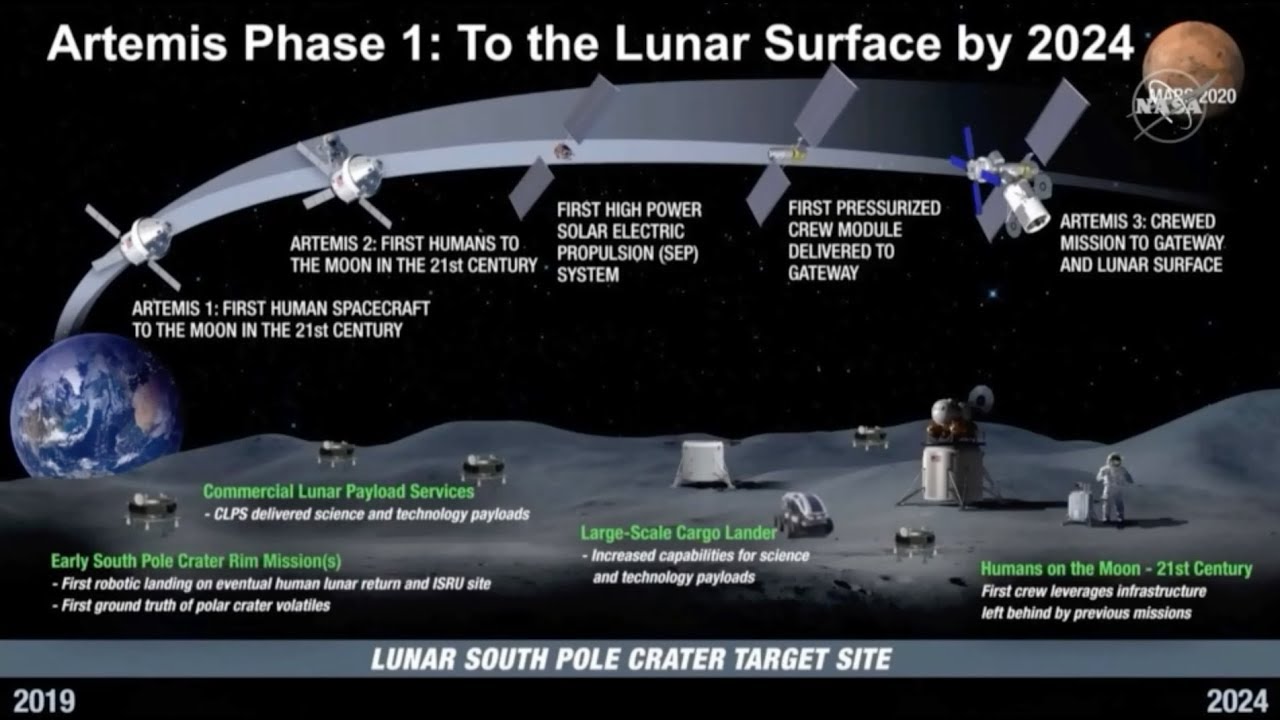
Seeker has videos on both, beginning with NASA’s 2024 Moon Landing Mission Explained | Countdown to Launch.

Fifty years ago, Neil Armstrong took the first steps on the moon. With the announcement of the long awaited Artemis mission, NASA plans to send the first man and woman to the Moon's south pole by 2024.
I hope things go according to the schedule.  Even so, it would mean I'll have been looking forward to this day for 10 years when it happens.

Seeker also covered India's lunar landing mission in India Could Be the First to Land on the Moon’s South Pole.

The Indian Space Research Organization's Chandrayaan-1 was the first to discover water on the moon, and with the Chandrayaan-2, they could be the first to explore the surface on the Moon's south pole. These future discoveries could reveal the evolution of our solar system and beyond.
DW News covered today's launch itself in India moon probe Chandrayaan 2 launches into space.

India is on track to head to the moon today. The rocket that carries the Indian lunar lander Chandrayaan 2 just launched into space. This is India's second attempt to launch the lunar probe after a technical glitch caused the mission to be aborted just one hour before launch last week.
Good luck!

I'm not done with celebrating the 50th anniversary of Apollo 11.  I plan on posting an entry in which I feature videos from both Verge Science and Vintage Space taking the position that the legacy of Apollo is actually hindering U.S. efforts to return to the Moon and go on to Mars.  Stay tuned.

Saturday, June 22, 2019

Happy World Rainforest Day!


I'm not done with environmental holidays.  After celebrating National American Eagle Day plus an early National Seashell Day and World Giraffe Day on the Summer Solstice, I am now observing World Rainforest Day.
June 22 is World Rainforest Day. The day has been set aside to help protect rainforests by raising awareness and encouraging action to protect them.

Organizers of this annual day say 20% of the oxygen we breathe and the freshwater we drink is attributed to rainforests of the Amazon. They absorb carbon dioxide, stabilize climate patterns, and are home to half the world’s plant and animal species. The concern of organizers is that an area the size of 40 football fields is lost every minute of every day.

HOW TO OBSERVE

Nurture your knowledge by reading about rainforests on National Geographic’s website.

Shop smart. Look for Rainforest Alliance Certified products.

When buying palm oil, look for Roundtable on Sustainable Palm Oil (RSPO) or Green Palm logo.

On social media, use #WorldRainforestDay and share why rainforests matter to you.

Follow on Facebook https://www.facebook.com/worldrainforestday/

HISTORY

The first World Rainforest Day was June 22nd, 2017. It was created by a collaboration of groups called the Rainforest Partnership. It is an international non-profit organization based in Austin, Texas and is dedicated to protecting and regenerating tropical rainforests through community-based projects in the Amazon.
Follow over the jump for the videos I found for this international day.

Monday, June 17, 2019

Seeker asks 'How bad are rocket launches for the environment?'


I am both an environmentalist and a space enthusiast, so I couldn't resist watching and sharing a video about the intersection of my two interests from Seeker, which asks How Bad Are Rocket Launches for the Environment?

From Space-X to Blue Origin, rocket launches have increased tremendously over the past year. How do these numerous launches affect the environment?
The answer is "maybe not as bad as we might think, but we really don't know."  Time for more research.  Since I'm also a scientist, I like that answer.  In the meantime, keep exploring and exploiting space.  Until I find out differently, I think it's worth the energy and resources dedicated to the effort and that its benefits exceed the harms.

Friday, May 31, 2019

Seeker and TEDx explain how self-driving cars will change cities for Autonomous Vehicle Day


Happy National Autonomous Vehicle Day!  Here is what I wrote about the day two years ago.
I first blogged about self-driving cars in 2013, when I wrote "We may not get flying cars for the mass market, but another science fiction transportation idea, self-driving autos, looks like it's on its way."  I wrote about them again in last year's Self-driving cars--fantasy and reality, which showed that autonomous vehicles are still coming but have a long way to go.  They're a lot closer now that there is a day in their honor.
All three of my previous posts focused on the technology behind and business opportunities available self-driving cars.  Today, I begin with the technology but end with the effects it will have on our communities, starting with Seeker/DNews asking How Close Are We to a Self-Driving World?

Self-driving cars could revolutionize the way we travel, giving us more time to work, play, learn, and relax on the road. But when it comes to making them a reality, cutting-edge technology is only the tip of the iceberg. So, how close are we ditching driving?
The answer is about only a couple of years for companies like Uber and Waymo, but a decade away for the masses.

Seeker also quoted the following from NACTO Releases the Blueprint for Autonomous Urbanism, a press release from the National Association of City Transportation Officials.
"The Blueprint outlines key tools and objectives for cities to use as they update their physical and digital infrastructure and on every type of street and intersection, from narrow, residential streets to major multi-modal boulevards. Future modules of the Blueprint will expand on these topics with new focus areas including roadway pricing, data partnerships with the private sector, regional planning, designing autonomous networks and autonomous freight delivery needs."
That paragraph is the one Seeker thought worth quoting from the NACTO press release.  I found three more.
“The expansion of autonomous vehicles is a once-in-a-lifetime opportunity to rethink city streets and save lives on an unprecedented scale – but only if cities are prepared,” said Janette Sadik-Khan, NACTO Chair and Principal at Bloomberg Associates. “The Blueprint gives city leaders across the country and around the world the vision they need to partner with the private sector and design streets that are smarter, safer and more efficient than ever before.”

“As cities guide the autonomous revolution, we want technology to solve our mobility challenges; not settle for more of the same,” said Seleta Reynolds, NACTO President and General Manager of the Los Angeles Department of Transportation. “This Blueprint will help cities everywhere lay the foundation for 21st century streets designed to serve people first and foremost, no matter how they travel.”

“When it comes to autonomous vehicles, cities are where the action is,” said Linda Bailey, Executive Director of NACTO. “This is the start of a critical conversation with AV companies about what cities need today and will need tomorrow.”
As a Crazy Eddie, I approve.  A little planning for the future will go a long way.

Speaking of planning for a future with self-driving cars and other autonomous vehicles, I present a TEDx talk by Nico Larco that asks another question, How Will Autonomous Vehicles Transform Our Cities?

Nico Larco's insights on one the most exciting technology of our time will open your eyes to a whole new way of thinking and show you how the world we live in could be fundamentally transformed. Nico is an Associate Professor of Architecture and Urban Design at University of Oregon and Director of the Urbanism Next Research Initiative. He pulls back the curtain to preview how autonomous vehicles will shape the future planning of our parks, cities and life as we know it. This talk was given at a TEDx event using the TED conference format but independently organized by a local community.
I think Larco is right; autonomous vehicles are not just a transportation issue, they're an everything issue.  Given how rapidly Americans are likely to adopt the technology, it's important that we anticipate its effects and prepare for them.

On a less optimistic note, Atrios expressed strong skepticism of autonomous vehicles and especially Elon Musk's efforts to make them possible in Your Kids, itself a commentary on https://www.thedrive.com/opinion/28247/my-infant-daughters-life-shouldnt-be-a-variable-in-tesla-autopilots-public-beta.  I left the following comment on the blog post.
I find this post simultaneously both appropriate and ironic because tomorrow is Autonomous Vehicle Day. Let's celebrate the limits to our technologies.
Actually, that should be contemplate the limits of our technologies, but someone uprated my comment anyway.

Since today is a holiday of sorts, I'm using it to fulfill half of the promise I made to my readers in Tariffs on Chinese goods will reduce GDP and cause inflation, say experts on CNBC to recap the top posts of last year about holidays.   Follow over the jump.*

Friday, January 11, 2019

The shutdown is disrupting American science


While Sears Holdings, JCPenney, and Macy's are contracting in the face of the Retail Apocalypse, the partial government shutdown over funding for Trump's border wall.  I could write a post for every day that it has lasted and not run out of bad things to say about it.  I'll start by sharing the following segment from PBS NewsHour, With the government shutdown, American scientific progress is disrupted.

Even scientists who don’t work for the government, but receive federal money for research and grants, are among the hundreds of thousands of Americans affected by the government shutdown, now in its 19th day. That means important work and research may be put on hold, or even canceled. William Brangham talks to Rush Holt, CEO of the American Association for the Advancement of Science, for details.
This is all awful, but the worst part is that we've seen this all before and knew exactly how it would play out for science.  Seeker/DNews uploaded The Impact of the Gov't Shutdown on Science in 2013 and it works almost as well for the current impasse.

A full government shutdown is in effect here in the US. And it's having a pretty significant impact in the science world. Trace details that impact, and explains its potentially long-lasting effects.
For good measure, I wrote about the effects of the 2013 shutdown on science, which was shorter than the current one, in Shutdown and science from campuses on the campaign trail and Daily Kos.  Almost all of that could be reused now.  So could Effects of the shutdown from local news, in which I wrote "one week of shutdown takes 0.1% off the GPD for a quarter."  That's still true and it could speed up the arrival of the next recession, which I predict will begin in the second half of this year.  Yikes!

ETA: As I was writing the above, DNews/Seeker uploaded a video updating the one I used from six years ago, How a Government Shutdown Screws Up Scientific Research.  Here it is.

Thousands of scientists were sent home on temporary non-paid leave, what does it mean for the research they had to leave behind?
...
Toll on Science and Research Mounts as Government Shutdown Continues
“A shutdown has these cascading effects on the scientific work of the organization,” said Daniel M. Ashe, a former director of the Fish and Wildlife Service. “They’re hard to foresee or predict right now, but they’re crippling, really, and they affect the organization not for three or four weeks, but for the rest of the year because of all of this complex orchestration of field work.””

Another Casualty of the Government Shutdown: Hurricane Preparedness
“EMC, the Environmental Modeling Center—they’re the main point of contact for improving the Hurricane Center models, and really the Weather Service model in general. And that organization is basically furloughed; there's very few staff working now. Every fiscal year they set out to improve [some] model, and they have timetables to meet. And now we’re in the third week here. Delays for a day or two—that can easily be absorbed. But the longer this goes on, the more likely it is to have negative consequences down the line.”

Government Shutdown Causes Slowdown In Scientific Research
“It does have a lingering impact because a lot of this work is work that's ongoing at such an incredible pace right now that interrupting that really sets a lot of that work back. And also, just recovering from the lost opportunities for people to get together, it's going to take some months to really be able to rebuild some of those opportunities in new and different ways.”
Almost perfect timing on Seeker's part.  As for the shutdown, the new video shows that it's even worse than I thought.

Monday, December 24, 2018

Apollo 8's Earthrise 50 years later for Christmas Eve


Last year, I took a break from my tradition of wishing my readers Seasons Greetings from NASA but thought I might return this year. It turns out that NASA has the perfect video for the occasion, Apollo 8: Around The Moon and Back, celebrating 50 years of Earthrise on Christmas Eve 1968.

50 years ago, three NASA astronauts embarked on a journey that would take them “Round the moon and back”. The Apollo 8 mission proved the performance of the command and service module. This historic mission launched on December 21, 1968 to demonstrate a lunar trajectory and was the first crewed launch of the Saturn V rocket. On Christmas Eve, Frank Borman, Jim Lovell, and Bill Anders were the first humans to orbit the Moon and the first to see an Earthrise above its surface.
I could stop there, but I think Seeker's How Apollo 8 Survived the Risky Trip to the Far Side of the Moon provides a more complete view of the mission as a whole, not just the events leading up to Christmas Eve.

A last minute shake up in 1968 sent a manned crew outside of Earth’s orbit for the first time. The crew of Apollo 8, in a very short amount of time, would have to learn how to reach our nearest celestial neighbor and then return safely to Earth.
That's it for space history for now, although I plan on the 50th anniversaries of the rest of the Apollo missions next year. In the meantime, may my readers have a pleasant Christmas Eve. I will return for a post on Christmas itself.

Friday, December 14, 2018

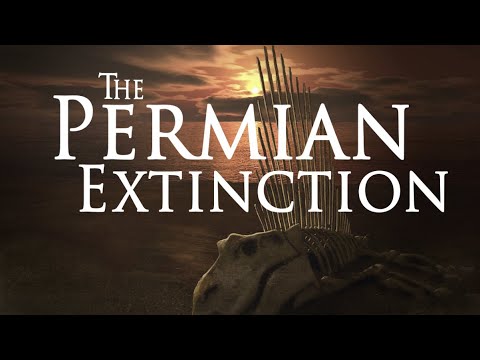
Acid rain, climate change, and ozone depletion contributed to the Permian Extinction AKA The Great Dying


I realized I had to write a sequel to PBS Eons on the last time the climate warmed this fast — the Paleocene-Eocene Thermal Maximum.
The article notes that humans are releasing cabron dioxide even faster than the Siberian volcanoes did at the end of the Permian, which is known as The Great Dying.  The only saving grace is that we will not release as much carbon dioxide as then.  Still, it looks like I may have to write an entry about The Great Dying as well.  Stay tuned.
It turns out that Seeker/DNews already has a video on the subject: ‘The Great Dying’ Was Our Worst Extinction Ever, And It Could Happen Again.

What exactly caused the greatest extinction on earth? New research may finally hold the answer to this long time mystery.
As Trace said, global warming, acid rain, and ozone depletion — does that look familiar?  Also, we could get a trophy for first place, as long as there is anyone around to award it.  I'd rather not.

Those same themes show up in ASAP Science's The 6 Craziest Extinctions Ever, especially the relationship between carbon dioxide levels and climate change.

The earth has been through some major changes!
Both of these videos look good enough to play to my classes.  Welcome to blogging as professional development.

Monday, December 10, 2018

Celebrate Peace, Economics, and science winners for Nobel Prize Day 2018


Happy Nobel Prize Day!  I'm going to be a good environmentalist and recycle the description from National Day Calendar.
The Nobel Laureates are announced at the beginning of October each year. A couple of months later, on 10 December, the anniversary of Alfred Nobel’s death, they receive their prizes from the Swedish King – a Nobel diploma, a medal, and 10 million Swedish crowns per prize. All Nobel Prizes are awarded in Stockholm, Sweden, except for the Nobel Peace Prize, which is awarded in Oslo, Norway. (When Alfred Nobel was alive, Norway and Sweden were united under one monarch, until 1905 when Norway became an independent kingdom with its own king.)
Since today is also Human Rights Day, I'm beginning with a video from The Washington Post reporting 2018 Nobel Peace Prize awarded to Denis Mukwege and Nadia Murad.

The 2018 Nobel Peace Prize was awarded Oct. 5 to Denis Mukwege, a Congolese gynecologist, and Nadia Murad, a Yazidi activist. Both have worked to place the spotlight on ending sexual violence in armed conflicts.
Congratulations to both, but especially Murad, who I consider to be a hero in the struggle against the Daesh AKA the Sith Jihad.

Next, the winners of the Economics Prize, which isn't really a Nobel Prize, but is important nonetheless.  I have particular reason to celebrate this year, as the Financial Times reported Nobel economics prize winners change how we think about growth.

Technological and environmental change have transformed economies. The FT's Martin Sandbu says next time you marvel at your app or worry about extreme weather give a thought to Paul Romer and William Nordhaus, the winners of this year’s Nobel prize in economics.
Technology and environment in economics — these are definitely on-topic for my blog!  I should probably examine Nordhaus and his ideas in depth in a future entry, as I consider myself a supporter of the field he founded, environmental economics.

Next, the prizes I usually examine first, Chemistry, Medicine, and Physics.  Seeker/DNews describes all three in The Science Nobel Prizes Explained in 3 Minutes.

Science that’s worthy of a Nobel Prize is bound to be complicated. Here’s everything you need to know about this year’s winners.
Congratulations to all the winners!

Those readers who pay attention to the Nobel Prizes might notice that the Literature Prize was not awarded this year.  CBC's The National explains why in No Nobel Prize for Literature after sex assault scandal.

There will be no Nobel Prize for Literature awarded this year, because the organization that decides the winner is dealing with a scandal over sexual assault allegations. The Swedish Academy says it will announce the 2018 winner along with the 2019 winner next year.
I did not plan on closing the circle by making the first and last videos about sexual violence; it just worked out that way.  Still, I find it grimly satisfying that the Literature Prize selection committee has to follow the lead of the Peace Prize in fighting against sexual violence.  May they clean up their act enough to be able to award two prizes next year. one for 2018 and another for 2019.

Friday, October 19, 2018

Seeker on the IPCC report and Hot Mess on coral bleaching propose solutions to urgent climate problems


I am not done with the latest news about climate change and the risks associated with it, which involved PBS NewsHour and Al Gore explaining the latest IPCC climate report and "Chasing Coral" winning an Emmy Award for Outstanding Nature Documentary.  Seeker/DNews posted its own explanation of the the IPCC report when it described Why a Half Degree Rise in Global Temperature Would Be Catastrophic earlier today.

According to a new report, Earth is likely to reach 1.5°C warming by 2030. Here’s why that’s a big deal.
...
IPCC: Global Warming of 1.5 °C
“An IPCC special report on the impacts of global warming of 1.5 °C above pre-industrial levels and related global greenhouse gas emission pathways, in the context of strengthening the global response to the threat of climate change, sustainable development, and efforts to eradicate poverty.”

Why Half a Degree of Global Warming Is a Big Deal
“The Earth has already warmed 1 degree Celsius (1.8 degrees Fahrenheit) since the 19th century. Now, a major new United Nations report has looked at the consequences of jumping to 1.5 or 2 degrees Celsius.”

What genuine ambition on climate change would look like
“It is generally agreed that hitting 2 degrees would be quite ambitious, while hitting 1.5 would be nothing short of miraculous. Yet the scientists at the Intergovernmental Panel on Climate Change, in their latest report, are pleading with the world to go for it, because at this point, every fraction of a degree of warming matters.”
The consequences and the efforts to prevent them, are so ambitious that they appear daunting.  Hot Mess agrees, but says that solutions are still possible in Coral Reefs Are Dying. But They Don’t Have To.

Coral reefs cover less than one percent of the seafloor, and yet they’re home to a quarter of all marine life, making them some of the most biodiverse places on Earth. But their future looks bleak. Decades of environmental threats like warming waters and ocean acidification have pushed reefs to the brink. Can we use science to bring them back?
The answer is yes.  I approve of the Crazy Eddie solutions to the problem of coral bleaching.

Stay tuned for an update on last season's flu epidemic followed by a celebration of Sweetest Day and the entry about the the nominees for the Critics' Choice Documentary Awards that I promised at the end of 'Tower' wins Outstanding Historical Documentary plus five other Emmy winners covered mass shootings.  I have a busy weekend of blogging coming up.