Showing posts with label BAU. Show all posts

Saturday, June 27, 2026

Best box office since 2019 as Gen Z saves the cinema!

Out of the options I posted yesterday, I chose "the Sunday entertainment feature early" thanks to CNBC uploading How The U.S. Box Office Made Its Comeback this morning.

Americans are back at the movies. Summer blockbusters like Michael, The Devil Wears Prada 2, Obsession, and Backrooms have all contributed to the best first half of the year since 2019. CNBC’s Sarah Whitten breaks down the data.
Unlike drum corps, where returning to business as usual once the pandemic was almost over is the problem, Hollywood in general and movies in particular see it as the solution. Americans want their entertainment, and will do just about anything to keep it going. Hollywood is happy we are and is doing its part.

CNBC missed one element that contributed to the story, which CBS19 in Tyler, Texas featured in Movie theaters see major comeback as Gen Z audiences return to the box office.

Movie theaters are enjoying a post-pandemic resurgence, with Gen Z driving ticket sales and helping fuel one of Hollywood's strongest summer seasons in years.
This story looks familiar.
After all the "Millennials are killing" some institution, cultural activity, food or other product I've been reading since before the pandemic, I shouldn't be surprised that news media and popular culture would discover a contrasting feature about Gen Z to report. Gen Z reversing the trend by saving malls certainly fits.
So does Gen Z saving movie theaters. While I'm planning to retire this year, it's not because of my students. I like them and think they're good people (I'm tempted to write kids, but they're adults and deserve to be treated as such).

That's a wrap for today. Stay tuned for Paul Bunyan Day.

Monday, September 30, 2019

Forever 21 files for Chapter 11 bankruptcy, a tale of the Retail Apocalypse


I wrote that Forever 21 was facing bankruptcy just three weeks ago.  Today, Forever 21 declared Chapter 11 bankruptcy.  WXYZ reported on this tale of the Retail Apocalypse on location from the Oakland Mall in Troy, Michigan.

The chain said it will file a motion to close up to 178 of its more than 800 stores, though it said in a letter to customers that "the decisions as to which domestic stores will be closing are ongoing, pending the outcome of continued conversations with landlords."
WXYZ excels at person on the street interviews, which in this case show that the regular shoppers had little to no idea that one of their favorite stores was in trouble.  At least they seem as concerned about the employees as they do about losing their place to go for "fast fashion."

As WXYZ mentioned, Forever 21 is closing down operations in 40 countries including Canada and Japan.  CBC News examined this angle in Forever 21 files for bankruptcy in U.S., to cease operations in Canada.

Fashion retailer Forever 21 has filed for Chapter 11 bankruptcy protection in the U.S. to restructure. The company said it plans to discontinue operations at most of its international locations, including Canada.
The customers outside of the Oakland Mall location may worry about their local store closing.  Forever 21's customers in Canada know their store will close.

Of course, if there are losers, like Forever 21, there will be winners, which CNBC examined in Here are the winners and losers of the retail apocalypse.

CNBC's Courtney Reagan and Lauren Thomas, CNBC.com retail reporter, join the "Power Lunch" team to discuss brick-and-mortar stores and where millennials and gen-Z are shopping.
The panel did a good job of at least touching on all the issues and major players in less than three minutes, although I noticed that the host quickly diverted the discussion away from sustainability when it was brought up.  Instead, she was more interested in the possible winning companies to invest in than a major cause of Forever 21 failing.  Things that make me say "hmm."

I promise to keep following this story as it develops.  In the meantime, stay tuned for the first entry of October, which begins in a few hours.

Tuesday, September 3, 2019

CBS News on the downsizing of higher education for back to school


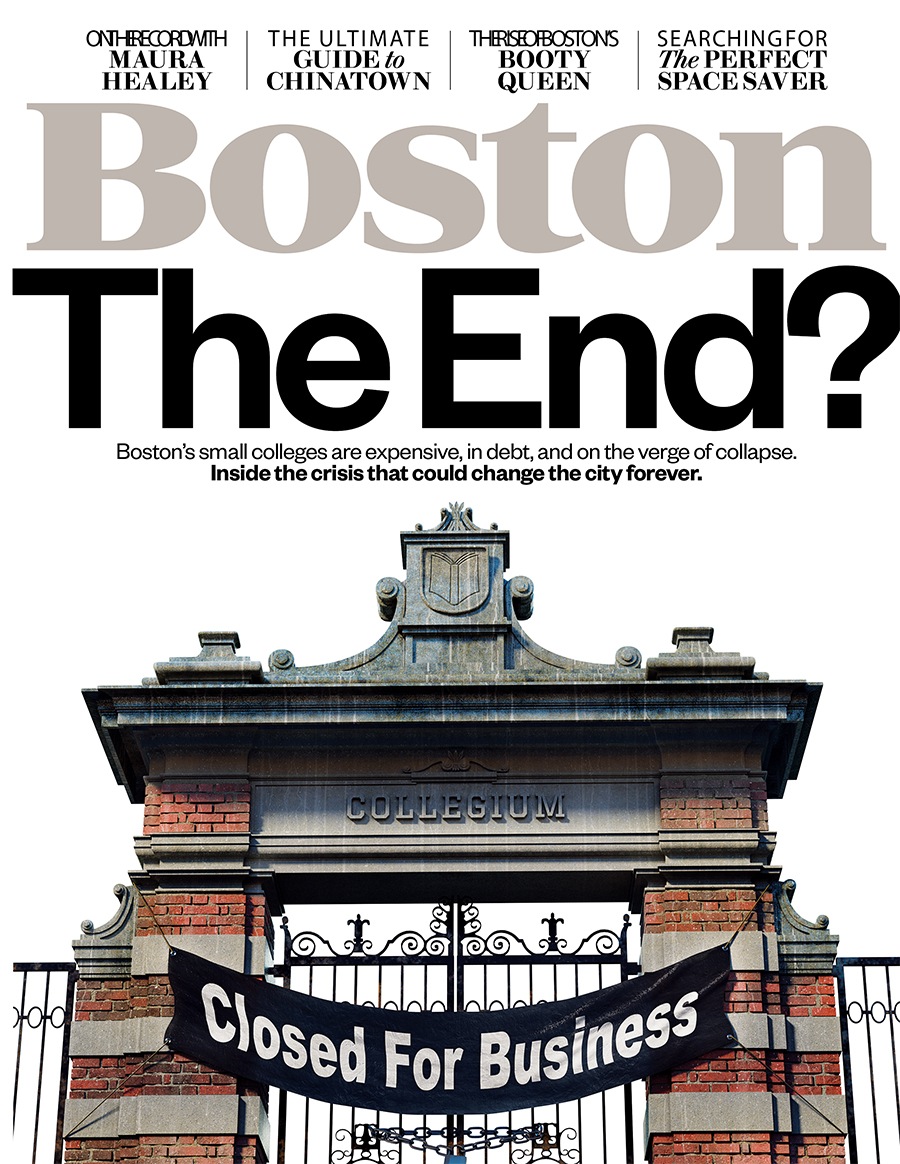
It's the first day of school in Michigan, although the college where I teach started in August.  To mark the occasion, I'm sharing Expert predicts 25% of colleges will fail in the next 20 years, which CBS This Morning uploaded on Saturday.

For millions of students, Labor Day weekend marks the end of summer vacation and the start of another school year. But for the first time in 185 years, there will be no fall semester at Green Mountain College in western Vermont. The school fell victim to trends in higher education that could soon impact hundreds of other schools. One expert predicts that 25% of colleges will fail in the next 20 years. Brook Silva-Braga reports.
So there isn't just a Retail Apocalypse; a mass depletion of independent liberal arts colleges may have already begun that could suck some for-profit colleges and maybe a few smaller community college districts and state college campuses along with it.  This would be one way of James Howard Kunstler's prediction in "The End of Suburbia" that "we're gonna have to downsize and downscale everything we do. Everything from farming to education" coming true.  This would be a disorderly downsizing of higher education much like the disorderly downsizing of brick-and-mortar retail the U.S. is currently experiencing, but it won't directly be from an economic crisis caused by energy shortages, just as energy shortages aren't directly causing the Retail Apocalypse.  Instead, the cause will be more acceptable to the business as usual mindset, lower U.S. birth rates.

I will likely retire before or as the trough of children born during and after the Great Recession hits college age, but I still think it's appropriate to be a good environmentalist and recycle what I wrote last year.
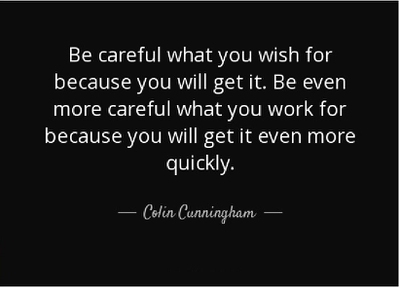
I have been in favor of zero population growth for as long as I can remember.  However, I'm not sure the U.S. economy is set up for a stable or slowly declining population, a point I made in the Hipcrime Vocab: Why Slowing Population Growth is a Problem.  We are going to have to figure how to do so.  Otherwise, I might live long enough to experience the wisdom of the saying "Be careful what you wish for; you might get it."

Saturday, August 3, 2019

An update on record low U.S. birth rate during 2018


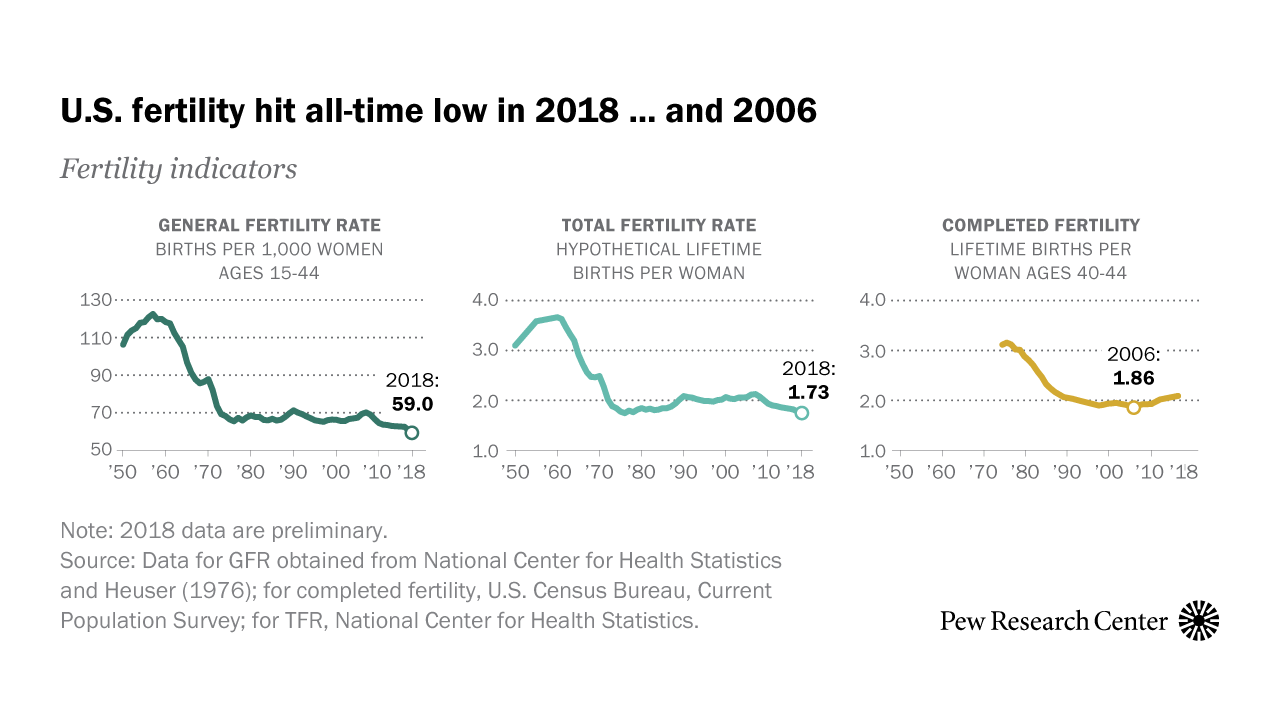
Yesterday, I saw a lot to remind me of U.S. birth and fertility rates continue falling and setting record lows for Father's Day.  First, I gave it and the rest of the top posts from June 2019 social media boosts for #FlashbackFriday.  It was the entry that appeared in the most categories for the month.  The entry was the 7th most read entry posted during June 2019 and 9th overall with 288 default and 332 raw page views.  It also tied for second most commented on entry during the month with four, and tied for most replies to a single tweet during June 2019 with 3 replies in 1 thread.  Impressive.  Second, Wochit News posted an update on U.S. birth rates with Birth Rates At An All Time Low.

New data from the National Vital Statistics System shows birth rates are at an all-time low in the United States.
There were just 59.1 births for every 1,000 women between the ages of 15 and 44 in 2018.
Experts worry this could eventually result in a "demographic time bomb," says Business Insider.
Such a time bomb would mean fertility rates decrease at the same time longevity increases.
This decreases the workforce as well as the number of people able to stimulate the economy.
The trend represents some societal shifts, like a decrease in teenage pregnancies and unlivable wages.
On the one hand, the U.S. is doing its part to slow down population growth.  On the other hand, a possible shrinking economy in the future, which is bad for business as usual.  It's time to be a good environmentalist and recycle what I wrote last year.
I have been in favor of zero population growth for as long as I can remember.  However, I'm not sure the U.S. economy is set up for a stable or slowly declining population, a point I made in the Hipcrime Vocab: Why Slowing Population Growth is a Problem.  We are going to have to figure how to do so.  Otherwise, I might live long enough to experience the wisdom of the saying "Be careful what you wish for; you might get it."
Here's to hoping the U.S. learns how to thread that needle.

Saturday, November 18, 2017

Home ownership rate and me, three years later


I made a programming note in one of the footnotes to November 2017 driving update for Pearl plus Tesla Truck and Chevy Bolt news.
Yesterday was also the third anniversary of putting an offer on my current home and having it accepted.  I plan on writing about that and my prediction that the U.S. home ownership rate would start going up tomorrow.
Here's what I wrote three years ago Thursday.
I showed my hand to Greer later in the entry, when I wrote, "Now to see about buying property as it struggles off the bottom."  Well, that time has arrived.  We've made an offer on a house and it's been accepted.  Wish my wife and me luck as we both get on board, just in time for the housing market to go back up.  Yes, it's a business as usual decision and I know these are not business as usual times, but as I'm fond of saying, I can't be all DOOM all the time.
It took just over a year and a half for the home ownership rate to rise, as the Washington Post managed to document the bottom in Why the decline of the homeownership rate is good news.
The U.S. homeownership rate has just fallen to its lowest level since the Census Bureau began tracking it in 1965.

During the second quarter of this year, only 62.9 percent of U.S. households were owner-occupied residences, down from the all-time high of 69.2 percent reached in the fourth quarter of 2004.

Contrary to entrenched conventional wisdom, however, the ongoing decline of the homeownership rate is actually good news.

Here’s why: Thanks to recovering real estate values, today’s homeowners as a group have the same equity in their property — roughly 58 percent — that the record-size cohort did back in late 2004, according to the Federal Reserve. Ergo, there’s now more equity, on a per- household basis; current homeowners’ tenure is that much more sustainable and secure.

“They are now more able to weather an economic disaster,” says Ralph McLaughlin, chief economist of Trulia.com, the online home-listing service.

To put it another way: The United States actually has more homeownership, in economic terms, than it did when the homeownership rate, a measure of mere legal ownership, was higher. Accordingly, the economy should also be less vulnerable to another real estate shock.

We’re still not back to the rock-solid days of 1983, when the homeownership rate was a hair under 65 percent and equity hit an all-time high of 70 percent.
The following graph from the St. Louis Federal Reserve shows that previous peak in home ownership rate and then some back to the 1960s.  It also shows how small and recent the rebound in home ownership rate is.


Just the same, I'm glad to have jumped on the trend just before it turned around, just like I did the last two times when my ex-wife and I bought in 1994 (not 1995, as I misremembered), which was a little ahead of the rapid rise in home ownership, or before it accelerated, like when I sold in 2006, a couple years after the peak but before the bottom fell out of both housing values and home ownership rates.  As I wrote three years ago, "I shouldn't be reassured by moving with the herd, but in in this case, I am."

Tuesday, June 28, 2016

Detroiters celebrate summer at fireworks show


Four years ago, I predicted that the suburbs would pitch in to save the Detroit fireworks show.
Based on what I think motivates Americans to act and the presence of the Michigan State Police and Wayne County Sheriffs at the show, I'm sure that the fireworks and parade will continue. People want their entertainment, especially if it comes in the form of an annual civic ritual to celebrate the seasons, and messing with America's entertainment is the one guaranteed thing that will get Americans to act.
Sure enough, the show carried on.  WXYZ reported on this year's festivities in Fireworks light up the night over Detroit river.

The annual Detroit fireworks show was tonight.
Detroiters demanded their entertainment, and last night, they got it.  I used to deride this as an example of Americans' screwed up priorities.  After blogging about five shows, I'm now seeing it as people celebrating the return of another year in a reviving city.  May Detroit's current return from the ashes continue.

Wednesday, May 25, 2016

Census finds Detroit still shrinking in mid-decade estimate


Last week, the Census Bureau released its annual population estimates for 2015.  The results were generally predictable and so were the reactions.  WXYZ's response was to report Detroit out of top 20 cities.

Detroit's population decline has now pushed it out of the top 20 cities.
While the ongoing story of Detroit shrinking is the same one that I've been covering since the second post on this blog, I'm glad to note the good news that Downtown, Midtown, and the riverfront are growing and the rate of population loss is slowing.  When I wrote "It's an exciting time to live here, and I wouldn't miss it for the world" in April 2011, this is the kind of development, pun intended, I was hoping for.

MLive also covered this story, noting Denver knocks Detroit off list of 20 most populous U.S. cities and provided the following table.


Detroit didn't just fall behind Denver last year, it dropped below Seattle, too.  El Paso passed Detroit a year earlier.  The next cities to grow larger than Detroit proper will be Washington D.C. and Boston.

Not all the population news was bad, that is, if one favors population growth.  Fox 47 reported Lansing's Population is Growing.

Most cities in Michigan are losing population. But Lansing is one of the few that's actually growing.
Lansing is not alone.  MLive published a slideshow listing the five biggest gainers and losers in the state.  It lists Macomb Township, Novi, Shelby Township, Dearborn, and Southfield in the top five, along with Clinton Township and Canton Township gaining more than 3,000 people since 2010, followed by Lyon Township, which had the highest five-year percentage population growth rate of any municipality in the state, then Hamtramck, Pontiac, Sterling Heights, Farmington Hills, Birmingham, Rochester Hills, and Troy.  Detroit may be shrinking, but its suburbs are still booming.

So is Grand Rapids, as MLive reported.
Among Michigan's six cities with more than 100,000 people, Grand Rapids saw the biggest increase. Its population was estimated at 195,097 in 2015 -- up 848 people from the previous year.

Since 2010, Grand Rapids' population has increased by 7,043 people, or 3.7 percent. The only other place in Michigan with a bigger increase during that same period is Macomb Township, which grew by 7,299 people.
That growth is showing up in a boom in housing downtown, as WOOD-TV reported Downtown GR in the middle of ‘gangbuster economic moment’.

It doesn’t take an expert to look around and see the cranes dotting the Grand Rapids skyline and realize we are a growing city.
Detroit isn't the only big city in Michigan experiencing a revival of urban living.  As for a goal of 10,000 housing units in downtown Grand Rapids, that's ambitious, but I'm still in favor of it.  It will reduce sprawl and all its ills.

For more on this story, MLive has an interactive map showing population gain and loss for all municipalities in Michigan.  Have fun playing with it; you might learn something.

Friday, March 25, 2016

M1 Rail to be called QLine for next 10 years


Yesterday brought news about the M1 light rail line in Detroit.  WXYZ reports in M-1 Rail to be named Q Line.

Officials have announced that the official name of the M-1 Rail project will be the Q Line.
The Detroit Free Press included quotes from Quicken Loans, who bought the naming rights, in Detroit's M-1 Rail line now to be called the QLINE.
“The launch of QLINE marks a significant moment in the development of Detroit. Quicken Loans is proud to play our part in the beginning stages of modernizing the transit system in our burgeoning urban core,” Jay Farner, president and chief marketing officer of Quicken Loans, said in a news release.
...
In addition to the name, the QLINE logo was also released. It "features a stylized 'Q' in a design that symbolizes the connectivity accomplished through the rail line," according to a news release.

The project's supporters tout it as an economic development engine. Tweets from Quicken Loans and M-1 Rail touted prior projections that "Detroit’s modern streetcar is expected to ignite over $3 billion in economic development."

Sommer Woods, vice president of external affairs for M-1 Rail, the organization developing the project, predicted in a news release that “the QLINE will activate the sidewalks throughout the community, encouraging residents and visitors to experience all the neighborhood has to offer, from our cultural institutions, restaurants and small businesses, to Detroit’s entertainment district. The streetcar will create connectivity and serve all who live, work and play in Detroit.”
I hope both Quicken Loans and M-1 Rail, which will still use the name to operate the streetcar line, are both right about their predictions.  I promise to update my readers either way.

Saturday, June 13, 2015

Second Meijer opens in Detroit

Two years ago, I marked the opening of the first Meijer in Detroit and posted videos of its opening.  Thursday, a second Meijer opened in the city in the Brightmoor-Redford neighborhood on the site of the former Redford High School.  WXYZ reports in Meijer's second supercenter opens in Detroit.


It's time to be a good environmentalist and recycle.
Not only will Meijer take care of the residents of the neighborhoods of Detroit, it has the potential to bring in people from the near suburbs as well as catch people on their way out of the city.  Not only will it bring jobs and food, it has the potential to bring money into the city from outside.  Time to break out Professor Farnsworth.

I haven't used him since November.  It's been too long.

Stay tuned for the monthly meta and the Sunday entertainment entry, along with updates on the regional water authority and oil development in Detroit's suburbs.

Wednesday, December 24, 2014

Good economic news on Christmas Eve 2014


Gas got even cheaper since WXYZ on lowest gas prices in five years, plus more on lower oil prices, when all the neighborhood stations were selling regular at $2.15.  Yesterday, the corner gas station dropped to $2.08, while the three stations down the street undercut it by a penny to $2.07.  That wasn't the only good news yesterday, as the Dow broke 18,000 for the first time ever.  WXYZ has reports on both.  First, Millions traveling for the holidays.


The narrative of people being grateful for low gas prices and using the savings to either spend money on other things or traveling, thus fueling the consumer economy, continues.

Next, Financial analyst Rick Bloom comments on Record-breaking day on Wall Street.


Again, low oil and gas prices are good news for the economy if one believes in Business as Usual.  Bloom obviously does, and so do a lot of investors.  The market and economy might just improve throughout 2015, although I expect either 2016 or 2017 will tell another story, as I wrote in PBS NewsHour on lower oil prices.  In the meantime, Merry Christmas!  Enjoy it while it lasts.

Monday, November 24, 2014

Professor Farnsworth approves of the University of Michigan's predictions


As if Good economic news for election day wasn't enough, the University of Michigan provided two more pieces of good news, or, rather, two forecasts of good news for business as usual, last week that I included in the tip jar for Overnight News Digest: Science Saturday (Philae discovers organics) on Daily Kos.

First, The US economy: Ready for takeoff on November 20, 2014.
ANN ARBOR—The U.S. economy will grow by more than 3 percent next year—its highest rate in 10 years, say economists at the University of Michigan.

Overall economic output growth (as measured by real Gross Domestic Product) will jump from 2.2 percent this year to 3.1 percent in 2015 and 3.3 percent in 2016.

"We expect that 2015 will be the year when U.S. economic growth will finally accelerate meaningfully," said U-M economist Daniil Manaenkov. "This year, severe winter weather joined the list of headwinds that have prevented U.S. economic growth from picking up. Even still, both private and total payroll job gains during 2014 are on track for their best performance since 1999. And going forward, strong GDP growth supports steady employment gains."
We should be so lucky.

The very next day, the prediction was for Michigan's economy: Onward and upward.
ANN ARBOR—After five years of steady job growth, the Michigan economy will continue to move forward at a solid clip over the next two years, say University of Michigan economists.

In their annual November forecast of the Michigan economy, George Fulton and colleagues Joan Crary and Donald Grimes say the state will add more than 132,000 jobs over the next two years.

All told, Michigan will have added nearly 463,000 jobs during the economic recovery from summer 2009 through the end of 2016—returning the job count to levels posted at the end of 2006 and a little more than halfway back to job levels posted in mid-2000.
Ah, yes, good news for business as usual.  Too bad these are not business as usual times.

Sunday, November 16, 2014

U.S. home ownership rate and me


For those of my readers expecting an entertainment post, stay tuned; I'll get to it eventually.*  Instead, I'm going to explain my part in the graph above, as I rode it both up and down, reinforcing the trends.  The story begins, like the graph, in 1995, when my ex-wife and I bought the house that later became the first house I owned by myself.  That's the year when home ownership in the U.S. started rising and more-or-less marked the beginning of the housing boom/bubble. 

I moved into the house in 1999 and got it in the divorce settlement in 2000.  I enjoyed living there, but eventually it became a burden as my work moved farther and farther away from me.  As I recounted most recently in a meta update on driving:
From 2000-2004, I regularly put 40,000 miles on my car. In 2005, I began driving 1000 miles a week when school was in session to three different colleges and a tutoring service. Then on the weekends, I'd judge marching bands or cover drum and bugle corps shows. From May 2005 to May 2006, I drove 48,000 miles. That was the year I put my house up for sale, stopped seeing my long-distance girlfriend, and eventually sold my house. In June, I moved to the middle of my jobs and cut my driving down to 700 miles a week. Then I changed one of my jobsites and cut it down to 500 miles a week. Then I got a full-time job and quit my part-time jobs and dropped to 300 miles a week. Finally, we moved and I now drive 70 miles a week. I'm so close to work I could ride a bike on a good day.
I included a more detailed account of the sale in The Archdruid and I talk real estate.
The news on the radio in June 2005 trumpeted record home sales and prices.  I took it as a sign of the market top I'd been looking for since 2001 and immediately drove to the nearest real estate office to my home in the Irish Hills of Michigan and listed my house for sale.  The house sold in April 2006 and closed in May 2006, just as the bottom was about to fall out.

That was not only good for me, but good for the deer.  That winter, the deer ate my shrubs up to the seven foot level. Good thing they were eight feet tall at the time. I vowed that if I were still in my house the next firearms deer season, I'd finally break down and buy a rifle and a deer hunting license.  I never got the chance.  Lucky deer.
The result was that I got out of the market just in time, as the graph shows that home ownership began its steady slide immediately afterwards, then rented from 2006 until now, eight years of riding the real estate market down by staying out of it.

I showed my hand to Greer later in the entry, when I wrote, "Now to see about buying property as it struggles off the bottom."  Well, that time has arrived.  We've made an offer on a house and it's been accepted.  Wish my wife and me luck as we both get on board, just in time for the housing market to go back up.  Yes, it's a business as usual decision and I know these are not business as usual times, but as I'm fond of saying, I can't be all DOOM all the time.

Finally, speaking of trends in real estate, my wife and I are part of another trend.


Yes, we're in one of the markets where home ownership is increasing.  I shouldn't be reassured by moving with the herd, but in in this case, I am.

*Along with entries about raising fuel taxes to maintain Michigan's roads and the U.S.-China climate deal, both of which are old business being revisited.

Wednesday, November 5, 2014

Good economic news for election day


While I'm actually in a doomy mood, I'm just not up to posting something appropriately pessimistic.  Instead, I'm going to update Good economic news from Michigan universities with the latest good economic news.  I'm in need of cheering up after tonight's election results.

I begin with the national picture from the University of Michigan: Consumer sentiment in October highest in seven years, posted October 31, 2014.
ANN ARBOR—Consumer confidence posted its third consecutive monthly gain in October, rising to its highest level since July 2007, according to the Thomson Reuters/University of Michigan Surveys of Consumers.

Conducted by the U-M Institute for Social Research (ISR) since 1946, the Surveys monitor consumer attitudes and expectations.

"Consumers have been gradually regaining their economic footing in the past several months, with confidence rising to the highest level since the start of the Great Recession," said Richard Curtin, director of the surveys. "This is not the first time such a strong rebound has occurred, but this time it appears to have more forward traction. Consumers have not overreacted to the negative news of a global slowdown or Ebola, nor to the positive news of lower gas prices. Instead, consumers have kept their focus on improved job and wage prospects. Finally, five years after the start of the recovery, consumers have begun to adopt the expectations and behaviors that have driven past expansions."

The October gain was due to improved personal finances as well as a more favorable outlook for the overall economy, according to Curtin. Indeed, consumers reported the most favorable personal financial expectations as well as the most positive year-ahead outlook for the national economy in the past seven years. What the survey did not find was any negative impact on confidence from the global economic slowdown, military conflicts, or Ebola. None of these issues was mentioned by more than a few respondents; instead, respondents emphasized improved wage and employment prospects due to a stronger economy. Gains in holiday spending are expected to be the best in several years, benefiting from higher confidence as well as falling gas prices at the pump.
Trick or Treat!  Hey, a treat!

Next, Wayne State University with the local economic picture in Southeast Michigan Purchasing Managers Index remains strong in October, finishing at 54.7 , posted November 3, 2014.
DETROIT— The Southeast Michigan Purchasing Managers Index (PMI) for October is 54.7, down slightly from September’s 59.4.  A PMI value above 50 generally suggests economic growth.

“We continue to enjoy a bright economic outlook, said Timothy Butler, associate professor of supply chain management at Wayne State’s School of Business, who interpreted this month’s results.  Key indicators for growth include the New Orders Index, the Finished Goods Inventory Index and the Employment Index.  In fact, the Employment Index has remained over 50 since July 2012.”

Purchasing managers’ confidence continues to be up, with 93.4 percent believing the Southeast Michigan economy will remain stable or become more stable over the next six months, while only 6.7 percent anticipate a less stable economy.

Respondents reported prices were up for resins, aluminum and steel for the month, while oil and copper were down in price. They also noted the Ebola crisis disrupted air transportation and reported travel cost increases.
Professor Farnsworth approves in general, although I'm sure that he's not too keen on Ebola.

Follow over the jump for economic reports from Florida, Colorado, and Georgia.


Tuesday, October 7, 2014

More good economic news from Colorado and Florida


I wasn't done with good economic news from the perspective of Business as Usual (BAU).  Here are two stories I originally included in Overnight News Digest: Science Saturday (Ebola in the U.S.) on Daily Kos over the weekend that also trumpet "Good news, everyone!"  Yeah, enjoy it while it lasts.

University of Colorado: Colorado business confidence dips but remains positive to finish year, says CU-Boulder Leeds School
October 1, 2014
The confidence of Colorado business leaders continues to be positive heading into the fourth quarter and has moderately increased compared with a year ago, according to the most recent Leeds Business Confidence Index (LBCI) released today by the University of Colorado Boulder’s Leeds School of Business.

It’s not as bullish, however, as it was a quarter ago with slight drops across the board resulting in a current overall reading of 59.5, down from 61.2 heading into the third quarter of 2014.

“I wouldn’t put too much concern in a slight dip in the numbers,” said economist Richard Wobbekind, executive director of the Leeds School’s Business Research Division, which conducts the LBCI. “Last year and this year, we’re growing at the fastest rate in terms of employment growth that we’ve seen since the year 2000, so we’re really on a very, very strong growth rate for jobs year over year.”
University of Florida: UF: Florida's September consumer sentiment reaches post-recession high
September 30, 2014
GAINESVILLE, Fla. --- Floridians’ consumer sentiment this month reached its highest level since before the Great Recession began and after it ended, according to a monthly University of Florida survey. The index inched up one point from August to 83 -- a level not seen since April 2007.

“This is a welcome development given that consumer sentiment has been flat for the last few months,” said Chris McCarty, director of UF’s Survey Research Center in the Bureau of Economic and Business Research. “While we are still about 10 points behind where we would like to be at this point in a recovery, confidence among Floridians is heading in the right direction.”

The small rise, which parallels an uptick in confidence nationwide, was broad-based among all ages and income levels. Of the five components that comprise the survey, two rose, two declined and one remained unchanged.
Yes, I'm in an "I can't be all DOOM all the time" mood right now.  I also know that these aren't business as usual times.  I hope posting the above gets the unwarrented optimism out of my system.

Friday, October 3, 2014

Good economic news from Michigan universities


Once again I'm in an "I can't be all DOOM all the time" mood, so I'll recycle the concept behind Good economic news from Michigan and elsewhere from last May and post some good news from the perspective of business as usual, complete with the second appearance of Professor Farnsworth in a row.

I begin with this item from the University of Michigan that I first posted in Overnight News Digest: Science Saturday (MAVEN at Mars) on Daily Kos: Consumer sentiment strengthens in September.
ANN ARBOR—Consumer confidence posted a healthy gain in September due to more favorable prospects for the domestic economy as well as more favorable personal income expectations, according to the Thomson Reuters/University of Michigan Surveys of Consumers.

The September reading, the second highest in the last seven years, points toward renewed strength in consumer spending. Conducted by the U-M Institute for Social Research since 1946, the Surveys monitor consumer attitudes and expectations.

While the September rebound brought confidence back to its highest levels since the Great Recession, confidence has repeatedly failed to move above this level, according to Richard Curtin, director of the surveys.
Note that it's not unalloyed good news; consumer confidence just won't move above a ceiling.  That's probably a good thing, as these are not business as usual times and the public probably senses that.

Next, something I'll post in this weekend's Overnight News Digest from Wayne State University: Economic expansion continues as Southeast Michigan Purchasing Managers Index climbs to 59.4.
DETROIT— Reflecting an on-going confidence and enthusiasm for the economy, the Southeast Michigan Purchasing Managers Index (PMI) for September is 59.4, up from 54.8 in August.  A PMI value above 50 generally suggests economic growth.

“Significant increases in both the Production (61.4) and New Orders (65.7) indices contributed to the uptick in the PMI, and are promising indicators of continuing growth, said Nitin Paranjpe, a supply chain faculty member at Wayne State’s School of Business, who interpreted this month’s results.  It’s also interesting to note that though the Employment Index dropped from 60.3 in August, to 54.3 in September, its three-month average is very strong at 59.3.”

Almost 90 percent of respondents believe the Southeast Michigan economy will remain stable or become more stable over the next six months.
My response to all of the above is to enjoy it while it lasts.  After all, the first Ebola case diagnosed in the U.S. caused the stock market to tank on Wednesday and Thursday's trading was characterized by Reuters as Wall St. ends flat, small caps rebound in volatile day.  See, I'm already out of my "I can't be all DOOM all the time" mood, which makes me perversely pleased with myself.

Wednesday, August 27, 2014

A great day for business as usual


In Politics and economics from Reuters for August 25, 2014, I made this observation on the stock market.
If one of my readers had told me a year and a half ago that the S&P 500 would break 2,000, I wouldn't have believed them.  I would have been sure that the market would have topped out by now.  By the way, the markets went up today.  No profit taking yet.
Here's the story from Reuters: S&P 500 scores first close above 2,000; data helps By Chuck Mikolajczak in NEW YORK on Tue Aug 26, 2014 4:48pm EDT.
(Reuters) - U.S. stocks edged higher on Tuesday to lift the S&P 500 just a hair above the 2,000 mark, its first close above that milestone, after data that pointed to a brighter future for the economy.

Energy shares, which closely track the pace of growth, led the day's gain. The S&P energy index rose 0.5 percent and ranked as the best performer of the 10 major S&P sectors.

The S&P 500 hit an intraday high of 2,005.04, climbing above the 2,000 mark for the second straight day. On Monday, though, the benchmark could not hold on to that mark and ended at 1,997.92. With Tuesday's move, both the Dow and the S&P 500 have risen in 10 of the past 13 sessions, while the Nasdaq is up for 11 of the past 13 sessions.
...
The Dow Jones industrial average rose 29.83 points or 0.17 percent, to end at 17,106.70. The S&P 500 gained 2.10 points or 0.11 percent, to close at 2,000.02, a record high. The Nasdaq Composite added 13.29 points or 0.29 percent, to finish at 4,570.64.

The Dow industrials had touched a record intraday high of 17,153.80 during Tuesday's session.
Two stories, one definitely good news and the other mixed depending on which side of the Atlantic one one lives, helped fuel this rally.  Follow over the jump for them.

Tuesday, August 26, 2014

Politics and economics from Reuters for August 25, 2014


I wasn't done with the relevant stories from last night's Overnight News Digest: Death, Disaster, Good news for business, and the Emmys on Daily Kos with Emmy Awards update from Reuters and War, Death, and Destruction from Reuters for August 25, 2014.  I have one more themed entry left, all about economics and politics, including some business news that intersects politics and technology.

I'll begin with an article in the intersection between politics and economics, which was the third most read story on Reuters last night.

France's Hollande ejects rebel minister Montebourg from cabinet
By Ingrid Melander and Alexandria Sage
PARIS Mon Aug 25, 2014 7:45pm EDT
(Reuters) - French President Francois Hollande on Monday called for a cabinet reshuffle, evicting from his government rebel leftist ministers who had argued for an economic policy U-turn away from budgetary rigor.

The surprise move - which risks deepening the confrontation between Hollande and more left-wing lawmakers - came a day after outspoken Economy Minister Arnaud Montebourg attacked euro zone powerhouse Germany for ruining the region's economy with what he called an "obsession" with economic austerity.

Montebourg did not wait for Prime Minister Manuel Valls to announce a new cabinet, which he is scheduled to do on Tuesday, before stepping up his attacks and declaring he and two other left-wing ministers would not seek roles in it.
I'm with the rebels--austerity is a bad idea.  There is a reason why I have an anti-austerity label on this blog.

Next, the fourth most read article on Reuters last night, which lies at the intersection of business and politics, specifically tax law.

Investors cheer Burger King-Tim Hortons 'combo deal'
By Euan Rocha and Solarina Ho
TORONTO Mon Aug 25, 2014 5:27pm EDT
(Reuters) - Investors in Burger King Worldwide Inc and Tim Hortons Inc applauded news of a potential merger between the two fast food chains, seeing both tax savings and strategic rationale for a combination.

The two companies confirmed late on Sunday that Burger King is in talks to acquire the Canadian coffee and doughnut chain, and that the combined entity would be based in Canada. Shares of Tim Hortons jumped 18.9 percent to close at $74.72 on the New York Stock Exchange on Monday, while shares of Burger King, which is majority owned by investment firm 3G Capital, rose 19.5 percent to $32.40.

Investors and tax experts said the main reason for Burger King to move its domicile to Canada is to avoid having to pay double taxation on profits earned abroad, as the company would have to do if it remained in the United States.
Investors and corporations may love this idea, but I'm pretty sure rank-and-file Americans do not.  It might be enough to make me give up Burger King.  As for Tim Hortons, well, they never were a U.S. company.

Follow over the fold for articles on the stock market setting another record high, Amazon buying Twitch, and today's primary elections.

Saturday, August 2, 2014

Good economic news from campuses on the campaign trail for August 2014


While these aren't business as usual times, this week has been good news for the business as usual types with the both the good but not great jobs report and the Consumer Confidence Index hitting a post-recession high.  Georgia Tech goes first with Sizzling labor market recovery shifts focus to Fed action from August 1, 2014.
The labor market continued a sizzling pace of economic recovery in July. The economy created 209,000 new jobs while the unemployment rate edged up only incrementally from 6.1 percent to 6.2 percent. However, the latter increase occurred only because 329,000 workers enter the labor market over the last month. According to Thomas "Danny" Boston, an economics professor in the Sam Nunn School of International Affairs, when so many workers enter or re-enter the labor market, it is an optimistic sign that jobs are increasingly available. But the current growth comes with some worries.

The job gains were spread across all key industries, including construction (22,000) and manufacturing (28,000). Private non-goods producing sectors also experienced significant employment gains, including retail trade (26,700), business and professional services (47,000) and health care and social assistance (25,400).

One concerning outcome of the labor market picture is the fact that unemployment among Blacks increased notably from 10.7 percent to 11.4 perecent. However, the increase was caused primarily by over 200,000 Blacks entering or re-entering the labor market in July. Unemployment among whites and Hispanics remained constant at 5.3 percent and 7.8 percent, respectively.
All of the above would be great news if it weren't for the likelihood that the Fed is about to take away the punchbowl of zero interest loans within the year to combat the possibility of inflation.  Paul Krugman thinks this is wrong-headed, but that's a topic for another entry.  Instead, I'll continue on to the University of Michigan, which reported Consumer confidence: Favorable job and wage growth boost spending, also on August 1, 2014.
ANN ARBOR—More rapid job creation, higher wages and gains in household wealth have eased the financial strains on households as well as supported more favorable buying plans for vehicles and household durables, according to the Thomson Reuters/University of Michigan Surveys of Consumers.

Conducted by the U-M Institute for Social Research since 1946, the surveys monitor consumer attitudes and expectations.

While consumers considered their current financial situation to now be in the best shape since the start of the Great Recession, those gains have not caused consumers to confidently expect a continuation of robust growth in the year ahead, said U-M economist Richard Curtin, who directs the surveys.

Nonetheless, confidence is sufficiently high to expand consumption by an annual rate of 2.5 percent in 2014.
Follow over the jump for good news about the state's economy from MSU and better news from Wayne State about the regional economy.

Friday, May 9, 2014

Good economic news from Michigan and elsewhere


I'm in the rare position of being able to report solid news and still indulge my "I can't be all DOOM all the time mood."  Of course, it's all good news from the perspective of Business as Usual, but I'll take good BAU news right now, too.

First, the University of Michigan reported that Consumer confidence improved in April.
ANN ARBOR-Consumer confidence has rebounded to nearly its highest level since 2007, according to the Thomson Reuters/University of Michigan Surveys of Consumers.

Conducted by the U-M Institute for Social Research since 1946, the surveys monitor consumer attitudes and expectations.

The April level of consumer confidence was just one index-point below the post-recession peak, according to U-M economist Richard Curtin, director of the surveys. The recent gain, he said, was due to much more positive assessment of consumers' current financial situations as well as renewed optimism about the outlook for the national economy during the year ahead.
That's the good news from a nationwide survey.  What about here in Michigan?  Wayne State University reports good news for this part of the state in  Solid economic growth for region continues according to Southeast Michigan Purchasing Managers Index.
DETROIT - The Southeast Michigan Purchasing Managers Index (PMI) for April is 53.6. Though that's down slightly from 55.0 in March, it is still indicative of an expanding economy.  A PMI value above 50 generally suggests economic growth.

"The good news is the economy is continuing to come back," said Tim Butler, associate professor of supply chain management at Wayne State's School of Business Administration, who interpreted this month's results.  "That the PMI settled down a bit from March, only demonstrates that the rate of growth is continuing at a steady pace, overall.  Another indicator of an expanding economy is the three-month moving average index, which increased from 51.5 to 52.0," Butler said.

Comments from purchasing managers responding to this month's survey ranged from "Companies continue to hoard cash and postpone capital investments and hiring," to "We are beginning to see our customers finally breaking loose and ordering capital equipment."
It's even better where I live, with the University of Michigan reporting Oakland economy leaving recession in its dust.
ANN ARBOR—Now entering its fifth year of recovery, Oakland County is leaving the 2008-09 recession firmly behind in its rearview mirror.

After bursting out of the recession with more than 65,000 new jobs over the past three years, the Oakland economy will add nearly 43,000 jobs through 2016—11,000 jobs this year, 15,000 next year and 17,000 the year after, say University of Michigan economists. And for the first time since 2003, Oakland's unemployment rate will fall below the national average this year, dropping to 5 percent by 2016.

"We see the continuation of a healthy recovery through 2016, extending its span to seven years, but with the pace of growth moderating a little more this year and accelerating again in the following two years," said economist George Fulton. "Oakland's recovery is supported by an expanding U.S. economy, a recovering local housing sector and increasing vehicle sales, with the Detroit Three fully participating.

"All of this is backed by the county's strong economic fundamentals and forward-looking policy initiatives."
Three years ago, I mocked U of M's forecast for Oakland County in The Business As Usual people are optimistic about Oakland County.  It turns out that the BAU people weren't optimistic enough.  The forecast was for 29,000 jobs over the past three years.  The county added more than twice as many.  As I wrote in October, when I recall I last posted good economic news, "This is great news for Business as Usual.  Too bad these (still) aren't Business as Usual times."  It was still good enough to break out Professor Farnsworth then, so this month's even better news deserves him, too.

Follow over the jump for economic surveys from Florida and Indiana orginally included in the past two Overnight News Digests on Daily Kos, which aren't bad, but aren't as good as the news from Michigan, either.

Friday, December 20, 2013

My thoughts on Helicopter Ben’s last press conference


Original at dshort.com.

I began China lands “Goddess and Rabbit” on Moon and other space news by begging off commenting on Wednesday’s big news.
Now that I'm through grading for the year, it's time to resume "regular programming" here.  I should be remarking on yesterday’s announcement of tapering off Quantitative Easing and Wall Street’s reaction, but I’m not up to it right now.
I’m up to it.  Time to quote the Reuters articles, beginning with Fed cuts bond buying in first step away from historic stimulus.
The Federal Reserve on Wednesday embarked on the risky task of winding down the era of easy money, saying the U.S. economy was finally strong enough for it to start scaling down its massive bond-buying stimulus.

The central bank modestly trimmed the pace of its monthly asset purchases, by $10 billion to $75 billion, and sought to temper the long-awaited move by suggesting its key interest rate would stay at rock bottom even longer than previously promised.

At his last scheduled news conference as Fed chairman, Ben Bernanke said the purchases would likely be cut at a "measured" pace through much of next year if job gains continued as expected, with the program fully shuttered by late-2014.

The move, which surprised some investors but did not cause the market shock many had feared, was a nod to better prospects for the economy and labor market. It marked a historic turning point for the largest monetary policy experiment ever.

"The recovery clearly remains far from complete," Bernanke said. But "we're hopeful ... we'll begin to see the whites of the eyes of the end of the recovery, and the beginning of the more normal period of economic growth."
...
To soothe investors' nerves, the Fed said it "likely will be appropriate" to keep overnight rates near zero "well past the time" that the jobless rate falls below 6.5 percent, especially if inflation expectations remain below target.
I watched the entire news conference as I was grading final exams and presentations.  Follow over the jump for my reaction and those of actual experts on the subject.