Showing posts with label waste. Show all posts

Thursday, September 11, 2025

SciShow explains 'How to Make a Warning Last 10,000 Years'

SciShow has been uploading videos about nuclear waste lately, the most recent of which explains How to Make a Warning Last 10,000 Years.

In the southeast corner of New Mexico, the United States is burying decades of nuclear waste. The storage site, and the earth above it, will remain lethal for millennia...perhaps as much as 300,000 years! How can we warn people that far in the future to "Keep Out!"?
It's time to be a good environmentalist and recycle.
As I point out to my students, the worst aspect of nuclear power isn’t the risk of meltdown, as in Fukushima. Very few plants melt down. All of them, however, produce radioactive waste, which is dangerous for thousands of years. Dealing with that is the big issue.
I reinforce that point with the Seeker video I embedded in Nuclear waste in cat litter, which is where I first heard about WIPP. I'm relieved to see that the Department of Energy is thinking ahead to its closure and how to protect people for millennia to come.

Working backwards, the next most recent SciShow video on this topic is So You Need To Dispose Of Some Nuclear Waste…

We all have to deal with getting rid of trash. But what do we do when that trash is radioactive? Here's a few of the weirdest solutions to the green glowy problem of storing radioactive waste for decades to come.
If this video were shorter, I'd gladly show it to my students. Instead, I'm planning on passing on the highlights the next time I lecture on nuclear power, which will be this December. May I remember it that long.

I close with the earliest of the three videos from the past few months, This Gorgeous Gemstone Traps Nuclear Waste.

This month's Rocks Box is the perfect combo of beauty and brains. Sodalite is a gorgeous blue mineral that has a superpower - its tiny pores can trap all kinds of molecules, making it the perfect sieve for everything from industrial practices to cleaning up pollution. And this month's Rocks Box subscribers get their own!
I had no idea zeolites like sodalite were so useful. Any day I learn something new is a good day, so today is already a good day.

That's a wrap for today's Commoner's Laws lessons about pollution, "Everything must go somewhere (There is no away)" and "There is no free lunch" about the problem and "Nature knows best" for the solutions. Stay tuned for a driving update, since Pearl will actually pass 70,000 miles today.

Sunday, November 3, 2024

Kamala Harris visits 'Saturday Night Live' during its cold open

Do I have a highlights post of last night's Saturday Night Live for you, my readers! As if the title and preview image haven't already spoiled the big surprise, Kamala Harris dropped in to the 2024 Pre-Election Cold Open.

CNN's Kaitlan Collins (Chloe Fineman) checks in with Kamala Harris (Maya Rudolph) and Donald Trump's (James Austin Johnson) campaigns on the eve of the 2024 election.
Also starring Bowen Yang as JD Vance, Andy Samberg as Doug Emhoff, Jim Gaffigan as Tim Walz, Dana Carvey as Joe Biden, and Vice President Harris as herself. That's an even better trick than the real Nikki Haley crashing the fake Trump town hall, especially since it reused the fake mirror props from 'SNL' plays Family Feud Election Edition as Ariana Grande hosts. I'm an environmentalist, so I approve of reusing and recycling. I'm also a fan of politicians having fun while laughing at themselves, and Harris was certainly doing that.

Convicted criminal Trump's stunt with the trash truck was one of the stories in Weekend Update: 2024 Presidential Election, Trump's MSG Rally.

Weekend Update anchors Colin Jost and Michael Che tackle the week's biggest news, like a comedian at Trump's Madison Square Garden rally calling Puerto Rico a "floating pile of garbage."
As I wrote yesterday, "all the garbage references...came out of Trump's rally at Madison Square Garden. That deserves a post of its own, but I don't know if I will have time before Tuesday." Thanks to Weekend Update, I don't think I have to write it.

I wrote "I'm rooting for a retro Subway Series between the Dodgers and the Yankees" on Sweetest Day and I got the result I was hoping for, Dodgers Win World Series, NYC Legalizes Jaywalking.

Weekend Update anchors Colin Jost and Michael Che tackle the week's biggest news, like Sean "Diddy" Combs facing a new lawsuit.
I take perverse pleasure in Michael Che just skipping over the Dodgers winning the World Series. I also enjoyed Colin Jost turning the tables on Che; usually Jost the butt of the joke.

The news about Disney and Diddy — never thought you'd see those together — qualified this post as the Sunday entertainment feature, but follow over the jump for more entertainment news.*

Monday, April 29, 2024

Vox explains 'The lies that sell fast fashion'

I've written about fast fashion mostly as a tale of the Retail Apocalypse starring Forever 21, although I have mentioned its environmental costs along the way. Vox gave me an opportunity to revisit fast fashion's externalities earlier this month when the channel uploaded The lies that sell fast fashion.

You deserve better than Shein.
...
There are countless articles and videos breaking down the abysmal labor practices, horrifying environmental toll, and overall mountain of waste produced by the fast fashion industry. Activists and even just large swaths of the general public have been raising the alarm about this for well over a decade, but it hasn’t stopped the rise of some of the worst offenders in the industry. For example, the ultra-fast fashion brand Shein has skyrocketed in value over the past five years largely due to their marketing success on TikTok. A lot of us know that fast fashion is bad, but the only way companies like Shein still thrive is if we convince ourselves otherwise and hit “add to cart” anyway. So why do we do it?

The answer is that e-commerce has completely warped our view of what items should cost and how long they should last (this includes and extends to our obsession with Amazon and two-day shipping). We’re moving through trends at an unprecedented pace and it’s doomed to get worse if we don’t adjust our buying habits and learn to slow down. Consumers are being manipulated, but we can do better.
I made a pessimistic assessment five years ago that "as an environmentalist, I probably should be more opposed to fast fashion than I am" and predicted "until Americans, especially young women, change their fashion tastes, they will just buy fast fashion online..." I have become more opposed to fast fashion and Americans have apparently accelerated their acquisition of cheap clothing, a trend being pushed by new chains I hadn't even heard of then, Shein and Temu, and haven't mentioned until now, through a social media platform, TikTok, I wouldn't mention until 2020. Then, I was concerned about TikTok's capacity to monitor users on behalf of China and its ability to misinform, which are why I don't use it, despite its promotion of dance, a phenomenon I can watch on YouTube shorts, thank you very much. I didn't think enough about it as an advertising medium affecting Americans' shopping habits beyond convincing young people to shop local. Now I am. That's another reason to be suspicious of the platform.

That's it for today's more-or-less evergreen post for Earth Month (if TikTok actually is blocked in the U.S., I expect most of its users will migrate to YouTube shorts, including the shopping influencers, so the issues will just move to a new platform). Stay tuned for the return of more timely topics, like Donald Trump's trial in New York. I've been ignoring that and postponing my retrospective of the most read entries featuring late night talk show hosts. It's time to cover both. A topical Throwback Tuesday tomorrow!

Monday, June 5, 2023

Beat plastic pollution on World Environment Day

Happy World Environment Day! This year's theme is "beat plastic pollution," which PBS NewsHour described in last month's The UN wants to drastically reduce plastic pollution by 2040. Here’s how.

As plastic waste piles up in the world’s landfills, sewer systems and oceans, the United Nations has set a goal to reduce plastic pollution by 80 percent by the year 2040. Inger Andersen, head of the United Nations Environment Programme, joins William Brangham to discuss the upcoming negotiations over how to realize this goal.
Listening to Inger Andersen talk about how plastic containers are a response to consumers wanting convenience reminds me that my first lecture in environmental science begins with a discussion of values and one of those values is convenience. It set it, along with profit and comfort, as counterpoints to sustainability, which I call the main value of environmental science. We can have all these values; I just think they need to prioritized properly.

Andersen brought up other topics from my environmental science class, such as a circular economy. That ties into one of the science-based sustainability principles from the textbook, chemical cycling. It fits one of Commoner's Laws, nature knows best. That plastic is everywhere, including in our own bodies, demonstrates the rest of Commoner's Laws, everything is connected to everything else, everything must go somewhere, so there is no "away," and there is no free lunch. Too bad my students are taking a test today, otherwise I'd show this video to them.

PBS NewsHour was revisiting this story, as the show examined the issue last December in How countries are trying to tackle the plastic pollution problem together.

This week, representatives from 150 nations are meeting in Uruguay with the goal of dramatically reducing or eliminating all plastic pollution by 2040. Meanwhile, U.S. lawmakers introduced a new bill to help curtail the harmful impacts of plastic waste. Washington Post reporter Michael Birnbaum joins Amna Nawaz to discuss.
This story describes government-based solutions to plastic pollution. CNBC's How Cleaning Up Plastic Pollution Is Making Millions shows market-based solutions to the problem.

For-profit companies Plastic Bank and RePurpose Global are incentivizing plastic collection and recycling in developing nations, and selling plastic credits to companies looking to offset their new plastic production. But while funding the development of recycling ecosystems in areas with poor waste management infrastructure is undeniably positive, some experts are concerned that the emerging plastic credits market will distract from the systemic changes that are truly needed to end plastic pollution.
This video ties into posts about fixing plastic recycling. This includes some bad news, like the U.S. recycling about 5% of its plastic while the world recycles 9%. We're going backwards!

I might have more on the Global Plastic Pollution Treaty as soon as Thursday, which is World Oceans Day, one of the first environmental holidays I celebrated on this blog. Stay tuned.

Monday, May 23, 2022

DW Planet A and SciShow address the environmental costs of cryptocurrencies

I hinted at my mixed opinion of cryptocurrency in CNBC, The Hill, and Forbes report on the impact of cryptocurrency on the midterms.
I've only mentioned Bitcoin twice on this blog, both times in the context of crime and cybersecurity, although the first time also involved shopping. The same is true of my previous mention of cryptocurrency in general. That's not a great reputation...
Another issue I have with cryptocurrency is its environmental cost. I'm sharing two videos that address that concern and explain how to fix it today, beginning with DW Planet A asking Can Bitcoin clean up toxic waste?

Some new players in the crypto space are using bitcoin mining to clean up toxic waste. So is it possible to “green up” bitcoin’s dirty track record? Can mining digital currency ever actually be good for the environment?
This is a good overview of the environmental problems caused by mining crypto, including efforts by the crypto miners to make their mining at least look more sustainable. That ranges from actually making the process greener to mere greenwashing.

SciShow concentrated more on "proof of work" vs. "proof of stake" when it asked a similar question in Crypto and NFTs Are Environmental Disasters...But Do They Have to Be?

The world of cryptocurrency and NFTs is riddled with controversy, but somewhere amid all of that blockchain there's some reckoning with reality that must be done.
SciShow explained the technology better than DW Planet A, while the latter explained the environmental issues more thoroughly. That's why I embedded both videos.

Both videos also relate to Commoner's Laws: There is no free lunch, there is no away, everything is connected to everything else, and nature knows best, which appears in the first video, relying on renewable energy and energy from waste, as there is no waste in nature.

With this entry, I've addressed one more of the "litany of unpleasant realities" that were "also a list of future blogging topics" from Weekend Update compares this week's headlines to 'Mad Max' on last night's 'SNL', cryptocurrencies. That's now three down.

Thursday, January 20, 2022

PBS Digital's 'Be Smart' asks 'Can We Actually Clean Up the Plastic Pollution Problem?'

I discussed three of Commoner's Laws in CNBC explains 'Why The U.S. Has A Massive Lithium Supply Problem', there is no free lunch, everything is connected to everything else, and nature knows best. Today, it's time to examine about the fourth, there is no away, using PBS Digital's "Be Smart" asking Can We Actually Clean Up the Plastic Pollution Problem?

Can we really clean our way out of this problem?
...
There’s been a lot of talk on YouTube lately about ocean plastic pollution and #TeamSeas. But there hasn’t been enough talk about the **ridiculously unthinkable scale of the ocean plastic pollution problem** or how it intersects with other environmental issues like climate change. And here’s a big spoiler alert: Nearly all environmental scientists agree that ocean plastic pollution isn’t a problem we can clean our way out of. So what CAN we do? That’s what this video is about.
...
There's been a lot of talk about cleaning up plastic pollution on YouTube lately. But there was a lot that wasn't talked about too. The problem is much, MUCH bigger than you realize, and it's worth asking: Can we actually clean our way out of this problem? Or do we need other solutions? That's why I made this video. And if you want more, there's oodles of references in the description!
The longevity of plastic is the answer to one of the questions I ask about Treasures of the Earth: Power: "Why is plastic a challenge for disposal?" The answer I'm expecting is that it isn't biodegradable and persists in the environment. Students also answer that there are so many varieties of plastic, many of which aren't recyclable. I also accept that answer, even though it's not the point of that part of the video.

Speaking of the varieties of plastic, PBS in both "Be Smart" and "Treasures of the Earth" describe the number of uses for plastic, which I also ask about: "What uses are there for plastic? Name five uses or products." That's for the environmental science students; I cut it from the worksheet for geology so I could ask a question about the depositional environment of coal — swamps. Priorities.

By the way, "Treasures of the Earth: Power" includes that same clip from "The Graduate." At the time, it was a joke and an unflattering character observation. More than 50 years later, it has turned out to be ironically prophetic.

Wednesday, August 21, 2019

Vox explains why we're recycling wrong — Student Sustainability Video Festival 82


I closed Devita Davison explains how urban agriculture is transforming Detroit — Student Sustainability Video Festival 81 by telling my readers "With luck, I'll return to regular blogging tomorrow.  If not, I have plenty of videos from my students' presentations to choose from."  I finished grading my students' final exams, computing their grades, and submitting them yesterday, but it took a lot out of me.  Since the update I promised of On The Issues shows most of the Democratic candidates have moved left during the campaign, too is a big project that I just started and won't finish today, I'm featuring another video that one of my students used as part of her presentation, Vox's Why you're recycling wrong, which is one I wanted to post here anyway.*  My student showing it and my need to recover just gave me the excuses I needed.

Knowing what you can and can’t recycle isn’t easy. But when you put stuff that can’t be recycled into that blue bin, it can turn entire hauls of otherwise recyclable materials into trash.
...
People try to recycle everything. Waste management workers routinely find bowling balls, batteries, Christmas lights, animal carcasses, even dirty diapers. In 2018, about 25% of items that Americans tried to recycle were actually non-recyclable trash, known as "contamination." The more contamination that enters recycling plants, the more likely a waste management company will simply send the entire haul, including items that could be recycled, to a landfill.

Watch the video above to learn more about why Americans’ recycling habits are trash, and how you can prevent recycling contamination.
I've been more careful about how and what I recycle since I watched the video, even more so after watching it in my student's presentation.  I hope my readers will be, too.

*I've already collected the data.  I just need to sort it, write the post, and create the memes.  The entry should be ready tomorrow.  Stay tuned.

Thursday, May 3, 2018

My geology course also has a worksheet for 'Treasures of the Earth: Power'


Happy Throwback Thursday!  I was planning on writing a retrospective about the top climate entries of the previous blogging year today, but I decided a different kind of throwback was in order.  Just as I do for "The End of Suburbia," I have a version of the worksheet for "Treasures of the Earth: Power" that my geology students fill out as they watch the show.  It's shorter, as it's missing the prompts for Commoner's Laws and values, as well as three questions from the Environmental Science version replaced by one for the geology students.  Follow over the jump to read the worksheet.

Monday, April 30, 2018

Seeker/DNews and Vox on food waste: Student Sustainability Video Festival 76


For the final post of April 2018, I am briefly returning to the Student Sustainability Video Festival series, which I post when I'm busy traveling or grading papers. I left off at the series at Episode 75: Hurricane Andrew so today's entry is Episode 76.

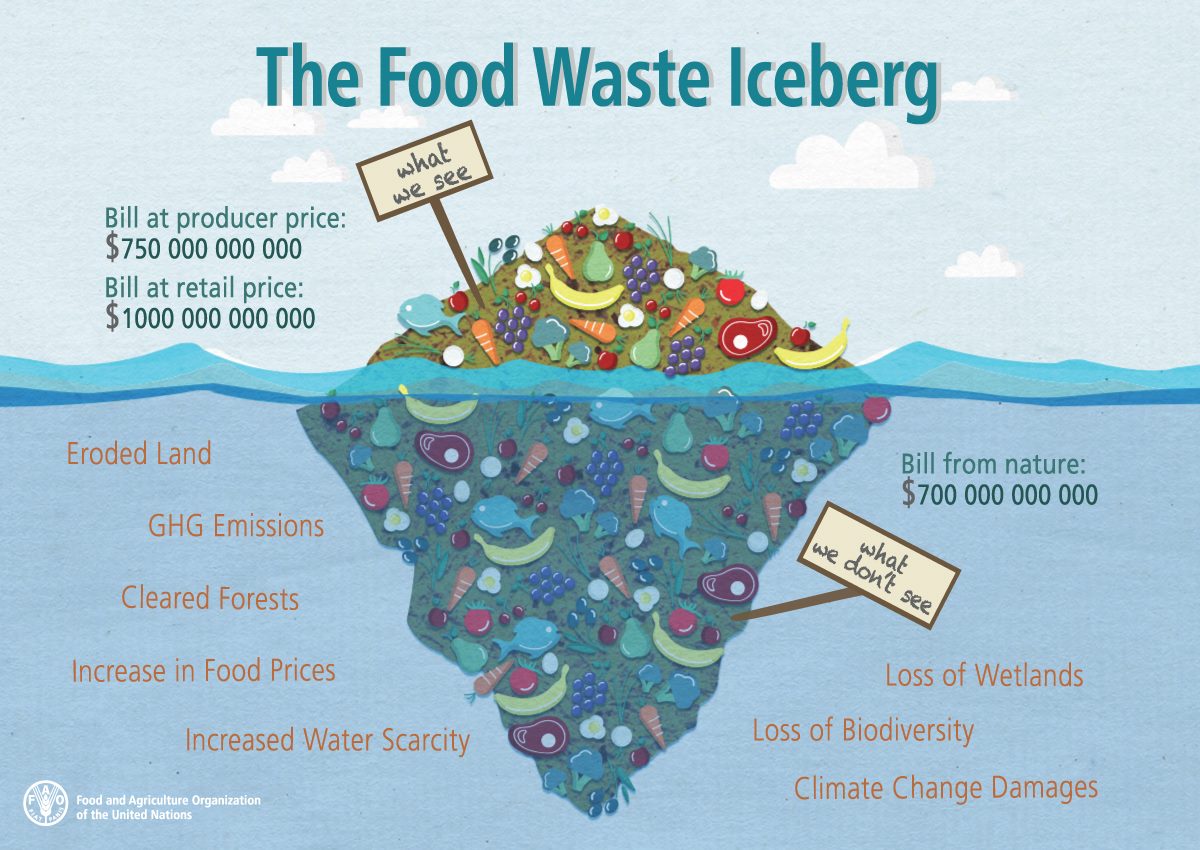
The final video my students presented this semester was Seeker/DNews asking Why Do We Waste $1 Trillion Of Food A Year?

"Ugly" and deformed food often gets left in fields to rot. How can we help reduce this food waste?
If this really were purely a Student Sustainability Video Festival entry, I'd stop here.  Instead, I'm tying this entry to Vox on going green by reducing waste for Earth Day 2018 by posting another video from that same Vox series: Food waste is the world's dumbest problem.

Eat your peas! It’s the easiest way to fight climate change.
That's it for this series for now, as I've finished grading final exams and have posted the grades by now.  The series should return in August or September.

That's also it for April 2018.  Stay tuned for another drum corps May Day entry to start the new month.

Sunday, April 22, 2018

Vox on going green by reducing waste for Earth Day 2018


Happy Earth Day!  To celebrate, I'm sharing two videos Vox created last year about the impact of trash on the environment, how people can reduce it, and how people can be persuaded to do so.  The first is Going green shouldn't be this hard.

Going green does not need to be a sacrifice, either for us as individuals or for businesses, governments and the economy.
The second video is from the same series and calls back to the previous one at the end, Takeout creates a lot of trash. It doesn't have to.*

Our single-use items aren't helping the fight against climate change but there are easy hacks to reduce and reuse. Climate Lab is produced by the University of California in partnership with Vox.

Hosted by conservation scientist Dr. M. Sanjayan, the videos explore the surprising elements of our lives that contribute to climate change and the groundbreaking work being done to fight back. Featuring conversations with experts, scientists, thought leaders and activists, the series demystifies topics like nuclear power, food waste and online shopping to make them more approachable and actionable for those who want to do their part. Sanjayan is an alum of UC Santa Cruz, a Visiting Researcher at UCLA and the CEO of Conservation International.
Both videos show ways to reduce our impact through changes in personal behavior, business practices, and government policy.**  All of them are worth doing, not just today, but throughout the year.  Remember, every day is Earth Day.

*The entire series of nine episodes is available at the link: Climate Lab with the description "Conservation scientist and UCLA visiting researcher Dr. M. Sanjayan explores the surprising ways we can change how we think and act about climate change."

**Think of these actions as a kind of technology.  That way they fit in the equation I=P*A*T, where I is impact, P is population, A is affluence, and T is technology.  Only technology can reduce the effects of increasing population and affluence and these behaviors counteract affluence.

Saturday, August 26, 2017

Paper vs. plastic bags: Student Sustainability Video Festival 73


After yesterday's dismal video that made my students and me feel helpless, I offer a video that also depresses viewers but also allows people to do something by making a choice about what they consume: 7 Reasons to Say No to Plastic Bags and Move to Paper Bags.

It's time we started caring for our environment. Lets pledge to carry our own shopping bags. If not at least insist for a paper bag.
"Paper or plastic?"  Reusable.  My wife and I carry our own reusable bags in our cars all the time.

Friday, August 25, 2017

EWaste dumping in Third World: Student Sustainability Video Festival 72


Today I feature a video on shipping EWaste to developing countries for the locals to process them: How the west dump Electronic Waste in Africa and India.

Movie made by Greenpeace showing how e-waste sent as "charity" in reality turns out to be electronic waste.
Remember Commoner's Laws -- there is no away, everything is connected to everything else, and there is no free lunch.  As for nature knows best, this isn't it.

Wednesday, January 6, 2016

Making styrofoam: Student sustainability video festival 49


Continuing with the theme of recycling, I present G Word- How Styrofoam is Made.

Watch as Waste Sleuth, Todd Sutton tours Foam Fabricators to discover how Styrofoam is made.
Yes, there is recycling going on, although it's all pre-consumer.  However, the process would likely resemble post-consumer recycling, which looks like this:


Stay tuned for more videos from student presentations.

Tuesday, January 5, 2016

Recycling paper and cardboard: Student sustainability video festival 48


Continuing with the videos my students showed as part of their presentations, I present Paper & Cardboard Recycling.


That video might need another graphic to help explain what's going on.


There, that should do it.

Saturday, January 2, 2016

Test Tube and DNews on burning trash for energy


I concluded last night's "Theme for January 2015: Balance" with a programming note.
I have something else planned for the first two weeks as I pursue my own version of work-life balance.  It's something I would normally have done around the Winter Solstice if I hadn't been all Star Wars all the time then.  Time for some balance in The Force.
What I would normally have done was post more of the videos from the talks students voted as their favorites, as I promised at the end of Trash to energy: Student sustainability video festival 46.   I'll get to that, but first I wish to revisit the idea with Test Tube News' Why Is Sweden Buying Trash From Other Countries?

Due to overpopulation, trash levels are rising, forcing nations to create new solutions. So what are countries doing with their waste?
That video does a good job of explaining my objections to this practice.  So does DNews' Why Don't We Burn Our Trash?

Sweden is able to recycle 99% of their trash, some of which they burn. Why isn't this practiced in the United States?
The drawbacks are why I was slightly disheartened when trash to energy became so popular that it was the most read post for September 2015 with 319 page views (420 according to the raw counter) thanks to first Infidel 753 and then Boat Bits linking to it.  Still, it works as a stopgap.

Stay tuned for Entertainment Sunday, which should include both an entry about the Golden Globes nominees and the resumption of the Student sustainability video festival with an entertainment-related episode 47.

Thursday, August 27, 2015

Trash to energy: Student sustainability video festival 46


As I promised in China's gender imbalance: Student sustainability video festival 45, here is another video from the talks the students voted as their favorites, Importing garbage for energy is good business for Sweden.

Everyone produces waste, and the Swedes are no different. It’s what they do with it that is unusual. Sweden recycles and sorts its waste so efficiently that less than 1 percent ends up in landfills. But perhaps even more interesting, and somewhat controversial, is that Sweden burns about as much household waste as it recycles, over 2 million tons, and converts this to energy. But even with this amount of domestic waste, the country’s 32 waste-to energy (WTE) incineration plants can handle even more. And when Sweden runs out of its own garbage, it offers a service to the rest of garbage-bloated Europe: importing excess waste from other countries.
I don't recall addressing incineration of trash to produce energy directly before, although I came close with both University of Cincinnati explores energy from waste and Paean to the power of poop, a Squirrel Case entry.  Once again, I thank my students for directing my attention to this subject.

Stay tuned for more of the videos from the talks students voted as their favorites along with the monthly meta.

Thursday, February 20, 2014

Approaching zero waste in San Diego


KPBS has a video I should have shown my class last week, when I was lecturing about recycling and matter quality: San Diego Leaders, Environmentalists Gather For Zero Waste Symposium

Zero Waste San Diego is hosting its first symposium Tuesday in Kearny Mesa, bringing together business leaders, nonprofits and local governments for a discussion on reusing or recycling all materials.
The accompanying article by Dwane Brown and Susan Murphy, Originally published February 4, 2014 at 6:50 a.m. and updated February 4, 2014 at 5:05 p.m. has more fun facts.
The average person throws away 4.5 pounds of trash every day, including recyclable items like aluminum cans, newspaper, plastic cups and styrofoam food containers.
...
In San Diego last year, nearly 70 percent of the city's waste stream was diverted through recycling and other means. That figure has remained unchanged over the past three years, according to city documents.

California set a goal in 2011 of 75 percent recycling, composting or source reduction of solid waste by 2020.
According to the video, the goal state’s goal is 100% recycling by 2040.  Can it be done?  Yes, as the City of Oceanside has already achieved it.
"Actually what I've really found trying to work with the community going on the road to zero waste its always a process. Its about behavior change," said Colleen Foster, a solid waste and recycling management analyst with Oceanside.

Foster helped 1,000 city employees in Oceanside reduce their waste to zero by simply removing their plastic trash cans and replacing them with much smaller ones. That forced everyone to think twice about what to do with their trash.
While I missed my opportunity to show this video in lecture this semester, I haven’t missed it in lab.  Next month, the students will be working on a double assignment on recycling and the life cycles of consumer products.  That should be a perfect opportunity to watch this video.