A blog about societal, cultural, and civilizational collapse, and how to stave it off or survive it. Named after the legendary character "Crazy Eddie" in Larry Niven and Jerry Pournelle's "The Mote in God's Eye." Expect news and views about culture, politics, economics, technology, and science fiction.
Happy WorldElephantDay! I found two videos for today that illustrate a point I make about elephants, that they are ecosystem engineers, foundation species that not only maintain an ecosystem, like keystone species such as sea otters, but can re-establish ecosystems. Watch World Elephant Day 2026 from American Humane Society.
Take elephants out of Africa, and the landscape itself begins to change. Their absence would be felt far beyond the herd, in the forests they help renew, the water sources they uncover and the habitats their movement creates for countless other species. Elephants are not simply part of Africa’s biodiversity; they are one of the forces that help sustain it. This World Elephant Day, help us protect these extraordinary animals and the living landscapes shaped by their presence.
India is home to more than 60% of the world’s Asian elephants—a distinction that comes with a deep responsibility.
From 33 Elephant Reserves and more than 150 identified elephant corridors to science-led monitoring and mitigation measures across 77 critical railway stretches, India continues to strengthen efforts for elephant conservation.
Technology, scientific research, frontline forest teams and local communities are all playing an important role in creating safer landscapes for elephants and people.
On World Elephant Day 2026, we celebrate India’s elephants and reaffirm our commitment to conserving the habitats and landscapes they call home.
The 2026 El Niño could be the strongest we’ve ever seen. And to understand its potential impacts, we’ll take a trip back in time to 1877. That El Niño triggered one of the most devastating natural disasters in human history. What could this one do?
Yikes! This is the first I've learned about the famines of 1877 and 1878, so it shocks me that they were so deadly. That the British Empire made things worse was the least surprising part of the story; Infidel753 and I had the following exchange in the comments to SciShow warns 'The Potato Famine Could Happen Again'.
Infidel753: Obviously any threat to the world's third-largest food crop is a serious concern, but this video hugely understates how much the Irish potato famine was exacerbated by politics. "Unhelpful policies adopted by their neighbors in the UK" doesn't begin to cover it. At that time Ireland was completely under British rule (part of the British Empire), a colonial possession under the heel of a government the Irish had no say in. The conservative British government at the time refused to provide any help at all to the starving Irish, partly motivated by racism (Celtic people were thought of as a different race at the time) and partly by a pull-yourselves-up-by-your-bootstraps Ayn-Rand-like mentality which was common in the ruling class at the time (this was later applied during a famine in British-ruled India, with equally disastrous results).
If the colonial government had merely provided the normal level of food aid typical of what governments do in such situations, most of the deaths would have been prevented. If such potato crop failures were to occur today, presumably modern governments would do their job and provide help to the affected people.
Me: Thanks for adding the needed context to the video. Yes, the British/English made things much worse by continuing to use Ireland as a resource colony throughout the famine, including making the Irish pay their rent in wheat and Ireland being a net exporter of food. They also exported those policies to the rest of the British Empire, as you pointed out. What they did in India, they did it in Ireland first.
[P]rocesses that happened in the past are likely to repeat in the future, so understanding the past is essential for preparation. This is a key takeaway from uniformitarianism, the concept that everything we see in nature is the result of everyday processes occurring over sufficient time, which is boiled down to "the present is the key to the past." It also means that the past is the key to the future.
File all the above under "it's a always a good day when I learn something new."
On June 11, the National Oceanic and Atmospheric Administration issued an El Niño advisory after temperatures in the equatorial Pacific Ocean remained higher than average for several months. Declaring an El Niño isn’t out of the ordinary, as they happen in cycles every two to seven years. But this one could be extraordinary.
Some are calling it a “Super” or “Godzilla” El Niño, and the NOAA predicts an 81 percent chance that it could develop to a “very strong” level, rivaling the historic and devastating El Niños of 1982-1983 and 1997-1998. Experts are predicting it will likely reach its peak this winter and into 2027, bringing heat, rainfall, and other potential extreme weather events.
But even with that foresight and climate models that can confidently predict what might be in store, we still face a test of what could potentially be the strongest El Niño ever recorded and the wild weather that comes with it. We spoke with atmospheric scientists and meteorologists to find out how a Super El Niño forms, why it changes global climate, and what we should expect in the coming months.
Sean talks with journalist David Wallace-Wells about a looming climate event that could make 2027 one of the hottest years ever recorded. They discuss the return of El Niño, why some scientists are calling it a “Godzilla El Niño,” and what it could reveal about the future of global warming. They also explore climate adaptation, political complacency, extreme weather, technological progress, and whether humanity is prepared for the world it’s creating.
India Naftali reports from the Jaffa port, where the Indian Embassy in Israel and Tel Aviv-Jaffa municipality have organized a special Holi-Purim festival to celebrate both holidays.
Early Tuesday morning, the moon will go red and we will witness a total lunar eclipse.
At around 3 a.m. on March 3, we will see March’s full moon pass through Earth’s shadow, turning it a copper color for 58 spell-binding minutes.
Shannon Schmoll, the director of Abram’s Planetarium at Michigan State University, joined Local 4 Live to talk more about the eclipse.
It might be clear enough to see the Moon early this morning. I'll probably be asleep, but if I'm up, I'll look.
Today marks what one NGO calls 'Earth Overshoot Day'. The Global Footprint Network says that's the day that humans have used more of Earth's resources than the planet can regenerate in a year. Scientists say the date is getting earlier every year. So what can we do to try live within the planet’s limits?
It pleases me to see India used as a good example. It's one of the reasons I show my students Chasing Ice instead of An Inconvenient Sequel: Truth to Power; I didn't like Al Gore bullying the Indian delegation to the Paris Accord negotiations, even though it worked. Go bother the Chinese!
One of the points Beatrice Christofaro makes is about the A in I=P*A*T, "where I is impact, P is population, A is affluence, and T is technology. It's the A and inefficient T that is multiplying the impact of the effect of the relatively small P in the developed world, especially in North America." Deliberately making people less affluent isn't a viable solution; people don't like being poorer and will object. On the other hand, convincing people to be less wasteful, particularly creating less food waste and eating less meat, especially beef, would be helpful. Once could consider that to be a technology. So is renewable energy. Between the two, it would move Earth Overshoot Day back more than a month. Progress!
Earth has never experienced anything like us: a single species dominating and transforming the planet. Biologist Shane Campbell-Staton travels the globe to explore our Human Footprint and to discover how the things we do reveal who we truly are.
PBS’ Human Footprint makes a stop at Omega Mart for its “Shelf Life” episode. We talk to Omega Mart about the experience and the ways the exhibit highlights modern consumerism.
That was wild and even weirder than it looked in the "Shelf Life" episode of Human Footprint. I can now say there there is an intelligent attraction in Las Vegas beyond the sheer spectacle the city is known for.
Happy Flashback Friday! For reasons I'll explain at the next Wayback Wednesday, I've changed today's post from the blog's year on Instagram and Threads to Howtown asking How accurate was the Covid death count?
After four years and dozens of studies, we know everything we're going to know about the death toll of the Covid pandemic.
Contrary to the conspiracy theorists and denialists, examination of excess deaths shows that, if anything, the U.S. undercounted COVID-19 deaths during the pandemic, although it was probably not that big and got smaller as the pandemic went on. On the other hand, I've always been skeptical that India had fewer people die from the disease than the U.S. The official number is 533,623. The polling data indicates 3.2 million deaths, although it could be as low as 3.1 million or as high as 3.4 million, at least six times higher than the official count. That, I believe. I also believe the actual global death toll is in the range of 16 million to 28.1 million with the most likely figure being 21 million, 3.1 times the total of official deaths. It also puts the death toll at the low end of the range for the 1918-1920 flu epidemic, "17 million to 50 million,[6][7] and possibly as high as 100 million, making it the deadliest pandemic in history." By the way, that last link shows an estimate of 27 million COVID-19 deaths. Yikes!
How Did Holi and Purim Become One Festival in Tel Aviv? An Indo-Israeli Cultural Marvel!
That explained more about the Israel-India relationship than the video I featured two years ago, including the two countries working together in space. That's something I didn't know before watching it, so I learned something new. It's always a good day when I learn something new.
Hananya had a partner in the video I featured two years ago, his wife India. She's the host of i24News English explaining Israel's CRAZIEST Festival (Purim).
Israel’s CRAZIEST festival is going on right now...It is called Purim. Come and see what this day of fun and celebration looks like here in the Holy Land.
On December 10th, Nobel Prize Day recognizes the annual award established by Alfred Nobel. Alfred Nobel signed his third and last will at the Swedish-Norwegian Club in Paris on November 27, 1895. When it was opened and read after his death, the will caused a lot of controversy both in Sweden and internationally, as Nobel had left much of his wealth to establish a prize. His family opposed creating the Nobel Prize, and the prize awarders he named refused to do what he had requested in his will. It was five years before the first Nobel Prize could be awarded in 1901.
...
At the age of 17, Swedish Alfred Nobel spoke five languages fluently and became an inventor and businessman. At the time of his death on 10 December 1896, he had 355 patents worldwide – one of them was the patent on dynamite. Furthermore, he had started 87 companies all over the world. In his will, Nobel directed his enormous fortune to be used to establish prizes to award those who had done their best to benefit humankind. Each prize would recognize the fields of physics, chemistry, medicine, literature, and peace. In 1901, the Nobel Prize committee awarded the first prizes five years after Nobel's death. The committee added another prize in 1969: "The Sveriges Riksbank Prize in Economic Sciences in Memory of Alfred Nobel."
...
Each year on 10 December, a ceremony is held in Stockholm, Sweden on the anniversary of Alfred Nobel's death. In 1901, the committee kept the first winners secret until the 10 December ceremony. Since then, the committee announces the Nobel Laureates in October each year. In December, they gather in Stockholm for the ceremony and receive their prizes from the Swedish King. The winners receive a Nobel diploma, a medal, and 10 million Swedish crowns per prize. All Nobel Prizes are awarded in Stockholm, Sweden, with the exception of the Peace Prize. The recipient of the Peace Prize receives the award in Oslo, Norway. (When Alfred Nobel was alive, Norway and Sweden were united under one monarch. In 1905, Norway became an independent kingdom with its own king.)
The prestigious Nobel Awards for the year 2024, were announced last week. As Artificial Intelligence takes the centre stage across the globe, the 2024 Nobel Prize for Physics was awarded to two AI & ANN researchers/experts.
Along with that, the 2024 Nobel Peace Prize has been awarded to an organisation of survivors of the Hiroshima-Nagasaki bombings, highlighting the need for disarmament.
The duo — John Hopfield from Princeton University, United States and Geoffrey Hinton from the University of Toronto, Canada — have been awarded for the “foundational discoveries and inventions that enable machine learning with artificial neural networks.”
Machine learning is a type of artificial intelligence and artificial neural network (ANN) — a machine learning programme designed to mimic the brain. The duo were awarded for laying the groundwork for machine learning in the 1980s which served as a prototype for the present-day advancements in artificial intelligence.
Hopfield and Hinton weren't the only winners recognized for using AI in their research.
Three scientists share the 2024 Nobel Prize in Chemistry for their work on proteins, the molecules that drive chemical reactions and perform essential functions.
Demis Hassabis and John M Jumper from Google DeepMind have been awarded the prize for using artificial intelligence (AI) to predict the three-dimensional (3D) structure of almost all known proteins.
Meanwhile, David Baker from the University of Washington has been honoured for designing a new protein that does not exist in nature.
The 2024 Nobel Prizes in the sciences have recognised groundbreaking research spanning artificial intelligence, gene regulation, and protein structures.
In this video, we will look at the recipients and their contributions.
That's it for this year's winners. I plan on examining the IgNobel Prize winners on April Fools Day. In the meantime, stay tuned for more SaturnAwardscoverage tomorrow.
The light that burns twice as bright burns half as long. Come along as we take a closer look at the story of this legendary singer, musician and performer, including the many challenges and hardships he weathered before being taken too soon. Our video includes Freddie’s struggle to be taken seriously as an artist, his issues with substance abuse, his battle with AIDS, and more! What do YOU think is the most heartbreaking thing about Freddie Mercury’s life? Let us know in the comments!
I'vecalledWatchMojo's videos "high-quality, well-researched clickbait that is worth sharing" and this video exceeded even that standard. I learned a lot about Mercury from this video, including his being born in Zanzibar and his having extra teeth in his mouth. As I'm fond of writing, "it's always a good day when I learn something new, which makes today a good day."
He’s one of the all-time greats, but how much do you really know about this ‘80s musical icon? Did you know that Freddie Mercury wasn't his real name? Or that he actually had more teeth than most people? WatchMojo is counting down the things you never knew about Freddie Mercury.
I learned even more from this video, as light-hearted and trivial as it is. One of the facts was Mercury being DavidBowie's roadie. While the Wikipedia entry for "Under Pressure" makes no mention of this connection, it makes for an irresistible transition to Under Pressure - Annie Lennox & David Bowie from Freddie Mercury Tribute Concert in 1992.
What chemistry!
That concludes today's tribute to an entertainer taken away too early by AIDS. Stay tuned for CyberMonday followed by GivingTuesday to complete the extra-long holiday weekend.
Women have always been skilled and inventive; they have just faced numerous obstacles in getting recognition and credit for their creations. Here is our tribute to some women who were not afraid to stand up for the respect and credit they rightfully deserved.
I knew that Hedy Lamarr invented the technology that made cell phones possible, but I didn't know that it also made Wi-Fi and Bluetooth possible as well. I did not know about the rest, although that photo of Margaret Wilcox looks much too recent for an inventor active in the 1890s. Still, it's the one that I find when I search for her name. There may be an attribution issue in the history of her portrait, but I'm not going to look for it today. Just the same, I learned a lot just from this video, and it's always a good day when I learn something new.
Follow over the jump for the rest of WION's videos for International Women's Day, which do double duty for Women's History Month.
During the Cold War, competition between the the United States and the former USSR was fierce, as the two countries rallied for the chance to make history by getting to the moon first. In 1959, the Soviet Union beat the U.S. to become the first nation to reach the surface of the moon with its Luna 2 spacecraft. But, the United States was the first country to put man on the moon in 1969, and to this day is still the only nation to have landed people on the moon. To date, only five nations, the U.S., Russia, China, Japan and India, have completed a successful soft landing on the moon. But bolstered by evidence of the presence of water and other natural resources, many more nations and private companies are now seeking to get to the moon. And whoever is able to establish a significant lunar presence first could have big implications on Earth as well as the cosmos.
I'm glad that Joe Biden's Administration publicly supports the continuation of the Trump Administration's plans for space exploration. As I wrote five years ago and repeated the next year, "space policy is the one area where Trump might actually be good for the country" and "Trump's plan is actually not a bad idea." I was worried that the Biden Administration would dump the one Trump policy I supported along with all the ones I couldn't stand. I'm relieved that they didn't.
File this under "even a stuck clock is right twice a day" and Donald Trump is definitely a stuck clock.
CNN's Christiane Amanpour speaks with NASA deputy administrator Pamela Melroy about the potential that space could be the next platform for war between nations.
Fortunately, Pamela Melroy thinks the answer is no. However, I wonder if she would get the same answer from a high-ranking officer of Space Force. Now I'm tempted to leave that as a suggestion in a comment to the video.
That's it for today's space update. Stay tuned for the highlights of tonight's Saturday Night Live tomorrow.
France celebrates Bastille Day, which marks the fall of the Bastille prison in 1789, seen as igniting the French Revolution. 'Le chant des partisans' was part of the celebrations. '"Le chant des partisans" is the perfect symbol of resistance during WWII', French Army Major Antoine explains.
I learned something new from this segment and it's always a good day when I learn something new.
The Indian military contingent marched to the beats of ‘Sare Jahan Se Accha’ even as a compliment of Rafale fighters of the Indian Air Force (IAF) participated in a flypast over the Champs-Elysees at the Bastille Day Parade. The Punjab Regiment led the march and was followed by the Indian Navy and then the Air Force as the left their mark at the annual parade to mark the historic fall of Bastille in 1789.
The Indian army, navy, and air force units formed the tricolor of the French flag as they marched down the parade route — nice touch!
India is the guest of honor at this year’s Bastille Day parade, with Prime Minister Narendra Modi watching in the VIP tribune alongside French President Emmanuel Macron. About 240 Indian troops led the march down the Champs-Elysees before thousands of French forces, and French-made Indian warplanes joined the traditional flyby above the event. France often showcases international partners on Bastille Day, and the choice of India comes as France looks to further strengthen cooperation on fighting climate change, military sales and the strategic Indo-Pacific region. But human rights were missing from the vast agenda, despite concerns raised by European lawmakers, rights groups and others. Joining FRANCE 24's William Hilderbrandt on Bastille Day is author, economist and commentator on geostrategic affairs Saurav Jha. He is currently the Editor-in-Chief of Delhi Defence Review.
Saurav Jha tried to downplay India as a counterweight to China, but he couldn't avoid the comparisons and contrasts. His point that consumption composes 60% of India's GDP to 30% of China's struck me. What that means is that India is a better market for exporters, which makes it attractive to other countries to not only invest in India to make things, but to sell them, too. That's a selling point.
Follow over the jump for videos about two other holidays that share today with Bastille Day.
And why that’s a big deal.
...
For the first time in six decades, China’s population is shrinking, and it’s predicted it could create a demographic crisis. That’s because China isn’t just shrinking, it’s also aging. And the majority of Chinese couples are not considering having more than one child. Because of this, China is predicted to lose nearly 50 percent of its population by 2100.
China’s population decline can be traced back to the restrictive family-planning policies launched in the 1970s and an impressive economic boom fueled by China’s huge labor force.
China’s modernization brought rapid urbanization, rising income levels, and better education to large parts of China. Combined, these policies and growth have given China one of the lowest birth rates in the world.
Today, China is trying to reverse its population decline. Not just because an aging population is hard to sustain economically, but because China’s impressive economic growth, until now, has relied on its people. As China’s population challenges deepen over time, it might have to rethink how to grow its economy and care for its citizens.
I am in the middle of lecturing about human population in my Environmental Science class and described China's one-child policy on Thursday and this video fits right in. I think I'll show this video to my class as an update tomorrow night and replace the video I embedded in China ends one child policy in my slideshow. Welcome to blogging as professional development.
China remains home to 1.4 billion people. But that number is getting smaller.
The country's National Bureau of Statistics reported China's population slipped to 1.412 billion last year from 1.413 billion in 2021. The last time China saw negative population growth was in the 1960s.
Many experts believe that China's one-child policy, introduced in the 1980s, is one of the main reasons for the population decline.
I've been worried about China passing the U.S. to become the dominant global power and have advocated for cooperation, which I labeled The CoDominion. My long-time commenters Nebris and Infidel753 have been skeptical of this happening for political, social, and cultural reasons. They didn't convince me because I'm a scientist and I need something more concrete. China's population decline provides that concrete support. Now I'm less worried about China passing the U.S. to become number one.
What about India? Frankly, I think I'd be happier with a world where India is in charge. It will also take longer, as India currently has the fifth largest GDP, passing the United Kingdom, and is projected to pass Germany by 2027 and Japan to reach third by 2030. The three most populous nations will then have the three largest economies, although in reverse order. I can live with that.
Enough serious news and analysis. Stay tuned for some comedy tomorrow.
The mind-boggling multiverse comedy took home seven Academy Awards, including Best Picture. Michelle Yeoh became the first Asian woman to win Best Actress.
I'm glad the clip mentioned the second Oscar for Ruth Carter, the first African-American to win two Oscars, Angela Bassett being the first acting nominee for a Marvel movie, and the lack of female director nominees. True, the Motion Picture Academy awarded Euzhan Palcy an honorary Oscar, but it's not the same thing, although I am counting her among diverse honorees. The highest competitive award a woman won behind the camera was Sarah Polley winning Best Adapted Screenplay for "Women Talking." As good as this month's ceremony was for diversity, there is still room for improvement.
Many are celebrating Sunday night's history-making wins and nominations for Asian actors at the 2023 Academy Awards.
Don't forget Daniel Kwan, who co-produced the "Everything Everywhere All at Once" along with Jonathan Wang, and co-directed and co-wrote the movie with Daniel Scheinert. That four Asians and Asian-Americans winning five of the film's seven Oscars, a record breaking performance.
It was also a good night for Indian films, as "RRR" won Best Original Song and "The Elephant Whisperers" won Best Documentary Short. That's nine Oscars won by Asians and Asian-Americans.
Finally, "Guillermo del Toro's Pinocchio" took home the Oscar for Best Animated Feature to make Guillermo del Toro for ten awards won by diverse nominees. Congratulations to all the winners!
Follow over the jump for how my predictions fared.
On March 11th, 2020, the World Health Organization declared COVID-19 a global pandemic.
What followed, were travel bans, stay-at-home orders and mandatory masking.
1.[1] million Americans have died from the virus the most of any country in the world and among them, more than 42,000 Michiganders.
Officially, the U.S. has the most deaths from COVID-19 with Worldometer listing 1,148,765, followed by Brazil with 699,310 deaths, and India reporting 530,780. I suspect all of them have under-reported deaths from the disease, but especially India, as I wrote last May: "I was always a little skeptical that India had fewer deaths than the U.S. from the pandemic. An estimate of 4.7 million may be higher than I expected, but I really do think India had more deaths than the U.S.'s 1 million." Still, that's merely a suspicion, not a fact.
On March 10, 2020, Michigan health leaders confirmed the state's first two cases of COVID-19. Three years later, the chief medical executive is reflecting on the pandemic, what has been learned and where we stand today.
I'm glad vaccines and more effective treatments exist to make COVID-19 less dangerous and scary. My wife and I are the beneficiaries of both, as I mentioned in 'The First Wave' wins three News & Documentary Emmy Awards. While we haven't had any lingering symptoms besides modestly lower energy levels and some slight brain fog, there are lots of people who are suffering from worse syndromes. The economy has also not fully recovered, either. Follow over the jump for two reports from outside Michigan about both.
The Jewish Festival of Purim and the Indian Festival of Holi have an amazing connection!
As I first wrote eight years ago, "I don't celebrate Purim anywhere else but on this blog, but I'm all in favor of fun holidays and this one certainly qualifies." So does Holi. Happy Purim and happy Holi! Now stay tuned for International Women's Day.
What unravels when a tribal couple decides to foster an orphaned baby elephant? Watch how the arrival of the gentle giant Raghu, transforms the lives of his foster parents forever.
This is the second documentary from India about wild animals, the other being "All That Breathes." Indian media have made a big deal of the two films' Oscar nominations, along with that of "RRR," and created graphics like this. India cares what the U.S. movie industry thinks of its films and is thrilled to receive recognition.
The trailer for "Haulout" by Evgenia Arbugaeva and Maxim Arbugaev.
About the film: A man is waiting in his hut in the desolate expanse of the Russian Arctic. He is holding out in order to observe a natural event that occurs here, every year. But ocean warming is taking its toll.
A lone scientist on the coast of the Siberian Arctic finds that warming seas have taken a toll on the walrus migration, as documented in a film by Evgenia Arbugaeva and Maxim Arbugaev. "Haulout" is nominated for Best Documentary Short at the 2023 Academy Awards.
I'm a biologist, so I knew that "haulout" referred to pinnipeds (seals, sea lions, and walruses) and figured that walruses were the most likely animals based on the location. I'm glad to see I was right. I'm also pleased to have pursued this subject, as I've found two more documentaries I can recommend to my environmental science students. Welcome to blogging as professional development.
Follow over the jump for the Factual America video about "All That Breathes" I promised as a bonus.
I have been recommending two documentaries to my students since the Academy Awards nominations came out, "Fire of Love" and "All That Breathes," the first to my geology classes and the second to my environmental science classes.* That's a good enough reason to share my thoughts about them for today's Sunday entertainment feature. I begin with National Geographic's Fire of Love Trailer.
From National Geographic Documentary Films comes the extraordinary love story of intrepid French scientists Katia and Maurice Krafft, who died just as explosively as they lived — capturing the most spectacular imagery ever recorded of their greatest passion: volcanoes.
I'm a paleontologist, not a volcanologist, but I'm still a geologist, so I'm thrilled to see an award-winning documentary about geology being recognized at the Academy Awards and happy to recommend my students watch a tragic love story about scientists and their subject. It helps that the documentary is streaming on Disney+, so they don't even have to leave home or spend extra money on to see it.
As legions of birds fall from New Delhi’s darkening skies, and the city smoulders with social unrest, two brothers race to save a casualty of the turbulent times: the black kite, a majestic bird of prey essential to their city's ecosystem.
As the first video description notes, my students can stream this film at home on HBO Max, although I think fewer of them have the Warner Brothers-Discovery streaming service than Disney's. It still looks like a documentary they will find both enjoyable and educational.
Before I move on, the trailer's claim that this is "the most awarded documentary of the year" may or may not have been true at the time of the trailer's release, but it certainly isn't true now. IMDB lists 19 wins and 39 nominations for "All That Breathes" but 27 wins and 65 nominations for "Fire of Love." One of those is the DGA Awards, where "Fire of Love" won Outstanding Directorial Achievement in Documentary, beating "All That Breathes," two other Oscar nominees, "Navalny" and "All the Beauty and the Bloodshed," and "Retrograde," which substitutes for the Oscar-nominated "A House Made of Splinters." According to IMDB, "All the Beauty and the Bloodshed" ties "Fire of Love" with 27 wins but lags behind with 47 nominations, while "Navalny" has 11 wins and 28 nominations and "A House Made of Splinters" has 8 wins and 14 nominations. All that places "All That Breathes" in third, not first.
Follow over the jump for Gold Derby's interviews of the directors for both "Fire of Love" and "All That Breathes."
The world's population has hit eight billion, just 11 years after passing the seven-billion milestone, the United Nations has said.
After a big surge in the middle of the 20th Century, population growth is already slowing down.
It could take 15 years to reach nine billion and the UN doesn't expect to reach 10 billion until 2080.
It's hard to calculate the number of people in the world accurately, and the UN admits its sums could be out by a year or two.
This is very much the message I tell my students about the history and likely future of population growth and its effects on people and the planet. I might just replace the National Geographic video I embedded in both A video gift from a student and Student sustainability video festival 5: previous years' winners I currently have in my lectures with this one, although it lacks the infographics introducing the topics of health, water, and energy (even though the energy stat it cites for energy use was already out of date when the video was produced) that set up the rest of the course. Still, welcome to blogging as professional development.
The BBC video mentioned India's population passing China's, lower fertility rates, an aging population, and strains on infrastructure. All of those are the subjects of Cities under strain as world population hits 8 billion from Reuters.
As the world population touches the 8 billion mark this week, countries like India, the second-most populous country in the world, are faced with the challenges - from creating suitable infrastructure to creating a skilled workforce from the country's youth.
I tell my students that the world is becoming increasingly urbanized at the same time that population is increasing, so population problems will show up as urban problems. India's situation is a perfect example of this. I might add this video to my lectures on population as well. Again, welcome to blogging as professional development.
• RRR – Rise Roar Revolt (Sarigama Cinemas / Variance Films / Potentate)
• Death on the Nile (20th Century Studios)
• F9: The Fast Saga (Universal Pictures)
• No Time to Die (United Artists Releasing)
• Top Gun: Maverick (Paramount Pictures)
• West Side Story (20th Century Studios)
If this were a normal year, I'd say the contest for this award woul be between the latest entries in the James Bond and Fast and Furious franchises. This is not a normal year. "Top Gun: Maverick" is the top grossing movie of 2022 so far and is still in theaters, where it was number four at the box office this week after falling from first last week. It's also the leading nominee in this category, with five total nominations. I'm planning on voting for it, even though "West Side Story" is a better overall film, I don't think it belongs here. Its main competition isn't either of the usual suspects. Instead, it's the Indian film "RRR – Rise Roar Revolt," which is nominated for three total awards, including the next category.
International Film
• RRR - Rise Roar Revolt (Sarigama Cinemas / Variance Films / Potentate)
• Downton Abbey: A New Era (Focus Features)
• Eiffel (Blue Fox Entertainment)
• I'm Your Man (Bleecker Street)
• Riders of Justice (Magnolia / Magnet Releasing)
• Silent Night (RLJE Films)
Normally, I'd vote for "Downton Abbey: A New Era," but its box office was a bit disappointing and this is its only nomination at any awards show. On the other hand, "RRR - Rise Roar Revolt" has three other nominations, two here and one for Best Picture at the Hollywood Critics Association Midseason Awards. That's enough to convince me to vote for "RRR."
Independent Film
• Alice (Roadside Attractions/Vertical)
• Dream Horse (Bleecker Street)
• Dual (RLJE Films)
• Gold (Screen Media Films)
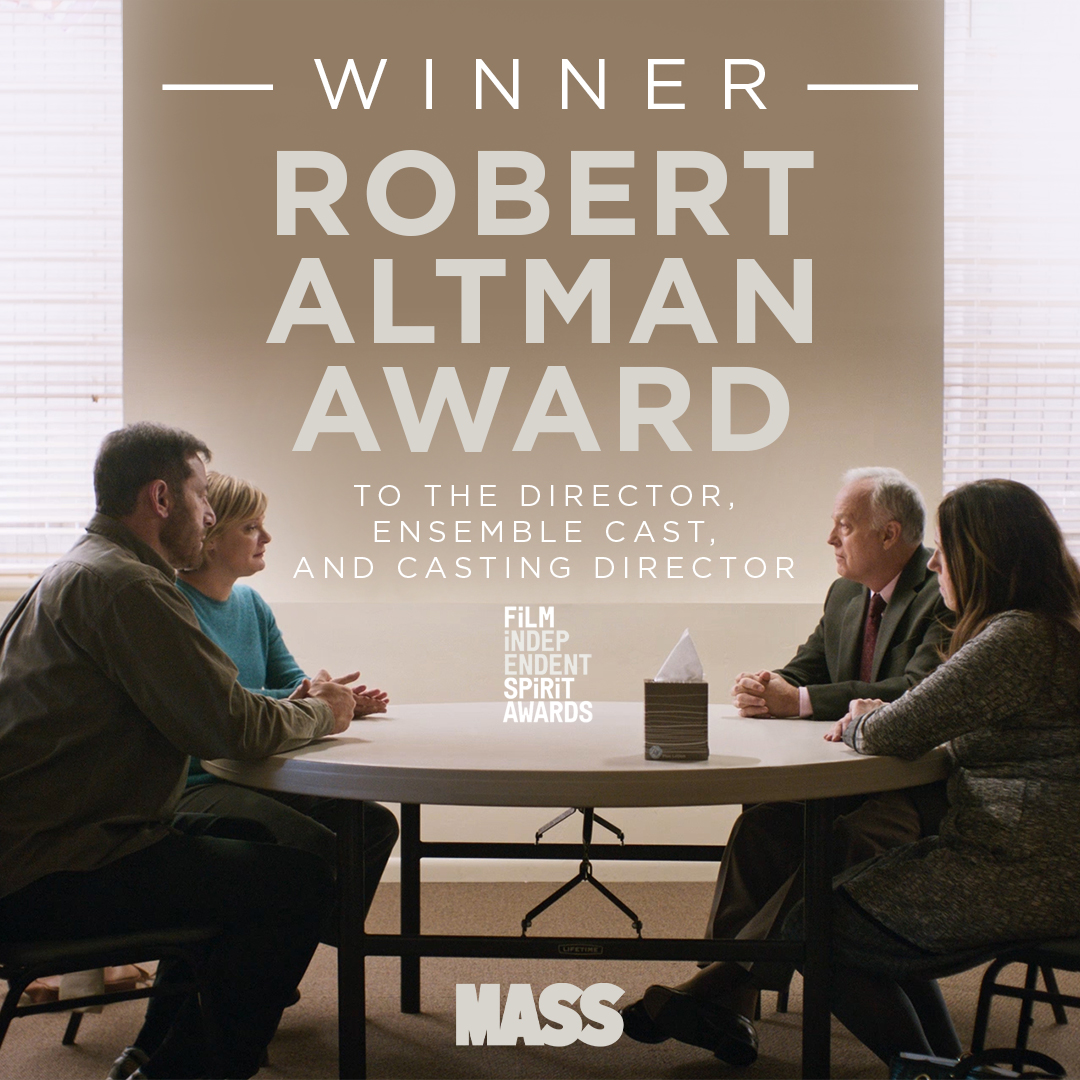
• Mass (Bleecker Street)
• Watcher (IFC Midnight)
"Mass" is by far the most nominated movie in this category at other awards shows, including the BAFTA Awards, so it has my vote.
As the death toll from the coronavirus nears 1 million Americans, we’ve been exploring why the U.S. Suffered such a terrible loss, especially when compared to other nations similar to us. While there are many reasons for this, one of them is that many Americans have not wanted to be vaccinated. William Brangham reports.
I'm going to be a good environmentalist by recycling my reaction from February.
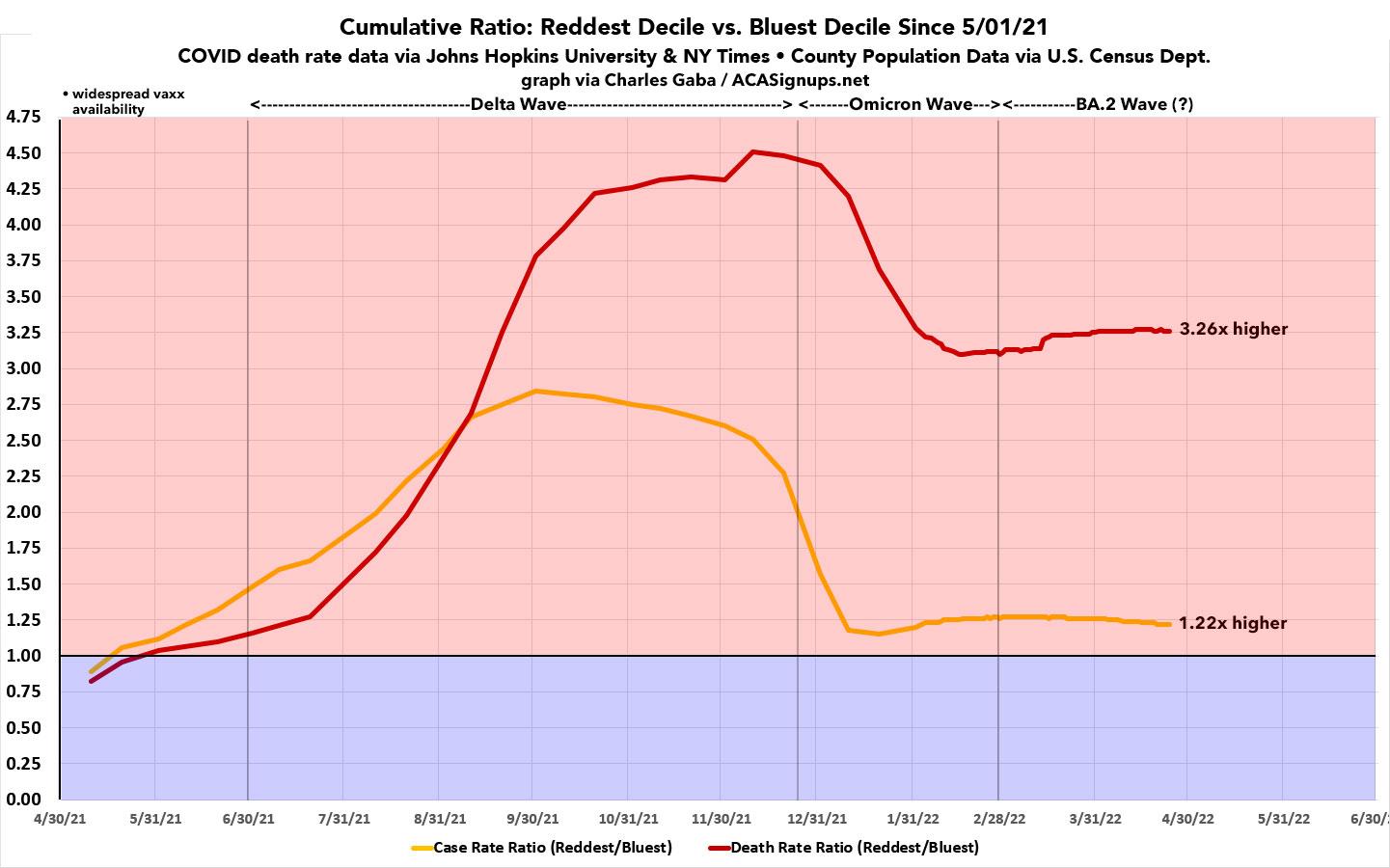
I found this depressing but not surprising, as I've been seeing this develop since I wrote Samantha Bee on 'Mask Hysteria' two years ago, even before vaccines. Since then, I've been paying attention to Charles Gaba at ACASignups.net who has been tracking vaccination rates vs. partisanship since May 2021....He found the same relationship between party identification and vaccination rates that [PBS NewsHour] showed in the video above.
Nearly 15 million people around the world have died from COVID's impact, directly or indirectly, during the first two years of the pandemic, according to a new World Health Organization report. It’s also about three times higher than governments have reported so far. University of Washington's Jonathan Wakefield, whose modeling work helped produce the report, joins William Brangham for more.
Speaking of which, both PBS and ABC News, which broadcast and uploaded Breakthrough COVID-19 deaths increasing as omicron subvariants spread last night, still think the country is close but hasn't passed that grim milestone yet, but expect it will pass it soon (I think we passed it already).
Breakthrough deaths comprise a larger share of COVID-19 deaths amid a surge of cases nationwide. ABC News medical contributor Dr. Alok Patel explains what you need to know.
That's not good news. Despite what Dr. Fauci said to PBS NewsHour last month, we are still in an active pandemic and cases are going up, even though deaths so far haven't followed suit.
That's it for today's pandemic update. Follow over the jump for the most active links on Twitter during the eleventh year of Crazy Eddie's Motie News.