A blog about societal, cultural, and civilizational collapse, and how to stave it off or survive it. Named after the legendary character "Crazy Eddie" in Larry Niven and Jerry Pournelle's "The Mote in God's Eye." Expect news and views about culture, politics, economics, technology, and science fiction.
Over the last decade, malls were left for dead, casualties of e-commerce and shifting consumer habits, with the pandemic seemingly sealing their fate. Gen Z, however, is bringing malls back, reviving them as social hubs and retail meccas.
Teens Sick of Their iPhones Are ‘Mallmaxxing’...
The mall is cool again, with stores like Edikted and Princess Polly luring a new generation that is eager to shop in real life and show off hauls online.
Against all odds, the mall is winning over American teens: they’re getting their ears pierced; they’re buying jewelry; they’re trying on outfits that make their parents shudder; they’re even learning to stand in line and hang out IRL.
After all the "Millennials are killing" some institution, cultural activity, food or other product I've been reading since before the pandemic, I shouldn't be surprised that news media and popular culture would discover a contrasting feature about Gen Z to report. Gen Z reversing the trend by saving malls certainly fits.
Since the video mentioned the role of social media in getting today's youth generation to revive malls, I'm sharing the most active links to last year's posts about the Retail Apocalypse on social media. Follow over the jump.
Normally, I focus on the plants in rainforests, particularly those in temperate rainforests, but the challenge I set for myself and the available material led to concentrating on animals in tropical rainforests. It works.
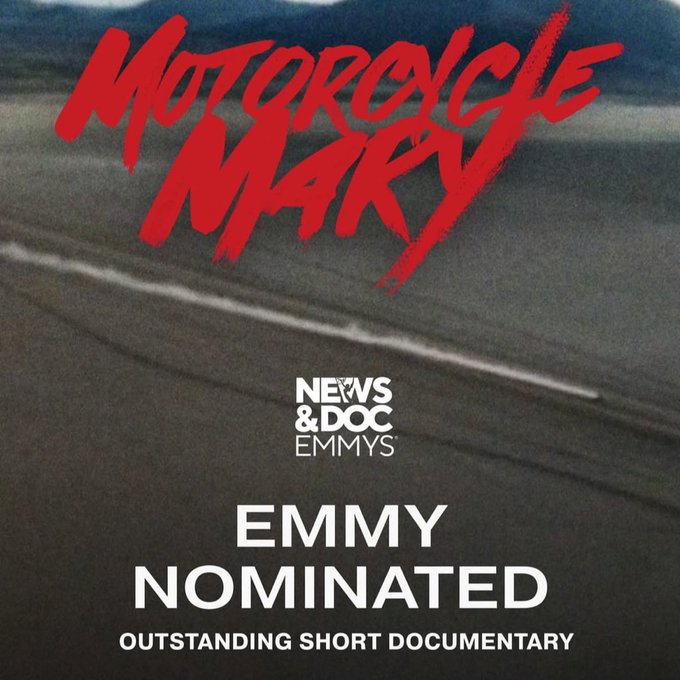
The other nominees for Outstanding Short Documentary are Love To The Max, Motorcycle Mary, Swept, and Wings of Dust. My pick is Motorcycle Mary on two criteria. First, it has the most wins and nominations listed at IMDB, four each, while Wings of Dust has one win and Love to the Max has one nomination, none of which include those at the News & Doc Emmy Awards.* IMDB doesn't even have entries for The Dirty Business of Monkey Laundering or Swept. The second is that the only promotional image I could find touting a nomination in this category was for Motorcycle Mary.
Its team believes in it.
Follow over the jump for the other News & Doc Emmy nominees that fit today's theme.
Discount retailer Big Lots Inc. has filed for bankruptcy protection and plans to sell the business to Nexus Capital. But Bloomberg's Eliza Ronalds-Hannon says this could wind up being a positive story.
At least Big Lots has a chance to survive under new ownership. That's what I hope happens to RedLobster, but didn't happen to 99 Cents Only Stores, the last two Retail Apocalypse stories I covered.
In this episode of Retail Archaeology we take a look at a closing Big Lots store.
Listening to Erik recount how the number of stores closing just kept increasing made me realize how much trouble Big Lots! is in and how much worse its situation was becoming, even before the chain declared bankruptcy.
Big Lots is raising big concerns in Citrus Heights as word got out that the store is closing up shop.
At least it wasn't Big Lots! management blaming homeless people for the closing, but the store's employees and customers. I'm not surprised the claim got amplified on Nextdoor; that site is notorious for its users making racist posts. I'm not surprised they would reinforce other stereotypes as well.
As for what will fill the spaces left by the closed stores, there's always Spirit Halloween. I have a CityNerd video about the seasonal store chain to share for Spooky Season. In the meantime, expect me to cover the limited series and comedy nominees at the Emmy Awards over the weekend. Stay tuned.
Home goods retailer Bed Bath & Beyond announced that it will begin “winding down operations” after filing for bankruptcy on Sunday. The news comes after a year of job cuts at the company and store closures. NBC News’ Kathy Park reports.
Bed Bath & Beyond has filed for Chapter 11 bankruptcy, clearing the way for it to shut down hundreds of stores and lay off thousands of staff. Su Keenan reports on Bloomberg Television.
There is still some hope that a "white knight" might rescue the chain, but I'm not holding my breath. I expect every store will close by the end of the quarter.
Bed Bath & Beyond — one of the original big box retailers known for its seemingly endless offerings of sheets, towels and kitchen gadgets — filed for bankruptcy protection, following years of dismal sales and losses and numerous failed turnaround plans.
It's interesting that the interviewee mentioned not only Amazon as a rival store, but also automation as a threat to jobs. I shouldn't be surprised; metro Detroiters have been losing jobs to automation for decades.
That's the latest on the Retail Apocalypse. I expect I'll be returning to this topic between now and the end of June. If nothing else, Erik of Retail Archaeology will be covering the shutdown of stores in Arizona and posting videos, which I will share here. Stay tuned.
Ever since President Trump withdrew the U.S. from the Paris Agreement, China has played an increasingly large role in the international fight against climate change. The country is now the world’s largest manufacturer of solar panels, lithium ion batteries, and electric vehicles. But while China has stepped up in these regards, it is still the global leader in carbon emissions, and burns more coal than the rest of the world combined. As President-elect Joe Biden looks to reassert American leadership in green energy and climate initiatives, it remains to be seen whether the U.S. and China can work collaboratively to address the climate crisis.
CORRECTION (November 16, 2020): Barbara Finamore and Alvin Lin both work at the “Natural Resources Defense Council” not the “National Resources Defense Council”
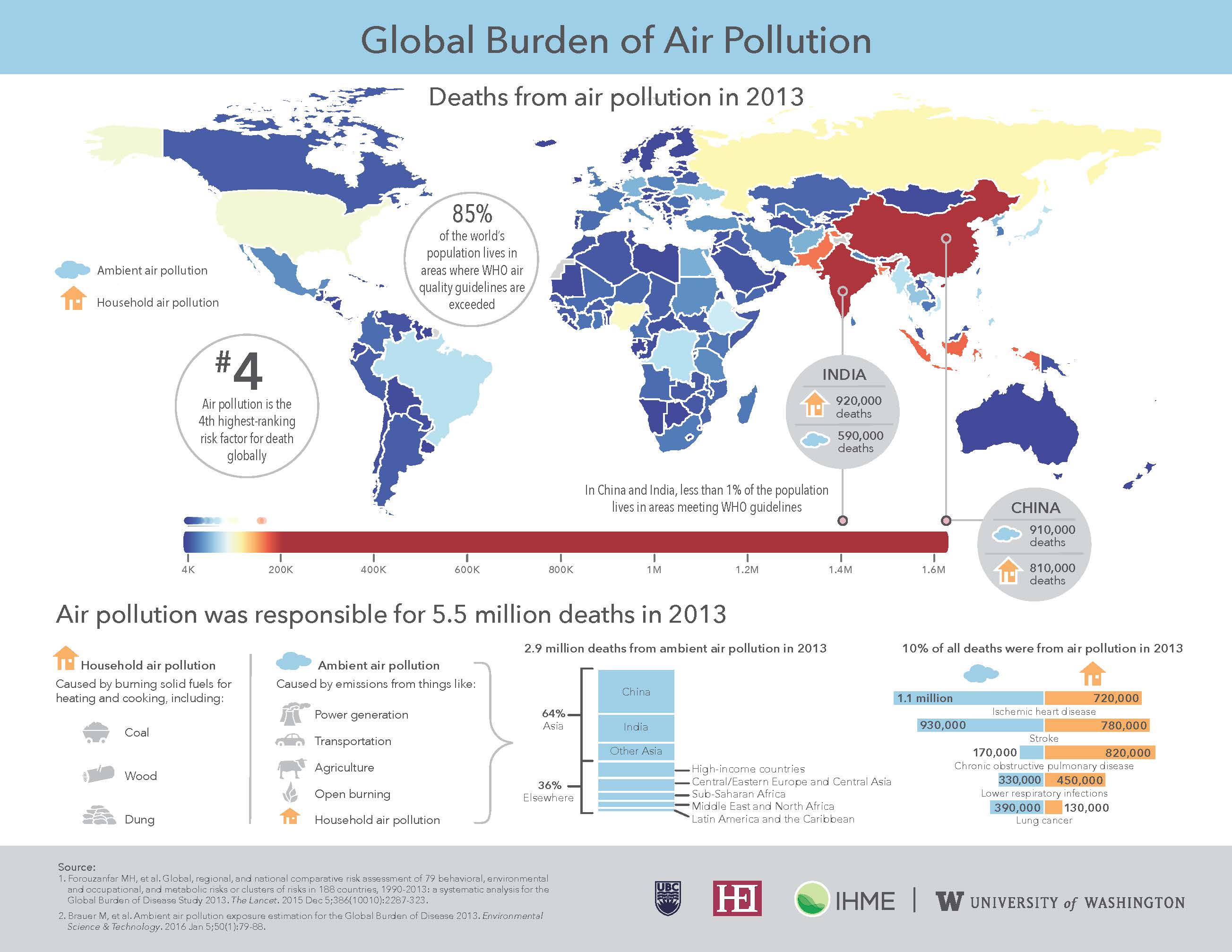
Alvin Lin shows up in Treasures of the Earth: Power where he gives the answer to one of the questions on the worksheet: "21. How many deaths are caused by China’s air pollution every year?" The answer he gives is 1.6 million in 2016, more than one out of every thousand Chinese. I also show a slide in my class about air pollution deaths in 2013, the year of the Chinese "airpocalypse" in the CNBC video. That year, about 1.7 million Chinese died from air pollution. Here's the image.
While 1.6 million is terrible, I won't minimize the 100,000 fewer deaths over three years from 2013. It's a sign of progress.
Speaking of "Treasures of the Earth: Power," here are some other questions addressed by this video, along with their answers.
9. What are the effects of burning coal and oil on the Earth’s atmosphere?
Both release carbon dioxide, which is a greenhouse gas that traps heat and warms up the atmosphere and oceans. Not mentioned in the video is that it also acidifies surface waters, particularly the oceans.
19. Solar panels are increasing by what percentage every year?
In 2016, solar panel installations were increasing 25% per year. Wow!
20.How are the Chinese attempting to solve a fundamental problem with solar energy?
They are storing electricity from solar energy in enormous banks of batteries to be released when the sun is not shining. This is a solution to the intermittency problem.
China, the world’s biggest polluter, has committed to reach net zero emissions by 2060, an ambitious goal matched by enormous investments that are reshaping the nation’s energy system.
Not only are China, Japan, and South Korea announcing net zero goals, so is the United States, which is shooting for net zero by 2050 at least for the federal government. I sincerely wish all four countries good luck in achieving their net zero goals. They need it and so does the planet.
COVID-19 has torn a particularly lethal path through the one in 10 Americans with diabetes, including many who never caught the virus. That's because when the pandemic hit, people with the chronic disease were already in worse shape than in years.
If I hadn't kept up my diabetes treatment regimen, I could have been one of these three unfortunate people. Their stories help explain why there have been so many excess deaths not attributable to the disease during the pandemic. They also serve as examples for two of Commoner's Laws: Everything is connected to everything else and there is no free lunch. All of the systems in our body are connected to each other and what we do to or for one system will have effects on the rest. Also, isolating ourselves to protect us from the pandemic comes at a price, which we have to pay one way or another, either in continuing our treatment during the pandemic, which I did, or the death and disability described by Reuters.
The three subjects of the Reuters report suffered indirectly from the pandemic, as they didn't catch the disease. KHOU in Houston reported on the effects of catching COVID-19 on diabetics in Keeping diabetes under control during COVID-19 pandemic last December.
Data show diabetics have more severe cases of COVID-19. Doctors say it's more important than ever to keep your diabetes under control.
My wife mentioned how dexamethazone increases blood glucose just last night, so seeing it being mentioned in this video made an impression. Again, there is no free lunch.
Dr. Philip Orlander described how some COVID-19 patients developed diabetes after their infections. Bloomberg Quicktake: Now described that more fully in Doctors Find That Covid Spurs Diabetes: Study from May 2021.
Among Covid-19’s many ripple effects, the worsening of the global diabetes burden could carry a heavy public-health toll. The underlying mechanisms stoking new-onset diabetes aren’t clear, though some doctors suspect the SARS-CoV-2 virus may damage the pancreas, the gland that makes insulin which is needed to convert blood-sugar into energy. Sedentary lifestyles brought on by lockdowns could also be playing a role, as might late diagnoses after people avoided doctors’ offices. Even some children’s mild coronavirus cases can be followed by the swift onset of diabetes, scientists found.
Yikes! That's a frightening example of "everything is connected to everything else." The more I learn about SARS-CoV-2, the scarier the virus becomes!
U.S. recently faced a series of ransomware attacks on critical infrastructure like the Colonial Pipeline, the city of Tulsa, and JBS, the worlds largest meat producer. Ransomware, a program that hackers use to hold digital information hostage, has become the top choice of malware for criminals. In 2020, the total amount of ransom paid by the victims reached nearly $350 million worth of cryptocurrency, most of them in bitcoin. So what led to the rise of ransomware in the U.S. and what makes it so difficult to fight?
The May 7 ransomware attack on the Colonial Pipeline “is probably the most significant ransomware attack on one of our critical infrastructures ever,” said Rep. John Katko, R-N.Y. And shortly after the pipeline was hit, the U.S. faced more ransomware attacks — targeting cities, ferries and even a meat plant.
“Although ransomware has really been around since 2013, it has not yet been seriously taken in terms of something that could impact critical infrastructure,” said Vanessa Pegueros, chief trust and security officer at OneLogin.
Like the other CNBC mini-documentaries I share, this one does a good job of explaining the issue with high production values. It also answers its own question.
These groups have become increasingly bold, showing off bundles of cash and fancy sports cars. That’s because tracking, arresting and bringing these hackers to justice is often incredibly difficult.
“A lot of these organizations are allowed to essentially operate freely within Russia or other former Soviet states as long as they don’t hit anybody within that country,” [Marc] Bleicher said. “So unless there’s a cooperation at the political level there, I don’t see this going away anytime soon.”
Jun.09 -- JBS USA has confirmed it paid the equivalent of $11 million in bitcoin to hackers that targeted and crippled its business last week. Separately, U.S. regulators have slammed Colonial Pipeline Co.’s cybersecurity practices after it paid $4.4 million in bitcoin in its own ransomware attack. Bloomberg’s Kartikay Mehrotra reports on “Bloomberg Daybreak: Asia.”
Kartikay Mehrotra told pretty much the same story as CNBC, that the FBI followed the money and exploited the hackers sloppy security to retrieve most of the ransom. That's rare, but at least it's possible, which is good news.
Two new cyberattacks targeted U.S. transit agencies. New York's Metropolitan Transit Authority and a Massachusetts ferry service both said their systems were recently compromised by hackers following Monday's attacks on the world's largest meat processing company, JBS SA. CBS News chief Justice and Homeland Security correspondent Jeff Pegues reports on the response from Washington, and CBSN technology reporter Dan Patterson joined Tanya Rivero to discuss.
While I'm calling these criminal gangs an outgrowth of Putin's hackers and agents, they are really independent organized crime groups acting with the Russian government's tacit approval. In addition, Russia isn't the only country hosting these criminal gangs; China is as well, although the group that attacked New York's subway system may be state associated. Those are government and industry issues. For individuals, follow the advice given by Dan Patterson to keep your data secure. Be careful and good luck!
It's been 100 years since the Tulsa race massacre, when an angry white mob destroyed a prosperous black neighborhood in Tulsa Oklahoma. But Tulsa's story is part of a larger history of Black Wall Streets that existed in many American cities.
I like Time Magazine's suggestions about how to rebuild African-American wealth. They are positive ideas I might return to in a future entry.
On May 31, 1921, the entire Greenwood neighborhood of Tulsa, Oklahoma, was destroyed and hundreds of its Black residents were murdered by a White mob. The massacre and the destruction of the prosperous enclave, dubbed “Black Wall Street,” was the single largest incident of racial violence in American history. While the neighborhood was razed, the survivors weren't deterred as they rebuilt Greenwood over the coming decades. But what demolished the neighborhood a second time four decades later was much less overt, but no less racist.
In his interview, Hannibal B. Johnson made a depressing observation followed by a cynical saying and an expression of hope. The depressing observation was that attempting to become respectable backfired; it made white Americans envious (not jealous, although I think I'm fighting a losing battle maintaining the distinction) and resentful. That's the fault of the white folks; I think Americans should celebrate success no matter which of our citizens achieves it.* The cynical saying was that "if you're not at the table, you're on the menu." Cynical or not, I agree with it. The expression of hope that that there are more white allies now. I hope so, too.
Both videos document the rise and fall of African-American wealth, including not only the race riots of 1919-1921, but also the straightforward effects of urban renewal and the paradoxical effects of integration in the 1960s, and the erasure of that history afterwards. Now that Americans are being made aware of it, may we not forget it again.
*This includes rich people like Elon Musk and Jeff Bezos, but that doesn't preclude taxing them more so they pay their fair share back to the country that helped them succeed.
I just realized that Earth Day is this coming Thursday, so I am moving up my planned post about the RetailApocalypse from Friday to today and the retrospective about entertainment from Thursday to Friday.* It helped that Bloomberg Quicktake uploaded The Rise and Fall of American Malls last week, making it the perfect video to update my readers about the Retail Apocalypse.
Part social gathering spaces, part retail meccas, malls were once the centerpiece of the suburban American experience. Now, fac
The National Rifle Association filed for bankruptcy, a sudden development that could help the gun rights group escape a lawsuit by New York's attorney general seeking its dissolution.
This is not all good news from the perspective of fighting gun violence and the effects of big money in politics, which I'll get to later, but it is a setback for an organization that epitomizes the influence of both gun culture and big money in U.S. politics. As for the NRA calling New York State "corrupt," I think it's projecting, something that the next two videos will show. Instead, I will say that New York State in the person of Attorney General Letitia James is hostile to the NRA, not that I disapprove.
Speaking of the next two videos, both show that the problems that led the NRA to declare bankruptcy have been brewing for years, beginning with CNBC's report How The NRA Ended Up On The Verge Of Bankruptcy from August 2019.
The NRA is mired in controversy. With about 5 million members as of July 2019, the NRA is one of the most powerful special interest groups in the U.S. But, claims of financial wrong doing have led to multiple investigations in Congress and in New York State that are threatening the groups survival. And, while the group did have some money problems in the past, 2016 proved to be a devastating blow to its finances. The NRA reported a staggering $46 million loss.
New York State and the federal government have been sniffing around the NRA and its finances for years. CNBC could see that could be a threat to the organization, one that finally resulted in yesterday's strategic bankruptcy. On the other hand, the bigger the threat, the stronger the NRA's revenues become, as gun sales, memberships, and donations all increase after mass shootings and elections of Democratic Presidents. I expect that will happen again with the election of Joe Biden and Kamala Harris, which is one of the reasons why the NRA's bankruptcy doesn't mean the end of the organization.
As an aside, I left the following in a comment to the video, although I added in the hyperlinks here.
I misread the misspelled sign about defending the Second Amendment at 6:58 as "Second Ammoment." On a whim, I performed a Google search for that phrase and "2nd Ammoment"; Google couldn't find any instances of either. Hey, I came up with something original! From now on, I'm going to say that the NRA is defending American's "Second Ammoment" rights. I hope it catches on."
More recently, Bloomberg Quicktake uploaded How the NRA Shot Itself in the Foot just last November, which also exposes corruption in the NRA.
The National Rifle Association had long been known as one of the most powerful lobbying groups in America. But at the peak of its power, this well-funded ally of the Republican Party has found itself besieged by scandal and legal challenges that could permanently change how it operates.
After starting off very similarly to the CNBC report, Bloomberg's video went into more depth about the structure of the NRA and reported on the recent challenges the NRA has been facing since the CNBC mini-documentary. It also took a more hostile tone, but I think that comes from the top, as Michael Bloomberg has made fighting gun violence one of his major issues. All of those are reasons why I decided to include this video, despite the duplication with CNBC's report.
By the way, the protestors at the NRA news conference after Sandy Hook were from Code Pink, which started off as an anti-war movement. I'm glad to see that they are working against all kinds of violence, especially since they are one of Coffee Party USA's partners. Maybe I should see what they have to say about the NRA's bankruptcy.
Finally, I did say that "this is not all good news from the perspective of fighting gun violence and the effects of big money in politics" later, so it's time for a reaction from The Young Turks, NRA Goes Bankrupt But Don't Get Too Excited Yet.
The NRA has filed for bankruptcy, but the news is complicated. John Iadarola, Ken Klippenstein, and Jordan Uhl discuss on The Young Turks.
The NRA may be finished as a non-profit operating in New York, but I think it will survive and even thrive in Texas when all is said and done. Still, I'll take the small victory.
That's it for a week of serious news. Stay tuned for the Sunday entertainment feature, when I plan on writing about the winners of the Critics Choice Super Awards.
HappyNobelPrizeDay! Today, the anniversary of Alfred Nobel's death in 1896, is the day the Nobel Prizes for peace, economics, medicine, physics, chemistry, and literature are presented to their recipients. Normally, that ceremony would take place in Stockholm, Sweden, for all the prizes except the peace prize, which would happen in Oslo, Norway, but because of the COVID-19 pandemic, the presentation happened remotely.
This year's Nobel Peace Prize went to the World Food Program, a UN org that combats hunger worldwide by helping feed nearly 100M people across 88 countries.
Bloomberg Quick Take had a worse video, but a better description that expanded on the reasons for the World Food Program earning the award.
The organization is being honored “for its contribution to bettering conditions for peace in conflict-affected areas and for acting as a driving force in efforts to prevent the use of hunger as a weapon of war and conflict,” the Norwegian Nobel Committee said on Friday.
The need for international solidarity and multilateral cooperation is “more conspicuous than ever,” the committee said. The World Food Program is the world’s biggest humanitarian group to specifically address hunger and to work toward food security, it said.
Last year, the World Food Programme helped close to 100 million people in 88 countries in the face of acute food insecurity and hunger. The WFP is also the main body through which the United Nations works toward eradicating hunger as one of the Sustainable Development Goals.
The committee chose to highlight hunger in this year’s peace prize after a deterioration in circumstances over recent years. In 2019, 135 million people suffered from acute hunger, the highest number in many years, it said. Most of the increase was caused by war and armed conflict.
This isn't the first time someone trying to feed the world earned a Nobel Peace Prize. The other that I have mentioned on this blog is NormanBorlaug, who received the Nobel Peace Prize in 1970 for his contributions to the Green Revolution. I teach about both Borlaug and the Green Revolution in my classes. When I return to the classroom, I plan on adding the World Food Program to that lecture.
The Royal Swedish Academy of Sciences cited the pair for improvements to auction theory and inventions of new auction formats.
This video shows that auction theory isn't just an academic interest; it applies directly to government functions as exemplified by the auction of radio frequencies. The airwaves are public property, which is why the government regulates broadcasters through the Federal Communications Commission and auctions off radio frequencies. Auction theory is one way of insuring accountability and transparency in the process.
Follow over the jump for this year's science and literature prize winners.
I decided to forego writing writing about nearly all the myriad days that share today to focus on National Voter Registration Day.* It's an election year, which is more important than elephants, rhinos, and hobbits. I can write about those next year, should I still be around, but National Voter Registration Day won't fall on the autumnal equinox again until 2026 and it's critical my American readers are registered to vote if they're 18 or over.
Today is National Voter Registration Day. CBS News campaign reporter Cara Korte joined CBSN to discuss why registration is down this year, and what to do if you still need to register to vote.
This clip does a good job of explaining the effect of the COVID-19 pandemic on voter registration and what can and has been done about it.
With the presidential election exactly six weeks away, National Voter Registration Day is aiming to ensure every eligible voter has the tools to make their voice heard. CBSN political reporter Caitlin Huey-Burns discusses how the coronavirus pandemic has impacted registration efforts nationwide.
Remember, axial tilt is the reason for the season! Also remember to be sure that you are registered to vote if you are eligible!
*The one I will celebrate on this blog this year is Car Free Day. I decided not to go into the office today and work from home, since I could because of the COVID-19 pandemic. Silver linings, anyone?
I wrote "Dr. Sanjay Gupta is right; this has become a political story instead of a health story" in Coronavirus data to bypass CDC and go to HHS plus more pandemic news. I also wrote "the directive for data to bypass the CDC and go directly to HHS (Health and Human Services)...strikes me as a political decision designed to reduce tranparency and accountability. It's also bad science and public health policy." I have the same opinion of a related story that CNN reported yesterday, White House blocks CDC from testifying on reopening schools.
The White House is blocking US Centers for Disease Control and Prevention Director Dr. Robert Redfield and other officials from the agency from testifying before a House Education and Labor Committee hearing on reopening schools next week, just as the debate over sending children back to classrooms has flared up across the US.
That disturbs me and should disturb my readers. The Trump Administration is letting politics get in the way of the science, which would actually help to get schools open sooner more safely than what they want to do.
Former Centers for Disease Control and Prevention Director Dr. Thomas Frieden warns against rushing into reopening schools before it is safe to do so, and outlines things we all can do to ensure children can return to their schools safely.
I'm with Dr. Frieden; opening schools too soon will not help in getting the country back to normal. Instead, it will spread the disease more and delay a return to the status quo ante, making the situation worse.
"When he says 'open,' he means open in full; kids being able to attend each and every day at their school. The science should not stand in the way of this."
White House Press Secretary Kayleigh McEnany defends Trump's push to re-open American schools in the fall.
I'm a scientist and an educator, so I find this appalling, if not particularly surprising. Nonnie9999 at Hysterical Raisins sums up my opinion of McEnany's remarks, as well as the policy behind them in Science Fiction.
Looking at that poster, I realized that I've never mentioned Betsy DeVos here before. Considering that she's an education activist from Michigan, that's quite an oversight. It's about time I did.
Stay tuned for the Sunday entertainment feature, which might be a double feature tomorrow.
Elon Musk’s aerospace company, SpaceX, just successfully launched its first two people into orbit, ushering in a new age of human spaceflight in the United States. SpaceX is now the first company to send passengers to orbit on a privately made vehicle, and the flight marked the first time astronauts have launched into orbit from American soil in nearly a decade.
This completes the previous chapter in human space flight by the U.S. May there be another one so that our society does not act out the tragic science fiction plot of losing the ability to travel to space as a sign of a declining technological civilization.
I've been waiting for this news since July 2011, which was the end of an era, the last space shuttle mission. If all goes well, I'll be able to report that the United States once again has a crewed space capacity after eight long years of depending on Russia at the next National Moon Day. Yay!
The day has finally come. YAY! I feel much better.
This series will return on June 2, 2020, when the District of Columbia, Indiana, Maryland, Montana, New Mexico, Pennsylvania, Rhode Island, and South Dakota will hold their presidential nominating primaries for a final mini-Super Tuesday. Watch for the Pennsylvania drum corps, if nothing else.
Senator Amy Klobuchar dropped out of the Democratic primary race on Monday after outlasting higher-profile rivals in the race. She joined fellow former contenders Pete Buttigieg and Beto O'Rourke in endorsing Joe Biden ahead of Super Tuesday. Klobuchar joins "CBS This Morning" to talk Super Tuesday and her support for the former vice president.
Follow over the jump for all the drink suggestions and memes I made for Bloomberg and Klobuchar, which I will retire unless and until either become the running mate for either Joe Biden (possible for Klobuchar) or Bernie Sanders (ha) or runs again in the future (still a possibility for Klobuchar).
While I'm retiring this chart because Harris has dropped out, I would have had to been retired even if she were still running. First, Harris left the campaign with a more moderate social score of 73, which, combined with her economic score of 10 places her closer to Amy Klobuchar than Joe Biden. Harris ended her run as the fourth most liberal member of the field according to On The Issues. Second, Biden himself has become more moderate with an economic score of 15 and a social score of 80. The two no longer share the same point on the Nolan Grid. Time to make a new graph for Biden, Cory Booker, Julian Castro, Tom Steyer, and Andrew Yang, who now share a spot.
That prompted me to ask "Now, do I hurry to make new memes for all the remaining candidates for tomorrow's entry, or wait until Booker drops out? Decisions, decisions" at the end of Julian jumps from the plane as Castro campaign crashes. By not making the memes before Booker dropped out, I made my decision through inaction. I guess I have no excuse now.
I begin by being a good environmentalist and recycling to explain my methodology.
[I] rank[ed] the candidates by economic score from low (left) to high (right, or in this case center) to make it comparable to the liberal-moderate (there are no true conservatives running for the Democratic nomination) ranking I used last [month and again earlier this month] which was based on the economic dimension [of Voteview's DW-Nominate scores]. I then used the social score to break ties in the economic score with high scores being considered more liberal and low scores being considered more conservative.
For the four remaining candidates who are sitting members of Congress, I'm also recycling my methodology for their Voteview scores.
Voteview allows users to view every congressional roll call vote in American history on a map of the United States and on a liberal-conservative ideological map including information about the ideological positions of voting Senators and Representatives.
...
Ideological positions are calculated using the DW-NOMINATE (Dynamic Weighted NOMINAl Three-step Estimation). This procedure was developed by Poole and Rosenthal in the 1980s and is a "scaling procedure", representing legislators on a spatial map. In this sense, a spatial map is much like a road map--the closeness of two legislators on the map shows how similar their voting records are. Using this measure of distance, DW-NOMINATE is able to recover the "dimensions" that inform congressional voting behavior.
The primary dimension through most of American history has been "liberal" vs. "conservative" (also referred to as "left" vs. "right"). A second dimension picks up differences within the major political parties over slavery, currency, nativism, civil rights, and lifestyle issues during periods of American history.
...the scores of liberals are all negative and the more liberal they are, the more negative the scores, so the most liberal candidate will have the lowest or most negative score.
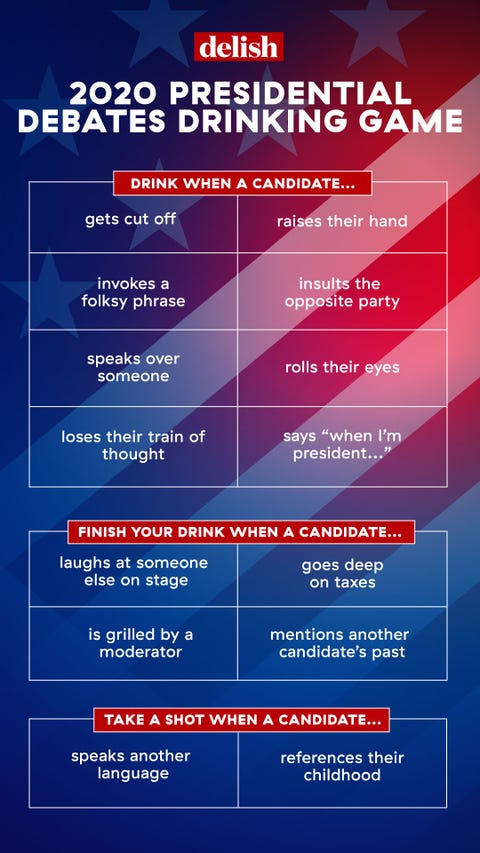
With that, it's time for a new drinking game. I begin with a meme from Delish.
This drinking game, in addition to being simple, has aged better than the others, even DebateDrinking.com, which hasn't been updated since December. Rolling Stone last updated its game in January. BTR at least has one for the last debate in New Hampshire, but I don't know how well it will work unless one substitutes New Hampshire for Iowa and Nevada for New Hampshire. Just the same, happy drinking!
Follow over the jump for the drink suggestions, which I've recycled. Of course I did; I'm an environmentalist.
President Donald Trump and Democratic presidential candidate Michael Bloomberg have each spent millions of dollars on TV ads for the 2020 Super Bowl. Chris Cillizza explains what this unprecedented ad buy means in the 2020 race.
I agree with Cilizza about the importance of these ads. While the Bloomberg ad does a good job of introducing him, which is an important function of political advertising, that's not its main purpose. Both Bloomberg's and Trump's ads show that the two campaigns have enough money to spend $10 million just to air during the Super Bowl without blinking. That's intimidating, although, it will definitely cause the more populist campaigns, such as those of Bernie Sanders and Elizabeth Warren, to react.
Morning Joe has an exclusive first look at 2020 Democratic candidate Michael Bloomberg's Super Bowl ad. Aired on 01/30/20.
Not only does this spot introduce Bloomberg, it showcases one of his signature issues, gun control. It also might help him with African-Americans, who aren't particularly keen with Bloomberg because of stop and frisk. That's one of the findings FiveThirtyEight reported in Bloomberg’s Super Tuesday Strategy Might Be Working.
Bloomberg has spent a lot of money on TV ads. In fact, he’s spent more than any other candidate running for president, including billionaire Tom Steyer, who’s also dropped a significant amount of money in some of these states. According to data from Kantar/Campaign Media Analysis Group, Bloomberg has spent an estimated $224 million on TV ad spots since entering the race, much of it concentrated in Super Tuesday states. In Texas, for instance, he has spent an estimated $24 million. And in all the Super Tuesday states combined, Bloomberg has spent about $91 million, which is four times more than what Steyer has spent (about $23 million) and more than 13 times what the rest of the Democratic candidates have spent — about $7 million. ... That money seems to be paying off in both the polls and the endorsement primary. Bloomberg is hardly the most popular candidate among party elites, but he has picked up some key endorsements in recent weeks: He now has the same number of endorsement points as Buttigieg. On Monday, Rep. Scott Peters from California voiced his support for Bloomberg, making that his fifth congressional endorsement. His endorsers are geographically diverse, too, which potentially indicates his strategy is successful in building a broad base of support.
As for who exactly makes up Bloomberg’s burgeoning base, it is mostly older, wealthier and more moderate Democratic voters. This is perhaps not that surprising, considering Bloomberg has consistently branded himself as an alternative moderate candidate. For instance, per a recent national Echelon Insights poll, Bloomberg was the second-most popular candidate for moderate or conservative likely Democratic primary voters, picking up 20 percent support. Only Biden, at 23 percent, picked up more support among these voters.
But there are also signs that Bloomberg might be able to attract more support among voters of color (who make up almost half of Democratic primary voters) and those without a college degree (about 38 percent of primary voters). In December, a national Monmouth University poll found that 3 percent of nonwhite Democratic voters said they supported Bloomberg. But that figure had grown to 8 percent in its January poll. The pollster also found Bloomberg’s support among voters without a college degree grew from 4 percent in December to 10 percent in January. Fox News and SurveyUSA polls also found signs of Bloomberg diversifying his base: Fox News’s latest poll shows a 5-point uptick in support among nonwhite Democratic primary voters (5 percent to 10 percent) and a 4-point bump (2 percent to 6 percent) among non-college educated white voters since December. SurveyUSA, meanwhile, found a 5-point gain among black voters (2 percent to 7 percent) and a 6-point gain among voters with just a high school diploma since late November.
With President Trump in office he is improving the lives of ALL Americans. Under President Trump, the economy is booming, historic tax cuts were passed, trade deals have been ren[e]gotiated, and African-American, Asian American, and Hispanic American unemployment are all at RECORD LOWS!
That caption looks like a slightly cleaned up version of one of Trump's tweets, complete with ALL CAPS and a typo. While I would be surprised if Bloomberg's spot earns a nomination for OutstandingCommercial at this fall's Emmy Awards, I'm absolutely sure Trump's won't. Then again, his campaign isn't interested in winning awards; it wants to win votes.
Happy NobelPrizeDay! I begin this year's observance the same way I did last year, with the winner of the Peace Prize. Watch DW News (Deutsche Welle or German Broadcasting) answer Nobel Peace Prize 2019: Who is Abiy Ahmed?
Ethiopian Prime Minister Abiy Ahmed has been announced as the winner of this prestigious award for his work to resolve the border conflict with neighboring Eritrea. Ahmed was up against around 300 nominees. The Norwegian Nobel Committee made the announcement in Oslo. Earlier this week, the Nobel prizes in the fields of Medicine, Physics, Chemistry and Literature were also awarded.
Congratulations to Prime Minister Ahmed and thanks to the Nobel Prize committee to get me to write about East Africa, a region I have generally and probably unjustly ignored.
Follow over the jump for the rest of the laureates.
The crowded field of U.S. Democratic presidential hopefuls added a new name this week, when former New York Mayor Michael Bloomberg officially joined the race on Sunday. VOA's Ardita Dunellari reports the 77-year old billionaire investor and philanthropist has name recognition and millions of dollars of his own fortune for campaign spending.
As Larry Sabato mentioned, Bloomberg has already spent $37 million on media buys within days of declaring his candidacy. That figure places him second in campaign media spending behind only Tom Steyer. CBS News pointed that out in Billionaires lead presidential candidates in ad spending.
2020 Democratic presidential candidates Tom Steyer and Michael Bloomberg, both multi-billionaires, are leading all of their competitors in ad spending with a combined total of nearly $90 million. President Trump is in third place for his reelection bid. Axios media reporter Sara Fischer joined CBSN to break down the data and explain what it means for the race to the White House.
Steyer was able to convince enough people in Iowa and New Hampshire to contribute money and pick him in polls to make the October andNovember Democratic debates, so maybe Bloomberg can raise his poll numbers up high enough to qualify. However, as I noted in SNL has fun with impeachment hearings and Democratic debate, he's not taking any donations, which means he won't qualify for debates as long as that's a criterion. Let's see how well that works out for him.