Showing posts with label Food Inc.. Show all posts

Thursday, January 8, 2026

New guidelines flip the food pyramid on its head


I'm switching from topical posts to evergreen and holiday entries today. PBS NewsHour explaining Why experts are divided over the new federal dietary guidelines is both topical and evergreen, so it makes for the perfect transition.

The Trump administration released new dietary guidelines that will shape everything from school lunches to medical advice. The guidance puts a bigger emphasis on eating more protein and dairy, something Health Secretary Kennedy has long sought. William Brangham discussed the recommendations with Lindsey Smith Taillie, a nutrition epidemiologist and co-director of the Global Food Research Program.
Hearing Lindsey Smith Taillie talk about ultraprocessed food reminds me that I have two questions about the topic in 'Food, Inc. 2' worksheet for National Food Day.

16. What in ultraprocessed foods drives appetites/overeating?
...
19. How much of U.S. calorie intake comes from ultraprocessed food? France? Brazil? Italy?


I haven't shown Food, Inc. 2 either enough times or that recently to have the answers to both questions memorized in detail, but generally the response to the first involves additives to make ultraprocessed food more appetizing while that for the second is that Americans get the majority of our calories from ultrprocessed food while citizens of the other countries eat much less, generally around a quarter. Americans should eat less ultraprocessed food and more whole foods. Yes, I'm agreeing with RFK Jr. on this issue. File that under a stuck clock being right twice a day, and RFK Jr. is definitely a stuck clock.

That's the good news about the food guidelines. The bad news is the recommendation to eat more meat and dairy. That's not good for either health or the environment. Here are the questions I ask my students about the effects of meat and dairy on the environment.

9. Why are dairy farms moving from Wisconsin to California and Arizona and what are the environmental costs, especially on water? Answer both parts of the question.
...
24. Which food contributes most to climate change?


Dairy production requires a lot of water, which is in short supply in California and Arizona, where dairy farmers are moving to because those states have lower non-water costs. As Smith Taillie mentioned, beef has very high environmental costs, including being the food that contributes most to climate change.

William Brangham mentioned that FDA loosened its guidence on alcohol consumption. That got the attention of Stephen Colbert and his writers in Rubio: U.S. Wants To Buy Greenland | Stealing Venezuela's Oil | Dr. Oz: Booze Brings People Together. Skip to 9:04.

The Secretary of State says America's goal is not to invade Greenland but to purchase it from Denmark, President Trump said he will sell 50 million barrels of Venezuela's oil and that he will determine where the profits go, and the FDA removed its own guidance on how much alcohol is safe to drink on a daily basis.
Ultraprocessed food, meat, and dairy may be more important, but booze is funnier. Why do my readers think I post so many cocktail recipes? Because they're fun; I actually drink very little, as I lost interest in alcohol once I developed diabetes. Priorities.

Speaking of priorities, I have to do some maintainence then go to work to prepare for the new semester. See you all tomorrow!

Sunday, November 16, 2025

Think about the fast food workers on National Fast Food Day

I twice promised times that I would examine the visual media GRAMMY nominees for today's Sunday entertainment feature, but it's taking too long. I'll finish and post it tomorrow. In the meantime, I'm sharing National Day Calendar's National Fast-Food Day | November 16.

While fast food began as sandwiches and sides, the menus expanded over time. Today fast food includes fish, a variety of fried chicken, tacos, pizza, and a wide selection of sides.

Sodas quench the thirst and desserts sweeten the menu. From ice cream and shakes to pies and cakes, fast food delivers.
Happy National Fast Food Day, but remember the relevant questions I asked in 'Food, Inc. 2' worksheet for National Food Day.

20. How long has the federal minimum wage been at $7.25 per hour?

Since 2009.

21. How much does the CEO of Yum Brands earn in an hour? How much does the average Taco Bell worker make in a year? Answer both questions.

I forget the exact amount, but the CEO of Yum Brands, the parent company of Taco Bell, Kentucky Fried Chicken, and Pizza Hut, makes slightly more in one hour than the average Taco Bell worker makes in a year, about $12,000.

22. Which two companies’ workers are the biggest users of food stamps and Medicaid?

One of them is McDonalds. The other is Walmart.

That's a wrap for today's food holiday, making four in a row. Stay tuned for Grammy nominees tomorrow.

Tuesday, June 17, 2025

'Buy Now! The Shopping Conspiracy' leads Outstanding Business and Economic Documentary nominees at the News & Doc Emmy Awards


As I promised yesterday, I'm covering Buy Now! The Shopping Conspiracy and the other nominees for Outstanding Business and Economic Documentary today. I begin with Buy Now! The Shopping Conspiracy | Official Trailer | Netflix.

Directed by Emmy-winning writer and filmmaker Nic Stacey, Buy Now! The Shopping Conspiracy pulls back the curtain on the world’s top brands, exposing the hidden tactics and covert strategies used to keep all of us locked in an endless cycle of buying—no matter the cost.
I've found yet another documentary I can recommend to my students. I can see applications of three of Commoner's Laws: "Everything must go somewhere (There is no away)," "There is no free lunch," and "Everything is connected to everything else." "Nature knows best?" Sorry, no. Still, welcome to blogging as professional development.  That will turn out to be a major theme of today's post.

Buy Now! The Shopping Conspiracy is the only nominee in this category with a second nomination, in this case for Graphic Design – Documentary, and the outstanding animation and special effects are all over this trailer. Also, other outlets have been paying attention to this documentary. YouTube's recommendation algorithm is showing me videos by CNN, CBS News, WGN News, and KCAL, and that's before I search for news reports on it. The TV news people are certainly aware of this nominee, and I'm taking that as a factor in favor of it winning. Remember, electorates matter and television journalists are part of the electorate for these awards. Between that and the 2,051,802 views plus 1,695 comments on the trailer, I'm considering Buy Now! The Shopping Conspiracy to be the favorite.

The first nominee in alphabetical order with only one nomination for Outstanding Business and Economic Documentary is Bitconned | Official Trailer | Netflix.

Ray Trapani had always wanted to be a criminal, even as a young boy. In 2017, amidst the economic frenzy of the Bitcoin boom, there was no better place for scammers than cryptocurrency. So when Ray's friend approached him with the idea of creating a debit card for crypto, Trapani jumped at the chance. There was only one problem: he had no idea how to do that. But thanks to fake LinkedIn profiles, paid celebrity endorsements, and the online community’s insatiable desire to "get rich quick," Centra Tech was soon raking in millions of dollars a day. Was it real? No. But did it work? Maybe. In this fast-paced, debaucherous documentary from director Bryan Storkel (Producer of The Legend of Cocaine Island + Director of The Pez Outlaw), Ray himself guides viewers through the ups and downs of his dramatic journey, alongside his family, former friends, and the journalist who exposed Centra Tech as the first high-profile fraud case of the crypto era.
This reminds me of McMillion$, an examination of an elaborate scam and the scammers behind it. It also shows the fine line between business and the economy on one side and crime and justice on the other. I'm not surprised the two intersected at cryptocurrency.

Next, Diane von Furstenberg: Woman in Charge | Trailer | Hulu.

The story of the iconic trailblazer known by her initials DVF worldwide. Child of a Holocaust survivor, Princess by marriage, and founder of a fashion brand. Featuring interviews with Oprah Winfrey, Marc Jacobs, Hillary Rodham Clinton and more. Watch Diane von Furstenberg: Woman in Charge on Hulu!
This looks fun and inspiring and is about glamorous and famous people. Those qualities would give it a leg up at the Creative Arts Emmy Awards, where the voters would look at Diane von Furstenberg and say "she's one of us." I'm not sure it will have the same effect on the journalists and documentarians here. Again, electorates matter.

I'm continuing with The Hobby - Official Trailer (2024) Card Collecting Documentary from IGN.

A McDonald’s Happy Meal shortage. A security guard escort. Guns pulled in a Target parking lot. All of these are caused by a common factor: trading cards. In 2020, a new BOOM began. For the first time, large hedge funds, celebrities like Logan Paul and Steve Aoki, nostalgic millennials, entrepreneurs like Josh Luber, and billionaires scrambled to add sports, Pokémon, and other hot item cards to their collections and portfolios. Over the next two years, the hobby exploded — even causing card grading services to shut down due to overwhelming customer service. This documentary is a character-driven feel good deep dive into the high-stakes, eccentric world of card collecting, following buyers, sellers, card shop owners, graders, online streamers, auctioneers, and more, who all participate in the hobby in their own unique ways.
This also looks like fun, but it shows that collecting is literally serious business. It also shows that the pandemic is still having lasting effects.

Now for a nominee that the image above lists twice by mistake, MoviePass, MovieCrash | Official Trailer May 29 MAX Documentary.

It was the greatest thing ever. Until it wasn’t.

#MoviePassMovieCrash goes behind the scenes to reveal the meteoric rise and stranger-than-fiction implosion of the theatrical movie subscription app. The @HBO Original Documentary premieres May 29 on @StreamOnMax.
If MoviePass were a retail company with brick-and-mortar locations, it would be a good subject for a Retail Apocalypse entry. It still makes for an engaging story of failure snatched from the jaws of success.

The final nominee in this category is Razing Liberty Square | Official Trailer | Independent Lens | PBS.

Liberty City, Miami, was home to one of the oldest segregated public housing projects in the U.S. Now with rising sea levels, the neighborhood’s higher ground has become something else: real estate gold. Wealthy property owners push inland to higher ground, creating a speculators’ market in the historically Black neighborhood previously ignored by developers and policy-makers alike.
Welcome to climate gentrification, which is having its strongest effect in Miami. This is another documentary I can recommend to my students for extra credit. Again, welcome to blogging as professional development.

Follow over the jump to see the trailers for the nominees competing against Buy Now! The Shopping Conspiracy for Outstanding Graphic Design – Documentary, a category I haven't covered until now.

Thursday, October 24, 2024

John Oliver on corn for National Food Day

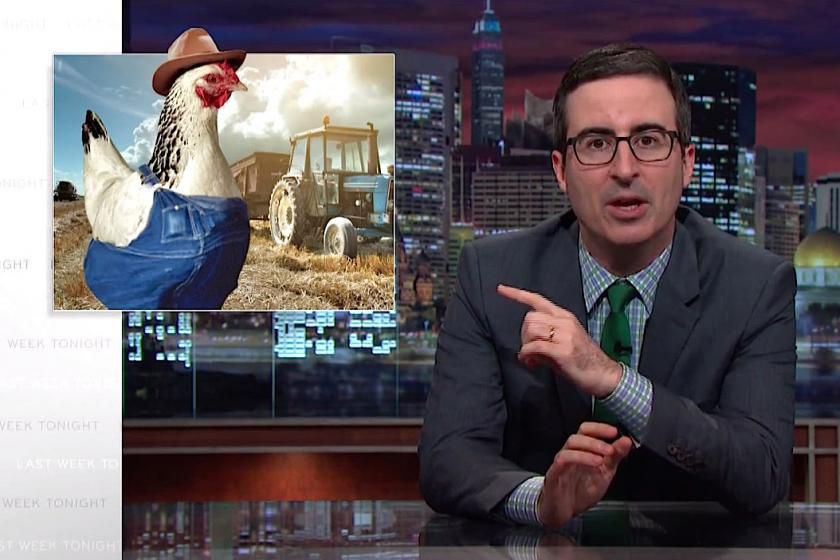
Happy National Food Day! I'm celebrating today by sharing Corn: Last Week Tonight with John Oliver (HBO).

John Oliver discusses the financial and environmental impact of corn in the U.S., and whether or not he really knows what Pearl Harbor is.
I chose this video in part because this episode is nominated for Variety Series at the Environmental Media Association (EMA) Awards. It's between Last Week Tonight with John Oliver and Real Time with Bill Maher. I'm rooting for Oliver over Maher, but both are HBO series, so HBO wins no matter what.

I also picked this because corn has been a major topic of my National Food Day series, going back ten years to 2014's Corn questions from 'Food, Inc.' worksheet and most recently in My students are watching 'King Corn' for extra credit on National Food Day 2020. Oliver used clips from King Corn in this segment.

Normally, I'd answer the corn questions from the Food, Inc. worksheet, but I did that ten years ago, so I'm not doing it again. Instead, I tell my students that corn, along with E. coli, can be used for examples of three of Commoner's Laws, everything is connected to everything else, there is no such thing as a free lunch, and everything must go somewhere. Excess fertilizer washing off of corn fields causing dead zones works for all three.

While I've been skeptical about corn for fuel since the first year of the blog, I'm even more doubtful about it now. Seeing that it is the number one use of dense corn, although not the majority, is something I suspected but now know for sure. That's a statistic I can tell my students. Also, I did not know that growing corn for fuel has a larger carbon footprint than the equivalent amount of gasoline. It's a good day when I learn something new, and that makes today a good day, even if it's about something bad for the environment.

That concludes today's holiday entry. Stay tuned as I return to spooky season all the way to Day of the Dead.

Tuesday, October 24, 2023

Vox examines hog farming's poop problem for National Food Day

Happy National Food Day! As I wrote in 'Last Week Tonight with John Oliver' on food safety for World Food Day, "I still plan on observing the day next week with the third video in the series that began with Vox explains how 4 companies control the beef industry for a late National Food Day and continued with Vox explains 'The chicken industry’s worker safety problem' for Food Day 2022." Here's the video, Hog farming has a massive poop problem.

Inside North Carolina’s search for solutions for its thousands of pig manure lagoons.
...
For this third episode of our video series with Vox’s Future Perfect team, we went to North Carolina, a state that for decades has been a battleground over the public health impact of hog farming.
I'll repeat some of what I wrote last week as my response.
I just watched Food, Inc. with my class last week and some of questions on the worksheet pertain to Oliver's video.

12. What is a CAFO?

A concentrated animal feeding operation.

13. How did the feeding of corn to cattle along with other raising and slaughtering practices lead to evolution and spread of a dangerous strain of E. coli?

I answered the first part of this question in Corn questions from 'Food, Inc.' worksheet: "Corn makes cattle stomachs acidic, which promotes strains of E. coli that are pathogens in humans. These strains can then survive passage through human stomachs." The video shows the second part; cattle finish their growth in crowded conditions on CAFOs that allow pathogens to spread from animal to animal. The pathogens, particularly E. coli, can then enter water supplies and pass into vegetables.
The last part, and more, is true of the emissions from manure lagoons and spray-fields, which pose an environmental justice issue.

This video also provides examples of Commoner's Laws, everything must go somewhere, everything is connected to everything else, there is no free lunch, and nature knows best. The poop has to be disposed of, but it gets into the air and water and affects people's health. That's a not-so-hidden cost of cheap meat. The solution to derive energy from the manure, which reduces methane and some of the odors, connects "there is no waste in nature" with nature knows best. I wrote more extensively about how that works in Paean to the power of poop, a Squirrel Case entry. Too bad it does nothing about the other problems like nitrogen and phosphorus. Sigh.

Stay tuned for a full week of Halloween posts. Spooky season!

Monday, October 16, 2023

'Last Week Tonight with John Oliver' on food safety for World Food Day

Happy World Food Day!* I have just the video clip for today, Food Safety: Last Week Tonight with John Oliver, which was uploaded in the wee hours of the morning. Perfect timing!

John Oliver discusses the groups in charge of keeping our food safe – from the FDA, to the USDA, to, most crucially, the Association for Dressings and Sauces.
I just watched Food, Inc. with my class last week and some of questions on the worksheet pertain to Oliver's video.

12. What is a CAFO?

A concentrated animal feeding operation.

13. How did the feeding of corn to cattle along with other raising and slaughtering practices lead to evolution and spread of a dangerous strain of E. coli?

I answered the first part of this question in Corn questions from 'Food, Inc.' worksheet: "Corn makes cattle stomachs acidic, which promotes strains of E. coli that are pathogens in humans. These strains can then survive passage through human stomachs." The video shows the second part; cattle finish their growth in crowded conditions on CAFOs that allow pathogens to spread from animal to animal. The pathogens, particularly E. coli, can then enter water supplies and pass into vegetables.

14. What effects has the spread of hemorrhagic E. coli had on the food supply? List at least three examples.

In addition to the incident at Jack-in-the-Box, where I worked in the late 1970s, the film mentioned peanut butter and leafy greens, both of which John Oliver also described. Some things haven't changed since Food, Inc.'s release 15 years ago. That's why I still show the documentary to my students.

15. Summarize the story of Kevin Kowalcyk and Kevin’s Bill.

I'll let Wikipedia do that for me.
Kevin's Law (as referred to in Representative Anna Eshoo's introduction of the law in 2005 and in the 2008 documentary Food, Inc.; formally known as the Meat and Poultry Pathogen Reduction and Enforcement Act of 2003, H.R. 2203) was proposed legislation that would have given the United States Department of Agriculture the power to close down plants that produce contaminated meat.[1]

Kevin's Law was nicknamed in memory of two-year-old Kevin Kowalcyk of Colorado, who died in 2001 after developing hemolytic-uremic syndrome due to eating a hamburger contaminated with E. coli O157:H7.

The bill was reintroduced by Rep. Anna G. Eshoo, D-Palo Alto, as H.R. 3160, in the 109th Congress.[2][3] This bill never became law, as it was referred to committee but never reported on.

In 2011, President Barack Obama signed into law the FDA Food Safety Modernization Act (FSMA), introduced by Rep. Betty Sutton. The FSMA contains key elements of Kevin's Law.
So some of Kevin's Law has been enacted. That's good news, which I can tell my students. The bad news is that some key provisions were not included in the FDA Food Safety Modernization Act and the FDA is still underfunded, to say nothing of the FDA's glacial bureaucratic organizational culture. Congress could take care of that by funding the agency and reorganizing it.

By the way, not only can I recommend this video to my students, I can recommend Poisoned: The Dirty Truth About Your Food to them as well. Welcome to blogging as professional development.

*I normally wait until National Food Day to post an entry like this, but I didn't feel like waiting. Don't worry, I still plan on observing the day next week with the third video in the series that began with Vox explains how 4 companies control the beef industry for a late National Food Day and continued with Vox explains 'The chicken industry’s worker safety problem' for Food Day 2022. Stay tuned.

Monday, October 24, 2022

Vox explains 'The chicken industry’s worker safety problem' for Food Day 2022

Happy National Food Day! For this year's celebration, I'm following up on last year's Vox explains how 4 companies control the beef industry for a late National Food Day with the next video in the series, The chicken industry’s worker safety problem.

There's a human cost to factory-processed chicken.
...
In the 1960s, the US began a love affair with chicken, and poultry workers paid the cost. Over the past few decades, poultry processing line speeds have increased to meet demand. But that’s happened in tandem with the decline of unions and deregulation of the industry. The result is a high rate of workplace injuries and repetitive motion disorders, with gaps in workplace safety oversight.
...
This is the second episode in a series of three by producer Laura Bult and Vox’s Future Perfect team, which explores big problems and the big ideas to solve them. This series explores the human cost of the meat industry.
I already covered chicken raising in John Oliver and 'Food, Inc.' explain chicken farming, so I'm moving on to the question about working conditions in meatpacking. One of the questions I covered in Joel Salatin from 'Food, Inc.' for Food Day sets up the question and answer.
21. What ethical effects does he think the treatment of pigs as “a pile of protoplasmic material” would have on the treatment of people and other countries?

He thinks the people who do not respect "the pigness of the pig," will treat other people and other countries in the community of nations as disdainfully as they do the pigs and will try to control them the same way. The film then jumps to a segment about Smithfield Farms that supports Salatin's contention.
The next question asks "Does the portrayal of the working and living conditions of the Smithfield meatpackers support the opinion of the owner of Polyface Farms that you described in question 21?" The answer is yes. The video shows the same is true of the workers processing chickens. Remember, there is no such thing as a free lunch.

One of the things that occurred to me when the video described how the USDA regulated the line speed in the plant for food safety but OSHA could not for worker safety was Upton Sinclair's remark about how he aimed for the heart when he wrote "The Jungle" but hit the stomach instead. I appreciated Laura Bult using that as a postscript for this episode. It really shows what Americans value.

That's it for Food Day and "Food, Inc." Stay tuned as I go all Halloween from now to the end of the month.

Monday, October 25, 2021

Vox explains how 4 companies control the beef industry for a late National Food Day

I foreshadowed the subject for National Food Day in Cyberattack on meat processor JBS shows how the food supply is a national security issue.
National Farmers Union President Rob Larew made a point that Food, Inc. makes about industrial agriculture; food processing has become too centralized and concentrated for the good of farmers, workers, and consumers and a more diverse food system would serve them better. To get students to think about that, I ask them "In 1970, how much of the beef market was controlled by the top beef packers? In 2010?" The answers show how much meat packing has consolidated during those 40 years.
In 1970, the top five meat packers controlled 25% of the beef supply. In 2010, the top four controlled 80%.
"Food, Inc." focused on how this concentration of power led to abuses of workers and outbreaks of food-borne diseases and could lead to disruptions of the food supply from market forces.
Vox shows how the consolidation has only increased in How 4 companies control the beef industry and has made the situation even worse for farmers.

Corporate consolidation is making it impossible for cattle ranchers to stay afloat.
...
Cattle auctions happen every day throughout the US; they serve a crucial purpose for the cattle markets. Inside one of these auctions, like the one we profile in St. Onge, South Dakota, you can see how a competitive market functions. There are multiple producers and buyers competing for a commodity, which results in a value, or price, for that commodity.

But over the past 40 years, the meatpacking sector — made up of the companies that buy and slaughter cattle for consumption — has undergone a dramatic degree of corporate consolidation. In the 1980s, the US relaxed its approach to antitrust enforcement, one tool the government uses to rein in market concentration. Today, only four companies process 85 percent of all the cattle produced in the US.

Cattle ranchers say this is affecting their ability to compete for good prices and make a living. This is one way industrialized agriculture is making it difficult for independent farmers and ranchers to stay in business in America.
This is approaching the state of chicken farming, where the processors have total control over the animals and near total control over the farmers. That may be good for consumers in the short run, but it will likely drive independent farmers out of business, setting up the chicken model for beef. I don't know if that will be good for anyone but the meatpackers in the long run.

That's it for this year's exploration of "Food, Inc." for Food Day. Stay tuned as I go all Halloween from now to the end of the month.

Wednesday, June 2, 2021

Cyberattack on meat processor JBS shows how the food supply is a national security issue

It's bad enough when the pandemic and market responses create supply chain disruptions as I documented for the microchip supply chain for autos and appliances. It's worse when criminals disrupt supply chains as Russian hackers using ransomware shut down the Colonial Pipeline did last month. That happened again, this time to the food supply, which CNBC reported yesterday in Cyber attack hits world’s largest meat processor in North America and Australia.

CNBC's Eamon Javers reports on the latest details from the cyberattack on JBS, the world's largest meat supplier.
The food supply has now become a 21st Century crime scene and a national security issue. Lovely.

Follow over the jump for coverage of this story on the morning news shows.

Wednesday, December 16, 2020

John Oliver on fast fashion — Student Sustainability Video Festival 83

I have a lot of real world work to do between correcting assignments and exams and Coffee Party business (no, I'm not traveling because of the COVID-19 pandemic; we're conducting it by Zoom), so I'm returning to my go to series when I'm doing one or the other and in this case, both, the Student Sustainability Video Festival, where I share the videos my Environmental Science students used in their presentations.

Today's featured video is Fashion: Last Week Tonight with John Oliver, in which Oliver explores the the social and environmental externalities of fast fashion.

Trendy clothes are cheaper than ever. That sounds great for the people who buy them, but it's horrible for the people who make them.
I found Oliver's comparison of cheap clothes to cheap food both hilarious and particularly apt. It's similar to one that Joel Salatin makes in "Food, Inc." where he asks if people want to buy the cheapest car. My answer is only if they can't afford something better. The same with food. Maybe people should think the same of clothes.

For what it's worth, selling fast fashion didn't save Forever 21 from falling into bankruptcy. However, that probably won't change Americans' clothes buying habits. As I wrote in Forever 21 is facing bankruptcy, a tale of the Retail Apocalypse.
As an environmentalist, I probably should be more opposed to fast fashion than I am; as Newsweek reported three years ago, Fast Fashion Is Creating an Environmental Crisis.
Americans are blithely trashing more clothes than ever. In less than 20 years, the volume of clothing Americans toss each year has doubled from 7 million to 14 million tons, or an astounding 80 pounds per person. The EPA estimates that diverting all of those often-toxic trashed textiles into a recycling program would be the environmental equivalent of taking 7.3 million cars and their carbon dioxide emissions off the road.
Yikes! On the one hand, replacing Forever 21 with a clothing outlet that produces more sustainable clothing would be an improvement. On the other, that's not likely to happen. Instead, until Americans, especially young women, change their fashion tastes, they will just buy fast fashion online and more malls will be stuck with empty anchors and other stores, creating more dead mall[s]. Sigh.
This doesn't even include all the social costs that Oliver documented in his video, which are also considered part of sustainability.

Wow, the whole point of this series is to post something that doesn't require a lot of analysis and writing. I guess I had more to say about the subject than I thought when I chose it!

Saturday, October 24, 2020

My students are watching 'King Corn' for extra credit on National Food Day 2020


Happy National Food Day! For this year's celebration, I am taking a break from my five year project of blogging about "Food, Inc." on this day. It's only a slight break, as I am instead writing about a movie my students have been able to use for extra credit in addition to the assignment on "Food, Inc.," "King Corn."

I created the worksheet below because the YouTube uploads of "Food, Inc." I have used for my students while they take my courses remotely were blocked in the U.S., something I expected would happen eventually. However, the upload of "King Corn" remained, so I used two existing worksheets for inspiration, rewriting some of the questions and substituting my own for the rest to cover topics I found more important. As soon as I completed it, I found a new upload of "Food, Inc." at watchdocumentaries.com that I could use, so I didn't have to change the assignment or the test questions based on it (The site also has a upload of Chasing Ice so I can continue using that film as well as long as the pandemic persists). Still, I'm an environmentalist, so I won't waste what I made. I substituted the "King Corn" worksheet below for the original extra credit opportunity, a one-page essay worth 8 points. The students have a structured assignment worth two more points out of all this!

Enough introduction. Here's the assignment.

KING CORN

In this lab session, you will watch King Corn (Available on Amazon. If you don't have Amazon, there is an uploaded version on YouTube), the Peabody Award winning 2007 movie directed by Aaron Woolf about best friends Ian Cheney and Curt Ellis and what they learned about the food system when they returned to the small Iowa town where two of their great-grandfathers lived to grow corn. As you watch the movie, answer the questions beginning on the next page. After the video is over, find the best examples you saw from the show of each of the five concepts below and write them in the blanks on this page. You must answer all questions, including the ones on this page, for the full ten points. The five questions below are worth one point total. Questions 1-18 are worth nine points total, one-half-point each.

A value expressed and a decision made based on that value.
____________________________________________________________________________________________________________________________

Everything is connected to everything else.
____________________________________________________________________________________________________________________________

There is no such thing as a free lunch.
____________________________________________________________________________________________________________________________

Everything must go somewhere.
____________________________________________________________________________________________________________________________

Nature knows best.
____________________________________________________________________________________________________________________________

Program description from IMDB: King Corn is a feature documentary about two friends, one acre of corn, and the subsidized crop that drives our fast-food nation. In King Corn, Ian Cheney and Curt Ellis, best friends from college on the east coast, move to the heartland to learn where their food comes from. With the help of friendly neighbors, genetically modified seeds, and powerful herbicides, they plant and grow a bumper crop of America's most-productive, most-subsidized grain on one acre of Iowa soil. But when they try to follow their pile of corn into the food system, what they find raises troubling questions about how we eat-and how we farm.

(Follow over the jump for the rest of the worksheet.)

Thursday, October 24, 2019

Diabetes and the dollar menu from 'Food, Inc.' for Food Day


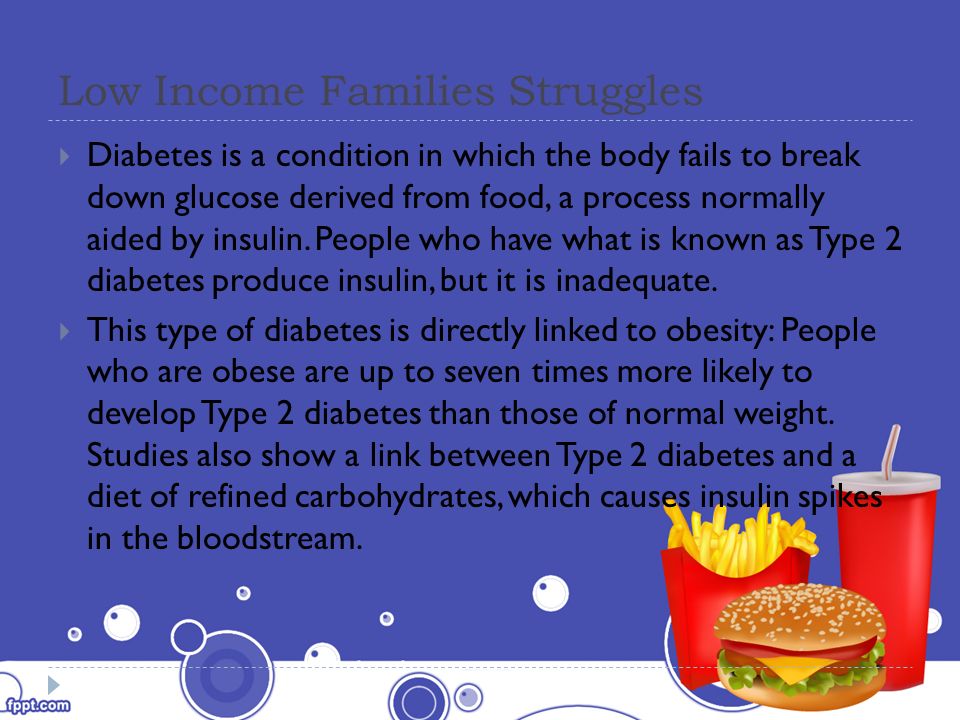
A Happy Food Day, the theme of which is "eat real" by "cutting back on sugar drinks, overly salted packaged foods and fatty, factory-farmed meats in favor of vegetables, fruits, whole grains and sustainably raised protein."  As I have for the last four years, I am observing the day here on my blog by discussing the worksheet my students fill out while watching "Food, Inc."  This year's topic is the relationship between cheap and fast food and diabetes.  Watch The Dollar Menu.


Now the relevant question from the worksheet.

17. What dilemma does the Gonzales family face when balancing money and food?

First, it's cheaper to eat fast food and snack food than it is to eat fresh fruits and vegetables because of subsidies.  That's a topic I explore in Corn questions from 'Food, Inc.' worksheet.  Second, the Gonzales family either has enough money to pay for the medicines for the father's diabetes or healthy food to prevent diabetes, not both.  That's a dilemma.

The clip above ends before the film shows the answer to the next question, but not before I tell my students to watch the hands of the students answering the question about how many people with diabetes do they know.  I'm still amazed how many of them know three members of their family with type II diabetes.

18. What fraction of all American children born after 2000 has been predicted to come down with Type II diabetes during their lifetime?  What fraction of minority children (from caption)?

The answer is one in three for all Americans born after 2000 (the oldest of whom are no longer children and some of whom are already my students), one in two for minorities.  Wow.  People say misery loves company, but I would rather not have more people share my condition, even if I'm a Type I diabetic, not a Type II.  It takes work and discipline to stay alive and healthy to say nothing about money and good insurance.  I'm glad I have all of these and I know not everyone does, including the Gonzales family.

Once again, Happy Food Day and eat healthy!

Wednesday, October 24, 2018

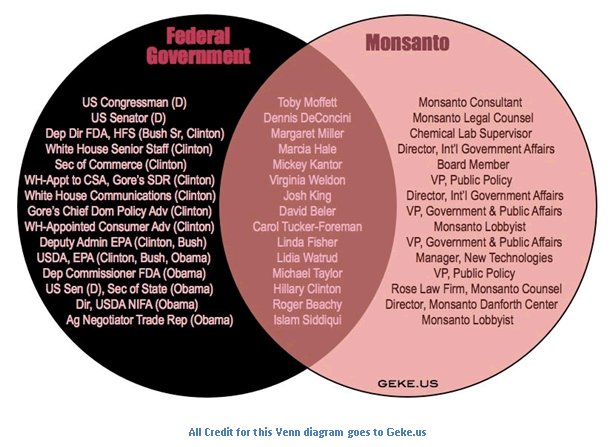
The revolving door between Monsanto and government for Food Day 2018


A Happy Food Day to my readers!  To celebrate the day, I am returning to what I wrote in last year's Joel Salatin from 'Food, Inc.' for Food Day: "Today, I'm continuing what I did last year in For Food Day, a guide to entries with answers to 'Food, Inc.' by discussing the worksheet for 'Food, Inc.'"

This year, I'm revisiting the questions I asked and the answers I gave in Monsanto wins gene patent case.
26. What has Monsanto done to promote use of their soybeans and stop seed saving?  List at least three examples.
...
Part of the answer to 26 is sue people who violate Monsanto's patents.
That wasn't enough of an answer.  A more complete one is that Monsanto has patented their seeds and enforced the patent by having a hotline to report violator of their patent, sending investigators out to determine responsibility, having a blacklist of growers who can't buy their seeds for not complying, and suing growers and seed cleaners.
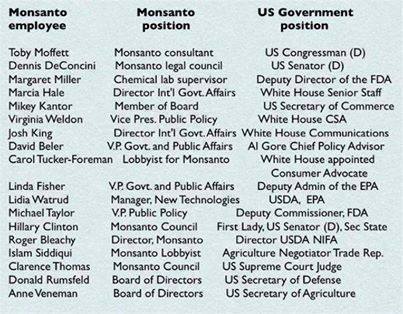
27. List at least five government officials who were connected to Monsanto and other food producers.  What effect does the narrator think this has had on regulation of food production?
...
One of the people who traveled through the revolving door between Monsanto and the government is Supreme Court Justice Clarence Thomas, who wrote the decision allowing Monsanto to patent GMOs.

Justice Thomas is just one government official.  The image at the top that I used to start this entry lists more.  Here is another that adds to the list.


In addition to Justice Thomas, the others I recall being mentioned are Margaret Miller, Mickey Kantor, Linda Fisher, Michael Taylor, and Donald Rumsfeld.  Of all of them, the one that struck me as most emblematic of the revolving door between government and industry was Michael Taylor.


The man has made gone through the revolving door four times, going all the way around twice!

By the way, the revolving door continues to turn, as the St. Louis Post-Dispatch reported yesterday Trump taps ex-Monsanto executive to lead wildlife agency.
President Donald Trump says he is nominating a former executive at agribusiness giant Monsanto to head the Fish and Wildlife Service.

Aurelia Skipwith of Indiana is currently deputy assistant Interior secretary for fish, wildlife and parks.

A biologist and lawyer, Skipwith spent more than six years at Monsanto and has worked at the Agriculture Department and U.S. Agency for International Development.
At least Skipwith isn't going to be overseeing regulation of our food.  With that, Happy Food Day!

Tuesday, October 24, 2017

Joel Salatin from 'Food, Inc.' for Food Day


A Happy Food Day to my readers!  Today, I'm continuing what I did last year in For Food Day, a guide to entries with answers to 'Food, Inc.' by discussing the worksheet for "Food, Inc."

When I showed "Food, Inc." to my students last week, I asked them which questions they had the must difficulty answering.  The ones that stumped them that I hadn't already answered involved Joel Salatin, owner and operator of Polyface Farms.  I can understand that.  The man has a complex and effusive way of speaking that throws out a lot of concepts in a short period of time.  It doesn't help that he also misuses words.  He says "spacious" instead of "specious" and "mystique" instead of "illusion."   The irony is that he has an English degree.

Watch Sustainable Solutions to Food Production, which puts together two of the three segments in which Salatin appears, then follow along as I use it to answer the questions below.

Is this the smartest man in the USA, or just a farmer with common sense? Please check out the documentary film "Food Inc.", and read Fast Food Nation. You deserve to know what you're eating. Note: for those who may be squeamish, please realise that the chicken you eat is no longer alive. This is a humane and relatively painless way of killing the animal.
Now time for the questions.

19. How does Joel Salatin, owner-operator of Polyface Farms, describe the advantages and disadvantages of industrial agriculture?

The advantages, which Salatin breezes through sarcastically, are that industrial agriculture grows food "bigger, fatter, faster, cheaper."  That's exactly what industrial agriculture is supposed to do.  The disadvantages are that it creates a lot of inefficiencies and externalities and removes the people who make decisions from the consequences of their decisions.  As a result, "no one is thinking about E. coli, Type II diabetes, and the ecological health of the whole system."  This also serves as an example of "There is no such thing as a free lunch," although there are better examples elsewhere in the movie.


20.What advantages does he give for his methods of organic farming?  He’ll explain more after you watch the material for questions 21-23.

Salatin describes how his pasture raised cattle handle food and waste a lot more efficiently than cattle on feedlots.  Salatin does not have to pay for the food and he does not have to pay to dispose of the manure.  Instead, the natural way of doing thing takes care of both.  As I sometimes tell my students, he manages to screw up a perfectly good explanation of "Nature knows best."

21. What ethical effects does he think the treatment of pigs as “a pile of protoplasmic material” would have on the treatment of people and other countries?

He thinks the people who do not respect "the pigness of the pig," will treat other people and other countries in the community of nations as disdainfully as they do the pigs and will try to control them the same way.  The film then jumps to a segment about Smithfield Farms that supports Salatin's contention.

24.How do the views of the owner of Polyface Farms and that of the former owner of Stonyfield Farm differ when it comes to growth and selling to Wal-Mart?

Salatin says he absolutely won't sell to Wal-Mart.  He thinks he will lose his integrity if he does, as he'll have to change what he thinks about his business, his product, and his customers.  On the other hand, Gary Hirshberg of Stonyfield Farms thinks he absolutely has to sell to Wal-Mart for his ideas to have any effect.  Watch him in Food, Inc. – Walmart's Going Organic.

What AN INCONVENIENT TRUTH was to the energy industry, Robert Kenner’s Academy Award-nominated documentary is to big agriculture. Based on Michael Pollan’s bestselling book of the same name, FOOD INC. examines the outrageously unhealthy practices of corporations like Monsanto and Perdue, exposing how little we really know about what we put on our plates. A must-see for proponents of sustainable and organic farming movements and anyone concerned about the future of our planet.
Both Salatin's refusal and Hirshberg's eager collaboration are examples of "A value expressed and a decision made based on that value."  It's a contrast I set up early in the semester, when I use Salatin as an example of someone who follows an ecological economics model and Hirshberg as someone who follows an environmental economics model.  Both agree about the importance of sustainability in economics, but they disagree about how to achieve it.  Salatin is setting up his own food distribution system, while Hirshberg is trying to reform the existing one.  I'm on Hirshberg's side; if the system can be improved, then it should be.  At least Salatin isn't doing what James Howard Kunstler advocates -- letting the system collapse first and hoping that something more sustainable will grow out of the wreckage.

That's it for today's observation of Food Day.  Stay tuned for a report on "The Rachel Maddow Show" winning two News and Documentary Emmy Awards, one for its coverage of the Flint Water Crisis.

Monday, October 24, 2016

For Food Day, a guide to entries with answers to 'Food, Inc.'


A Happy Food Day to my readers!  To celebrate the occasion, which is also my wedding anniversary, I revisit my motivation for writing Cracked on the Food Pyramid--"I'm showing Food, Inc. to my students this week."  I continued by writing "I'll have more to say about the movie on Monday," which elicited the following comment from Infidel753.
I'll be looking forward to that. It figures the official recommendations about food would reflect lobbying and food-industry profits more than actual nutrition.
My response was brief.
Thanks for your anticipation. It means I'll be sure to have something interesting to say. And, yes, it figures.
Before I try to fulfill that promise, I'm listing what I've already covered about the movie to produce a guide to entries with answers, much as I've done for "The End of Suburbia" and "An Inconvenient Truth."  That may not be an interesting thing to do for Infidel753, but it will certainly be helpful to my students.
It looks like I have more answers available to my students on my blog than I thought!  Even so, there is still room for one more answer today.


2. For which agricultural products is McDonalds the largest or one of the largest customers?  List at least five.

The slide above listed four.  CBC has a more complete list in How McDonald's has shaped the food biz.
With 36,000 restaurants in 119 countries serving 69 million customers a day, it's an accepted fact that McDonald's holds enormous sway over consumers' eating habits, food production and prices.

McDonald's is now the biggest purchaser in the world of beef, pork, potatoes, lettuce and tomatoes, and the second-biggest buyer of chicken, after KFC.

When it decided to add apple slices to Happy Meals a few years ago, the company quickly became the biggest buyer of the shiny red fruit in the United States.

Analysts expect the chain to soon become a power in kale as well, if its tests with the leafy vegetable – reportedly under way in Canada – are successful.

Indeed, every tweak to its menu has a butterfly effect, sending ripples that reverberate all the way to the dinner table, from the price of your meal to how it gets to your plate.
When my students ask about how McDonalds became a major purchaser of apples, I usually cite their apple pies.  Now I'll be sure to add apple slices in Happy Meals to the explanation.  Welcome to blogging as professional development!

Thursday, October 20, 2016

Cracked on the Food Pyramid


Last night was the final debate, but I'm going to wait until tomorrow to respond; I'll have more time and Keith Olbermann will have posted his reaction.  Instead, I'm posting the following video from Cracked: The Terrible Truth Behind The Food Pyramid.  Consider it a preview for next Monday, which is Food Day.

Pretty much everything you learned as a child is a lie.
In case you're wondering what prompted me to post this, I'm showing Food, Inc. to my students this week.  I'll have more to say about the movie on Monday.

Friday, August 19, 2016

Popular entries from the back catalog for the fifth year of Crazy Eddie's Motie News


Last month, I teased that "I have only one more entry left, a look at how entries posted before March 21, 2014 2015 fared last year."  It turned I wasn't ready to do post it until I finished the monthly metas for March and January, the latter of which told my readers to "Stay tuned for the final installment of the annual retrospective tomorrow."  It's tomorrow and also Flashback Friday, the perfect day to fulfill my promise and finish this series.


The highest ranking entry from the back catalog as of March 20, 2016 was Eye spy the gas price rollercoaster about to coast down like a parachute from September 2, 2012, which was in fifth place on the all-time top ten with 1988 page views, 2936 according to the raw counter.  Those numbers were a sign of stagnation compared to  March 20, 2015.
The most read entry for the history of the blog according to the default counter as of March 21, 2015 and still the current number one is Eye spy the gas price rollercoaster about to coast down like a parachute, posted on September 2, 2012 with 1988 page views, which it still has now.  The post currently has 2916 according to the raw counter.  This entry was not among the top 20 for the second year of the blog on March 20, 2013, and not among the default top ten as of March 20, 2014.  It began its rise during the second half of 2014, when gas prices began their long, deep slide from $3.50 to just under $2.00 and a lot of web searches retrieved it as one of the results.  The entry was in the monthly top ten for six months running during that time period, enough to move it from not on the list to the top of the leader board.  Amazing how a change in economic conditions can revive the fortunes of an old post.
Since last year, it gained not a single view according to the default counter and only 20 according to the raw counter while falling four places.  It continued its slide the past five months, finally being displaced by John Oliver on feelings over facts and Colbert on Trumpiness earlier this month, but that's really a story for next year.

Follow over the jump for what happened to the rest of the back catalog last year.
   

Saturday, October 24, 2015

John Oliver and 'Food, Inc.' explain chicken farming


A Happy Food Day to my readers!  This year, I'm blogging about the movie Food, Inc. to celebrate, just as I did in 2013.  Today, I'm answering questions about chicken farming from the "Food, Inc." worksheet, which my students worked on this week, the way I answered questions about corn and energy.  Follow over the jump for those as well as a video from "Last Week Tonight by John Oliver" on the indignities of contract chicken growing.

Tuesday, July 21, 2015

"We eat a lot of oil"


I'm showing "The End of Suburbia" to my students this week, which means it's time to update the Guide to entries that contain answers to "The End of Suburbia."  For this semester, I'm following through on a promise I made in a comment on the latter entry last semester.
I need to write about fossil fuel use in agriculture, a topic covered by Questions 14-16 for "The End of Suburbia" and Question 28 for "Food, Inc." Stay tuned.
Follow over the jump for the four questions and the answers in the same style as Corn questions from 'Food, Inc.' worksheet.