Showing posts with label The Verge. Show all posts

Thursday, May 29, 2025

PBS NewsHour explains 'How Meta's blockbuster antitrust trial could have major implications for big tech' — a Throwback Thursday special

Happy Throwback Thursday! I'm returning to what I wrote in BBC News asks 'Will Bluesky be able to rival X or Twitter?' A Wayback Wednesday special, "I plan on getting to Zuckerberg and Meta's legal fight with the Federal Trade Commission (FTC) on Flashback Friday, when I finish this series with the blog's year on Instagram and Threads." I wrote Howtown asks 'How accurate was the Covid death count?' A Flashback Friday pandemic update instead, so I'm covering the case today.* I begin with PBS NewsHour explaining How Meta's blockbuster antitrust trial could have major implications for big tech.

A blockbuster antitrust trial between Meta and the Federal Trade Commission is underway. The government alleges the company monopolized the social media market when it purchased Instagram and WhatsApp. The trial could have major implications for big tech. Stephanie Sy discussed the case with Rebecca Allensworth, a law professor at Vanderbilt University.
That was in April. The trial is still going on, so I turn to The Verge for an update in Inside the Meta monopoly trial | The Vergecast, uploaded two days ago.

After more than a month of testimony, the Meta antirust trial is beginning to slow down. The Google search remedies trial, meanwhile, is about to heat up again, with closing arguments coming soon. The Verge’s Lauren Feiner has been in the DC courthouse for all of it, and has finally emerged to tell us about what she’s seen, and learned, from two all-important monopoly trials. After that, The Verge’s Victoria Song tells us about her latest experience with Google’s smart glasses prototypes, what Google is doing differently from Meta and Apple, and what she thinks Jony Ive and OpenAI might be building. Finally, we answer a question on the Vergecast Hotline about what to do now that Mozilla is shutting down Pocket.
I don't use WhatsApp, but I do use Instagram and X competitor Threads. The latter two are tied so closely together that I have a hard time seeing how the two would be separated without imparing Threads, even though Threads doesn't seem to be an issue in this case by itself. I might be wrong, but I don't know how. In any event, this trial will last long enough, short of a surprise settlement, that Tech Policy has scheduled FTC v. Meta: Takeaways from A Landmark Trial for June 26th. That will make for a post that I can share in July. Wowzers!

Follow over the jump for a retrospective of the blog's year on Instagram and Threads, which will complete this series.

Sunday, January 15, 2023

The science of gas stoves from Verge Science, PBS Digital's Reactions, and the Los Angeles Times

For today's Sunday entertainment feature, I'm going off on a tangent inspired by Meyers and Colbert take closer looks at the Republican House majority, where the subject line of Stephen Colbert's monologue asked "Will Gas Stoves Be Banned?" and the response in the video description was "Stephen is not interested in switching to an electric stove." That piqued my curiosity about this hot topic, pun intended, so I turned to Verge Science asking Is it time to say goodbye to the gas stove?

The debate over which stove to use is moving beyond our kitchens, and into our energy grid. More and more research is showing that natural gas is not the harmless energy source it was once thought to be. As some cities are taking action in the race to reduce emissions, the natural gas industry is fighting back. The last big battleground? Our stovetops.
In addition to examining methane emissions, Verge Science talks a lot about the other greenhouse effects of methane and of burning it for heat, which still produces carbon dioxide, just less than other fossil fuels. It also predicted the current controversy over gas stoves and ranges in April 1, 2021 almost two years ago. That's no joke!

Verge Science gave short shrift to gas stoves and ranges as sources of indoor air pollution and the health problems it causes, but PBS Digital's Reactions made that the main subject of Your Gas Stove is Polluting Your Home.

Most people absolutely love their gas stoves and prefer them to electric. But these gas ranges are polluting our homes.
Yikes! I have written once that I'm an asthmatic, but I never thought much about why I developed the condition until now. Since I grew up in a house that used gas for heating and cooking, I suspect that may have had something to do with it. It's always a good day when I learn something, even when it's as bad as this.

I mention indoor air pollution in passing in my environmental science classes, but these videos have given more more material. If nothing else, I can suggest gas vs. induction stoves as a topic for my students' presentations. Students might take me up on it, as it's a hot topic (running joke, I know).

I close with the Los Angeles Times asking Would you get rid of your gas stove and go electric?

More than 50 California cities have restricted or banned natural gas hookups in homes and businesses to combat climate change. Some researchers have also linked gas stoves to a higher risk of asthma. L.A. Times reporter Evan Halper digs into how electric cooking alternatives such as induction stoves can benefit the environment and our health. But are cooks willing to give up cooking with fire?
Before watching these videos, I would have said no, except that my wife and I currently have an electric oven and stove top, so I wouldn't have to. However, we've been thinking of replacing it with a gas stove. Now, I'm thinking seriously about an induction stove top when we redo our kitchen. That might be a selling point in the future. It's also better for the environment, our health, and the health of whoever owns our house next, and there almost certainly will be someone else who owns this house after us.

Stay tuned for this year's version of diversity among Golden Globes winners for MLK Day, the real entertainment update.

Tuesday, May 25, 2021

The science of catalytic converters, part 1 of why catalytic converters are being stolen

Yesterday, I shared one story I tell my students in which bags are best and worst for the environment. Today, I'm sharing another, about the earth materials, mostly metals, used to make automobiles. I focus on three parts in particular, catalytic converters, air bags, and wheels, because the high-value metals in them increase their costs and make them attractive to thieves.* The prices of the metals in catalytic converters have shot up recently, leading to a rising tide of thefts.

I'll get to the economics of this phenomenon tomorrow. Today, I'm concentrating on the science, particularly the chemistry and engineering, of catalytic converters along with the legal and regulatory changes that made them mandatory on cars in the U.S. and elsewhere, beginning with Verge Science's This metal is more valuable than gold.

The theft of catalytic converters is on the rise due to the value of the precious metals they contain. One of these metals, palladium, is now more valuable than gold and is crucial in helping to clean up toxic emissions. As soaring demand creates a palladium crunch, the race is on to find new alternatives — or rethink how we use palladium in the future.
This video does a good job of explaining how the platinum-group metals work in catalytic converters and what kind of scientific and engineering solutions can reduce the amount of palladium, platinum, and rhodium used while still achieving the same pollution control. It's a little short on the personal angle except for the very end. For that, I turn to PBS Digital's Reactions Catalytic Converter Stolen? Here's Why.

Catalytic converter theft is on the rise, and that’s partly because of their chemistry.
The Reactions video manages to combine a more personal tone with even more science. That makes it a good candidate to share with my students, although I'm tempted to share both.

That's the science side of the story, along with a dose of the legal and regulatory history behind mandating catalytic converters to reduce air pollution. Stay tuned for part 2 tomorrow, which will concentrate on the economics and crime prevention aspects of the issue.

*I focus on these three parts because the car next to mine had them stripped out of it, along with the sound system, and the car left on cinder blocks when I taught in the Detroit Public Schools 21 years ago. My poor colleague was in shock when she discovered the theft. Fortunately, I drove the worst car in the lot — the custodians made fun of it — and the thieves left it alone. Lucky me.

Monday, July 6, 2020

Verge Science points out that one rocket launch can't unify America

Even after blogging about Disney's America and "Hamilton," I'm still not done with the holiday. I'm taking a cue from the phrase "the rockets' red glare" in The Star-Spangled Banner and sharing Verge Science's One rocket launch can't unify America, which I'm treating as a follow-up to SpaceX launches first crewed mission from U.S. soil since 2011.

In May, SpaceX and NASA launched their historic DM-2 mission while protests over the death of George Floyd roiled the country. Can the space industry hope to unite Americans behind a common cause, when it largely ignores the division and injustice here on the ground?
When I wrote in a footnote to Samantha Bee on Trump and the police attacking the press that "I haven't examined the first part, the 'today is 1968' comparison much, but I have something planned...that should work," this was what I had in mind. It explictly makes the comparison between now and 1968-1969, when the Apollo 8 through Apollo 11 missions were happening but so were protests and demonstrations like the ones this month and last. The video also points out that the unifying effect of the Apollo missions, even the successful failure of Apollo 13, is remembered as larger now than it was at the time. For Verge Science, which is very much pro-space-exploration, that's quite an admission.

Speaking of admissions, The Vintage Space uploaded Space Exploration is All Politics last week, which I think goes well with Verge Science's video.


Amy Shira Teitel of The Vintage Space is also very pro-space, but recognizes the reality of why countries pursue space exploration. So should my readers, which is why I included her video.

That's it for space until National Moon Day. Stay tuned for marching music for the New Jersey and Delaware primaries.

Monday, June 1, 2020

SpaceX launches first crewed mission from U.S. soil since 2011

I've been looking for good news to post this week, what with 100,000 dead and 40 million unemployed in the U.S., many stores closing for good even as the economy reopens, and nation-wide protests with police attacks on the press. After all, I can't be all DOOM all the time! Well, I have just the news item from Verge Science: SpaceX just launched humans to space for the first time.

Elon Musk’s aerospace company, SpaceX, just successfully launched its first two people into orbit, ushering in a new age of human spaceflight in the United States. SpaceX is now the first company to send passengers to orbit on a privately made vehicle, and the flight marked the first time astronauts have launched into orbit from American soil in nearly a decade.
That was the launch. The important part of the mission so far was getting the crew to the ISS. Bloomberg Quick Take News showed that in Two Astronauts Welcomed Aboard International Space Station After Historic SpaceX Launch.

"And with that, Endeavor, welcome to the International Space Station, please come aboard."

@Astro_Doug and @AstroBehnken board the @Space_Station after their historic @SpaceX launch, the 1st American-manned mission since 2011.
As both Verge Science and Bloomberg noted, Americans going to space from American soil on an American rocket hasn't happened for nine years, when I posted The end of an era: last space shuttle mission. The occasion made me sad and worried, a pair of emotions that reappeared when I wrote Endeavour's last flight and other space and astronomy news.
This completes the previous chapter in human space flight by the U.S. May there be another one so that our society does not act out the tragic science fiction plot of losing the ability to travel to space as a sign of a declining technological civilization.
Even before I posted that, the first glimmer of hope for a return to space appeared in Space and astronomy stories for the week of Memorial Day where I reported on Dragon's first cargo mission to the ISS. My hope became more real two years ago.
I've been waiting for this news since July 2011, which was the end of an era, the last space shuttle mission. If all goes well, I'll be able to report that the United States once again has a crewed space capacity after eight long years of depending on Russia at the next National Moon Day. Yay!
The day has finally come. YAY! I feel much better.

Stay tuned for another happy and slightly escapist entry tomorrow, which I previewed in Marching music for the Hawaii Democratic Primary.
This series will return on June 2, 2020, when the District of Columbia, Indiana, Maryland, Montana, New Mexico, Pennsylvania, Rhode Island, and South Dakota will hold their presidential nominating primaries for a final mini-Super Tuesday. Watch for the Pennsylvania drum corps, if nothing else.

Tuesday, December 17, 2019

Verge Science explains the science and controversy behind our lightbulbs


As much as I blog about energy, I have written very little about lightbulbs, particularly LED bulbs.  The last two times that technology featured prominently in one of my entries was in 2014, when I posted The practicality and esthetics of LED streetlights in February, then LED news from the University of Michigan and Detroit officially joins the salvage economy in October.  Since then, I only made a passing mention of LED lighting in Solar Impulse 2 completes trip around the planet from 2016.  That's an oversight in my coverage, as efficiency and conservation in energy consumption is as important as sustainability in energy production.  Other than autos, I haven't written consistently about reducing energy consumption.  Shame on me.

Fortunately, Verge Science gave me an opportunity to make up for that omission by uploading The science and controversy behind your lightbulbs.

The tech that powers your lightbulbs has made huge leaps forward in the past few years, and is making a big difference in home energy use. But shifting political winds are now threatening the lightbulb revolution that’s only just begun.
The good news is that household energy consumption has been down this decade in large part because of more efficient CFL and LED lighting.  The bad news is that the current administration has decided to waive the requirements for more efficient lights that would have taken effect next year.  Of course, he did it for personal reasons as much as ideological ones, as The Verge quoted him.
A more efficient bulb “doesn’t make you look as good,” President Donald Trump has argued multiple times over the past year. “Being a vain person, that’s very important to me,” he joked at the White House in December. Vanity aside, his position is that consumers ought to be able to purchase whatever kind of lightbulb they want, even if it’s one that uses a lot of energy.
That's right down there with his complaints about toilets, something that I'll get to some other time.  The result won't just be that it will make Trump look better, at least in his eyes.  It might slow down the trend to increased efficiency and innovation, at least in the U.S.
“America’s setting itself up, believe it or not, to become the dumping ground of the world for all these inefficient incandescents,” Noah Horowitz, who works on energy efficiency at the nonprofit Natural Resources Defense Council, tells The Verge.
Sigh.

So, as Verge Science asks in a comment to the video, "What kind of lightbulbs do you use?"

Wednesday, October 9, 2019

Verge Science looks at the current state of farming insects for food


I had no idea how much I needed a break from blogging about both impeachment and the Emmy Awards until I saw a video about eating bugs show up on my YouTube notifications.  Shiny!  Since I haven't written about the subject since Bill Nye thinks eating bugs will save the world more than a year ago, I'm sharing Verge Science's Taste-testing crickets from a high-tech insect farm.

Around the world, two billion people eat insects regularly. In the US and Europe? Not so much. But, some entrepreneurs think it’s time. We take a tour of the startup cricket farms trying to kickstart a new industry, and sample some insect snacks ourselves.
Just like the video, I began my serious examination of entomophagy by asking What will nine billion people eat for protein?*  Also like the video, I referenced the U.N. report in Now the U.N. says edible insects are the future of food.  As for the boom, that coincided with Cracked on insects as a food of the future.  The bust coincides with my not writing about the topic for more than a year.  As my readers can see, I've been following this story all along, even if I haven't been as diligent about it as I have about the Retail Apocalypse.  I'm glad to see another revival of interest in the topic as well as a quality report on the state of cricket farming.  I will recommend this Verge Science video to my students and not just to gross them out.  They will definitely learn something from it.  I know I did!

*My less serious first post about the topic was Travel is broadening, especially the food about my personal experiences eating insects in Mexico.  That was just about me and the bugs, not about the broader implications of the practice for the environment.

Tuesday, July 23, 2019

Apollo's legacy may be holding the U.S. back in space


I looked uncritically at NASA and the Trump Adminstration's goal of returning humans to the moon in Seeker on the U.S. returning to the Moon plus India's moon lander.  At the end, I also wrote "I plan on posting an entry in which I feature videos from both Verge Science and Vintage Space taking the position that the legacy of Apollo is actually hindering U.S. efforts to return to the Moon and go on to Mars.  Stay tuned."  It's time to examine the less helpful legacy of the Apollo program on future space flight, beginning with someone who went back to before the beginning of NASA and looked at key moments all the way up to today, Amy Shira Teitel of Vintage Space, who uploaded Apollo's Legacy is Keeping Us Grounded on July 20, 2019.


Coming from an space enthusiast who specializes in studying Apollo-era spaceflight, that's a strong thing to say.  She's not alone.  Verge Science also thinks the legacy of Apollo explains Why NASA hasn’t gone back to the Moon and does it more succinctly and with higher production values.

NASA has big plans to return to the Moon by 2024, and it’s banking on the historic Space Launch System (SLS) to get them there. But after years of delays and cost overruns, skeptics are questioning whether SLS should remain the biggest priority for NASA. As the 50th anniversary of the Moon landing approaches, we take a look at what the future of solar system exploration might bring.
Paradoxically, the memory of our success and how the U.S. achieved it may be holding us back now more than inspiring us.  That's depressing.  Here's to hoping that NASA can work through the issues of its own legacy of success.

Friday, July 12, 2019

Verge Science and Depeche Mode on the Insect Apocalypse

I've written a lot about bees and colony collapse disorder, but it turns out that it may be part of a larger phenomenon.  Any reader of my blog knows about the Retail Apocalypse.  Verge Science asks Is the “insect apocalypse” real?

This week, we hit the road in rural Texas for our weirdest experiment yet. We’re collecting all the bugs that splat on our car’s windshield. It’s a silly project that hints at a very serious issue: the decline of insect populations around the world. It’s mysterious and disturbing...but might be different from what you’ve been hearing on the news.
So it's not just bees that are in trouble.  It may be all insects.  That fits in with the United Nations report warning that one million species could go extinct in the next century.  That's scary.

My reaction was to share some musical gallows humor in a comment: "1980s Depeche Mode: 'Death is everywhere.  There are flies on the windshield, for a start.'  Now, not so much."  It turns out I misquoted Depeche Mode.  The title of the song is "Fly on the Windscreen."  Ah yes, the U.S. and the U.K., two countries divided by a common language.  That written, people enjoyed my comment and didn't correct it, as it has 13(!) likes so far on YouTube.

Since I mentioned the song, I'm sharing it.  Here is Depeche Mode performing the song live in Barcelona.


Enough doom.  Stay tuned for a post about  Amazon on Prime Day.

Monday, April 22, 2019

The Verge explains why most Americans support the EPA for Earth Day plus environmental policy for the eighth year of Crazy Eddie's Motie News


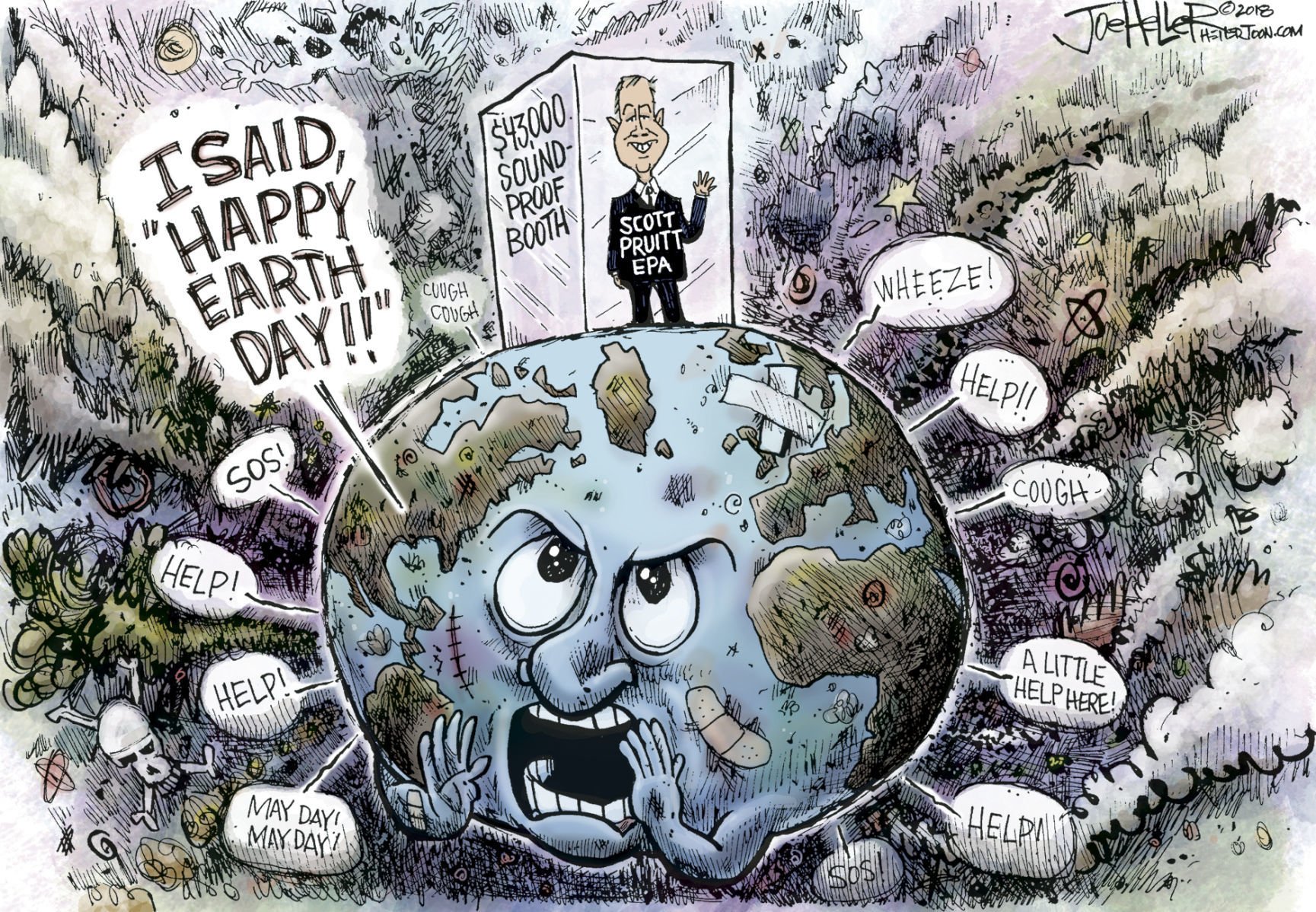
Happy Earth Day!  Today, I am pointing out that climate isn't the only environmental issue the U.S. and the planet is confronting.  Pollution of all kinds is another one, which the Environmental Protection Agency (EPA) was created to combat.  The results have been generally successful, as The Verge describes in Why most Americans support the EPA.

The future of the EPA is uncertain. We look back at why the agency was created in the first place, and why we still need it today.
The video is two years old, but its points are still valid, even after Scott Pruitt has left as EPA Administrator.

Two of the most read entries of the eighth year of this blog were about the EPA, so follow over the jump for how they and another about the Trump Administration's environmental policies earned their page views.

Wednesday, March 6, 2019

It's not just Flint that has problems with lead in drinking water — Verge Science


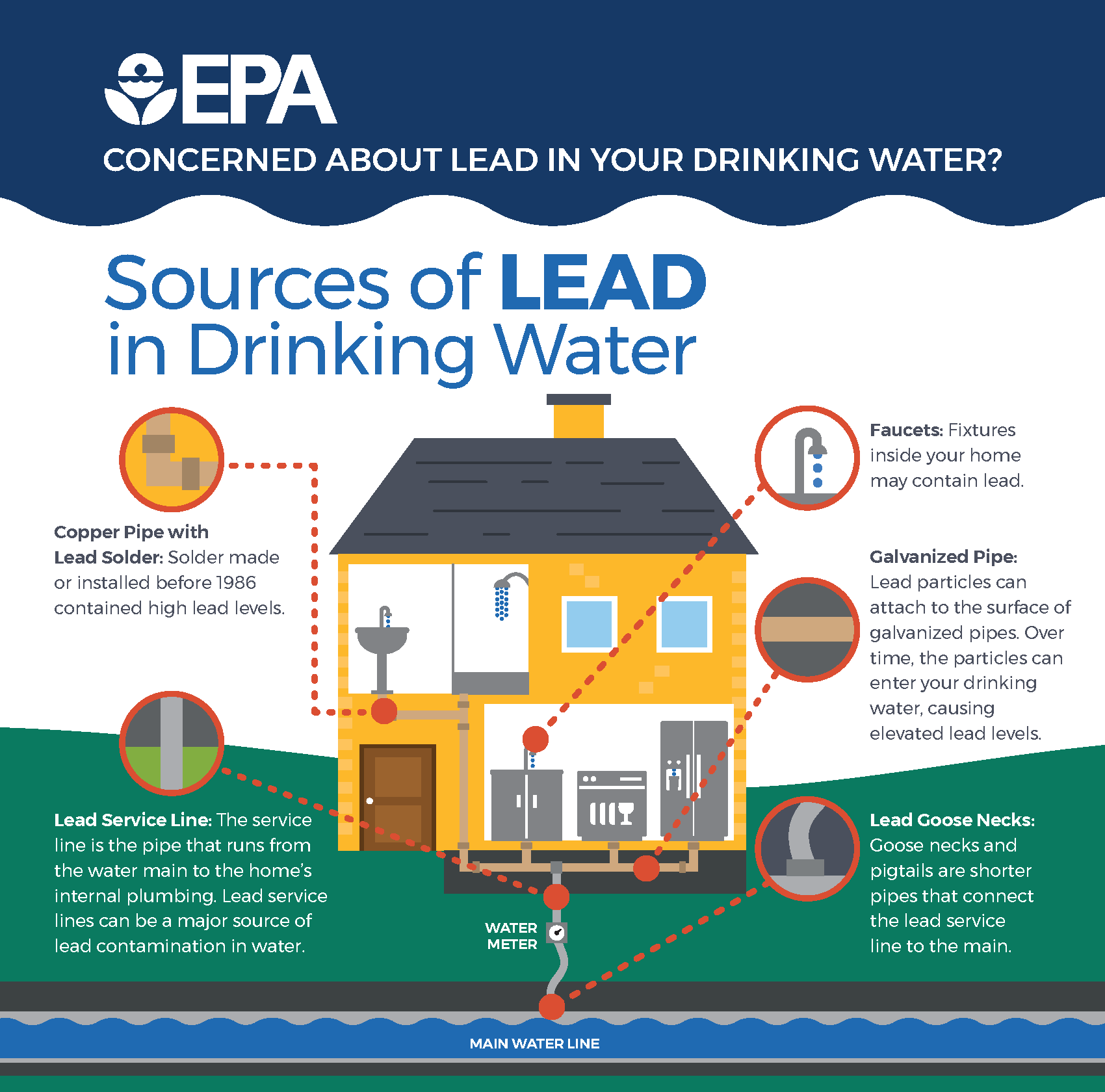
When I last wrote about the Flint Water Crisis, it was about the Michigan Attorney General's prosecutions.  Today, I'm updating an earlier entry, SciShow examines the science of the Flint Water Crisis.  Verge Science posted a video yesterday on the subject, We tested NYC water for lead and the results were confounding, which I'm sharing with my readers today.

Lead contamination got a lot of national attention because of the crisis in Flint, Michigan. But today, lead pipes are still tainting tap water across America. In this episode of “Trial & Error,” we explore how lead enters the water supply, how to test for it, and find out whether our own homes are at risk.
Since installing a filter is cheaper than an unreliable test, it's good news that ABC Television Stations reported Jaden Smith's foundation bringing clean water To Flint on Sunday.

Jaden Smith's foundation and a church are working to bring cleaner water to Flint, Michigan. The rapper's organization and First Trinity Missionary Baptist Church on Friday announced they'll deploy a mobile water filtration system known as "The Water Box" that reduces lead and other potential contaminants. The 20-year-old's JUST goods company collaborated with the church to design and engineer the system. He is the son of Will and Jada Pinkett Smith.
Filters are a longer term solution than bottled water and better for the environment, too.  Still, the best solution would be to replace all the lead plumbing.  That's expensive and will take a while.

I'll have more on the Flint Water Crisis as it develops.  Stay tuned.

Wednesday, November 28, 2018

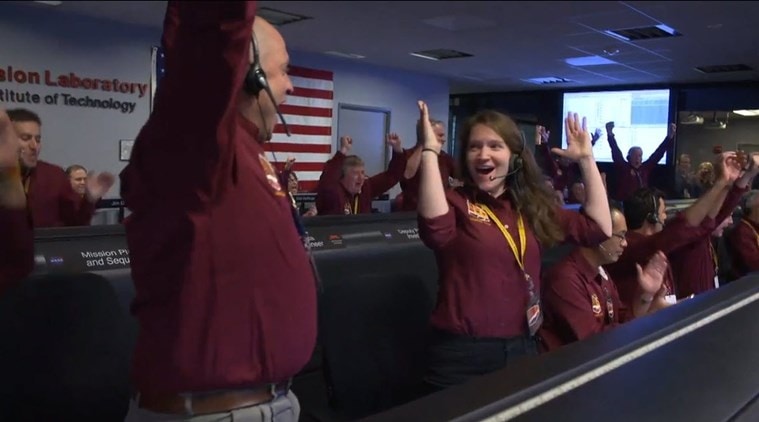
Ground control celebrates as Mars InSight lands


It was only six months ago that I posted Verge Science and Seeker on Mars InSight.  Two days ago, Mars InSight landed after a six-month journey.  CNN has the short take in All eyes on Mars as NASA lander touched down.

NASA celebrates Mars landing with an epic handshake. CNN's Jeanne Moos reports on the touchdown that inspired lots of touching.
Moos did a great job of chronicling the human reaction.  For a more detailed look by someone who was there at the launch, watch Verge Science reporting NASA’s InSight Mars landing: what it really took.

After a six-month long journey, NASA’s InSight spacecraft successfully landed on Mars. The probe will now begin to collect data on Mars’ crust, mantle, and core, providing a never-before-seen look at the red planet’s inner workings. Getting a new spacecraft on the surface of the red planet is no easy feat – The Verge’s Loren Grush talks to engineers about how they prepared for this landing.
This video did a much better job of explaining the science than the launch coverage.  In addition, it looks like I'm going to get my wish.
That looks like great science that I can use in my geology classes — next year.  Here's to Mars InSight succeeding so the wait is worth it.
I already talked about Mars InSight in one of my geology classes yesterday, so I'm using the probe ahead of schedule.  Here's to more interesting findings about the interior of Mars that I can teach to my students.

Wednesday, August 15, 2018

Vox and Verge Science on California's year-round fire season


Two days ago, I mentioned Califoria's record heat and wildfires in 2018 on track to be fourth-warmest ever.  Yesterday, both became the subject of a video by Vox that asked Why is California always on fire?

Humans are making the problem worse. Can we get out of nature’s way, for our own good?
...
Wildfires are intensifying in California — but “wild”fires might be a misnomer at this point, because humans are responsible for why they’ve gotten so out of control. Proceedings of the National Academy of Sciences found that 84 percent of fires are started by humans. The Carr fire in northern California, for example, was sparked by the rim of car with a flat tire.

If you look at where California’s population is growing and getting denser, you’ll see that more and more people are building in areas that are at risk, increasing the potential for costly destruction — 2017 was the most expensive year on record, topping $10 billion in damages.

Since we drastically exacerbated this problem, can we swing it back the other way? The impact of man-made climate change is unlikely to reverse. And people continue to build in dangerous areas, with no sign of stopping. By 2050, there could be over 640,000 new homes built in the path of wildfires.
All that explains why and how California's brush and forest fires have become so intense and damaging.  It does not explain why the fire season, which went from August to October when I was growing up in Los Angeles, extended from April to January in 2014 and now seems to last all year long.  I blamed climate change in 2013 when the season went from May to January.  So does Verge Science in Why wildfire season never stops.

In the Western United States, “fire season” isn’t seasonal anymore — it’s year-round. Because more and more, wildfires are a thoroughly man-made disaster and are technically a misnomer. Here, we take a car and drone tour through some of the most fire-prone parts of California, and see firsthand the causes and effects of “fire season” that just keep getting worse and worse.
It's time to revive a line I first wrote in 2013 and used most recently in 2017, welcome to the 400 ppm world.

Thursday, June 7, 2018

Verge Science updates bees on the endangered species list plus environmental policy for the seventh year of Crazy Eddie's Motie News


Once again, it's Throwback Thursday, so it's time for another retrospective of the blogging year just past.  As I promised in The Primetime Emmy Awards for the seventh year of Crazy Eddie's Motie News, today's review of last year's top posts is about environmental issues other than climate change.

The top entry on that topic was Rusty-Patched Bumblebee finally placed on the Endangered Species List from March 22, 2017.  That was the second day of the seventh year of this blog, so this entry became the first to enter the all-time top ten, which I noted in Holidays for the sixth year of Crazy Eddie's Motie News.  The post earned 3863 raw page views over the year, enough to place it 16th overall and 14th among entries actually written during the blogging year.  It was also the most read entry during April 2017 with 3491 default page views.

Before I explain how the entry earned its page views and place, I am sharing an update on the topic from Verge Science: Bees are going extinct...but not the ones you think.

You’ve probably heard for years that bees are in dire straights. Which is true…but it’s probably not the bees you’re thinking of. We talk to a bee researcher about what’s really at stake for bees, global agriculture, and all the almonds you’ve ever eaten.
For more, read all the entries with the bees label.

Follow over the jump for how this entry earned its page views as well as the other top non-climate environmental story of the past year.

Tuesday, May 8, 2018

Verge Science and Seeker on Mars InSight

I'll take a break from the Saturn Awards to return to reality tomorrow.  Right now, I'm planning an an entry about the latest Mars lauch.  Stay tuned.
So I ended 'Black Panther' vs. 'Wonder Woman' at the Saturn Awards for a late Free Comic Book Day and so I shall proceed.

I begin with Verge Science reporting NASA's InSight spacecraft just launched to Mars.

NASA’s InSight spacecraft just launched to Mars. Equipped with cutting edge instruments to study Mars’ crust, mantle, and core, InSight will provide a never-before-seen look at the red planet’s inner workings. The Verge’s Loren Grush visited Vandenberg Air Force Base for the launch, which marks the beginning of InSight’s six-month journey to Mars.
That video did a good job of conveying the experience, but did not explain the science as well.  For that, I'm turning to Seeker's NASA Just Launched a Mission to Mars to Dig Deep Inside the Planet’s Core.

NASA just sent a robotic probe on a mission to Mars! Here’s what it’ll explore.
That looks like great science that I can use in my geology classes — next year.  Here's to Mars InSight succeeding so the wait is worth it.

Sunday, April 9, 2017

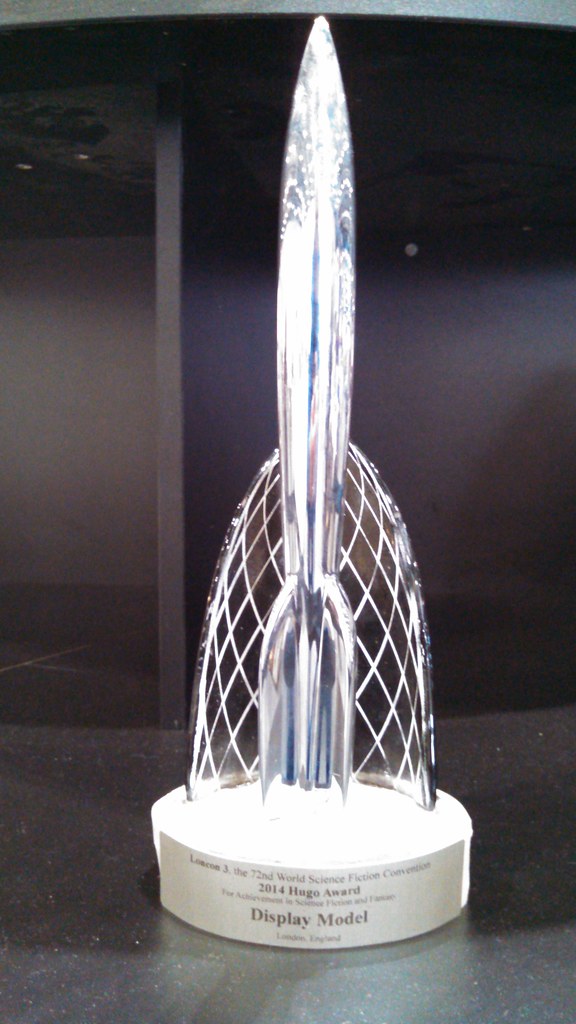
Hugo Awards successfully fighting off Rabid Puppies


In yesterday's entry, I told my readers to "stay tuned for Sunday's entertainment feature, when I plan on writing about the Hugo Awards."  Since it's now Sunday, I'm sharing the media nominees from io9's Here Are the 2017 Hugo Awards Finalists, beginning with the movies and entire series.
Best Dramatic Presentation (Long Form)

Arrival, screenplay by Eric Heisserer based on a short story by Ted Chiang, directed by Denis Villeneuve (21 Laps Entertainment/FilmNation Entertainment/Lava Bear Films)

Deadpool, screenplay by Rhett Reese & Paul Wernick, directed by Tim Miller (Twentieth Century Fox Film Corporation/Marvel Entertainment/Kinberg Genre/The Donners’ Company/TSG Entertainment)

Ghostbusters, screenplay by Katie Dippold & Paul Feig, directed by Paul Feig (Columbia Pictures/LStar Capital/Village Roadshow Pictures/Pascal Pictures/Feigco Entertainment/Ghostcorps/The Montecito Picture Company)

Hidden Figures, screenplay by Allison Schroeder and Theodore Melfi, directed by Theodore Melfi (Fox 2000 Pictures/Chernin Entertainment/Levantine Films/TSG Entertainment)

Rogue One, screenplay by Chris Weitz and Tony Gilroy, directed by Gareth Edwards (Lucasfilm/Allison Shearmur Productions/Black Hangar Studios/Stereo D/Walt Disney Pictures)

Stranger Things, Season One, created by the Duffer Brothers (21 Laps Entertainment/Monkey Massacre)
Just looking at the nominees, I could tell that the Rabid Puppies had very little effect on the outcome.  Both "Ghostbusters" and "Hidden Figures," which feature female casts, are exactly the kind of works the Puppies slates attempted to keep out of the voting in previous years.  It turned out they were hardly trying.

Metafilter's post, Hugos 2017: a tale of puppies reported that the Sad Puppies didn't bother to make any recommendations and the Rabid Puppies, instead of full slates, which this year would have been three entries per category, only made one or two.  In the long form/"film" category, File 770's Measuring the Rabid Puppies Effect on the 2017 Hugo Ballot listed it as "Deadpool," which was a worthy nominee anyway.  In fact, all of them are acceptable nominees, although I'm surprised that "Ghostbusters" beat out the "Star Trek" movie or "Fantastic Beasts."  As for "Stranger Things" being here instead of an episode being nominated in the short form category, that's a pleasant surprise.  It really is the year for "Stranger Things," even though I think "Arrival" will win this category in a walk.
Best Dramatic Presentation (Short Form)

Black Mirror: “San Junipero”, written by Charlie Brooker, directed by Owen Harris (House of Tomorrow)

Doctor Who: “The Return of Doctor Mysterio”, written by Steven Moffat, directed by Ed Bazalgette (BBC Cymru Wales)

The Expanse: “Leviathan Wakes”, written by Mark Fergus and Hawk Ostby, directed by Terry McDonough (SyFy)

Game of Thrones: “Battle of the Bastards”, written by David Benioff and D. B. Weiss, directed by Miguel Sapochnik (HBO)

Game of Thrones: “The Door”, written by David Benioff and D. B. Weiss, directed by Jack Bender (HBO)

Splendor & Misery [album], by Clipping (Daveed Diggs, William Hutson, Jonathan Snipes)
When I looked at this list, I first thought that "The Expanse" episode was the Puppies choice; it's their kind of show.  However, File 770 reported that it wasn't; a third episode of "Game of Thrones," "The Winds of Winter,"  was instead.  It earned enough votes to make the top six, but was disqualified because a series can only have two episodes nominated and "Game of Thrones" already had two in the top six, presumably with more votes.

The only entry I found surprising was "Splendor & Misery" by Clipping.  It's a music album, not a movie.  The commenters at Metafilter love the selection, but I have a hard time seeing it here instead of an episode of "Westworld" such as "The Bicameral Mind."  In my opinion, that was the best episode of the best science fiction show on television last year and I have a hard time seeing it not recognized, which the Science Fiction Writers of America did.  From The Verge, here are this year's Nebula Award nominees for dramatic presentation.
Arrival, directed by Denis Villeneuve, screenplay by Eric Heisserer, 21 Laps Entertainment / FilmNation Entertainment / Lava Bear Films / Xenolinguistics

Doctor Strange, directed by Scott Derrickson, screenplay by Scott Derrickson & C. Robert Cargill, Marvel Studios / Walt Disney Studio Motion Pictures

Kubo and the Two Strings, directed by Travis Knight, screenplay by Mark Haimes & Chris Butler; Laika Entertainment

Rogue One: A Star Wars Story, directed by Gareth Edwards, written by Chris Weitz & Tony Gilroy; Lucusfilm / Walt Disney Studio Motion Pictures|

Westworld: ‘‘The Bicameral Mind’,’ directed by Jonathan Nolan, written by Lisa Joy & Jonathan Nolan; HBO

Zootopia, directed by Byron Howard, Rich Moore, & Jared Bush, screenplay by Jared Bush & Phil Johnston; Walt Disney Pictures / Walt Disney Animation Studios
"Westworld" was the only television series recognized by the writers, but the fans didn't even bother to nominate it.  Time to start hyping it for the Saturn Awards.

Tuesday, August 23, 2016

'The Martian' and 'Jessica Jones' win Hugo Awards


Today, I present a bonus entertainment entry, a follow up to Rabid Puppies infect 2016 Hugo nominees for movies and television.  From The Verge: Here are the winners of the 2016 Hugo Awards.

Best Dramatic Presentation, Long Form
  • The Martian screenplay by Drew Goddard, directed by Ridley Scott (Scott Free Productions; Kinberg Genre; TSG Entertainment; 20th Century Fox)
  • Avengers: Age of Ultron written and directed by Joss Whedon (Marvel Studios; Walt Disney Studios Motion Pictures)
  • Ex Machina written and directed by Alex Garland (Film4; DNA Films; Universal Pictures)
  • Mad Max: Fury Road written by George Miller, Brendan McCarthy, and Nico Lathouris, directed by George Miller (Village Roadshow Pictures; Kennedy Miller Mitchell; RatPac-Dune Entertainment; Warner Bros. Pictures)
  • Star Wars: The Force Awakens written by Lawrence Kasdan, J. J. Abrams, and Michael Arndt, directed by J.J. Abrams (Lucasfilm Ltd.; Bad Robot Productions; Walt Disney Studios Motion Pictures)
Best Dramatic Presentation, Short Form
  • Jessica Jones: "AKA Smile" written by Scott Reynolds, Melissa Rosenberg, and Jamie King, directed by Michael Rymer (Marvel Television; ABC Studios; Tall Girls Productions; Netflix)
  • Doctor Who: "Heaven Sent" written by Steven Moffat, directed by Rachel Talalay (BBC Television)
  • Grimm: "Headache" written by Jim Kouf and David Greenwalt, directed by Jim Kouf (Universal Television; GK Productions; Hazy Mills Productions; Open 4 Business Productions; NBCUniversal Television Distribution)
  • My Little Pony: Friendship Is Magic: "The Cutie Map" Parts 1 and 2 written by Scott Sonneborn, M.A. Larson, and Meghan McCarthy, directed by Jayson Thiessen and Jim Miller (DHX Media / Vancouver; Hasbro Studios)
  • Supernatural: "Just My Imagination" written by Jenny Klein, directed by Richard Speight Jr. (Kripke Enterprises; Wonderland Sound and Vision; Warner Bros. Television)
"The Martian" was, as We Hunted the Mammoth said, one of "two nominees who didn’t need [Vox Day's] help to win."  As Lorcan Nagle wrote in a comment, Day was "claiming he won because The Martian got best Dramatic Picture - Long Form and Andy Weir [who wrote the book the movie was based on] got the Campbell (even though Weir was kept off the Campbell shortlist last year by the Puppy campaigns)."  I quite agree with that assessment.  I thought "Star Wars: The Force Awakens" was the favorite to win the Hugo, just as I did the Saturn Award for best Science Fiction movie (I was right about the Saturn Award, but I preferred "The Martian."  Therefore, I'm quite happy about the result.

As for "Jessica Jones," I'm not surprised or displeased, either.  It was the only television script nominated for a Nebula Award.
Ray Bradbury Award for Outstanding Dramatic Presentation Winner: Mad Max: Fury Road, Written by George Miller, Brendan McCarthy, Nick Lathouris

Other nominees:
Ex Machina, Written by Alex Garland
Inside Out, Screenplay by Pete Docter, Meg LeFauve, Josh Cooley; Original Story by Pete Docter, Ronnie del Carmen
Jessica Jones: AKA Smile, Teleplay by Scott Reynolds & Melissa Rosenberg; Story by Jamie King & Scott Reynolds
The Martian, Screenplay by Drew Goddard
Star Wars: The Force Awakens, Written by Lawrence Kasdan & J.J. Abrams and Michael Arndt
The writers preferred "Mad Max: Fury Road," which also would have been a suitable choice, even if it wasn't mine.  For what it's worth, it came in second in the Hugo voting results, while "Star Wars: The Force Awakens" ended up in third.  I guess the literary crowd preferred a movie based on a book.  I can't say I blame them.

Speaking of the voting results, at least this time "Grimm" didn't lose out to "No Award," although "Supernatural" did.  Speaking of which, there were two categories in which no award was given out, Best Related Work and Best Fancast.  The voters decided that none of the nominees produced by the Sad Puppies and Rabid Puppies slates were acceptable.  Good for them.  Maybe next year, a non-slate candidate will get on the ballot and win.