A blog about societal, cultural, and civilizational collapse, and how to stave it off or survive it. Named after the legendary character "Crazy Eddie" in Larry Niven and Jerry Pournelle's "The Mote in God's Eye." Expect news and views about culture, politics, economics, technology, and science fiction.
National Sweetest Day found its beginnings in a holiday founded by the National Confectioners’ Association in 1916 called Candy Day. On October 14, 1916, candy shops around the country filled newspapers announcing their sweetest treats and delights. Originally designated to be celebrated the second Saturday of every October, the confectioners’ convention in Detroit in May of 1916 made the final resolution. Walter C. Hughes, the secretary of the National Confectioners’ Association, encouraged Americans to patronizes (sic) their local candy shops, bakers, and druggist for the highest quality confections.
...
Sweetest Day’s theme of charity and giving became apparent in 1921. At the time, four Michigan confectioners united with the Red Cross. Those confectioners included the Detroit Retail Confectioners, Detroit Wholesale Confections Club, Detroit Jobbing Confectioners Association, and the Michigan Confectioners Club. Together, they distributed thousands of bags of candy to hospitals, orphanages, shelters, and homes across Michigan. The celebration also included 100 regulation army target balloons, which dropped coupons worth a box of candy.
I'm willing to advocate for Detroit's role in creating Sweetest Day. If Dave knew, would he at least celebrate today?
I close with my tradition for today, embedding a video of Control Freq's Sweetest Day.
That's a wrap for today's holiday. Stay tuned for a highlights post of tonight's Saturday Night Live as the Sunday entertainment feature — Michael Keaton and Billie Eilish! — followed by a late celebration of Wester.
*I never thought I'd type this, but go Yankees! I'm rooting for a retro Subway Series between the Dodgers and the Yankees over a modern Subway Series between the Yankees and the Mets. It would so disappoint the cast of SNL, but at least they'd be unconflicted over who to root for.
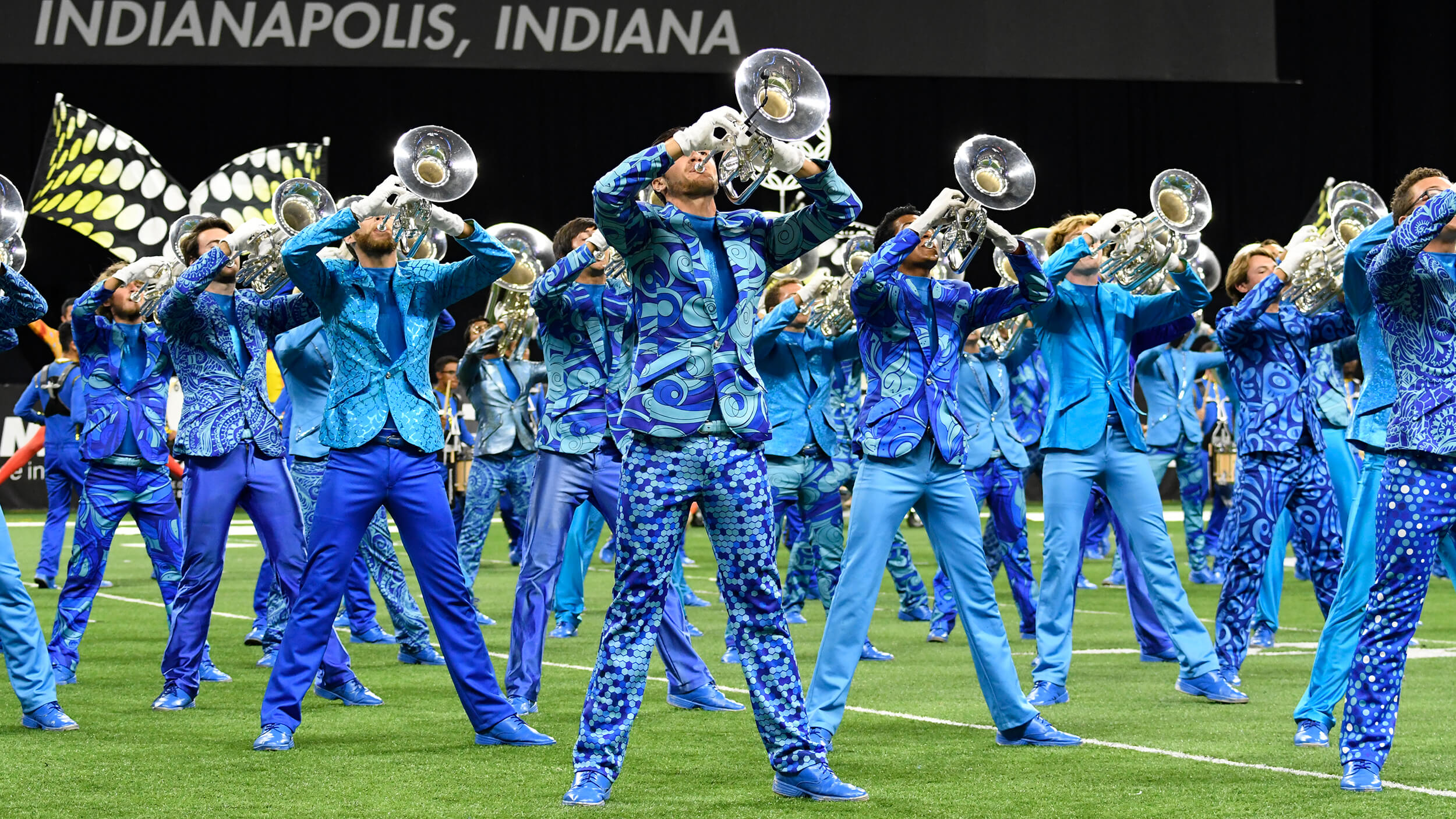
HappyVernalEquinox! I'm passing on the science of the day this year to celebrate with the next installment of marching music for primaries and caucuses. I'm working my way more or less east to west starting at Ohio, represented by one DCI corps, three DCA corps, and a Rose Parade band. I kick off the music to watch and listen while waiting for results with with Bluecoats | #2023 | The Garden of Love | Bon Iver - ____45_____
Canton, Ohio's Bluecoats perform a segment from the corps' #DCI2023 production, "The Garden of Love," during the 2023 DCI World Championships hosted August 10-12 at Lucas Oil Stadium in Indianapolis. Canton, OH | 2nd Place | 97.738
Canton, Ohio's Bluecoats perform a segment from the corps' #DCI2022 production, "Riffs and Revelations," during the 2022 DCI World Championships hosted August 12-14 at Lucas Oil Stadium in Indianapolis.
While Blue Devils won and Boston Crusaders tied for second, this was the show everyone talked about in 2022, and this was probably the most talked about moment.
From Columbus, Ohio
The Ohio State University Marching Band performing at the 133rd Annual Pasadena Tournament of Roses Parade on Saturday, January 1, 2022.
In this late-night edition of the 538 Politics podcast, the crew unpacks the results from election night 2023. Democratic Gov. Andy Beshear won reelection in Kentucky and Ohioans voted to enshrine abortion protections in the state constitution. The night was a decent performance for Democrats, despite a spate of recent polling suggesting Americans are pessimistic about Joe Biden's presidency.
Nov. 7, 2023, was Election Day in at least 37 states, and Americans cast their votes on everything from governorships to local referenda. When the dust settled, it was a solid night for Democrats and their allies: According to ABC News projections, Democratic Gov. Andy Beshear won reelection in Kentucky, and Ohio voters passed Issue 1 to codify abortion rights in the state constitution. The AP also projected that Democrats won both chambers of the Virginia legislature and an open seat on the Pennsylvania Supreme Court. However, there were a few bright spots for Republicans: ABC News projected that Mississippi Gov. Tate Reeves beat back a strong challenge from Democrat Brandon Presley.
Issue 2 to legalize recreational marijuana use passed in Ohio as well. Things went as well as both the polls projected and I hoped in FiveThirtyEight's 2023 elections to watch. Yay!
John Oliver discusses the ongoing fallout from the overturning of Roe v. Wade as the November elections approach.
I hope all of you reading this blog in Ohio, Virginia, and Kentucky not only voted, but voted in a way to keep abortion safe and legal. I did that last year, and the candidates and proposals that would do that won in Michigan. I like being a good example.
2023's off-year election day is tomorrow, so I'm featuring FiveThirtyEight's series on 2023's elections to watch, beginning with Ohio's abortion vote.
Nathaniel Rakich breaks down Ohio's Issue 1 ballot measure, one of the key races in the 2023 elections.
This is the election I'm most interested in because Ohio is next door, the nearest state to where I live in Michigan, and reproductive rights have been a focus of mine on this blog since it became clear that the Supreme Court wouldoverturn Roe v. Wade. While I think that Issue 1 will win, I'm not certain.
There is also an Issue 2 on Ohio's ballot to legalize recreational marijuana. I'm even less sure that will pass, although these measures usually do.
The elections for Virginia legislature also have implications for reproductive rights, as a trifecta would allow Republicans to pass laws restricting abortion.
Republicans are hoping to win a "trifecta" this November in Virginia’s 2023 legislative midterm elections. Nathaniel Rakich takes a look at what issues are at stake for both parties in this pivotal contest.
These elections will also take the temperature of the electorate in a state that's trended Democratic since 2008. If Democrats have trouble here, then they might have issues nationally next year.
On the other hand, FiveThirtyEight has generally good news for Democrats in Kentucky governor.
Democratic Gov. Andy Beshear is popular, but Kentucky is a deep red state. Nathaniel Rakich looks into the tight governor's race in the state between Beshear and state Attorney General Daniel Cameron.
Here's to hoping Beshear can win a state that is considered solidly Republican again.
I close with Mississippi governor, which is the most watched of all these videos, much to my surprise.
Mississippi currently has one of the most unpopular governors in the country in Republican Tate Reeves. Nathaniel Rakich wonders if a Democrat could win in this year's election in this deep red state.
I can see why Reeves is unpopular, but I'm not so sure that will translate into a Brandon Presley win. I'd be pleasantly surprised if he does.
I'll return with some comedy tomorrow. Stay tuned.
The UAW and the Detroit Big Three are having what's been characterized as around-the-clock discussions, but there has been no update from the automakers.
At least the Canadian Auto Workers have reached an agreement. The reporter on location seemed pretty pessimistic about the UAW reaching agreements with the Big Three any time soon.
As UAW members continue protesting outside three plants in the U.S., Michigan's economy could be derailed if the strike lasts for several weeks.
Unlike the SAG-AFTRA andWGA strikes, talks are taking place and progress toward an agreement is happening every day, so I think the strike will end before suppliers start to close, although not before more UAW members go out on strike. Stay tuned.
Weekend Update anchors Colin Jost and Michael Che tackle the week's biggest news, like Donald Trump visiting East Palestine, Ohio, after the recent train derailment.
Both The Former Guy and Pete Buttigieg earned laughs for their appearances, although TFG was tacky and Buttigieg was just a little overdressed. I prefer the latter. Both had to wait until Jost and Che invited the audience to have a good laugh at Biden's visit to Ukraine on Presidents Day. That was bigger news, but I guess Jost, Che, and their writers didn't find it as funny as TFG in Ohio.
Seth takes a closer look at Marjorie Taylor Greene saying whales are being killed by wind turbines all while the catastrophic train derailment in Ohio continues to upend the lives of residents and pose significant health risks.
First, Seth is right to be skeptical of the GOP claim to be a working-class party; their efforts to help working-class voters economically only works through allowing business owners to create more jobs, but not improving pay or working conditions. Socially, it works by promising their White working-class voters that the GOP will hurt the people they don't like worse than the party will hurt them. As Seth showed, The Former Guy made that explicit.
Second, blaming environmental problems on liberal social policy looks like changing the rationale for attacking the same targets the GOP is aiming at already. They're more interested in beating up on the recipients of their ire than actually solving the problems. It also comes off as hypocrisy and projection. That's especially true of what J.D. Vance said on Tucker Carlson's show. People in glass houses shouldn't throw stones and all that.
Finally, Seth is right that the Biden Administration has been slacking in at least saying something about the disaster, if not actually doing something. I'll leave it at that, as I have to go to work. See you all tomorrow!
Saturday marks Sweetest Day. Mike Polk Jr. is here to share some misconceptions about the holiday.
That's good as far as it goes, but WKYC is a Cleveland station, so it ignores Detroit's contribution to the origin of the holiday, which I mentioned in Happy Sweetest Day! and Happy Sweetest Day 2017! On the one hand, I shouldn't be surprised. On the other, hmph! The cure for that would be one of the Detroit TV stations putting out their own versions of the history of the holiday, but I the best I could find is What's The Buzz - Sweetest Day on Live in the D from WDIV's Live in the D.
Jason Carr started off a popular but factually wrong opinion of the day but at least mentioned the involvement of the candy industry in its origin. He still neglected to include that the part Detroit played in the holiday's history. Maybe if he actually liked the day, he would. Here's to hoping someone in the local media does that in the future. In the meantime, here's a Sweetest Day meme.
Did you know that the holiday started in Cleveland? Sweetest Day has Northeast Ohio roots going back to the 1920s!
While this version of the holiday's origin favors Cleveland over Detroit, it accords with the one in Wikipedia.
The first Sweetest Day was on October 10, 1921, in Cleveland. The Cleveland Plain Dealer's edition of October 8, 1922, which chronicles the first Sweetest Day in Cleveland, states that the first Sweetest Day was planned by a committee of 12 confectioners chaired by candymaker C. C. Hartzell. The Sweetest Day in the Year Committee distributed over 20,000 boxes of candy to "newsboys, orphans, old folks, and the poor" in Cleveland, Ohio.[4] The Sweetest Day in the Year Committee was assisted in the distribution of candy by some of the biggest movie stars of the day including Theda Bara and Ann Pennington.
National Sweetest Day found its beginnings in a holiday founded by the National Confectioners’ Association in 1916 called Candy Day. On October 14, 1916, candy shops around the country filled newspapers announcing their sweetest treats and delights. Originally designated to be celebrated the second Saturday of every October, the confectioners’ convention in Detroit in May of 1916 made the final resolution. Walter C. Hughes, the secretary of the National Confectioners’ Association, encouraged Americans to patronizes (sic) their local candy shops, bakers, and druggist for the highest quality confections.
...
Sweetest Day’s theme of charity and giving became apparent in 1921. At the time, four Michigan confectioners united with the Red Cross. Those confectioners included the Detroit Retail Confectioners, Detroit Wholesale Confections Club, Detroit Jobbing Confectioners Association, and the Michigan Confectioners Club. Together, they distributed thousands of bags of candy to hospitals, orphanages, shelters, and homes across Michigan. The celebration also included 100 regulation army target balloons, which dropped coupons worth a box of candy.
I have a feeling that National Day Calendar's history comes from connecting Sweetest Day to Candy Day, which Wikipedia doesn't. However, the online encyclopedia does acknowledge Detroit and Michigan in the following passage.
Retail Confectioners International describes the observance as "much more important for candymakers in some regions than in others (Detroit and Cleveland being the biggest Sweetest Day cities)".[9] The popularity in Detroit was greatly perpetuated by the Sanders Candy Company. Frederick Sanders of Detroit was a large promoter of the holiday.
Both WKYC and Wikipedia also conforms to the origin of the holiday described in The History of Sweetest Day video I embedded in 2015's Happy Sweetest Day! Now I'm torn. On the one hand, as someone who has adopted Michigan as his home state, I prefer the National Day Calendar version with its older Michigan roots. On the other, Wikipedia is better known, more respected, and usually better researched.* If I were a historian of holidays instead of a paleontologist, a scientific historian of ancient life, I might try to resolve the conflict between the two accounts. Instead, I'll be lazy and hope someone else does it for me. Anyone, anyone, Bueller, anyone?
Follow over the jump for a song to play with your loved one and something to drink while listening to it.
While I featured "The Cave" and "American Factory" in the title of the nominees post because the first was nominated for an Oscar and the second won one, it was one of the other documentaries, "Apollo 11," that won the most Emmy Awards of the nominated documentaries, three, while "The Cave" earned two and "American Factory" took home only one. That written, I begin with "The Cave" because it won the most prestigious category for a documentary at the Creative Arts Emmy Awards, Exceptional Merit in Documentary Filmmaking.
Exceptional Merit in Documentary Filmmaking
The Cave (National Geographic Channel) Chasing the Moon (American Experience) (PBS) Moonlight Sonata: Deafness in Three Movements (HBO) One Child Nation (PBS)
If I handicapped this category purely on the number of nominations, I'd pick "The Cave" with its four nominations while all the others only have one. In addition, it's the only Oscar nominee in the category. However, electorates matter and the Emmy electorate is not the Oscar electorate. "Icarus" won the Academy Award but did not win any of its categories at the Emmys two years ago and Oscar winner "American Factory" did not even earn a nomination in this category. As for the film that could upset "The Cave," I'd pick "One Child Nation," which was the most nominated documentary at the Critics' Choice Awards, even though it didn't win a single category. After all, I did write "I think it will have better luck at the Emmy Awards next year." This is its one chance to prove me right.
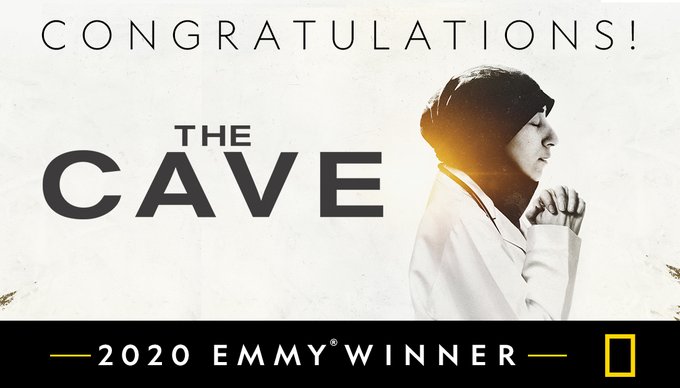
The team from The Cave wins the Emmy for Outstanding Merit in Documentary Filmmaking.
Handicapping on the numbers worked, as "The Cave" won. It also won the next award.
Outstanding Cinematography for Nonfiction Programming
American Factory - Aubrey Keith, Erick Stoll (Netflix) Apollo 11 - Buzz Aldrin, Michael Collins (CNN) Becoming - Nadia Hallgren (Netflix) The Cave - Muhammed Khair Al Shami, Ammar Sulaiman, Mohammad Eyad (National Geographic) Sea of Shadows - Richard Ladkani (National Geographic) Serengeti - Richard Jones, Michael W. Richards, Warren Samuels, Matthew Goodman (Episode: "Rebirth") (Discovery Channel)
This is one of two categories that have three of the top documentaries, four if one counts "Becoming," competing against each other, so the competition is stiff. On the basis of number of nominations, I'd pick "Apollo 11," but it's up against "The Cave" and "American Factory," which are shot by professionals, while Buzz Aldrin and Michael Collins, while legendary astronauts and American heroes, are essentially amateur cameramen. The Emmy electorate might prefer the professionals, which give nature documentaries "Sea of Shadows" and "Serengeti" a chance.
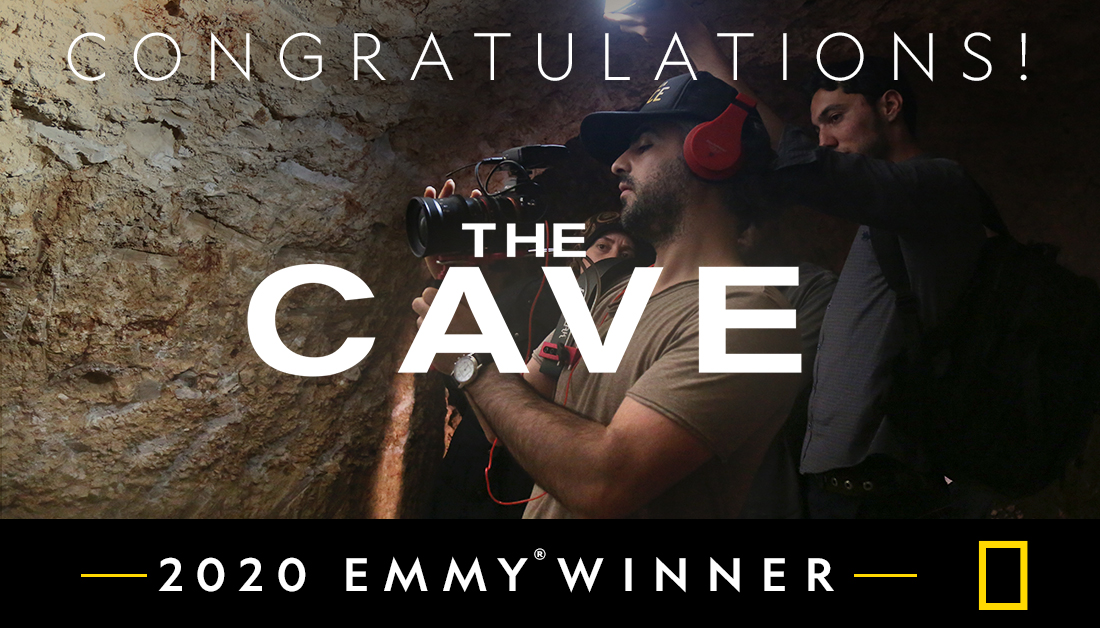
The team from The Cave wins the Emmy for Outstanding Cinematography for a Non-Fiction Program.
I was right that it went to professionals instead of amateurs. Congratulations to the crew of "The Cave" for winning two Emmy Awards. You deserve it, especially after beating Oscar winner "American Factory."
"American Factory" did not leave empty-handed, as it won the next award.
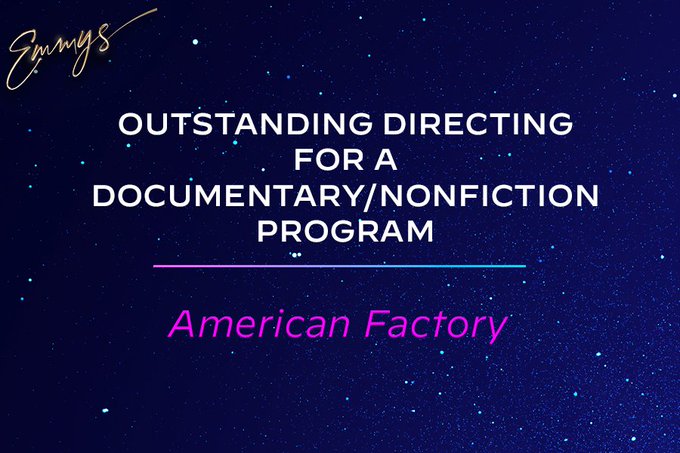
Outstanding Directing for a Documentary/Nonfiction Program
Steven Bognar & Julia Reichert, American Factory (Netflix)
Todd Douglas Miller, Apollo 11 (CNN)
Nadia Hallgren, Becoming (Netflix)
Feras Fayyad, The Cave (National Geographic Channel)
Jason Hehir, The Last Dance (Episode: "Episode 7") (ESPN)
Eric Goode & Rebecca Chaiklin, Tiger King (Episode: "Cult of Personality") (Netflix)
This is one tough category for "Tiger King" and "The Last Dance," as both series are up against not only the Oscar nominated "The Cave," but also Critics' Choice Documentary Award and Golden Coffee Cup Movie winner "Apollo 11" and Oscar winner "American Factory." Even "Becoming" about former First Lady Michelle Obama is a serious contender, as it earned a total of four nominations including Outstanding Documentary or Nonfiction Special, directing, and two others. No wonder "McMillion$" didn't make the cut! As for which show will win, I would bet on "American Factory," the Oscar recipient.
I was right! "American Factory" won this category! Unfortunately, the Television Academy did not upload a video. To make up for it, here is "American Factory" wins Best Documentary Feature at the Academy Awards.
Mark Ruffalo presents Steven Bognar, Julia Reichert and Jeff Reichert with the Oscar for Best Documentary Feature for "American Factory" at the 92nd Oscars in 2020.
Better late than never, as I never did recap the Oscar winners, just the nominees. Tsk, tsk, shame on me. Here's to a belated congratulations to "American Factory" for both the Oscar and the Emmy.
Follow over the jump for the three Emmy Awards won by "Apollo 11."
Absentee ballots needed to be postmarked by Monday in order to count. Voters can also bring ballots to county boards of elections before 7:30 p.m. Tuesday. In-person voting is only available on Tuesday to individuals with disabilities who require in-person voting and those who do not have a home mailing address.
A day ahead of the primary, Ohio Secretary of State Frank LaRose announced that more than 1.9 million Ohioans had requested vote-by-mail ballots and that more than 1.4 million ballots had already been cast.
"In a matter of weeks, we've done something that's taken other states years to do -- transform our state into one capable of voting entirely by mail," LaRose said in a statement.
As I noted first for the Alaska Democratic Primary and the Wyoming Democratic Caucuses, "Since Bernie Sanders dropped out, there is little suspense left in the result...Other than selecting delegates, this election has little meaning. Just the same, enjoy the music while waiting for the results." With that, it's time to feature the corps from the Buckeye State I listed in a comment to A drum corps Super Tuesday 2020, Bluecoats, Columbus Saints, and Cincinnati Tradition, plus a bonus performance by the Ohio State University Marching Band.
I begin with the Bluecoats. Since I didn't write one of these for the 2016 Ohio primary, I'm sharing the performance I most likely would have used then, 2013 Bluecoats - ...to look for America.
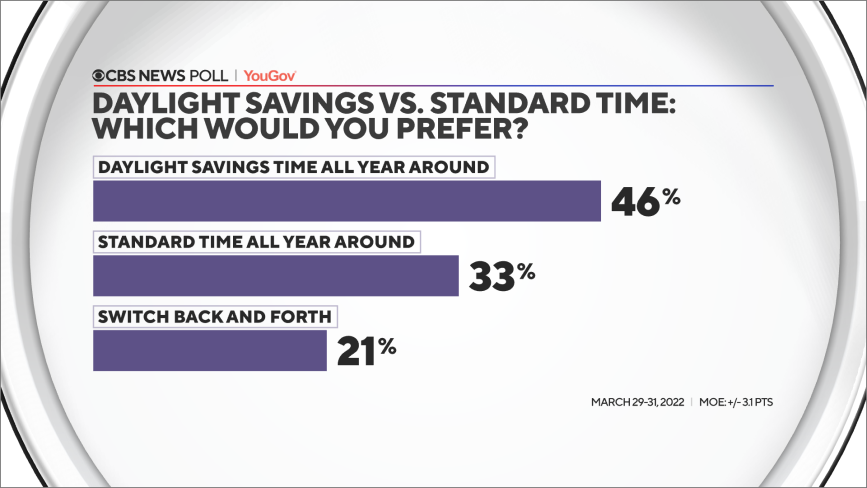
A new poll finds a majority of Americans want to get rid of daylight saving time all together.
70% of Americans are tired of switching the clocks back and forth, while only 30% want to keep doing it. Americans don't agree yet on which time to stay on, Standard or Daylight Saving. However, that hasn't stopped states from trying to please their residents by stopping the back-and-forth. Unfortunately, it literally requires an act of Congress to finish the job. Follow over the jump for reports about three states that have voted to stop the twice-annual changeover and five more that are considering doing so.
Why the “rights of nature” could be the next frontier for environmentalism. ... The Lake Erie Bill of Rights is the first law of its kind in the United States. In February of 2019, the residents of Toledo, Ohio voted to give Lake Erie's entire ecosystem legal rights. That means any citizen of Toledo, if they have credible evidence that a corporation or government is harming the lake, can file a lawsuit on behalf of Lake Erie in court.
The Lake Erie Bill of Rights is part of a larger movement to give legal rights to mountains, rivers, forests, and other natural objects. The citizens of these communities -- from Pennsylvania, to Ecuador, to New Zealand -- argue that because their long-term survival is dependent on the health of their natural surroundings, anything that harms the lakes, rivers, or forests they depend on should be considered a legal harm.
It’s a totally new way of approaching the law, and it could change the very nature of our relationship with the natural world. This is how one community in Ohio started what they hope will be a nationwide movement.
Of course, this attracted significant opposition. Follow over the jump to read the rest of the story.
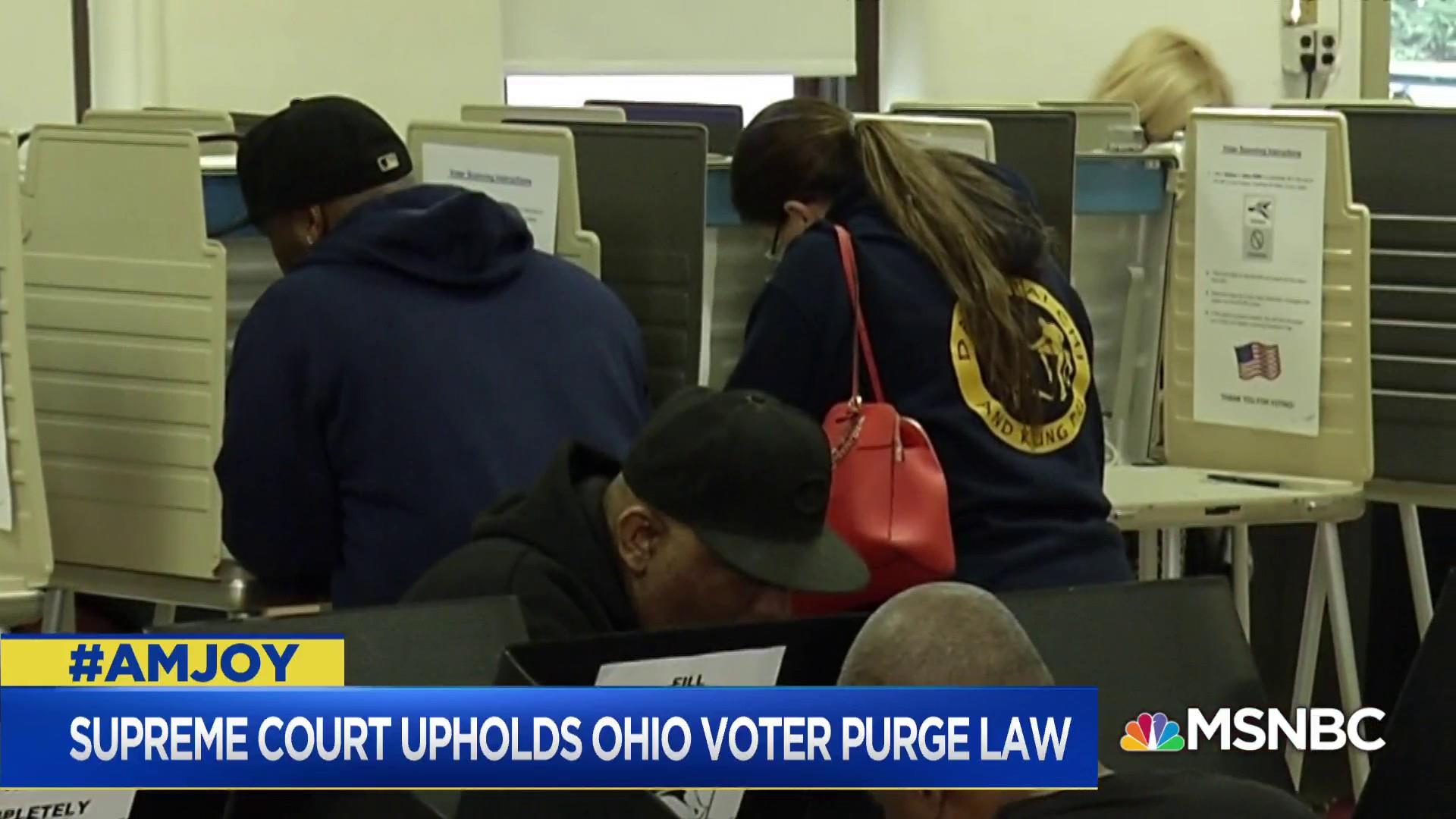
And how to avoid the purge. ... Voter purges are a means of removing ineligible voter registrations from the rolls — meant to clean up the system. But what happens when aggressive purges end up getting rid of the registrations of eligible voters?
Critics say states like Georgia and Ohio - purging through “exact match” or “use it or lose it” laws - are disproportionately eliminating thousands of minority voters from the system.
What states are doing them, how do they work, and what should you do if you find out you’ve been purged?
May my readers have avoided "The Purge," and not just by refusing to watch the movies and limited TV series.
I left a variation of a story I tell my students as a comment at Kunsler's blog two weeks ago, a shortened version of how and why Detroit became the Motor City in the context of its place in the Great Lakes regional economy and what might be in store for it in response to a remark by Kunstler.
“I’m convinced that the Great Lakes region will be at the center of an internally-focused North American economy when the hallucination of oil-powered globalism dissolves. Places like Buffalo, Cleveland, and Detroit will have a new life, but not at the scale of the twentieth century”
In my classes, I spend a good chunk of a lecture on the roles of Great Lakes cities. It was pretty natural that North America’s manufacturing would be centered on the Great Lakes, as all of the natural resources required for making things out of steel were there–iron ore, coal, and lime–and the entire region was connected by a vast natural waterway, making shipping cheap. All that was needed to make cars was imported rubber. Detroit ended up with the distinction because of its central location, skilled manufacturing work force, and money looking for something to invest in once the timber boom ended. Now that cars are winding down, the city is looking for something else to make. Urban farming and trade with Canada aren’t enough to support a metropolitan population of four million.
It also helped that all the rest of the Great Lakes cities had something else to do already. Buffalo is a trade center between New York and the Great Lakes to the west. I suppose the Erie Canal might get revived as a functioning trade route in the post-petroleum future. Cleveland was the original oil capital and secondary manufacturing center. Now, it’s trying to become a tourist attraction. I’m not sure what it will do in a future without mass tourism. Toledo is the Glass City, which means its a subsidiary of Detroit. It’s still a trade center where the Maumee enters Lake Erie, but the rest of its future depends on what Detroit does.
As for the cities to the west, Chicago is the ultimate trade center, where the raw materials of the west get sent to the manufacturing centers of the east and the manufactured goods get sent to the west with Chicago profiting as the middleman (think Chicago Board of Trade). There will still be room for such a role in the future, even if it’s smaller. Milwaukee is the place where milk and grain become beer and cheese. Again, that’s useful, but how much of a mass market will there be for it?
All of the above is a story I tell my students that helps them understand their place in the world. Now they have to help create their own story so that they can keep a place in the world.
I transitioned out of that passage by promising to repost it to here in a more refined form. Honestly, I think it's good enough. Now follow over the jump for responses to it and to another comment about Detroit I posted this week at Kunstler's blog.
Hydraulic fracturing or fracking, isn't practiced within city limits, but Mayor Richard Edwards worried it could hurt the drinking water supply if it was ever allowed in Bowling Green. It was part of the reason city council unanimously passed a fracking ban two weeks ago.
...
Another group in BG wants to take that push a step further. They're drumming up voter support to get the fracking ban officially worked into the city charter this November. They worry an ordinance alone could be overturned down the road.
"It hurts property values, it hurts human health and it pollutes the environment," says BG Charter Amendment Committee chair, Lisa Kochheiser.
Last week, the chamber launched pro-fracking campaign "Protect Michigan's Energy Future." The group's website touts energy independence, job creation and decades of safe fracking in the state. It also specifically targets fracking opponents.
“The dangerous petition drive to ban hydraulic fracturing is based on fear and emotion, not facts or sound science," said Rich Studley, president and CEO of the Michigan chamber . "It is a direct attack on a key industry that provides good jobs and energy independence for our state."
Some fracking opponents, fueled by environmental and health concerns, are collecting signatures to put a proposal to ban fracking on the 2014 statewide ballot. The group needs more than 250,000 petition signatures.
"Stopping a well here or there, in one community or two or in just the parks will help, but it does not prevent the overall, large-scale invasion of this toxic, polluting industry from destroying our state." the Committee to Ban Fracking in Michigan says on its website.
As you can see, the battle lines are already drawn, even though the measure is not yet on the ballot and the election is a year away.
President and CEO of Great Lakes Credit Union David Seeger gives analysis of the market less than 24 hours of a government shutdown.
Once again, Seeger gives a valuable statistic--one week of shutdown takes 0.1% off the GPD for a quarter. He also warns about the effects of a debt ceiling beach, which would be even worse. Here's to hoping that doesn't happen.
A meteoroid traveling at ~114,000 mph, slammed into Earth's atmosphere almost directly over Columbus, Ohio. It was visible from 14 U.S. States. NASA's all-sky camera in Hiram, Ohio captured the fireworks at 11:33pm EDT on Sept. 27th, 2013. (looped)
That's not the same meteor in the previous report from WOOD-TV. Just the same, it's not necessarily a sign of greater activity, just greater awareness and opportunity. As the astronomer noted in the WCPO video, people are more likely to see meteors at this time of the year. That's the opportunity. Follow over the jump for the other meteor and asteroid stories, including ones about the reason for the increased awareness.
I forgot to mention the mayor's race in Cincinnati among the elections I was watching yesterday. WCPO has allowed me to correct this oversight by posting two clips about the winners last night.