A blog about societal, cultural, and civilizational collapse, and how to stave it off or survive it. Named after the legendary character "Crazy Eddie" in Larry Niven and Jerry Pournelle's "The Mote in God's Eye." Expect news and views about culture, politics, economics, technology, and science fiction.
Dive into the history and controversy of Igor Stravinsky’s ballet, “The Rite of Spring,” which shattered the conventions of classical ballet.
--
Ballet is typically thought of as harmonious, graceful and polished— hardly something that would trigger a riot. But at the first performance of Igor Stravinsky's “The Rite of Spring,” audience members were so outraged that they drowned out the orchestra. People hurled objects at the stage, started fights and were arrested. What caused this shocking reaction? Iseult Gillespie explains the controversy.
Lesson by Iseult Gillespie, directed by WOW-HOW Studio.
Explore how the technology of gene drives could lead to the eradication of mosquitoes and what that could mean for our ecosystems.
--
Mosquitoes are responsible for more human deaths every year than any other animal, but very few of the 3,500 mosquito species actually transmit deadly diseases to humans. Scientists have been conducting experiments using engineered technologies called gene drives that could theoretically get rid of the most lethal mosquitoes. So, should we eradicate these pesky insects? Talya Hackett investigates.
Lesson by Talya Hackett, directed by Luísa M H Copetti, Hype CG.
I'd prefer making the mosquitoes immune to the malaria parasite to driving them, pun intended, to extirpation, but I don't have to live with malaria. I'll let the people who do make that decision.
How genetically engineered mosquitoes might defeat a disease that kills millions of children.
...
The invention of the CRISPR gene editing tool has injected new life into a line of research called gene drive. Gene drives use selfish genetic elements to spread a modification through a wild population.
Researchers have proposed using gene drives against agricultural pests and invasive species, but the most urgent application is against vector-borne diseases like malaria, which kills hundreds of thousands of people every year, mostly in sub-Saharan Africa.
We talked to the scientists working on this revolutionary approach to disease eradication to find out how it works and how long it might take to deploy a technology like a gene drive against malaria.
That's a wrap for today's post. Stay tuned for a non-holiday entry tomorrow.
Ocean waters are constantly on the move, traveling far distances in complex currents that regulate Earth's climate and weather patterns. How might climate change impact this critical system? Oceanographer Susan Lozier dives into the data, which suggests that ocean overturning is slowing down as waters gradually warm — and takes us on board the international effort to track these changes and set us on the right course while we still have time.
Countdown is TED's global initiative to accelerate solutions to the climate crisis. The goal: to build a better future by cutting greenhouse gas emissions in half by 2030, in the race to a zero-carbon world. Get involved at https://countdown.ted.com/sign-up
This is not a new concern, as Al Gore described it in "An Inconvenient Truth." I asked about it specifically in the worksheet I used in one of my classes, which I reproduced in Hot (not): a cold blast from the past along with an answer.
What is the likely effect of the melting of the Greenland ice cap on ocean circulation and global climate?
In the movie, the idea is that the release of meltwater from a large glacial lake diluted the Gulf Stream, causing the water to become less dense and unable to sink to the bottom of the ocean off Greenland, jamming up the global thermohaline circulation and sending the planet back into an ice age for another thousand years. An analogous melt of water from the Greenland icecap, which is beginning to happen, would do much the same thing, slowing ocean circulation and cooling Europe. Both of those are indeed taking place.
The movie came out seventeen years ago and I wrote the above more than ten years ago. It's not as if we weren't warned.
The first 10 amendments to the United States Constitution make up the Bill of Rights. Passed by Congress on September 25, 1789, these rights place limits on government power.
The bill was introduced by James Madison. He later became the 4th President of the United States.
Congress passed 12 of Madison’s proposed amendments. The states only ratified 10 of them. One of the two rejected by the states concerned the number of constituents for each Representative. The other limited when and how members of Congress are compensated. Neither was ratified at the time.
The latter of the two rejected amendments was ratified 203 years later. The 27th Amendment restricted compensation for members of Congress.
The Bill of Rights is displayed in The Rotunda of the National Archives Building in Washington, DC.
There were 14 copies made; one for each of the 13 states to sign and one for the federal archives. Only 12 copies survive today.
The National Day Calendar's entry on its website opens with the origin of the day.
"Now, Therefore, I, Franklin D. Roosevelt, President of the United States of America, do hereby designate December 15, 1941, as Bill of Rights Day. And I call upon the officials of the Government, and upon the people of the United States, to observe the day by displaying the flag of the United States on public buildings and by meeting together for such prayers and such ceremonies as may seem to them appropriate."
Daily, Americans exercise their rights secured by the Constitution. The most widely discussed and debated part of the Constitution is known as the Bill of Rights. Belinda Stutzman provides a refresher course on exactly what the first ten amendments grant each and every American citizen.
Lesson by Belinda Stutzman, animation by Jacques Khouri.
"The First Amendment...may be the most revered of the amendments." I would hope so, especially since it mentions religion, making "revered" just a bit on the nose for a description. However, I think the Second Amendment has just as passionate if not more numerous adherents, although for the version I mock as the "SecondAmmoment." A well-regulated militia — what's that?
I'm taking a break from EmmyAwardsnominationscoverage to share a clip about over-hunting of whales from PBS's "Human Footprint" uploaded to PBS Terra's YouTube channel along with a TED-Ed video about over-fishing I already show my students.
Long before the days of fast-fashion and chain restaurants, humans were busy hunting down whales and nearly wiping them out... The efficiency of 20th-century whaling had a devastating impact. Join host Shane Campbell-Staton as he visits Paleontologist Nick Pyenson at Smithsonian's Whale Warehouse to uncover the history of whaling and its impact on our oceans.
My students already hear from me about the over-exploitation of whales for whale oil and its effects on the supply and price of whale oil, which led to the switch to petroleum, which the video described. However, they don't hear about the literally massive effect on biomass and whale numbers and the "everything is connected to everything else" feedback loop of the krill paradox. That's because I didn't know either until I watched the video. Now I know, so I can tell my students. That, or I can show this video to them. Welcome to blogging as professional development.
I follow the story of over-exploitation of whales with one about modern-day over-fishing, which supports a point I make throughout my environmental science course, people don't learn, at least the first time, so they repeat their mistakes. Here's the video I show my students already, TED-Ed asking Will the ocean ever run out of fish? - Ayana Elizabeth Johnson and Jennifer Jacquet.
When most people think of fishing, we imagine relaxing in a boat and patiently reeling in the day’s catch. But modern industrial fishing -- the kind that stocks our grocery shelves -- looks more like warfare. Ayana Elizabeth Johnson and Jennifer Jacquet explain overfishing and its effects on ecosystems, food security, jobs, economies, and coastal cultures.
Lesson by Ayana Elizabeth Johnson and Jennifer Jacquet, directed by Anton Bogaty.
The same techniques that decimated whales are being used to over-exploit fish. As I mentioned above, we haven't learned — yet. But we can, so there is still hope.
PBS Terra has also uploaded a video about the effect of hunting on elephant evolution. Stay tuned to see if I write about it. In the meantime, stay tuned for my awards show coverage.
Get to know the history of Juneteenth, a commemoration of the end of slavery in the United States after the Civil War.
--
At the end of the Civil War, though slavery was technically illegal in all states, it still persisted in the last bastions of the Confederacy. This was the case when Union General Gordon Granger marched his troops into Galveston, Texas on June 19th and announced that all enslaved people there were officially free. Karlos K. Hill and Soraya Field Fiorio dig into the history of Juneteenth.
Lesson by Karlos K. Hill and Soraya Field Fiorio, directed by Rémi Cans, Atypicalist.
Americans are celebrating Juneteenth, marking the day in 1865 enslaved people in Galveston, Texas found out they had been freed. NBC News’ Marissa Parra reports from Georgetown, where parades and events are underway.
That's more fun. Speaking of fun, follow over the jump for music and a drink to celebrate the holiday.
When is the last time you stopped and really looked at a tree? Sometimes the things we see everyday lose their profound importance as they seem so commonplace, ordinary, already understood. Andy Lipkis has dedicated his life to trees, and talks about the extraordinary, and untapped power of the tree.
Andy Lipkis if the Founder and President of TreePeople, a nonprofit organization that is growing a green and climate-resilient Los Angeles.
This talk was given at a TEDx event using the TED conference format but independently organized by a local community.
This is at least the second time Andy Lipkis has appeared on this blog. The first time was Rocking the boat down the Los Angeles River, which included a brief interview of him. I didn't even mention him or his charity, TreePeople, then, but he made important points about water in "Rock the Boat" that he repeats in this video. I'm glad a gave him a chance to repeat them a decade later. It beats Captain Planet!
Follow over the jump for a retrospective about last year's holiday posts that became popular on Pinterest and Twitter.
The ratio of a circle's circumference to its diameter is always the same: 3.14159... and on and on (literally!) forever. This irrational number, pi, has an infinite number of digits, so we'll never figure out its exact value no matter how close we seem to get. Reynaldo Lopes explains pi's vast applications to the study of music, financial models, and even the density of the universe.
Lesson by Reynaldo Lopes, animation by Igor Coric.
That's a ten-year-old math lesson that I can't believe I haven't seen before. As I have written before, it's a good day when I learn something new.
Speaking of learning something new, I learned that today is also Science Education Day. Take it away, 8SA!
Science Education Day (March 14) - Activities and How to Celebrate Science Education Day
Science Education Day is celebrated on March 14th of every year. Science is all around us, and we could notice it in every walk of life. Most of us are introduced to the science subject in our school classrooms.
I'm a science educator, so every day I work is Science Education Day. Just the same, it's nice to know that there is an actual day for it and it's one I observe already.
My environmental science students are working on a project called Hidden Energy in lab this week, which explores how every step in the production, use, and disposal of manufactured items requires energy. In addition, my students have to research the materials used to make the items and their eventual fate after people are through using them. One of my students' favorites over the years has been shopping bags, paper, plastic, and reusable, which I featured in Sustainability of banning plastic bags from DNews and KPBS eight years ago and Paper vs. plastic bags: Student Sustainability Video Festival 73 four years ago.* My answer to the question of paper or plastic then was reusable.
Both TED-Ed and SciShow have created videos about the environmental costs and benefits of shopping bags this past year and their answer is that not all reusable bags are equally sustainable. Watch Which bag should you use? - Luka Seamus Wright and Imogen Ellen Napper from TED-Ed.
Explore the environmental impact of three types of bags— plastic, paper, and cloth— to find out how they’re made, used and disposed of.
--
You’ve filled up your cart and made it to the front of the grocery line when you’re confronted with yet another choice: what kind of bag should you use? It might seem obvious that plastic is bad for the environment, and that a paper bag or a cotton tote would be the better option. But is that really true? Luka Seamus Wright and Imogen Ellen Napper explore the environmental impact of each material.
Lesson by Luka Seamus Wright & Imogen Ellen Napper, directed by JodyPrody.
Narrated by Bethany Cutmore-Scott.
I'm not surprised that cotton bags are bad for the environment, while reusable plastic bags are better. Years ago, one of my students presented on how bad cotton was for the environment using an actual cotton plant as a visual aid. It convinced me. Later, another student gave her talk on recycling plastic with reusable plastic shopping bags made from recycled pop bottles as her visual aid. I thought that was a good use for plastic bottles.
SciShow came to a similar conclusion with more scientific detail from what appears to be the same study in The Truth About Green Grocery Bags.
It seems like a simple question with a straightforward answer, but when you look at the total environmental impact of each type of bag, things start to get a little complicated.
Which data one records and analyzes makes a difference on the conclusions. In particular, while climatechange is the great existential environmental issue, it is not the only one, so looking at the environment through the lens of climate change alone is insufficient. Remember Commoner's Laws.
Everything Is Connected to Everything Else. There is one ecosphere for all living organisms and what affects one, affects all. Everything Must Go Somewhere. There is no "waste" in nature and there is no "away" to which things can be thrown. Nature Knows Best. Humankind has fashioned technology to improve upon nature, but such change in a natural system is, says Commoner, "likely to be detrimental to that system." There Is No Such Thing as a Free Lunch. Exploitation of nature will inevitably involve the conversion of resources from useful to useless form.
The first, second, and fourth apply, while our intuition about number three, that cotton bags are best, leads us astray. I take that to mean that our intuition about how to apply "Nature knows best" is wrong, not the law itself. After all, reusable plastic bags made from recycled material are still an application of chemical cycling, an application of both Nature knows best and "There is no 'waste' in nature." That's a lesson I plan on passing on to my students, along with these videos.
*The other pair of products are cloth vs. disposable diapers. I might be inspired to look for videos about that, too. If I do, it will be another instance of blogging as professional development.
United Nations - Biodiversity is the foundation for life and for the essential services provided by ecosystems. It therefore underpins peoples’ livelihoods and sustainable development in all areas of activity, including economic sectors such as agriculture, forestry, fisheries, and tourism, among others. By stopping biodiversity loss, we are investing in people, their lives and their well-being. Join us in celebrating the variety of life on Earth on 22 May, the International Day for Biological Diversity.
I like this video as a brief overview of the importance of biodiversity, but National Day Calendar has more detail.
The term biodiversity stems from two different words: biological and diversity. It refers to the variety of life on Earth. The three types of biodiversity include:
Genetic diversity
Species diversity
Ecosystem diversity
Biodiversity is very important for many reasons. It supplies the earth with clean water and oxygen. Biodiversity also enables plants to grow, which produces food for humans and animals. Other benefits of biodiversity is that it keeps pests and diseases in check and protects against flooding. It also helps to regulate the climate. Together, all of these benefits are known as ecosystem services.
The health of the earth suffers when biodiversity decreases. It’s also true of humans. The less biodiversity, the poorer our health becomes. Some even believe that pandemics are related to the loss of biodiversity. Now more than ever, we need to spread awareness for the importance of biodiversity.
Our planet’s diverse, thriving ecosystems may seem like permanent fixtures, but they’re actually vulnerable to collapse. Jungles can become deserts, and reefs can become lifeless rocks. What makes one ecosystem strong and another weak in the face of change? Kim Preshoff details why the answer, to a large extent, is biodiversity.
Lesson by Kim Preshoff, animation by TED-Ed.
And narration by Pen-Pen Chen, who my readers might recognize because she wrote and narrated the final video I embedded in Happy Year of the Fire Rooster! She deserves credit, too.
Happy WorldWaterDay! For today's celebration, I'm looking at the global picture through two videos about the developing global water crisis and how to solve it. The first comes from TED-ED, which asks Are we running out of clean water?
Despite water covering 71% of the planet’s surface, more than half the world’s population endures extreme water scarcity for at least one month a year. Current estimates predict that by 2040, up to 20 more countries could be experiencing water shortages. These statistics raise a startling question: is the Earth running out of clean water? Balsher Singh Sidhu takes a closer look at water consumption.
TED-Ed and Sidhu examine the solution through the lens of decreasing consumption, the same lens I examine environmental issues on EarthOvershootDay. It's also an important part of the message I try to impart to my students. That written, another lesson I teach my students is that decreasing consumption is not the same as increasing supply.* BBC News concentrated on that issue when it asked Are we heading towards a water crisis?
By 2025, nearly two billion people will be living in countries or regions with absolute water scarcity according to the United Nations.
Many countries now face decisions over how to provide water to their citizens.
Reality Check takes a look at five potential solutions.
*One of the test questions I ask students is to list three ways to increase water supply and describe their advantages and disadvantages. Every semester, at least one of them responds by describing water conservation measures. That means they didn't learn that lesson. Sigh.
Are you afraid of black cats? Would you open an umbrella indoors? How do you feel about the number 13? Whether or not you believe in them, you’re probably familiar with a few of these superstitions. But where did they come from? Stuart Vyse shares the weird and specific origins of some of our favorite superstitions.
Great video, but it never did get around to explaining the superstition around black cats, although it did a great job with the fears around 13, 17, 4, and 14. Just the same, I'm continuing to be a good environmentalist and recycling what I wrote the Friday the 13th before last: "It's a good day when I learn something new, even if it is Friday the 13th."
#AustralianWildFires climate denial claims, "it's arson! it's been warmer before! fire's natural!" The truth? Human-induced climate change is a threat multiplier. It takes existing risks + amplifies them beyond imagining, affecting every living thing on this planet: including us.
Can environmental threats actually become security issues? Tami Relph will explore patterns of conflict and will share how global issues can escalate if left unchecked. Tami Relph is an interdisciplinary engineer in the Environmental Security department at Naval Facilities Engineering & Expeditionary Warfare Center (NAVFAC EXWC). Ms. Relph has substantial experience in water security, wastewater systems, and sustainable engineering. Her interest in engineering stemmed from a knack for problem solving and a desire to improve living conditions sustainably in communities around the world. She joined Engineers Without Borders in 2011 and quickly became a leader in both her student and professionals chapters. Since then she has led project teams to design, implement, and evaluate sustainable engineering projects supporting community-driven, small-scale infrastructure needs in Nepal, Peru, and Tanzania. She has a Civil Engineering M.S. and Environmental Engineering B.S. from CU Boulder, an Anthropology B.A. from UCLA, and is a licensed Professional Civil Engineer in CA. This talk was given at a TEDx event using the TED conference format but independently organized by a local community.
While I've written a lot about both climatechange and ISIS/Daesh, who I call the Sith Jihad, I haven't written before about how climate change, drought, and crop failure contributed to the latter's rise. I'm glad Relph gave me a chance to correct that omission. It also serves as an example of Commoner's First Law of Ecology, "Everything Is Connected to Everything Else. There is one ecosphere for all living organisms and what affects one, affects all," something I teach my students.
I also teach my students environmental literacy. This video not only shows connection between the environment and security but also goes through all the steps of environmental literacy, awareness, knowledge, attitudes, skills and action. I could definitely use it in my classes, which resume on Monday. I also hope that it inspires my readers to take action themselves. It certainly is inspiring me.
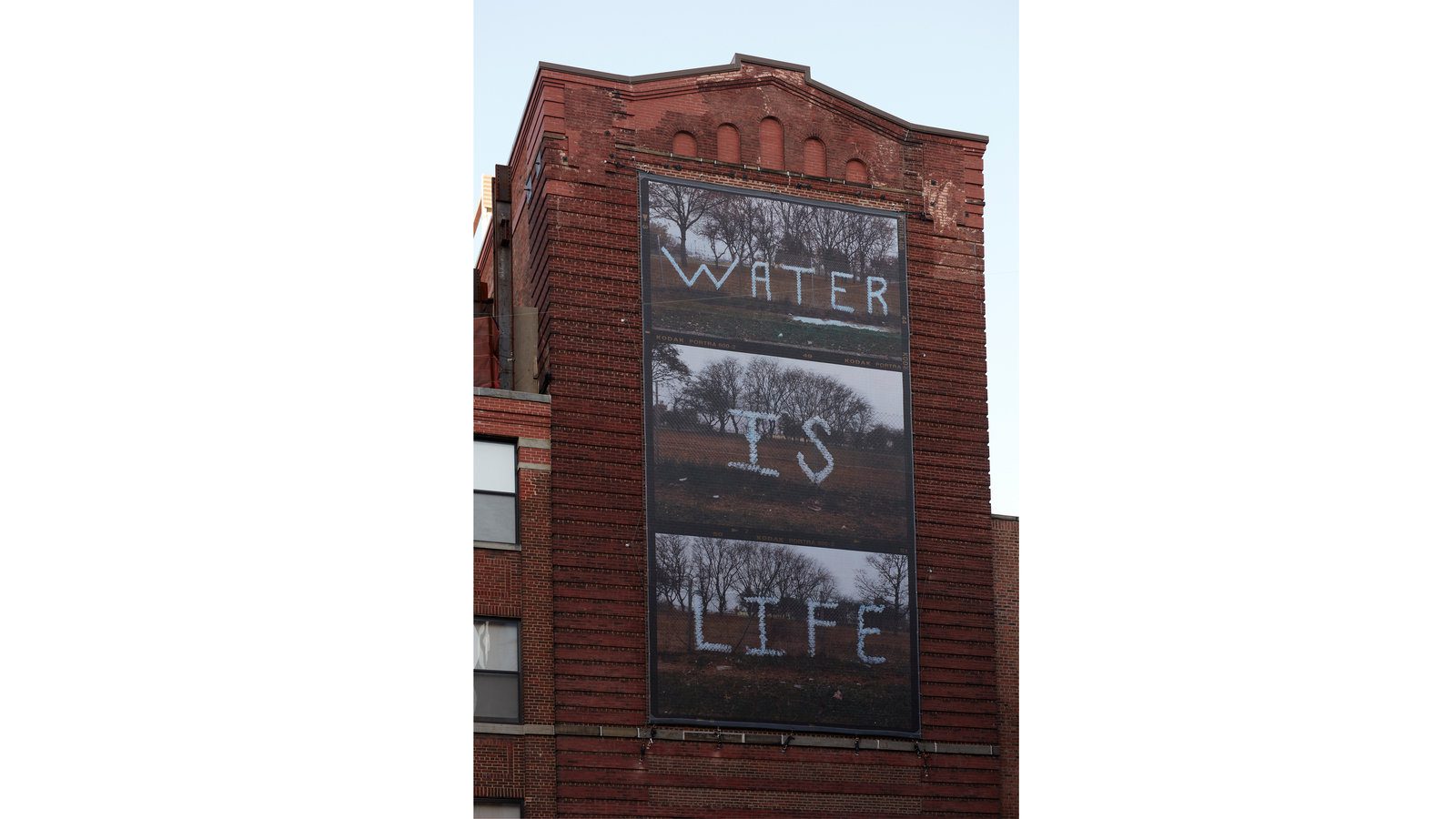
Artist LaToya Ruby Frazier spent five months living in Flint, Michigan, documenting the lives of those affected by the city's water crisis for her photo essay "Flint is Family." As the crisis dragged on, she realized it was going to take more than a series of photos to bring relief. In this inspiring, surprising talk, she shares the creative lengths she went to in order to bring free, clean water to the people of Flint.
In an unmissable talk, journalist Carole Cadwalladr digs into one of the most perplexing events in recent times: the UK's super-close 2016 vote to leave the European Union. Tracking the result to a barrage of misleading Facebook ads targeted at vulnerable Brexit swing voters -- and linking the same players and tactics to the 2016 US presidential election -- Cadwalladr calls out the "gods of Silicon Valley" for being on the wrong side of history and asks: Are free and fair elections a thing of the past?
I heard this talk on the TED Radio Hour a couple of months ago and was properly appalled by the material, if not surprised, but it took a fellow Coffee Party USA volunteer and former director to call my attention to the transcript of the talk. I'm sharing some of the key paragraphs near the end.
Our democracy is broken, our laws don't work anymore, and it's not me saying this, it's our parliament published a report saying this. This technology that you have invented has been amazing. But now, it's a crime scene. And you have the evidence. And it is not enough to say that you will do better in the future. Because to have any hope of stopping this from happening again, we have to know the truth.
And maybe you think, "Well, it was just a few ads. And people are smarter than that, right?" To which I would say, "Good luck with that." Because what the Brexit vote demonstrates is that liberal democracy is broken. And you broke it. This is not democracy -- spreading lies in darkness, paid for with illegal cash, from God knows where. It's subversion, and you are accessories to it. ... And what you don't seem to understand is that this is bigger than you. And it's bigger than any of us. And it is not about left or right or "Leave" or "Remain" or Trump or not. It's about whether it's actually possible to have a free and fair election ever again. Because as it stands, I don't think it is.
And so my question to you is, is this what you want? Is this how you want history to remember you: as the handmaidens to authoritarianism that is on the rise all across the world? Because you set out to connect people. And you are refusing to acknowledge that the same technology is now driving us apart.
And my question to everybody else is, is this what we want: to let them get away with it, and to sit back and play with our phones, as this darkness falls? ... Democracy is not guaranteed, and it is not inevitable, and we have to fight and we have to win and we cannot let these tech companies have this unchecked power. It's up to us -- you, me and all of us. We are the ones who have to take back control.
It's been three years since I used the phrase "a21stCenturycrimescene," but Cadwalladr calling social media "a crime scene" tells me its time to bring it back. As for any commentary I might have on her talk, I think her words speak for themselves. I don't need to add my own take; I just need to boost the signal.
There's something amazing growing in the city of Detroit: healthy, accessible, delicious, fresh food. In a spirited talk, fearless farmer Devita Davison explains how features of Detroit's decay actually make it an ideal spot for urban agriculture. Join Davison for a walk through neighborhoods in transformation as she shares stories of opportunity and hope. "These aren't plots of land where we're just growing tomatoes and carrots," Davison says. "We're building social cohesion as well as providing healthy, fresh food.
When I read the topic, I was expecting Davison to mention Brightmoor, one of the neighborhoods featured in HOUR Detroit displays its green thumb; she did not disappoint me.
With luck, I'll return to regular blogging tomorrow. If not, I have plenty of videos from my students' presentations to choose from. Either way, off to correct final exams!
I first blogged about self-driving cars in 2013, when I wrote "We may not get flying cars for the mass market, but another science fiction transportation idea, self-driving autos, looks like it's on its way." I wrote about them again in last year's Self-driving cars--fantasy and reality, which showed that autonomous vehicles are still coming but have a long way to go. They're a lot closer now that there is a day in their honor.
All three of my previous posts focused on the technology behind and business opportunities available self-driving cars. Today, I begin with the technology but end with the effects it will have on our communities, starting with Seeker/DNews asking How Close Are We to a Self-Driving World?
Self-driving cars could revolutionize the way we travel, giving us more time to work, play, learn, and relax on the road. But when it comes to making them a reality, cutting-edge technology is only the tip of the iceberg. So, how close are we ditching driving?
The answer is about only a couple of years for companies like Uber and Waymo, but a decade away for the masses.
"The Blueprint outlines key tools and objectives for cities to use as they update their physical and digital infrastructure and on every type of street and intersection, from narrow, residential streets to major multi-modal boulevards. Future modules of the Blueprint will expand on these topics with new focus areas including roadway pricing, data partnerships with the private sector, regional planning, designing autonomous networks and autonomous freight delivery needs."
That paragraph is the one Seeker thought worth quoting from the NACTO press release. I found three more.
“The expansion of autonomous vehicles is a once-in-a-lifetime opportunity to rethink city streets and save lives on an unprecedented scale – but only if cities are prepared,” said Janette Sadik-Khan, NACTO Chair and Principal at Bloomberg Associates. “The Blueprint gives city leaders across the country and around the world the vision they need to partner with the private sector and design streets that are smarter, safer and more efficient than ever before.”
“As cities guide the autonomous revolution, we want technology to solve our mobility challenges; not settle for more of the same,” said Seleta Reynolds, NACTO President and General Manager of the Los Angeles Department of Transportation. “This Blueprint will help cities everywhere lay the foundation for 21st century streets designed to serve people first and foremost, no matter how they travel.”
“When it comes to autonomous vehicles, cities are where the action is,” said Linda Bailey, Executive Director of NACTO. “This is the start of a critical conversation with AV companies about what cities need today and will need tomorrow.”
As a Crazy Eddie, I approve. A little planning for the future will go a long way.
Speaking of planning for a future with self-driving cars and other autonomous vehicles, I present a TEDx talk by Nico Larco that asks another question, How Will Autonomous Vehicles Transform Our Cities?
Nico Larco's insights on one the most exciting technology of our time will open your eyes to a whole new way of thinking and show you how the world we live in could be fundamentally transformed. Nico is an Associate Professor of Architecture and Urban Design at University of Oregon and Director of the Urbanism Next Research Initiative. He pulls back the curtain to preview how autonomous vehicles will shape the future planning of our parks, cities and life as we know it. This talk was given at a TEDx event using the TED conference format but independently organized by a local community.
I think Larco is right; autonomous vehicles are not just a transportation issue, they're an everything issue. Given how rapidly Americans are likely to adopt the technology, it's important that we anticipate its effects and prepare for them.
I find this post simultaneously both appropriate and ironic because tomorrow is Autonomous Vehicle Day. Let's celebrate the limits to our technologies.
Actually, that should be contemplate the limits of our technologies, but someone uprated my comment anyway.
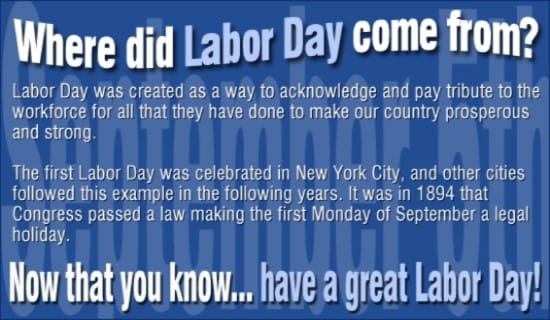
In the United States and Canada, the first Monday of September is a federal holiday, Labor Day. Originally celebrated in New York City's Union Square in 1882, Labor Day was organized by unions as a rare day of rest for the overworked during the Industrial Revolution. Kenneth C. Davis illustrates the history of Labor Day from Union Square to today.
I learned something from that. I hope my readers did, too.
As my regular readers know, I like to celebrate my holidays with a drink. WXYZ managed to provide one along with a local Detroit angle in Cocktails for Labor Day Weekend.
We know it sounds crazy, but hear us out: trees actually are speaking to each other. Trees use a vast underground network to send each other nutrients, and warn their their neighbors about droughts and disease. Considering they've been around for over 400 million years, is it really that surprising that they’ve figured out a way to communicate?
I plan on showing this video along with the one about farming ants today. Both of them are about the mutualistic relationships of fungi with other organisms.*
Fusion quotes Suzanne Simard, so I may as well go to the source. Here she is giving a TED Talk on the subject, How trees talk to each other.
"A forest is much more than what you see," says ecologist Suzanne Simard. Her 30 years of research in Canadian forests have led to an astounding discovery — trees talk, often and over vast distances. Learn more about the harmonious yet complicated social lives of trees and prepare to see the natural world with new eyes.
This video is pitched at a higher level than the one from Fusion, but it's too long to show to my students today. Darn.
*Speaking of fungal mutualisms, mow I'm looking for a video about lichen. If I find a good one, I'll post it.
Legendary ocean researcher Sylvia Earle shares astonishing images of the ocean -- and shocking stats about its rapid decline -- as she makes her TED Prize wish: that we will join her in protecting the vital blue heart of the planet.
That's inspiring. If anything, I think her message is even more urgent than it was eight years ago.





/cdn.vox-cdn.com/uploads/chorus_image/image/52094853/MUFI_103.0.jpeg)