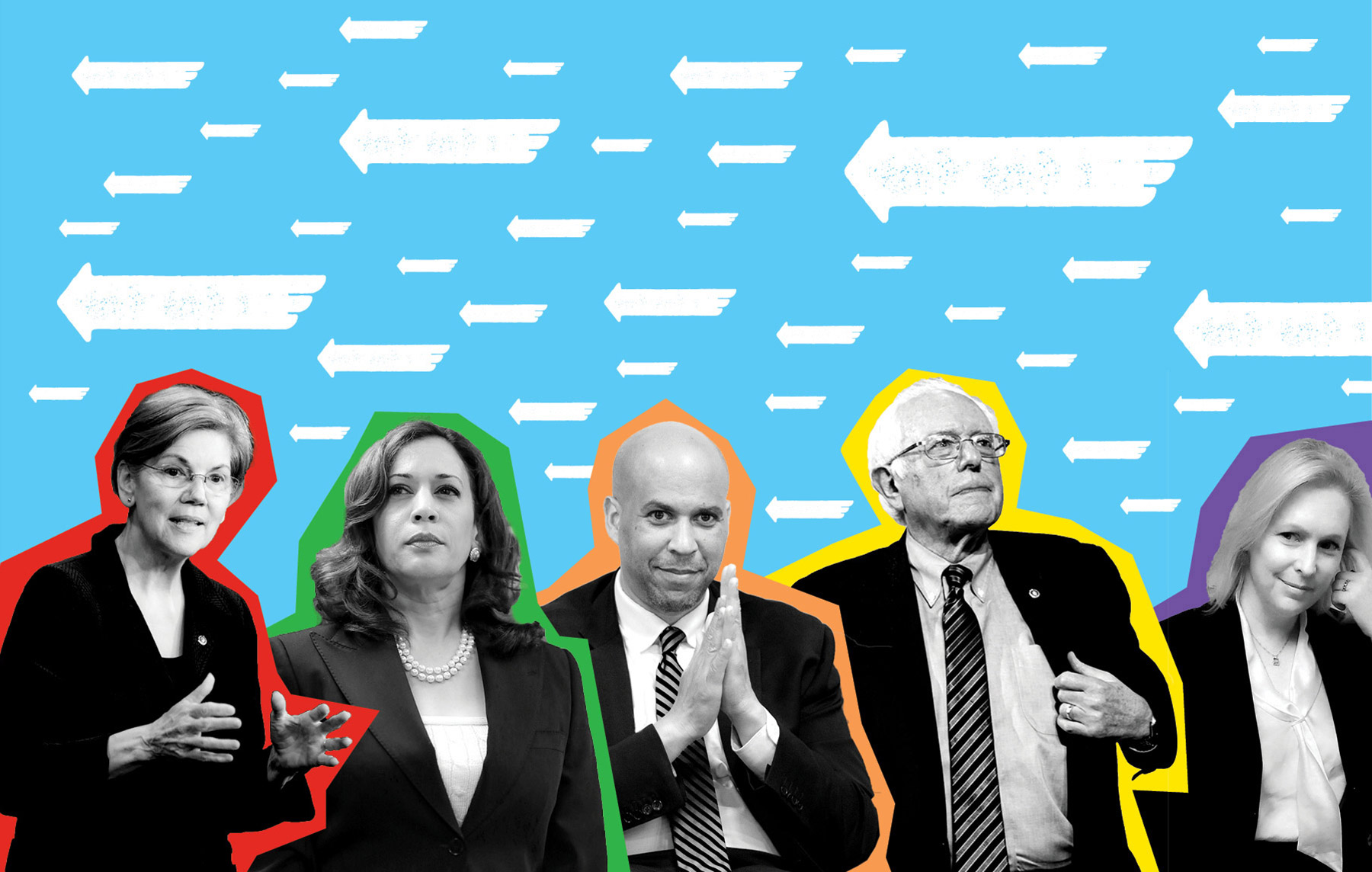
Showing posts with label Amy Klobuchar. Show all posts

Sunday, May 26, 2024

DOJ sues Live Nation/Ticketmaster

Yesterday, I promised that the Sunday entertainment feature would be about Ticketmaster, so without any further ado I'm sharing Yahoo! Finance reporting DOJ files lawsuit seeking to break up Live Nation and Ticketmaster.

US Department of Justice (DOJ) officials filed an antitrust lawsuit against concert promoter and ticket seller Live Nation (LYV) on Thursday, making the case that Live Nation created a monopoly through its ownership of Ticketmaster that ultimately resulted in inflated ticket prices. Live Nation has refuted these claims in a statement, saying Ticketmaster's service fees are no higher — if not lower — than on competing ticketing websites.
Citi Managing Director Jason Bazinet focuses on the DOJ's antitrust crackdown in recent years and whether a breakup outcome would ultimately affect concert and event ticket prices.
"This administration is trying to go back to structuralism, that's what's underpinning a lot of the antitrust actions that they're pursuing," Bazinet outlines. "And so that that's difficult, I think, for the judges to understand because they now have 40-plus years of case law that says this is really all about price. And that's why you see Live Nation in their response, focusing on price."
On the one hand, Citi Managing Director Jason Bazinet expressed a pro-business and government skeptical perspective on this case. He attributes the DOJ bringing this case to a change in legal philosophy, if not outright ideology. On the other, he thinks this case will succeed, despite Live Nation/Ticketmaster's arguments about price. On the gripping hand (hey, the conceit of this blog is that humans are acting like Moties), Bazinet is missing a purely political motive, which I'll get to at the end.

PBS NewsHour hosted a guest with a contrasting opinion in Ticketmaster, Live Nation a monopoly that should be broken up, Justice Department alleges.

The Department of Justice wants the courts to break up Ticketmaster parent company Live Nation, the biggest concert promoter in the U.S. The company has faced intense scrutiny over prices and tickets selling out and reappearing on resale sites. More than two dozen states and the District of Columbia joined the lawsuit. California Attorney General Rob Bonta joined Geoff Bennett to discuss more.
California Attorney General Rob Bonta advocated for the role of government in maintaining free markets. Unregulated markets don't remain free for long. As I wrote last year, "Ticketmaster is a monopoly, which are bad for consumers since there is no competition to drive down prices, so monopolies require regulation. Where's the regulation in this picture? Maybe that's why there were hearings..." Speaking of hearings, MSNBC interviewed one of the Senators who held those hearings in ‘A long time coming’: Sen. Klobuchar on DOJ's Ticketmaster lawsuit before DOJ's press conference.

The Justice Department is set to announce a new lawsuit against Ticketmaster’s owner. NBC News’ Christine Romans has the latest details. Also, Sen. Amy Klobuchar, D-Minn., joins Ana Cabrera to share her thoughts on what needs to be done and discusses the growing calls for Justice Alito to recuse himself from January 6th cases.
For my response, I'm going to repeat what I wrote last year.
Both the Ticketmaster hearings and the closing of Splash Mountain at Disney World qualify this entry as the Sunday entertainment feature. Both news items tie into what I first wrote in 2011, "America is quite clear about its screwed up priorities­. My experience has convinced me that the surest way to get Americans to act is to mess with their entertainm­ent." Both Ticketmaster and Disney messed with (some) Americans' entertainment, although I'm more sympathetic [to] the Swifties than those complaining about Splash Mountain. The former are reacting to a monopoly, while the latter strike me as a bit selfish and insensitive.
That leads me back to the hearings themselves.
The discussion bypassed regulation entirely and went directly to using anti-trust action to break up Ticketmaster and Live Nation. Wow! That would be radical action that would create competition, which the market needs.
And that's what DOJ is doing, suing to break up the monopoly.

The federal lawsuit shows that messing with Americans' entertainment is getting the U.S. government to act. Politically involved people may think that there are more important things the DOJ can do, but this is a priority for more Americans. I expect it will be very popular, especially among young people, since Taylor Swift was Time's 2023 Person of the Year and the most searched on Google last year, and it was the problems with getting tickets for her concerts that brought this issue to a head.

That's a wrap for this week's entertainment update. Stay tuned for Memorial Day.

Thursday, March 31, 2022

Stephen Colbert on missing Trump White House phone records and Ginni Thomas's texts updates the attempt to overturn the 2020 election

Happy Throwback Thursday! I'm beginning my retrospectives with an update to Stephen Colbert remembering the insurrection on January 6th along with other efforts to overturn the 2020 election.* I begin with Stephen's monologue from Tuesday night, Why Is T**** Hiding His Jan 6th Phone Records? | Cawthorne's Cocaine Claims Rattle GOP.

We know the former president spoke to Kevin McCarthy and Jim Jordan as the January 6th insurrection unfolded, but his missing phone records leave a lot of open questions. Elsewhere in Washington, Republican congressman Madison Cawthorne's allegations of cocaine use and orgies among lawmakers have drawn rebukes from members of his party.
The person in charge of the show's YouTube channel neglected to mention that the first half of the monologue focused on Putin's war on Ukraine. The material about The Former Guy's missing phone records begins about halfway through. The lack of records certainly looks suspicious.

Stephen opened Tuesday's show with his and the show's writers speculating on This Is Who T**** Called During The Capitol Insurrection.


Ordering a pizza for someone who isn't expecting one is a well-know hacker prank. Imagining that the prankster is also trying to poison the target is something much more sinister. That The Former Guy has such a bad reputation that anyone would think it's funny is scary!

The night before, Stephen's first segment at the host desk was Ginni Thomas's Texts To Meadows Are Full Of B-Movie Quotes And Conspiracy Theories.

The Jan 6th committee wants to hear from two people who may have committed crimes in their efforts to help the former president overturn Joe Biden's electoral victory: disgraced attorney John Eastman, and Ginni Thomas, wife of Supreme Court Justice Clarence Thomas.
That all sounds even loopier than I expected, although I shouldn't be surprised after listening to double Razzie winner Mike Lindell. I just had hope that the wife of a Supreme Court Justice would be less susceptible to conspiracy theories. Nope, she's not.

I'm sure this won't be the last I'll write about the investigation into last year's attempted self-coup. In the meantime, follow over the jump for the top posts about it and the other attempts to overturn the 2020 presidential election from the eleventh year of Crazy Eddie's Motie News.

Thursday, January 6, 2022

Colbert and Klobuchar on the insurrection one year later

I concluded Brenda Lawrence announces retirement from Congress and Rashida Tlaib announces run for her new district, the latest in Congressional musical chairs from Michigan with a program note for today.
Stay tuned for the anniversary of last year's attempted self-coup. That certainly won't be a cheerful occasion.
No, but Stephen Colbert can still milk some laughs out of it. Watch is monologue, Hannity's Role In Jan 6th Planning Revealed | Stephen's Song Explains The New CDC Guidelines.

It appears that Fox News host Sean Hannity had advance knowledge of the former President's plans for the Jan 6th attack on the U.S. Capitol, and Stephen Colbert has a special song to help everyone understand the CDC's updated Covid-19 quarantine guidelines.
I've read lots of people call Fox News "state television" during The Former Guy's administration. No, that's Voice of America. It is party television, however, and Hannity's apparent knowledge before and actions during and after the insurrection support my assessment.

Speaking of my expert opinion, Colbert calling Arizona "America's backup Florida" isn't far off. There are lots of snowbirds and retirees there, just like Florida. My late maternal grandparents were among them, as they moved there after my grandfather retired. TFG will love the place, even though it voted for Biden two years ago, and I'm happy he canceled today's press conference.

As for calling the COVID-19 test "the Nosey-Pokey," I'm only surprised that it took this long for someone to call it that and make a song about it.

Follow over the jump for Senator Amy Klobuchar's three-part interview.

Wednesday, March 4, 2020

Adios Amy and Bye-bye Bloomberg as both drop out and endorse Biden


When I told my readers to "stay tuned for Marching Music Day and a follow-up post to both Super Tuesday and Mayor Pete packs up his campaign" at the end of A drum corps Super Tuesday 2020, I knew I would be writing about Amy Klobuchar dropping out right before Super Tuesday.  Only the timing was a surprise, as "I expected Amy Klobuchar to drop out next, but only after Super Tuesday."  What I didn't know was who else would drop out.  Well, as CNN reported earlier today, Michael Bloomberg suspends 2020 presidential campaign.

Michael Bloomberg has dropped his bid for the 2020 Democratic presidential nomination and is endorsing Joe Biden, his campaign announced.
With that, every single moderate connected to the Democratic Party establishment other than Biden has dropped out and all of the ones I listed in Democratic candidates from left to center for the 2020 primaries have thrown their support to him.*  Talk about The Party Decides!

Speaking of which, watch CBS This Morning interview Klobuchar in Klobuchar says "Joe Biden is the answer" to beating Trump.

Senator Amy Klobuchar dropped out of the Democratic primary race on Monday after outlasting higher-profile rivals in the race. She joined fellow former contenders Pete Buttigieg and Beto O'Rourke in endorsing Joe Biden ahead of Super Tuesday. Klobuchar joins "CBS This Morning" to talk Super Tuesday and her support for the former vice president.
With that, all of the candidates picked in FiveThirtyEight's second drop out draft in November have now dropped out.  Nine down, none to go.  I can now close that tab, which I've had open since December.

Follow over the jump for all the drink suggestions and memes I made for Bloomberg and Klobuchar, which I will retire unless and until either become the running mate for either Joe Biden (possible for Klobuchar) or Bernie Sanders (ha) or runs again in the future (still a possibility for Klobuchar).

Monday, February 24, 2020

Democratic candidates from left to center for the 2020 primaries


I concluded Bye-bye Booker as Cory climbs down from his campaign by noting that I've been delaying on making good on a promise I had made late last year.
I had one final comment on Booker's ideological scores at On The Issues at the end of Kamala Harris heading home came as a complete surprise.
While I'm retiring this chart because Harris has dropped out, I would have had to been retired even if she were still running.  First, Harris left the campaign with a more moderate social score of 73, which, combined with her economic score of 10 places her closer to Amy Klobuchar than Joe Biden.  Harris ended her run as the fourth most liberal member of the field according to On The Issues.  Second, Biden himself has become more moderate with an economic score of 15 and a social score of 80.  The two no longer share the same point on the Nolan Grid.  Time to make a new graph for Biden, Cory Booker, Julian Castro, Tom Steyer, and Andrew Yang, who now share a spot.
That prompted me to ask "Now, do I hurry to make new memes for all the remaining candidates for tomorrow's entry, or wait until Booker drops out?  Decisions, decisions" at the end of Julian jumps from the plane as Castro campaign crashes.  By not making the memes before Booker dropped out, I made my decision through inaction.  I guess I have no excuse now.
Now that there are only eight major Democratic candidates after Andrew Yang, Michael Bennet, and Deval Patrick all dropped out, I think it's time to fulfill that promise, as I told my readers yesterday in John Lewis earns Chairman's Award plus movie and TV winners about politics and government at the 2020 NAACP Image Awards.

I begin by being a good environmentalist and recycling to explain my methodology.
[I] rank[ed] the candidates by economic score from low (left) to high (right, or in this case center) to make it comparable to the liberal-moderate (there are no true conservatives running for the Democratic nomination) ranking I used last [month and again earlier this month] which was based on the economic dimension [of Voteview's DW-Nominate scores].  I then used the social score to break ties in the economic score with high scores being considered more liberal and low scores being considered more conservative.
For the four remaining candidates who are sitting members of Congress, I'm also recycling my methodology for their Voteview scores.
Voteview allows users to view every congressional roll call vote in American history on a map of the United States and on a liberal-conservative ideological map including information about the ideological positions of voting Senators and Representatives.
...
Ideological positions are calculated using the DW-NOMINATE (Dynamic Weighted NOMINAl Three-step Estimation). This procedure was developed by Poole and Rosenthal in the 1980s and is a "scaling procedure", representing legislators on a spatial map. In this sense, a spatial map is much like a road map--the closeness of two legislators on the map shows how similar their voting records are. Using this measure of distance, DW-NOMINATE is able to recover the "dimensions" that inform congressional voting behavior.

The primary dimension through most of American history has been "liberal" vs. "conservative" (also referred to as "left" vs. "right"). A second dimension picks up differences within the major political parties over slavery, currency, nativism, civil rights, and lifestyle issues during periods of American history.
...the scores of liberals are all negative and the more liberal they are, the more negative the scores, so the most liberal candidate will have the lowest or most negative score.
I last updated both the the Vote Match scores from On The Issues and first dimension DW-NOMINATE scores from Voteview in August, so it's been half a year.  Follow over the jump to see how the remaining candidates rate from left to center.

Wednesday, February 19, 2020

Drinks and drinking games for the 2020 Democratic Primary debates


I finished Pier 1 Imports files for bankruptcy, a tale of the Retail Apocalypse by telling my readers to "stay tuned for an update to Drinks for candidates at the September and October Democratic debates.  I bet it will be time to add Bloomberg's drink suggestions.  Any takers?"  Well, that happened, as NPR reported yesterday NPR/PBS NewsHour/Marist Poll: Sanders Leads, Bloomberg Qualifies For Debate.    Good thing no one took me up on betting against that happening!

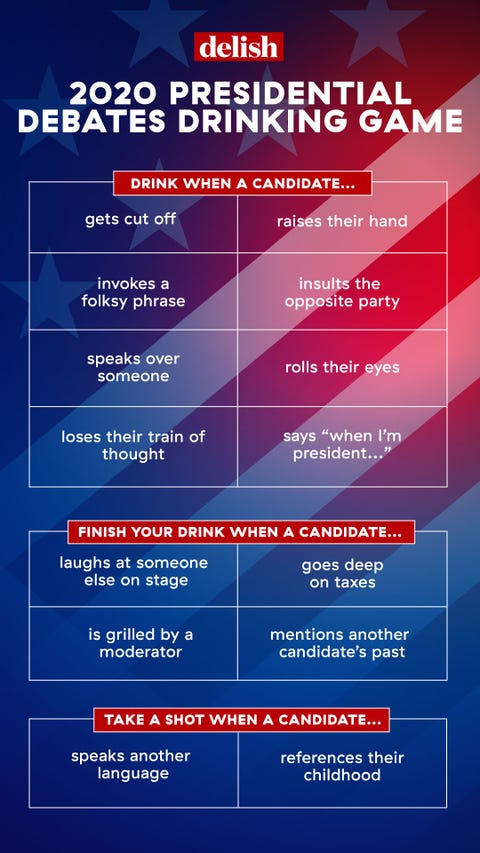
With that, it's time for a new drinking game.  I begin with a meme from Delish.


This drinking game, in addition to being simple, has aged better than the others, even DebateDrinking.com, which hasn't been updated since December.  Rolling Stone last updated its game in January.  BTR at least has one for the last debate in New Hampshire, but I don't know how well it will work unless one substitutes New Hampshire for Iowa and Nevada for New Hampshire.  Just the same, happy drinking! 

Follow over the jump for the drink suggestions, which I've recycled.  Of course I did; I'm an environmentalist.

Thursday, January 16, 2020

Samantha Bee takes her turn laughing at the January Democratic debate

While I was writing Colbert, Noah, and FiveThirtyEight react live to last night's Democratic debate, I wondered what Samantha Bee would say about it.  As I observed in Colbert, Noah, Meyers, and Bee take on the State of the Union Address, she "had an extra day to prepare and [would] made fun of different things."  I got my wish.  Watch Democratic Debate: Drama In Iowa | Full Frontal on TBS.

Debate season is in full swing. Last night, the CNN panel grilled the candidates about their positions on Medicare, climate change, and for some reason, nothing about women’s reproductive rights-- but the biggest question of the night was: Why won’t Tom Steyer stop looking at us?
Bee did make fun of different things, including a snipe at Michael Bloomberg and pointing out how Tom Steyer could use his money more effectively to fight the effects of climate change.*  Of course, she couldn't resist the Bernie Sanders-Elizabeth Warren conflict, but she made more fun of the media than she did of the candidates, unlike Colbert and Noah.  That's why I value her comedic perspective.

I'm sure Saturday Night Live will mock the debate as well, just as they did in November and December.  If they do, I will share those clips as well.  Stay tuned.

*I watched a Vox video about how the Australian fires are decimating koalas.  I plan on sharing that later this week.

Wednesday, January 15, 2020

Colbert, Noah, and FiveThirtyEight react live to last night's Democratic debate

Last night was the last Democratic debate before the Iowa Caucuses and both Stephen Colbert and Trevor Noah went live afterwards, just as they did for the November debate.  This time, I'm featuring Colbert first, whose show opened with Survivor Iowa: Outwit, Outplay, Outspend.

Six candidates, all looking to replace Donald Trump, marooned on a debate stage in Des Moines, Iowa.
As a former big "Survivor" fan, I appreciate that opening.*  It's enough to make me not miss Colbert's bit from four years ago, "The Hungry for Power Games."

Next, Stephen himself gave his and his writers' hot takes on the debate in Sanders, Warren Clash Over "Woman President" Question At Iowa Debate: Colbert's LIVE Monologue.

Stephen Colbert delivers his opening Late Show monologue LIVE following the Democratic presidential primary debate in Des Moines, Iowa.
Yes, this debate needed Andrew Yang on stage to do the math.  He ended up doing it on Twitter this morning, where he tweeted "For the record, if Bernie won his 1990 election in November, then it was 29 years and 2 months ago."  Math!

The Daily Show did a live stream to open its show last night.  Since the debate ran a little late, so did January 2020 Democratic Debate in Iowa | The Daily Show.  Skip ahead to 4:35.

Trevor went LIVE after the Iowa 2020 Democratic primary debate between Joe Biden, Elizabeth Warren, Bernie Sanders, Pete Buttigieg, Amy Klobuchar and Tom Steyer.
The live stream also cut off mid-joke.  That's why I gave Noah second billing.

I close with the mock headlines from FiveThirtyEight's live blog.
Clare: A Largely Dull Debate To Kick Off 2020
Geoffrey: Few Debates Have Really Moved The Polls And It’s Hard To Know If This One Did Either
Nathaniel: Candidates Give More Of The Same In 7th Debate — But How Will Those Just Tuning In Now React?
Amelia: Candidates Tangle Briefly Over Sexism In An Otherwise Snoozy Debate
Perry: Warren Defends Her Electability And That Of Female Candidates — Signaling Real Tension With Sanders
Meena: It’s Going To Be A Long Year
Yes, it will be a long year.  Just the same, keep reading.

*I was such a big "Survivor" fan during the early 2000s that I became a moderator of a reality TV fan forum.  I was in charge of the Outlandish Theories and Inside Information subforums.  The former I understood, as I came up with four outlandish ways to understand "Survivor" that actually worked.  The latter — well, I guess the admins decided they needed someone who could evaluate information.  As a scientist, I qualified.

Friday, December 20, 2019

Trevor Noah and FiveThirtyEight recap the December Democratic Debate live


Last month, both Trevor Noah and Stephen Colbert reacted live to November's Democratic debate.  Last night, it was just Noah who went live on The Daily show with the 2020 December Democratic Debate in Los Angeles.*

Trevor went LIVE after the Los Angeles 2020 Democratic primary debate between Joe Biden, Elizabeth Warren, Bernie Sanders, Pete Buttigieg, Amy Klobuchar, Andrew Yang and Tom Steyer.
That was a lot more fun and less time-consuming than reading FiveThirtyEight's live blog of the debate, which concluded with the reporters summing up the debate in a series of headlines.
Meena: Nothing But Fights And Platitudes In The Sixth Debate. Oh, Also A Wine Cave.

Nathaniel: Smaller Debate Leads To Substantive Exchanges Focusing On Buttigieg, Others

Amelia: Biden Rises Above the Fray While The Other Candidates Turn On Buttigieg

Micah: Anticipating A Mini Klobu-Surge? We Just May Be

Geoffrey: Buttigieg Catches Flak Like A Front-Runner

Clare: Buttigieg Bears The Brunt Of On-Stage Attacks.

Perry: You Were Christmas Shopping And That’s Fine — Nothing Really Happened in This Debate
Both Noah and FiveThirtyEight agreed on one thing; Mayor Pete got the bulk of attention last night, while Amy Klobuchar earned some for effectively attacking him and Joe Biden for not screwing up.  On the other hand, the one candidate both ignored was Tom Steyer, who only merited a mention in The Daily Show's video description, but not in the video itself.  Andrew Yang got more attention than Steyer.  I guess money alone doesn't make a candidate interesting.  I hope Michael Bloomberg is paying attention.

Geoffrey Skelley of FiveThirtyEight had a great throwaway line about the network broadcasting the debate focusing on foreign policy that became the illustration for What Surprised Us About The December Democratic Debate.


I wouldn't expect any less of them.

*I know I promised that I would feature Samantha Bee's take on impeachment today, but Noah gave me a shinier object to focus on.  Tomorrow.  Stay tuned.

Thursday, November 21, 2019

Trevor Noah and Stephen Colbert react live to last night's Democratic debate


I'm taking a break from Michael Bloomberg and Deval Patrick to have some fun with last night's Democratic debate.*  Watch 2020 November Democratic Debate in Atlanta from The Daily Show with Trevor Noah.

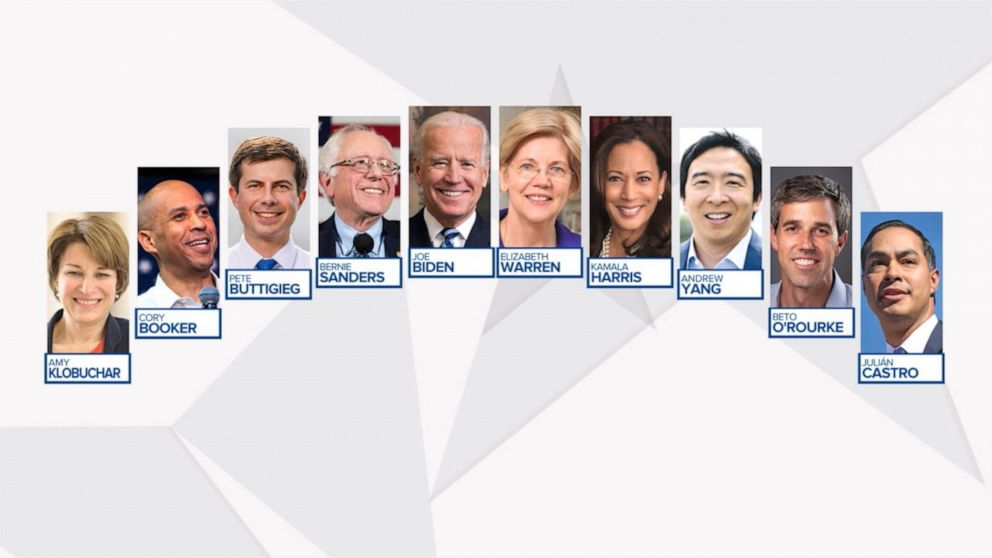
Trevor went LIVE after the Atlanta 2020 Democratic primary debate between Joe Biden, Elizabeth Warren, Cory Booker, Bernie Sanders, Kamala Harris, Pete Buttigieg, Amy Klobuchar, Andrew Yang, Tulsi Gabbard, and Tom Steyer.
Noah wasn't alone in reacting live after the debate.  Watch The Late Show's Stephen Colbert Breaks Down The 5th Democratic Presidential Debate.

Birthday boy Joe Biden provided the day's first gaffe, and the Democratic debate hadn't even started yet! Watch Stephen Colbert's LIVE post-debate analysis to find out who had the best night at Tyler Perry Studios in Atlanta.
Stephen wasn't the only one on his show having a good time with the debate.  Alex Wagner & John Heilemann: Cory Booker's "Weed" Comment Will Go Far.

The hosts of "The Circus" on Showtime, John Heilemann and Alex Wagner, join Stephen Colbert for LIVE analysis after the fifth Democratic debate.
Not only were these segments funny, they were informative, too.  I'm sure the other late night talk show hosts will have more to say about the debate tomorrow.  In particular, I'm looking forward to what Seth Meyers and Jimmy Kimmel have to say, although they might do what both Noah and Colbert did — move on to impeachment.

*I'm still planning on creating and posting graphs of Bloomberg's and Patrick's ideological positions from OnTheIssues.org.  Stay tuned.

Thursday, September 12, 2019

Drinks for candidates at the September and October Democratic debates


Since the third round of Democratic debates (actually just one debate) is being held tonight, it's time to update and recycle Drinks for the Democratic debates, Part 1 and Drinks for the Democratic debates, Part 2 by selecting the drinks for the debating candidates.  In addition, I am recommending drinking games for the debates.  Along with the ones at DebateDrinking.com, Spectator USA, and A.M. New York, I'm adding Rolling Stone and BTR Today.

Follow over the jump for the drinks.

Saturday, August 31, 2019

An update on Democratic candidates' Voteview scores before Congress returns from August recess


I told my readers to "stay tuned for an update to Senators and Representatives running for the Democratic nomination are drifting to the left as they campaign as the final post of the month."  I decided to go ahead even after I finding little change with no clear trends.  I suppose that's what happens when the members of Congress are campaigning instead of voting, both because they are choosing the former over the latter and because Congress is in recess during August.  That's a marked contrast to the story told by their Vote Match scores at On The Issues, which can be revised based on their statements on the campaign trail and do not depend on their votes and so told a tale of the bulk of them moving left.

Here are their current scores presented from left to center.  More negative scores mean the member of Congress is more liberal, while less negative scores mean they are more moderate.
  • Elizabeth Warren was -0.774 in July and is now -0.769, moving slightly to the center/right, but is still the most liberal member of Congress.
  • Kamala Harris was -0.710 in July and is now -0.713 and is still the second most liberal member of the current Senate, so she is continuing her leftward drift according to Voteview, which contrasts with her drift to the center according to On The Issues.
  • Cory Booker continued drifting to the center from a Voteview score of -0.611 in July and a score of -0.607 now, but is still the third most liberal member of the current Senate.  This contrasts with his move left according to On The Issues.
  • Bernie Sanders remained at -0.526 as the fourth most liberal member of the current Senate.
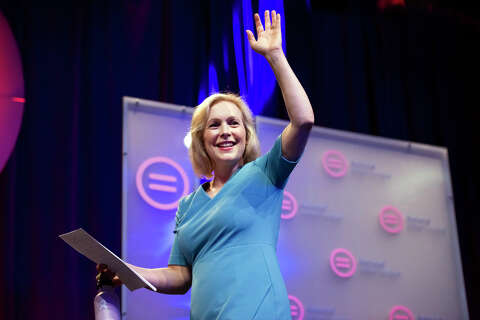
  • Kirsten Gillibrand left the nomination contest with her Voteview score unchanged at -0.439, which is still more liberal than 81% of Democrats in the current Senate.
  • On the one hand, Tim Ryan's Voteview score remained unchanged at -0.403.  On the other hand, his relative position became more liberal.  He was more liberal than 55% of Democrats in the 116th House in July but is now more liberal than 62% of Democrats in the current House.  As I wrote last month, nice trick!
  • When Seth Moulton complained about Democratic candidates moving too far to the left when he dropped out, he looked hypocritical, as Vote Match scores at On The Issues showed him moving sharply to his left.  However, his Voteview score makes him look more sincere. In July, it was -0.293, making him more conservative than 73% of Democrats currently serving in the House of Representatives in July.  Now, it's -0.286, a measurable move to the right making him now more conservative than 74% of House Democrats.
  • Tulsi Gabbard remained unchanged at -0.279 and more conservative than 78% of Democrats in the current House.
  • Amy Klobuchar continues to move to the left according to both Voteview and On The Issues.  Her Voteview score was -0.265 in July, which placed her as more conservative than 70% of Democrats currently serving in the Senate then.  Now, it's -0.269, which is more conservative than 68% of Democrats in the current Senate.  This is the largest score change to the left of any of the candidates.
  • Finally, Michael Bennet became more slightly more liberal according to his Voteview score, moving slightly to the left from -0.211 to -0.212 while becoming relatively more conservative at the same time.  Bennet was more conservative than 86% of the Democrats in the upper chamber of Congress in July but is now more conservative than 88% of Democrats now, which is where he sat in May.
The next recess is scheduled for the first two weeks of October.  I will try to update the candidates' Voteview scores then.

That's it for August.  Stay tuned for an entry about the Emmy nominees for a Sunday entertainment feature to begin September.

Thursday, August 29, 2019

Goodbye Gillibrand! Kirsten drops out


First John Hickenlooper dropped out, then Jay Inslee followed by Seth Moulton.  All three were picked by the reporters and editors of FiveThirtyEight in their first 2020 drop out draft.  They were the first, fifth, and second picked, respectively.  Yesterday, the third candidate picked left the contest, as CBS News reported Senator Kirsten Gillibrand drops out of 2020 presidential race.

Democrat Kirsten Gillibrand says she's dropping out of 2020 presidential race amid low polling and fundraising struggles. The New York Times was first to report the news.
ETA: CBS News later uploaded 2020 Daily Trail Markers: Senator Kirsten Gillibrand drops out of presidential race, which examined Gillibrand dropping out in depth.

Senator Kirsten Gillibrand announced she’s dropping out of the 2020 presidential race. The Democrat from New York ran her campaign on promises to fight for women's rights and policies like paid family leave. As a senator, she gained prominence while pushing for reforms in prosecuting sex crimes in the military. 2020 campaign reporter Cara Korte joins CBSN with Wednesday's edition of 2020 Daily Trail Markers.
So now the first, second, third, and fifth candidates picked by FiveThirtyEight have dropped out.  Four down, five to go.  The fourth candidate chosen in the drop out draft is Tim Ryan.  My readers and I will see if he's next.  In the meantime, follow over the jump for the drink and memes I am retiring now that Gillibrand is no longer running.

Saturday, August 24, 2019

Democratic candidates continue to drift leftwards according to On The Issues


It's time for me to update On The Issues shows most of the Democratic candidates have moved left during the campaign, too as I've been promising all week, beginning with the summary.  Once again, the majority of candidates have become more liberal.  Eleven have moved to the left economically, two have moved to the left socially, and four have moved to the left along both axes for a total of sixteen moving to the left one way or another.  Meanwhile, six have remained in the same ideological spots, while three have moved to the right economically including one who became more socially liberal, four have become more socially moderate, including three who became more economically liberal, and one has moved to the right (center) along both axes.  Yes, someone is completely bucking the trend.

To explain my methodology, I'll be a good environmentalist and recycle.
Before I start, I'm sharing a reminder of my methodology.
[I] rank[ed] the candidates by economic score from low (left) to high (right, or in this case center) to make it comparable to the liberal-moderate (there are no true conservatives running for the Democratic nomination) ranking I used last [month and again earlier this month] which was based on the economic dimension [of Voteview's DW-Nominate scores].  I then used the social score to break ties in the economic score with high scores being considered more liberal and low scores being considered more conservative.
With that out of the way, here are the Democratic candidates from left to center based on their Vote Match scores at On The Issues.
Follow over the jump.

Tuesday, July 16, 2019

On The Issues shows most of the Democratic candidates have moved left during the campaign, too


I concluded Senators and Representatives running for the Democratic nomination are drifting to the left as they campaign by observing that the phenomenon was more widespread than just current members of Congress.
By the way, the leftward movement of Democratic candidates isn't only shown by the Voteview scores of the current members of Congress; it's demonstrated by the Vote Match scores of all the candidates at On The Issues, which is something I found out after I wrote Wayne Messam at On The Issues, take one.  Nearly every candidate has become more liberal either economically or socially, and a few have moved left on both axes.
My findings are that, of the 25 candidates and one former candidate that I have examined, On The Issues rates eight as having become more liberal economically, six have become more liberal socially, and five have become more liberal along both scales, while four have remained the same and two actually become more moderate economically, so a total of nineteen have become more liberal on one or both dimensions.  Follow over the jump to see which candidates have new ideological scores and how those scores now arrange the candidates from left to center.

Wednesday, July 3, 2019

Senators and Representatives running for the Democratic nomination are drifting to the left as they campaign


I noticed that Amy Klobuchar had moved left according to her first-dimension DW-Nominate score at Voteview since the end of May when I compared her to  Joe Sestak a couple of weeks ago, so I decided to see if that was true of the rest of the Senators and Representatives running for the Democratic nomination for President.  It turns out that nearly all the Senators have more liberal ideology scores at Voteview, but only one of the Representatives.  However, even if their DW-Nominate scores haven't changed, half of the Representatives running for President have become relatively more liberal compared to the rest of the chamber, as the caucus as a whole has moved closer to the center over the past month.

Follow over the jump for all the changes in the candidates' scores and or placements since I posted Democratic presidential candidates from left to center from Voteview on June 1st.  Just as a reminder, the more negative a member of Congress's score, the more liberal their voting record is.

Wednesday, June 26, 2019

Drinks for the Democratic debates, Part 1


Four years ago, I wrote a five-part series about drinks for the Democratic debates.  Since the first Democratic debate for the 2020 nomination is tonight, it's time to revive the series.

The first item of business is the drinking game.  Unfortunately, Paul W. of You Might Notice A Trend is not creating drinking games this year; his experience with the 2016 election soured him on the idea.  That's the bad news.  The good news is that I've found three good ones at DebateDrinking.com, the site I used for the general election debates three years ago, Spectator USA, which is the funniest and most complex, and A.M. New York, which is the simplest.  I don't care which one my readers play, but please pick one.

Next, the drinks, one for each candidate in tonight's debate, which DebateDrinking.com lists as follows.
NIGHT 1
Wednesday, June 26
  • Cory Booker
  • Bill de Blasio
  • Julián Castro
  • John Delaney
  • Tulsi Gabbard
  • Jay Inslee
  • Amy Klobuchar
  • Beto O'Rourke
  • Tim Ryan
  • Elizabeth Warren
Follow over the jump for the drinks, one for each candidate.

Saturday, June 15, 2019

OnTheIssues.org's take on the Democratic presidential candidates from left to center


I concluded Democratic presidential candidates from left to center from Voteview with a promise to revisit the topic.
[T]his won't be the last time I plan on examining the ideology of the candidates.  On The Issues has pages and ideological evaluations of just about all the candidates, including ones who never served in Congress.  Compared to Voteview, it's more complete, but less objective and based on rhetoric, not action....Still, ranking the candidates by ideology, and comparing it to their DW-NOMINATE scores, if available, should be both entertaining and informative.
Since the participants in the debates later this month have been selected, it's time to follow through.

As I did for the rankings using Voteview, I'm sharing the methodology.
Candidate's Political Philosophy
The below is a way of thinking about the candidate's political philosophy by dividing the candidate's VoteMatch answers into "social" and "economic" questions.  It is only a theory - please take it with a grain of salt!

Social Questions:  Liberals and libertarians agree in choosing the less-government answers, while conservatives and populists agree in choosing the more-restrictive answers.

Economic Questions:  Conservatives and libertarians agree in choosing the less-government answers, while liberals and populists agree in choosing the more-restrictive answers.
...
Social Score

This measures how much the candidate believes government should intervene in people's personal lives or on social issues. These issues include health, morality, love, recreation, prayer and other activities that are not measured in dollars.
  • A high score (above 60%) means the candidate believes in tolerance for different people and lifestyles.
  • A low score (below 40%) means the candidate believes that standards of morality & safety should be enforced by government.

Economic Score

This measures how much the candidate believes government should intervene in people's economic lives. Economic issues include retirement funding, budget allocations, and taxes.
  • A high score (above 60%) means the candidate believes in personal responsibility for financial matters, and that free-market competition is better for people than central planning by the government.
  • A low score (below 40%) means the candidate believes that a good society is best achieved by the government redistributing wealth. The candidate believes that government's purpose is to decide which programs are good for society, and how much should be spent on each program.

This measures how much the candidate believes government should intervene in people's economic lives. Economic issues include retirement funding, budget allocations, and taxes.

How We Score Candidates

How we determine a candidate's stance on each VoteMatch question:
  1. We collect up votes, excerpts from speeches, press releases, and so on, which are related to each question. Each of these are shown on the candidate's VoteMatch table.
  2. We assign an individual score for each item on the list. The scores can be: Strongly Favor, Favor, Neutral/Mixed, Oppose, Strongly Oppose. The scoring terms refer to the text of the question, not whether the candidate strongly opposed a bill, for example.
  3. We then average the individual scores, using the numeric scale: Strongly Favor = 2, Favor = 1, Neutral/Mixed = 0, Oppose = -1, Strongly Oppose = -2.
  4. /OL>
    • If the average is above 1, the overall answer to the question is Strongly Favor.
    • If the average is above 0, the overall answer to the question is Favor.
    • If the average is exactly 0, the overall answer to the question is Neutral.
    • If the average is below 0, the overall answer to the question is Oppose.
    • If the average is below -1, the overall answer to the question is Strongly Oppose.
    ...
    • To get the political philosophy of the candidate, we sum up the answers on two scales, the Personal/Social scale and the Economic Scale. Some questions aren't used in the political philosophy calculations.
    • The VoteMatch table indicates the number of scale points from each answer (any one question can provide from 0 to 10 scale points on one scale or the other).
    • The combination of social/moral scales and economic scales produces a political philosophy description.
Enough of On The Issues' methodology.  Mine was to rank the candidates by economic score from low (left) to high (right, or in this case center) to make it comparable to the liberal-moderate (there are no true conservatives running for the Democratic nomination) ranking I used two weeks ago which was based on the economic dimension.  I then used the social score to break ties in the economic score with high scores being considered more liberal and low scores being considered more conservative.

Follow over the jump for the rankings.

Saturday, June 1, 2019

Democratic presidential candidates from left to center from Voteview


Full-sized original at In These Times.

This past April, I read a tweet describing Tulsi Gabbard and Bernie Sanders as "being objectively further left then the rest of the Dem primary field."  I thought "Really?  I don't think the data supports that claim" and decided to test it with the DW-NOMINATE scores and relative placements from Voteview.com of all the declared candidates for the Democratic nomination who had scores at the time.  Well, it's two months later, more candidates have declared, and the first two Democratic candidate debates are happening at the end of the month, so it's time to convert the scores into a post.

First, what's Voteview?
Voteview allows users to view every congressional roll call vote in American history on a map of the United States and on a liberal-conservative ideological map including information about the ideological positions of voting Senators and Representatives.
...
Ideological positions are calculated using the DW-NOMINATE (Dynamic Weighted NOMINAl Three-step Estimation). This procedure was developed by Poole and Rosenthal in the 1980s and is a "scaling procedure", representing legislators on a spatial map. In this sense, a spatial map is much like a road map--the closeness of two legislators on the map shows how similar their voting records are. Using this measure of distance, DW-NOMINATE is able to recover the "dimensions" that inform congressional voting behavior.

The primary dimension through most of American history has been "liberal" vs. "conservative" (also referred to as "left" vs. "right"). A second dimension picks up differences within the major political parties over slavery, currency, nativism, civil rights, and lifestyle issues during periods of American history.
In other words, liberal-conservative scores are calculated in two dimensions using DW-NOMINATE.  The votes are fed into the program and the program assigns scores and maps them out.  There is no human judgment involved so it's about as objective a measure of ideology as I can find.

The maps themselves have been animated to show changes in partisanship over time.  Watch This 60-second animation shows how divided Congress has become over the last 60 years, which is based on a study that used DW-NOMINATE data from Voteview.

It's news to no one that Congress has had a hard time passing legislation in recent years. Some have even asserted that partisanship in Washington has reached historic levels. But how do we put the current divide in perspective? A group of researchers recently tried to quantify and visualize House partisanship in a paper published in PLoS ONE.
That was fascinating, but enough about Voteview and its methods.  Follow over the jump for the ranking from liberal to moderate for the Democratic candidates running for President who are current or former members of Congress.

Friday, March 8, 2019

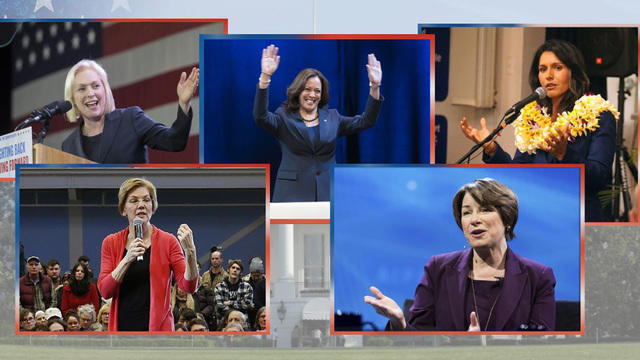
Record numbers of women running for U.S. President on International Women's Day 2019


Happy International Women's Day!  For today's theme of "Balance for Better," I'm following up the past two year's entries examining record numbers of women running for office, which resulted in record numbers women elected and serving in Congress, by examining the record number of women running for president.
With Democratic Sens. Elizabeth Warren of Massachusetts and Amy Klobuchar of Minnesota launching their presidential bids over the weekend, there are now more women running for a single party’s nomination than ever.

Warren and Klobuchar join fellow Sens. Kamala Harris of California and Kirsten Gillibrand of New York. Altogether, they comprise nearly a fifth of the Democratic women serving in the Senate. Rep. Tulsi Gabbard, D-Hawaii, is in the field, as well. Author Marianne Williamson, who counts Oprah Winfrey as a fan of her books, has also launched a presidential campaign.

Voters who want to see a woman in the White House will have many more candidates to choose from in 2020 compared with past elections. According to the Center for American Women and Politics, or CAWP, at Rutgers University, there has never been more than two women competing at the same time in the Democratic or Republican primaries.
CBS News covered this story last month in Women already making history in 2020 campaign.

Democratic women are already making history as the 2020 presidential race begins to take shape. CBSN political reporter Caitlin Huey-Burns spoke to CBSN about the growing field of female candidates.
Since CBS News uploaded the video, all five major women candidates have entered the contest.  Marie Claire interviewed all of them in One of These Women Could Be Our Next President.

This election season, a history-making, record-setting number of women are attempting to break that highest, hardest glass ceiling: the Oval Office. Marie Claire went to the Capitol and spoke to the women running for President in 2020.
I wish all of them luck, although my favorites are Harris and Warren.*  I may like Jay Inslee for making climate change his signature issue, but I think Harris, Warren, Klobuchar, and Gillebrand have more of a shot than he does; Gabbard, not so much.

I promise to have more on the presidential candidates as the campaign develops.  In the meantime, a final happy International Women's Day!


*Harris needs a label, so I'm creating one for her with this entry.